
BuddhistCatholicContemplativeEvangelicalGeneral ChristianHinduJewishLatter-day SaintMuslimNew VisionsProgressive Christian
Beliefs
- Buddhist
- Catholic
- Contemplative
- Evangelical
- General Christian
- Hindu
- Jewish
- Latter-day Saint
- More Voices
- Muslim
- New Visions
- Pagan
- Progressive Christian
Topics
- Religion News
- Food and Religion
- Sports and Religion
- Religious Art
- Religious Music and Entertainment
- Religious Events
- History and Religion
- Style and Religion
- Politics and Religion
- Women in Religion
- Recreation Outdoors and Religion
- Business Finance and Religion
- Careers Workplace and Religion
- Education and Religion
- Family Parenting and Religion
- Health Fitness and Religion
- Home and Religion
- Relationships and Religion
- Technology and Religion
- Travel and Religion
Columnists
- Buddhist Columnists
- Business Finance and Religion Columnists
- Careers Workplace and Religion Columnists
- Catholic Columnists
- Contemplative Columnists
- Education and Religion Columnists
- Evangelists Columnists
- Family Parenting and Religion Columnists
- General Christian Columnists
- Health Fitness and Religion Columnists
- Hindu Columnists
- History and Religion Columnists
- Home and Religion Columnists
- Jewish Columnists
- More Voices Columnists
- Latter Day Columnists
- Muslim Columnists
- New Visions Columnists
- Nonreligious Columnists
- Pagan Columnists
- Politics and Religion Columnists
- Progressive Columnists
- Recreation Outdoors and Religion Columnists
- Relationships and Religion Columnists
- Religion News Columnists
- Religious Art Columnists
- Religious Events Columnists
- Religious Music and Entertainment Columnists
- Sports and Religion Columnists
- Style and Religion Columnists
- Technology and Religion Columnists
- Travel and Religion Columnists
- Women in Religion Columnists
Resource Library
- 2026 Calendar
- Library of World Religions
- The 100 Most Holy Places on Earth
- Patheos Answers
- Podcasts
- Videos
- Faith Leaders Database
- Anglican Episcopalian
- Bahai
- Baptist
- Buddhism
- Christianity
- Confucianism
- Eastern Orthodoxy
- Hinduism
- Holiness and Pentecostal
- ISKCON
- Islam
- Judaism
- Lutheran
- Methodist
- The Church of Jesus Christ of Latter-day Saints
- New Age
- Paganism
- Presbytarian and Reformed
- Protestantism
- Religion Behind the Scenes
- Roman Catholic
- Scientology
- Shia Islam
- Sikhism
- Sufism
- Sunni Islam
- Taoism
- Zen
- See all religions
Research Tools
 Ad-Free & Subscriber Log-In Subscription Support
Ad-Free & Subscriber Log-In Subscription Support
Follow Patheos 

- Trending:
- Forgiveness
- |
- Marriage
- |
- Consciousness
- |
- Death Penalty
- |
- Election
- |
- Halloween

-
Tools
-
Support the Work
- Home
- Evangelical
- Honor, Shame, and Guilt within Tight and Loose Cultures
Honor, Shame, and Guilt within Tight and Loose Cultures
Last updated on: July 17, 2019 at 12:35 am by Brad Vaughn
Honor, Shame, and Guilt within Tight and Loose Cultures 2019-04-27T13:28:29-07:00 Brad Vaughn
Patheos Explore the world's faith through different perspectives on religion and spirituality! Patheos has the views of the prevalent religions and spiritualities of the world.
How does the distinction between tight and loose cultures affect contextualization, churches, ministry strategy, and the inner workings of a mission organization? This is the first in a series to address this question. Specifically, this post considers the relationship between honor-shame and tight-loose cultures.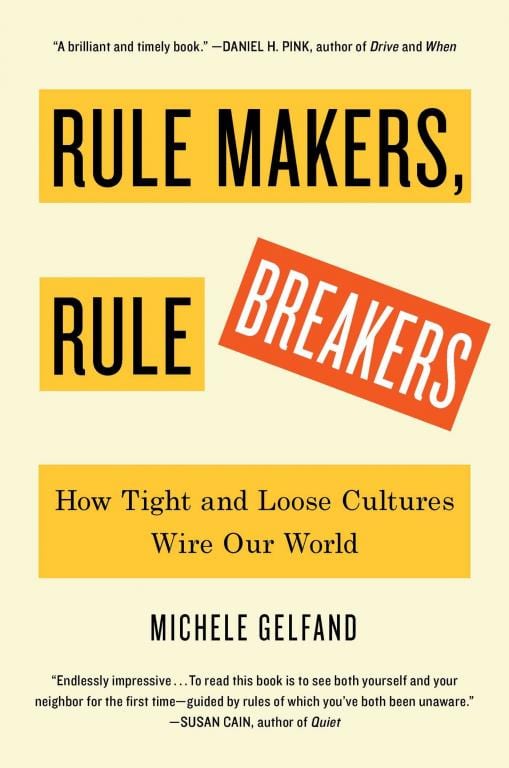
I previously introduced the topic of tight-loose cultures. The topic has been long overlooked by the missions community but deserves earnest reflection. For a brief overview, I’ll quote a summary from a recent dissertation:
tightness-looseness denotes the strength of norms and tolerance for norm deviance in a given cultural collective.
Norm strength denotes the number of unwritten and institutionalized rules that exist as well as the degree of social and institutional pressure that individuals feel to follow them, while tolerance for norm deviance denotes the amount of punishment that results when norms are violated.
By definition, tight cultural collectives have high norm strength and low tolerance for deviance, while loose cultural collectives have low norm strength and high tolerance for deviance.[1]
This aspect of cultural research is too significant for me to unpack it in a 1-2 blog posts. I want to post suggestions and questions to stimulate thought. I urge you to initiate dialogue with others with whom you work so that together we can develop helpful applications.
Also, you can watch the above TED talk from Michele Gelfand who explains tight and loose cultures.
Comparing Tight-Loose and Honor-Shame
Michele Gelfand, author of Rule Makers, Rule Breakers, explains in an interview,
Honor evolves when you need strong rules to regulate behavior. All honor cultures — or many — are tight, but not all tight cultures are honor cultures. You can also separate out what’s happening in the South from what’s happening around the world.
In the context of her work, she specifically describes cultures in which a person feels the need to defend one’s own reputation or status through some forceful means (e.g., insults, duals).
We see this play out in the “fame-shame” culture created by Western social media. Nowadays, any offense against a group’s moral sensibilities will be met with social sanctions, like doxing and lambasting in the media.
Traditional honor-shame societies are well-attuned to social expectations and adept at navigating customary rules of social interactions. Accordingly, people learn to exercise self- restraint (a trait typical of tight cultures) so as to modulate displays of anger and protect others’ face.
Honor and Tightness in Ancient Israel
In ancient Israel, a litany of rules codified social norms, governing nearly every aspect of life. Why? Deuteronomy 4:6-8 tell us what’s at stake when commands his people to obey his statutes.
Keep them and do them, for that will be your wisdom and your understanding in the sight of the peoples, who, when they hear all these statutes, will say, ‘Surely this great nation is a wise and understanding people.’ For what great nation is there that has a god so near to it as the Lord our God is to us, whenever we call upon him? And what great nation is there, that has statutes and rules so righteous as all this law that I set before you today?
The Lord’s own glory is at stake. This is the fundamental reason for the tightness of ancient Israel’s culture.
Paul in Romans 2:23-24 reinforces the link between honoring God and law-keeping,
You who boast in the law dishonor God by breaking the law. For, as it is written, “The name of God is blasphemed among the Gentiles because of you.”
And what happens when the people disregard his law? The Lord speaks to the priests in Malachi 2:2-3,
If you will not listen, if you will not take it to heart to give honor to my name, says the Lord of hosts, then I will send the curse upon you and I will curse your blessings. Indeed, I have already cursed them, because you do not lay it to heart. Behold, I will rebuke your offspring, and spread dung on your faces, the dung of your offerings, and you shall be taken away with it.
First, their neglect to keep the Law is interpreted as not honoring the Lord’s name. Second, as a part of their punishment, the Lord will spread dung on their face.
Does a Guilt Orientation Foster Looseness?
I have a hypothesis. I suspect some sort of relationship exists between having guilt-orientation and cultural looseness. Specifically, as (sub)cultures increasingly emphasize guilt, they are more likely to become increasingly loose, particularly with respect to morality and religious practice. At the very least, it appears a guilt-orientation contributes to cultural looseness.
Consider the history of Protestantism in the West. In places where the church, in practice, stresses both guilt over shame and individualism over collective identity, the church plays a smaller role in shaping the individual’s behavior. That is, churches do not influence an individual’s behavior simply through group pressure. Instead, the church’s stress on God’s absolute law fosters a sensitive conscience.
Following Luther’s example, Protestants increasingly appeal to their conscience when making moral decisions. One’s personal interpretations and judgments trump traditional church norms. Not surprisingly, individuals feel less connected to local churches, who accept their marginalized status compared to the conscience.
The above is an open meditation. I’m just thinking out loud.
My assumption is that a culture that emphasizes objective guilt will seek to foster psychological guilt. The latter activates the conscience. It seems to me that the shift of moral authority inward could easily veer towards looseness over time.
In the next post, I’ll address several other themes connect to tight-loose cultures, such as leadership development and serving on teams.
[1] Jesse Harrington. “Worlds unto Themselves: Tightness-Looseness and Social Class.” PhD Dissertation. University of Maryland, College Park. 2017, p. 4.
Next Post

July 24, 2019 How do tight and loose cultures practically influence ministry?
Browse Our Archives
Select a Category Atonement Biblical Theology Book Reviews China Chinese Church Chinese Culture Chinese Language Collectivism Contextualization Culture (General) Ecclesiology Evangelism Gospel Honor & Shame (Face) Interpretation/Exegesis Justification/Righteousness Missiology Mission Methods One Gospel for All Nations Other Practical Contextualization Reading Romans with Eastern Eyes Resources Romans Salvation (General) Saving God's Face Seeking God's Face The Cross in Context Theological Contextualization Theological Education Theology Uncategorized
Select a Month October 2026 September 2026 August 2026 July 2026 June 2026 May 2026 April 2026 March 2026 February 2026 January 2026 December 2025 November 2025 October 2025 September 2025 August 2025 July 2025 June 2025 May 2025 April 2025 March 2025 February 2025 January 2025 December 2024 November 2024 October 2024 September 2024 August 2024 July 2024 June 2024 May 2024 April 2024 March 2024 February 2024 January 2024 December 2023 November 2023 October 2023 September 2023 August 2023 July 2023 June 2023 May 2023 April 2023 March 2023 February 2023 January 2023 December 2022 November 2022 October 2022 September 2022 August 2022 July 2022 June 2022 May 2022 April 2022 March 2022 February 2022 January 2022 December 2021 November 2021 October 2021 September 2021 August 2021 July 2021 June 2021 May 2021 April 2021 March 2021 February 2021 January 2021 December 2020 November 2020 October 2020 September 2020 August 2020 July 2020 June 2020 May 2020 April 2020 March 2020 February 2020 January 2020 December 2019 November 2019 October 2019 September 2019 August 2019 July 2019 June 2019 May 2019 April 2019 March 2019 February 2019 January 2019 December 2018 November 2018 October 2018 September 2018 August 2018 July 2018 June 2018 May 2018 April 2018 March 2018 February 2018 January 2018 December 2017 November 2017 October 2017 September 2017 August 2017 July 2017 June 2017 May 2017 April 2017 March 2017 February 2017 January 2017 December 2016 November 2016 October 2016 September 2016 August 2016 July 2016 June 2016 May 2016 April 2016 March 2016 February 2016 January 2016 December 2015 November 2015 October 2015 September 2015 August 2015 July 2015 June 2015 May 2015 April 2015 March 2015 February 2015 January 2015 December 2014 November 2014 October 2014 September 2014 August 2014 July 2014 June 2014 May 2014 April 2014 March 2014 February 2014 January 2014 December 2013 November 2013 October 2013 September 2013 August 2013 July 2013 June 2013 May 2013 April 2013 March 2013 February 2013 January 2013 December 2012 November 2012
Follow Us!
TAKE THE
Religious Wisdom Quiz
Who is the "chosen lady" addressed in a New Testament letter?
Select your answer to see how you score.
Unspecified church Mary Phoebe Lydia
Books by This Author Books by Brad Vaughn
Related posts from Saving God's Face

No King forgets his crown. Why do we?

Recovering Moral Vision Between Shame and Shamelessness

Refuge, Confession, and the End of Shame

Psalm 25 and the Fear of Being Put...
TRENDING AT PATHEOS Evangelical

Emotion in Early Christianity by Andrew Crislip
Andrew Crislip’s Emotion in Early Christianity examines an often overlooked dimension of...

16 Spiritual Touchstones for a More Grounded Life
After decades of spiritual study, here are 16 principles I try...

Catholic Evangelization: Sharing Your Faith Every Day
Welcome back to the Graceful Awakening mini-series called, “From Faith to Mission.” ...

The Pillar of the Boatmen: the Ancient Monument...
The Pillar of the Boatmen is a Romano-Gaulish sculpture that dates from...

In one sense walking into Westminster Abbey is like walking down the...

'Super Scam Me' Exposes AI Jon Bon Jovi...
Leslie Pickett believed she was in a relationship with Jon Bon Jovi....
view all Evangelical blogs
Ad-Free & Subscriber Log-In Subscription Support
- About Us
- 2026 Calendar
- Videos
- Podcasts
- Library of World Religions
- Faith In Media Tracker
- Advertise With Us
- Write for Us
- Privacy Policy
- Terms of Service
- Do Not Sell My Data
- Contact Us
- Radiant Digital
- Manage Newsletter Subscriptions
- Unsubscribe From Notifications
- Sitemap
Copyright 2008-2026, Patheos. All rights reserved.
Subscription Support Ad-Free & Subscriber Log-In
Follow Patheos