
BuddhistCatholicContemplativeEvangelicalGeneral ChristianHinduJewishLatter-day SaintMuslimNew VisionsProgressive Christian
Beliefs
- Buddhist
- Catholic
- Contemplative
- Evangelical
- General Christian
- Hindu
- Jewish
- Latter-day Saint
- More Voices
- Muslim
- New Visions
- Pagan
- Progressive Christian
Topics
- Religion News
- Food and Religion
- Sports and Religion
- Religious Art
- Religious Music and Entertainment
- Religious Events
- History and Religion
- Style and Religion
- Politics and Religion
- Women in Religion
- Recreation Outdoors and Religion
- Business Finance and Religion
- Careers Workplace and Religion
- Education and Religion
- Family Parenting and Religion
- Health Fitness and Religion
- Home and Religion
- Relationships and Religion
- Technology and Religion
- Travel and Religion
Columnists
- Buddhist Columnists
- Business Finance and Religion Columnists
- Careers Workplace and Religion Columnists
- Catholic Columnists
- Contemplative Columnists
- Education and Religion Columnists
- Evangelists Columnists
- Family Parenting and Religion Columnists
- General Christian Columnists
- Health Fitness and Religion Columnists
- Hindu Columnists
- History and Religion Columnists
- Home and Religion Columnists
- Jewish Columnists
- More Voices Columnists
- Latter Day Columnists
- Muslim Columnists
- New Visions Columnists
- Nonreligious Columnists
- Pagan Columnists
- Politics and Religion Columnists
- Progressive Columnists
- Recreation Outdoors and Religion Columnists
- Relationships and Religion Columnists
- Religion News Columnists
- Religious Art Columnists
- Religious Events Columnists
- Religious Music and Entertainment Columnists
- Sports and Religion Columnists
- Style and Religion Columnists
- Technology and Religion Columnists
- Travel and Religion Columnists
- Women in Religion Columnists
Resource Library
- 2026 Calendar
- Library of World Religions
- The 100 Most Holy Places on Earth
- Patheos Answers
- Podcasts
- Videos
- Faith Leaders Database
- Anglican Episcopalian
- Bahai
- Baptist
- Buddhism
- Christianity
- Confucianism
- Eastern Orthodoxy
- Hinduism
- Holiness and Pentecostal
- ISKCON
- Islam
- Judaism
- Lutheran
- Methodist
- The Church of Jesus Christ of Latter-day Saints
- New Age
- Paganism
- Presbytarian and Reformed
- Protestantism
- Religion Behind the Scenes
- Roman Catholic
- Scientology
- Shia Islam
- Sikhism
- Sufism
- Sunni Islam
- Taoism
- Zen
- See all religions
Research Tools
 Ad-Free & Subscriber Log-In Subscription Support
Ad-Free & Subscriber Log-In Subscription Support
Follow Patheos 

- Trending:
- Forgiveness
- |
- Marriage
- |
- Consciousness
- |
- Death Penalty
- |
- Election
- |
- Halloween

-
Tools
-
Support the Work
- Home
- Evangelical
- The Problem with Defining “People Groups”
The Problem with Defining “People Groups”
Last updated on: May 23, 2019 at 12:19 am by Brad Vaughn
The Problem with Defining “People Groups” 2019-05-10T10:02:09-07:00 Brad Vaughn
Patheos Explore the world's faith through different perspectives on religion and spirituality! Patheos has the views of the prevalent religions and spiritualities of the world.
Christianity Today’s recent article “Why Missions Experts Are Redefining ‘Unreached People Groups’” highlights the problem with the label “unreached people groups” or “UPGs”. While I’m grateful that it puts in public view what has been a growing conversation in missions circles, I think we can press the questions further.
What is a “people group”?
As the article rightly notes, the traditional definition of a UPG is “one where evangelicals make up less than 2 percent of the population.” The idea behind that definition, refined back in the 1970s, is that a “reached” people group is one in which the church is large enough to sufficiently sustain itself against the pressures of the surrounding culture.
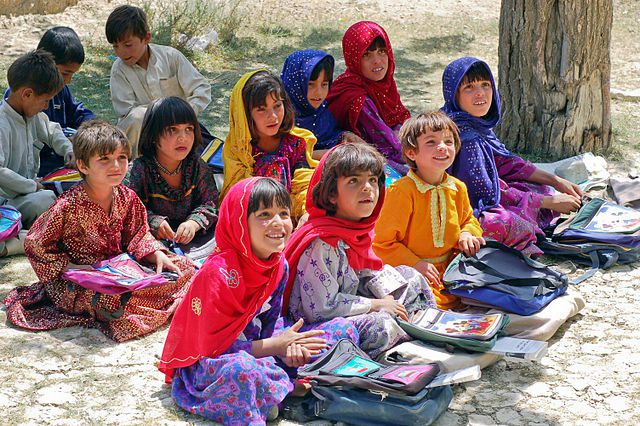
Public Domain
One difficulty with this definition is the meaning of “evangelical.” The term is politically loaded in the United States; yet, with that dynamic aside, “evangelical” seems to be something determined in the eye of the beholder. Certain conservative evangelicals will likely consider other groups insufficiently “evangelical.”
Another term, “unengaged unreached people groups,” refers to “those that are less than 2 percent evangelical and have no existing missionary efforts among them.” In recent years, mission agencies have shifted their focus to this “frontier” work.
The article states,
“missions network Finishing the Task has seen the number of ‘unengaged unreached people groups” [UUPGs] drop from 3,300 in 2005 to about 300 in 2019.'”
However, that figure is dubious and I frankly don’t believe it. I have first-hand knowledge of a major mission agency that reckoned a group “engaged” if a church in the United States merely adopted a plan to reach that “unengaged” group.
A similar concern is echoed by Ralph Winters’ daughter, Rebecca Lewis, herself a missionary and scholar. She states,
While applauding efforts to send workers to new places, Lewis has raised concerns about whether a single worker is enough to consider a group engaged and take it off the list.
In effect, the use of UPG and UUPG language has become a fund-raising ploy as much as a strategic tool.
Definitions Determine Strategy
Another quote raises additional questions.
“We have to ask the question, ‘What sort of task are we trying to finish anyways?’ ” said Dusty Hoffman, global evangelism strategist for the Issachar Initiative and Finishing the Task. “In finishing the task, are we trying to finish the whole Great Commission? Not necessarily. We are trying to finish the task of beginning everywhere. We want to try to get first workers into every people group on the planet
The first question concerns the meaning of the “whole Great Commission.” Sadly, evangelicals have reduced the term to simply mean “evangelism” or making converts. If pressed, I’m certain some mission leaders would deny this charge, but if we examine their priorities and strategies, I think we would see otherwise.
The second question involves the phrase “people group,” a term used in mission circles to referring generally to ethnic groups and the terms ethnos (“nations”), found in Matthew’s “Great Commission” passage (Matt 28:18-20). Scholars have increasingly questioned the correlation. I’ll briefly mention just a few reasons.
1. The linguistic category of “ethnicity” itself is a relatively modern creation. It is questionable that ancient biblical persons used ethnos to mean what we mean by ethnicity.
2. In light of globalization and intermarriage, one must ask what it means to have one ethnicity and not another.
3. Many biblical scholars argue that ethnos, often translated “Gentiles,” merely refers to non-Jews and is not specific to the ethnolinguistic groups demarcated by anthropologists. This is the explicit subject of a chapter, written by Jarvis Williams, in a new book titled World Mission: Theology, Strategy, and Current Issues. The book seeks to integrate biblical theology and global missions.
In response to this language problem, some has suggested we not speak of “people groups,” but rather “communities.”
Much more could be said. I urge us to reflect on the ways that our language and classifications impact our mission strategy, deployment of personnel, and promotion of missions.
Previous Post

May 22, 2019
Short Video Introduction to "Reading Romans with Eastern Eyes"
Next Post

May 29, 2019 The Problem with Old Half-Truths about the New Perspective
Browse Our Archives
Select a Category Atonement Biblical Theology Book Reviews China Chinese Church Chinese Culture Chinese Language Collectivism Contextualization Culture (General) Ecclesiology Evangelism Gospel Honor & Shame (Face) Interpretation/Exegesis Justification/Righteousness Missiology Mission Methods One Gospel for All Nations Other Practical Contextualization Reading Romans with Eastern Eyes Resources Romans Salvation (General) Saving God's Face Seeking God's Face The Cross in Context Theological Contextualization Theological Education Theology Uncategorized
Select a Month October 2026 September 2026 August 2026 July 2026 June 2026 May 2026 April 2026 March 2026 February 2026 January 2026 December 2025 November 2025 October 2025 September 2025 August 2025 July 2025 June 2025 May 2025 April 2025 March 2025 February 2025 January 2025 December 2024 November 2024 October 2024 September 2024 August 2024 July 2024 June 2024 May 2024 April 2024 March 2024 February 2024 January 2024 December 2023 November 2023 October 2023 September 2023 August 2023 July 2023 June 2023 May 2023 April 2023 March 2023 February 2023 January 2023 December 2022 November 2022 October 2022 September 2022 August 2022 July 2022 June 2022 May 2022 April 2022 March 2022 February 2022 January 2022 December 2021 November 2021 October 2021 September 2021 August 2021 July 2021 June 2021 May 2021 April 2021 March 2021 February 2021 January 2021 December 2020 November 2020 October 2020 September 2020 August 2020 July 2020 June 2020 May 2020 April 2020 March 2020 February 2020 January 2020 December 2019 November 2019 October 2019 September 2019 August 2019 July 2019 June 2019 May 2019 April 2019 March 2019 February 2019 January 2019 December 2018 November 2018 October 2018 September 2018 August 2018 July 2018 June 2018 May 2018 April 2018 March 2018 February 2018 January 2018 December 2017 November 2017 October 2017 September 2017 August 2017 July 2017 June 2017 May 2017 April 2017 March 2017 February 2017 January 2017 December 2016 November 2016 October 2016 September 2016 August 2016 July 2016 June 2016 May 2016 April 2016 March 2016 February 2016 January 2016 December 2015 November 2015 October 2015 September 2015 August 2015 July 2015 June 2015 May 2015 April 2015 March 2015 February 2015 January 2015 December 2014 November 2014 October 2014 September 2014 August 2014 July 2014 June 2014 May 2014 April 2014 March 2014 February 2014 January 2014 December 2013 November 2013 October 2013 September 2013 August 2013 July 2013 June 2013 May 2013 April 2013 March 2013 February 2013 January 2013 December 2012 November 2012
Follow Us!
TAKE THE
Religious Wisdom Quiz
What animal spoke to Balaam?
Select your answer to see how you score.
A donkey A lamb A lion A dove
Books by This Author Books by Brad Vaughn
Related posts from Saving God's Face
How Technique Undermines Mission
God both exceeds and undermines our expectations

Implications of Dignity, Honor, and Face Cultures for...
Should multiplication be the goal of missions?
TRENDING AT PATHEOS Evangelical

Swimfan: Forgotten Aughts Pleasures
This is a recovery effort. In 2002, My Big Fat Greek Wedding...

Top Three Anti-Catholic Lies About Catholicism
This is my initial transcript for the video, "THE 3 WORST...

Pope Leo Celebrates Mass for Nurses & Docs...
I don't have any idea how he did it, but Pope Leo...

The Sermon on the Mount, Part I: Matthew...
The Sermon on the Mount, Part I (Matthew 4:12-5:12) St. Matthew moves...

What's up from Crossway: Reviewing some of their latest A few weeks...

Janie Learns the Way of the Cross: A...
Teaching children about Jesus' Passion can be challenging. Many parents and educators...
view all Evangelical blogs
Ad-Free & Subscriber Log-In Subscription Support
- About Us
- 2026 Calendar
- Videos
- Podcasts
- Library of World Religions
- Faith In Media Tracker
- Advertise With Us
- Write for Us
- Privacy Policy
- Terms of Service
- Do Not Sell My Data
- Contact Us
- Radiant Digital
- Manage Newsletter Subscriptions
- Unsubscribe From Notifications
- Sitemap
Copyright 2008-2026, Patheos. All rights reserved.
Subscription Support Ad-Free & Subscriber Log-In
Follow Patheos