
BuddhistCatholicContemplativeEvangelicalGeneral ChristianHinduJewishLatter-day SaintMuslimNew VisionsProgressive Christian
Beliefs
- Buddhist
- Catholic
- Contemplative
- Evangelical
- General Christian
- Hindu
- Jewish
- Latter-day Saint
- More Voices
- Muslim
- New Visions
- Pagan
- Progressive Christian
Topics
- Religion News
- Food and Religion
- Sports and Religion
- Religious Art
- Religious Music and Entertainment
- Religious Events
- History and Religion
- Style and Religion
- Politics and Religion
- Women in Religion
- Recreation Outdoors and Religion
- Business Finance and Religion
- Careers Workplace and Religion
- Education and Religion
- Family Parenting and Religion
- Health Fitness and Religion
- Home and Religion
- Relationships and Religion
- Technology and Religion
- Travel and Religion
Columnists
- Buddhist Columnists
- Business Finance and Religion Columnists
- Careers Workplace and Religion Columnists
- Catholic Columnists
- Contemplative Columnists
- Education and Religion Columnists
- Evangelists Columnists
- Family Parenting and Religion Columnists
- General Christian Columnists
- Health Fitness and Religion Columnists
- Hindu Columnists
- History and Religion Columnists
- Home and Religion Columnists
- Jewish Columnists
- More Voices Columnists
- Latter Day Columnists
- Muslim Columnists
- New Visions Columnists
- Nonreligious Columnists
- Pagan Columnists
- Politics and Religion Columnists
- Progressive Columnists
- Recreation Outdoors and Religion Columnists
- Relationships and Religion Columnists
- Religion News Columnists
- Religious Art Columnists
- Religious Events Columnists
- Religious Music and Entertainment Columnists
- Sports and Religion Columnists
- Style and Religion Columnists
- Technology and Religion Columnists
- Travel and Religion Columnists
- Women in Religion Columnists
Resource Library
- 2026 Calendar
- Library of World Religions
- The 100 Most Holy Places on Earth
- Patheos Answers
- Podcasts
- Videos
- Faith Leaders Database
- Anglican Episcopalian
- Bahai
- Baptist
- Buddhism
- Christianity
- Confucianism
- Eastern Orthodoxy
- Hinduism
- Holiness and Pentecostal
- ISKCON
- Islam
- Judaism
- Lutheran
- Methodist
- The Church of Jesus Christ of Latter-day Saints
- New Age
- Paganism
- Presbytarian and Reformed
- Protestantism
- Religion Behind the Scenes
- Roman Catholic
- Scientology
- Shia Islam
- Sikhism
- Sufism
- Sunni Islam
- Taoism
- Zen
- See all religions
Research Tools
 Ad-Free & Subscriber Log-In Subscription Support
Ad-Free & Subscriber Log-In Subscription Support
Follow Patheos 

- Trending:
- Forgiveness
- |
- Marriage
- |
- Consciousness
- |
- Death Penalty
- |
- Election
- |
- Halloween

-
Tools
-
Support the Work
- Home
- Evangelical
- Interview with Scott Moreau about Contextualization
Interview with Scott Moreau about Contextualization
Last updated on: May 15, 2019 at 12:30 am by Brad Vaughn
Interview with Scott Moreau about Contextualization 2019-04-27T13:33:20-07:00 Brad Vaughn
Patheos Explore the world's faith through different perspectives on religion and spirituality! Patheos has the views of the prevalent religions and spiritualities of the world.
When I began reading Scott Moreau’s Contextualizing the Faith: A Holistic Approach (2018), I immediately wanted to let everyone know about it. He is a well-recognized expert on contextualization. He is the Academic Dean of Wheaton College Graduate School & Professor of Intercultural Studies. I recently interviewed Scott and today I share with you his responses.
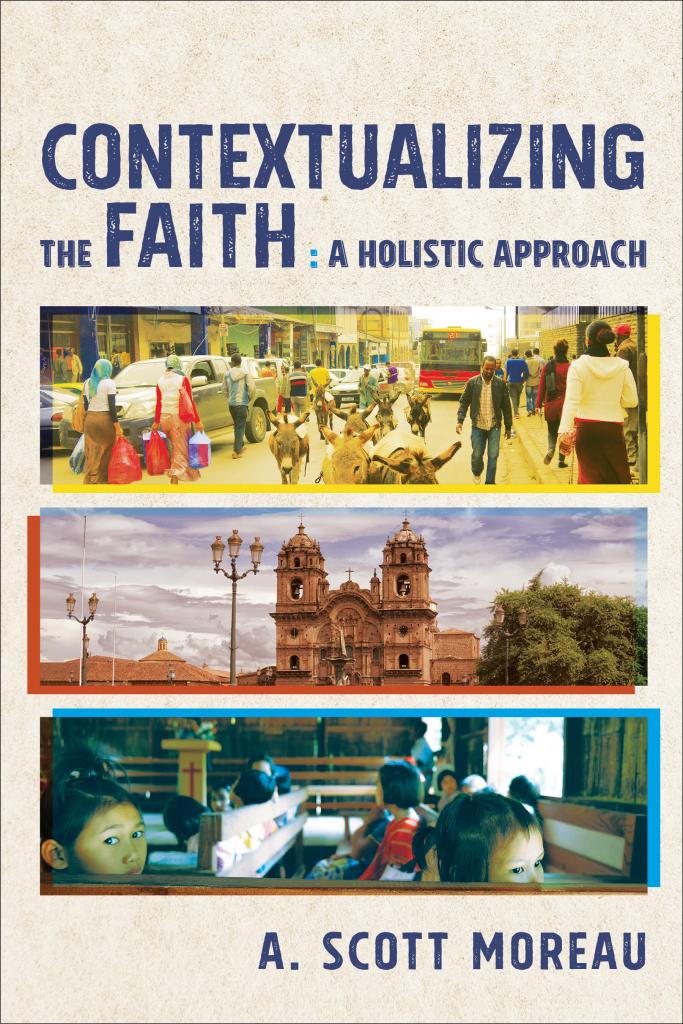
Many articles and books address the topic of contextualization. What motivated you to write this book? How does this project differ from other books on the subject?
I am reasonably familiar with most of the literature related to contextualization having followed it over the past several decades. Generally, the bulk of the literature on contextualization has tended to focus on theology—with a subtle underlying assumption that if we get the theology right everything else will fall into place I disagree with that assumption.
Further, I have not yet been able to find a single textbook that dives into how to contextualize or areas to contextualize in a cohesive and holistic fashion. Over the past 2 decades as I had been teaching and continuing to wrestle with the model I lay out in the book I realized that this would be a helpful model for many who are serving in cross cultural settings.
One of the primary differences between this book and other books on contextualization is the systematic exploration of dimensions of the Christian life that need contextual thinking and action. My hope and intention is that this will be a text that can be used by practitioners, church and mission leaders, and in classrooms.
How would you summarize the book’s thesis? What the book attempt to do?
The book explores contextualization, which I understand as everything that the church does. In teaching on contextualization I was frustrated by the fact that I had no way to cohesively explore everything that the church does without it being a mishmash of ideas thoughts and actions. In this book, I assume that contextualization can be examined in a framework of 7 dimensions (social, mythic, ethical, artistic, ritual, experiential, and doctrinal) and explore each of those in turn.
What did you find most challenging in writing Contextualizing the Faith?
Keeping the book under 100,000 words! So much can be written on each chapter, and so many examples can be found in the global church to explore. For example, in the theological dimension, I focused on Christology in African theologies—one topic from one continent. While this stands as an example of a crucial area for contextual thought, it clearly is only the tip of the proverbial iceberg in terms of what could be profitably examined.
Are there certain things in the book that you expect will be particularly controversial or challenging for readers?
For some, the fact that I try not to take sides in the current debates swirling around the globe (e.g., insider movements)—but explore them on their own terms. Others may be challenged by the examples I use (e.g., Christian Ashrams). And still others may not be satisfied with my systematic approach—it may smack too much of a ‘scientific’ approach, though having been trained in physics, I do not see the approach as scientific at all—only organized!
How do you envision people using this book or applying its insights?
I hope it generates new ideas for people who may be “stuck” at a particular stage of ministry or at least spark discussion and better thinking for those involved in some of the more contentious areas of ministry today. I use many examples from the global church in the book to help people see that this is not all theoretical—it is already happening across the globe whether or not people are following the outline I use in the book.
This book touches on a wide range of topics. Certainly, biblically faithful and culturally meaningful contextualization is a group effort. Given the breadth of areas you address in the book, how might mission agencies and schools improve the way they train missionaries?
I hope they will take advantage of the areas of preparation that are largely off-radar today. For example, in many societies ritual is a vital part of a religious life—and yet many evangelicals (as I explain in the book) consciously try to discard ritual in what might be seen as a historical knee-jerk reaction to the ritualism in both Catholicism and mainline churches in the West.
I may well be reading to much into this, but it was certainly my personal experience—I equated ritual with “dead, dry, boring” rather than seeing it as part of how God has made us as human beings and something to be consciously utilized in discipleship and spiritual development.
What are other books or resources that you have found especially helpful on this topic? Are there any works that you think complement Contextualizing the Faith?
I’m sorry to promote myself again, but my earlier work Contextualization in World Missions is a good companion volume. In that book, I work through evangelical approaches on contextualization and then map out 2490 evangelical examples of contextualization.
There are many good books focusing on a particular geographical area (Living Water in an Indian Bowl) or a particular issue (Majority World Theologies) or mapping out biblical approaches (Contextualization in the New Testament).
Previous Post

May 8, 2019
7 Reasons Why Sinicization is Not Rhetoric This Time
Next Post

May 22, 2019 Short Video Introduction to "Reading Romans with Eastern Eyes"
Browse Our Archives
Select a Category Atonement Biblical Theology Book Reviews China Chinese Church Chinese Culture Chinese Language Collectivism Contextualization Culture (General) Ecclesiology Evangelism Gospel Honor & Shame (Face) Interpretation/Exegesis Justification/Righteousness Missiology Mission Methods One Gospel for All Nations Other Practical Contextualization Reading Romans with Eastern Eyes Resources Romans Salvation (General) Saving God's Face Seeking God's Face The Cross in Context Theological Contextualization Theological Education Theology Uncategorized
Select a Month October 2026 September 2026 August 2026 July 2026 June 2026 May 2026 April 2026 March 2026 February 2026 January 2026 December 2025 November 2025 October 2025 September 2025 August 2025 July 2025 June 2025 May 2025 April 2025 March 2025 February 2025 January 2025 December 2024 November 2024 October 2024 September 2024 August 2024 July 2024 June 2024 May 2024 April 2024 March 2024 February 2024 January 2024 December 2023 November 2023 October 2023 September 2023 August 2023 July 2023 June 2023 May 2023 April 2023 March 2023 February 2023 January 2023 December 2022 November 2022 October 2022 September 2022 August 2022 July 2022 June 2022 May 2022 April 2022 March 2022 February 2022 January 2022 December 2021 November 2021 October 2021 September 2021 August 2021 July 2021 June 2021 May 2021 April 2021 March 2021 February 2021 January 2021 December 2020 November 2020 October 2020 September 2020 August 2020 July 2020 June 2020 May 2020 April 2020 March 2020 February 2020 January 2020 December 2019 November 2019 October 2019 September 2019 August 2019 July 2019 June 2019 May 2019 April 2019 March 2019 February 2019 January 2019 December 2018 November 2018 October 2018 September 2018 August 2018 July 2018 June 2018 May 2018 April 2018 March 2018 February 2018 January 2018 December 2017 November 2017 October 2017 September 2017 August 2017 July 2017 June 2017 May 2017 April 2017 March 2017 February 2017 January 2017 December 2016 November 2016 October 2016 September 2016 August 2016 July 2016 June 2016 May 2016 April 2016 March 2016 February 2016 January 2016 December 2015 November 2015 October 2015 September 2015 August 2015 July 2015 June 2015 May 2015 April 2015 March 2015 February 2015 January 2015 December 2014 November 2014 October 2014 September 2014 August 2014 July 2014 June 2014 May 2014 April 2014 March 2014 February 2014 January 2014 December 2013 November 2013 October 2013 September 2013 August 2013 July 2013 June 2013 May 2013 April 2013 March 2013 February 2013 January 2013 December 2012 November 2012
Follow Us!
TAKE THE
Religious Wisdom Quiz
Who healed a blind man by making mud and placing it on his eyes?
Select your answer to see how you score.
Jesus Elijah Moses Peter
Books by This Author Books by Brad Vaughn
Related posts from Saving God's Face
Paul’s Contextualization of Artemis for the Ephesians

Bathsheba, #MeToo, and Eisegesis

I'm launching 3 online courses!
What's your political denomination?
TRENDING AT PATHEOS Evangelical

The First Eucharistic Controversy: Christ’s Real Presence
For Catholics, the Eucharist is the source and summit of the Christian...

What a Stop Sign Can Teach Us About...
How to Make a Decision When You Can't Hear God Main point:...

Archdiocese Hosts Military Marriage Retreat in Germany
RASTATT, Germany — The transient military lifestyle, with its frequent deployments and...

Nearly every morning, I make the drive to Detroit with my high-school-age...

The Real AI Story Is Adoption Without Trust
Artificial intelligence has crossed a political threshold. It is no longer a...

A new article, written by Jeff Lindsay and Gale L. Pooley,...
view all Evangelical blogs
Ad-Free & Subscriber Log-In Subscription Support
- About Us
- 2026 Calendar
- Videos
- Podcasts
- Library of World Religions
- Faith In Media Tracker
- Advertise With Us
- Write for Us
- Privacy Policy
- Terms of Service
- Do Not Sell My Data
- Contact Us
- Radiant Digital
- Manage Newsletter Subscriptions
- Unsubscribe From Notifications
- Sitemap
Copyright 2008-2026, Patheos. All rights reserved.
Subscription Support Ad-Free & Subscriber Log-In
Follow Patheos