
BuddhistCatholicContemplativeEvangelicalGeneral ChristianHinduJewishLatter-day SaintMuslimNew VisionsProgressive Christian
Beliefs
- Buddhist
- Catholic
- Contemplative
- Evangelical
- General Christian
- Hindu
- Jewish
- Latter-day Saint
- More Voices
- Muslim
- New Visions
- Pagan
- Progressive Christian
Topics
- Religion News
- Food and Religion
- Sports and Religion
- Religious Art
- Religious Music and Entertainment
- Religious Events
- History and Religion
- Style and Religion
- Politics and Religion
- Women in Religion
- Recreation Outdoors and Religion
- Business Finance and Religion
- Careers Workplace and Religion
- Education and Religion
- Family Parenting and Religion
- Health Fitness and Religion
- Home and Religion
- Relationships and Religion
- Technology and Religion
- Travel and Religion
Columnists
- Buddhist Columnists
- Business Finance and Religion Columnists
- Careers Workplace and Religion Columnists
- Catholic Columnists
- Contemplative Columnists
- Education and Religion Columnists
- Evangelists Columnists
- Family Parenting and Religion Columnists
- General Christian Columnists
- Health Fitness and Religion Columnists
- Hindu Columnists
- History and Religion Columnists
- Home and Religion Columnists
- Jewish Columnists
- More Voices Columnists
- Latter Day Columnists
- Muslim Columnists
- New Visions Columnists
- Nonreligious Columnists
- Pagan Columnists
- Politics and Religion Columnists
- Progressive Columnists
- Recreation Outdoors and Religion Columnists
- Relationships and Religion Columnists
- Religion News Columnists
- Religious Art Columnists
- Religious Events Columnists
- Religious Music and Entertainment Columnists
- Sports and Religion Columnists
- Style and Religion Columnists
- Technology and Religion Columnists
- Travel and Religion Columnists
- Women in Religion Columnists
Resource Library
- 2026 Calendar
- Library of World Religions
- The 100 Most Holy Places on Earth
- Patheos Answers
- Podcasts
- Videos
- Faith Leaders Database
- Anglican Episcopalian
- Bahai
- Baptist
- Buddhism
- Christianity
- Confucianism
- Eastern Orthodoxy
- Hinduism
- Holiness and Pentecostal
- ISKCON
- Islam
- Judaism
- Lutheran
- Methodist
- The Church of Jesus Christ of Latter-day Saints
- New Age
- Paganism
- Presbytarian and Reformed
- Protestantism
- Religion Behind the Scenes
- Roman Catholic
- Scientology
- Shia Islam
- Sikhism
- Sufism
- Sunni Islam
- Taoism
- Zen
- See all religions
Research Tools
 Ad-Free & Subscriber Log-In Subscription Support
Ad-Free & Subscriber Log-In Subscription Support
Follow Patheos 

- Trending:
- Forgiveness
- |
- Marriage
- |
- Consciousness
- |
- Death Penalty
- |
- Election
- |
- Halloween

-
Tools
-
Support the Work
- Home
- Evangelical
- From the Shame of Vainglory to Christ’s Glory
From the Shame of Vainglory to Christ’s Glory
Last updated on: April 17, 2019 at 7:43 am by Brad Vaughn
From the Shame of Vainglory to Christ’s Glory 2019-04-17T07:43:18-07:00 Brad Vaughn
Patheos Explore the world's faith through different perspectives on religion and spirituality! Patheos has the views of the prevalent religions and spiritualities of the world.
This is the second post in a series by guest contributer Mikko Sivonen. When researching for my upcoming book Reading Romans with Eastern Eyes, I stumbled upon a fantastic dissertation by Mikko Sivonen titled “The Doxa Motif in Paul: A Narrative Approach to the Vindication of the Glory of God through Christ.” He serves with the IMB in Finland. His ThD in New Testament is from the University of Helsinki. He teaches and trains pastors and church planters in biblical studies at Agricola Theological Institute (www.ati.fi). He and his wife have 4 children.
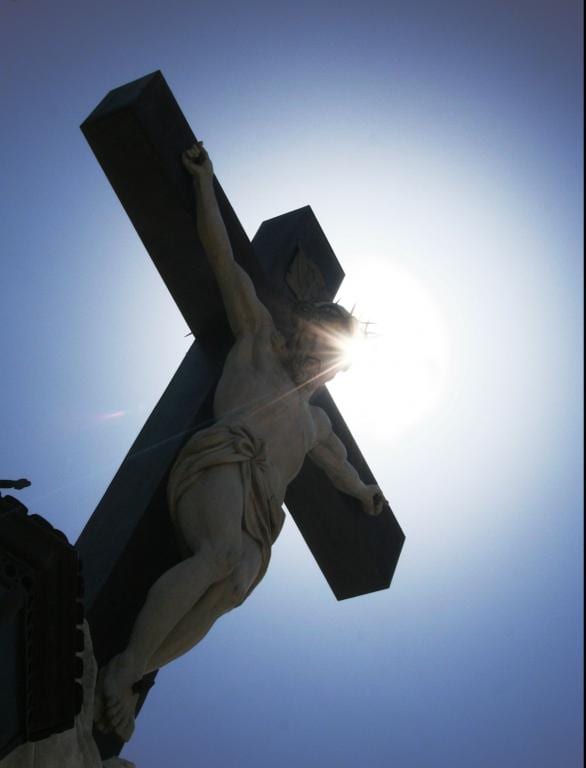
Credit: Public Domain
My previous post highlighted the importance of the glory motif in Paul’s narrative. The Last Adam, Israel’s Messiah, accurately displays God’s glory. His perfect representation of God and man vindicates God’s glory. As a result, Christ calls his followers to forsake their own shame and obtain his glory.
In the following, I briefly explore a few ways that believers are called to glorify God through Christ in Paul’s narrative.
From the Glory of Self to the Glory of Christ
Paul calls believers not to do anything “from selfish ambition or conceit but in humility count others more significant than yourselves” (Phil 2:3; cf. Gal. 5:26).
“Conceit” comes from the Greek word meaning “empty glory” (keno doxia). The old Adamic way of life, where one is occupied with exalting oneself at the expense of others, is the fruit of idolatry and fallenness. Christ redeems people from idolatry. His humiliation, obedience, death, and exaltation vindicate God’s glory and places him in a position worthy of worship (Phil 2:6-10; cf. Isa 45:22-25).
Paul not only calls believers to honor Christ over themselves; they are to honor others over themselves.
Seeking one’s own glory is a distinctive of the first-century Mediterranean world, wherein people sought “honor as a preeminently public commodity.”[1] For example, emperor worship reflects this vainglorious mindset. Yet, Paul calls his followers to honor Christ over Caesar.
Additionally, Paul uses glory and shame to contrast the destiny of Christ-believers with that of his opponents (Phil 3:17-21). While the destiny of Paul and his followers is participation in God’s glory, his opponent’s destiny is a shame. Rejecting Christ brings his opponents everlasting shame. By contrast, to obtain Christ’s glory, one must be humble, giving up one’s own rights in light of Christ.
This is what it means to be glorified: to be transformed into the likeness of his body of glory. Not to lose material humanness but to gain Christ’s character of humility and glory.
From Sexual Shame to Marital Honor
Glory shapes Paul’s restored sexual ethics. His vision seems to reflect the notion of sexuality in Genesis 1-3 (cf. Rom 1:21-28; 1 Cor 6:12-20; 11:3-11).
For Paul, sexual activity between members of the same sex is a consequence of idolatry. He argues from the Genesis narrative, claiming that such behavior does not glorify God (Rom 1:21-28). Paul also warns believers not to practice porneia because sexual engagement is patterned after the creational narrative. Furthermore, it reflects the unity of Christ and the church for the sake of God’s glory.
In 1 Corinthians, Paul engages the issue of sexuality in relation to doxa [glory]. In 1 Corinthians 6:12-20, Paul applies the creational sexual ethic to his contemporary culture. He appeals to the glory of God to motivate his audience to have appropriate sexual relationships. So, the phrase “glorify God in your body”, in context, primarily concerns your sex life.
Later in 1 Corinthians 11, we again see Paul’s rhetoric of shame and honor. He emphasizes the importance of defining and portraying oneself as husband and woman in public worship. Just as uncovered hair brings shames on a woman’s head (1 Cor 11:5), so too is it shameful to shave her head (1 Cor 11:6). When a man covers his head, he too brings shameful on his head (1 Cor 11:4). Paul asks rhetorically: does not nature itself teach that long hair is dishonoring (1 Cor 11:14)?
Avoiding the appearance of shame in light of the social convention is important to Paul. However, honor and shame before God and Christ ultimately govern this passage. The lack of head covering shames a woman’s husband in the public worship setting because it is sexually suggestive, even if unintentional. What makes hairstyle a serious issue is not sexuality. Rather, Paul leads the readers to a more fundamental consideration:
what attire ultimately honors Christ?
Paul wants the physical attire of believers to reflect the creational order; namely, the doxa of maleness and femaleness inherent to being made in God’s image. For Paul, equality does not negate a distinction between the sexes, which are rooted in creation (1 Cor 11:11-12). This difference is foundational for Paul’s ethical teaching concerning corporate worship in 1 Corinthians 11:2-16. Indeed, allowing gender distinctions to remain unclear goes against the creative order whereby humankind reflects the doxa of God. Therefore, Paul highlights the importance of “gender differentiation” in Corinthians’ worship setting.
From a Focus on Self to Being Faithful in Service
In Romans 1:17, Paul famously states, “I am not ashamed of the gospel for it is the power of God for salvation to everyone believes.” In 2 Corinthians, he calls Titus and his company “the glory of Christ” (2 Cor 8:23). They are pagan-background messengers sent from churches that bring a love offering to Jerusalem believers.
They are called the doxa of Christ because of their Christ-like character and attitude. Their faithful labor alongside Paul reveals their transformation such that they now reflect Christ’s glory. This delegation displays the attitude of Christ and offers an example to other believers. Their offering highlights the importance of unity between Jews and Gentile believers, for it demonstrates the glory of God.
The message of Christ’s glory has shaped their lives.
From Current Suffering to Future Glory
Paul invokes Christ-believers to conform to the image and doxa of Christ in their present lives. This conformity takes place through suffering. Identification with Christ’s glory is also identification with his suffering, and thus functions as a motivation in the midst of persecution.
“Provided we suffer with him in order that we may also be glorified with Him” (Rom. 8:17). Of course, the suffering of Christ’s followers is not substitutionary; rather, believers’ suffering is transformative and preparatory for the ultimate glorification.
Summary
The vindication of God’s glory through Christ has significant implications for Christ’s followers. In this post, I have briefly explored four of them.
First, Paul calls Christ-followers away from self-exaltation and the worship of cultural icons to glorify Christ. This requires humility.
Second, Christ-believers honor the Lord when their sexual activity remains within marriage, the faithful male-female covenant relationship established at creation.
Third, when the message of Christ’s glory thoroughly shapes the believers’ lives, they are called “the glory of Christ.” This transformation moves them away from passive self-focus. Instead, they become a missional, other-centered, and service-oriented community of believers.
Finally, present suffering prepares and transforms believers into future glory.
[1] Joseph Hellermann, Reconstructing Honor in Roman Philippi: Carmen Cristi as Cursus (Grand Rapids, Eerdmans, 2005), 35.
Previous Post

April 11, 2019
Writing Worship Songs in Chinese (when it’s your second language)
Next Post
April 24, 2019 Endorsements and Pre-ordering Reading Romans with Eastern Eyes
Browse Our Archives
Select a Category Atonement Biblical Theology Book Reviews China Chinese Church Chinese Culture Chinese Language Collectivism Contextualization Culture (General) Ecclesiology Evangelism Gospel Honor & Shame (Face) Interpretation/Exegesis Justification/Righteousness Missiology Mission Methods One Gospel for All Nations Other Practical Contextualization Reading Romans with Eastern Eyes Resources Romans Salvation (General) Saving God's Face Seeking God's Face The Cross in Context Theological Contextualization Theological Education Theology Uncategorized
Select a Month October 2026 September 2026 August 2026 July 2026 June 2026 May 2026 April 2026 March 2026 February 2026 January 2026 December 2025 November 2025 October 2025 September 2025 August 2025 July 2025 June 2025 May 2025 April 2025 March 2025 February 2025 January 2025 December 2024 November 2024 October 2024 September 2024 August 2024 July 2024 June 2024 May 2024 April 2024 March 2024 February 2024 January 2024 December 2023 November 2023 October 2023 September 2023 August 2023 July 2023 June 2023 May 2023 April 2023 March 2023 February 2023 January 2023 December 2022 November 2022 October 2022 September 2022 August 2022 July 2022 June 2022 May 2022 April 2022 March 2022 February 2022 January 2022 December 2021 November 2021 October 2021 September 2021 August 2021 July 2021 June 2021 May 2021 April 2021 March 2021 February 2021 January 2021 December 2020 November 2020 October 2020 September 2020 August 2020 July 2020 June 2020 May 2020 April 2020 March 2020 February 2020 January 2020 December 2019 November 2019 October 2019 September 2019 August 2019 July 2019 June 2019 May 2019 April 2019 March 2019 February 2019 January 2019 December 2018 November 2018 October 2018 September 2018 August 2018 July 2018 June 2018 May 2018 April 2018 March 2018 February 2018 January 2018 December 2017 November 2017 October 2017 September 2017 August 2017 July 2017 June 2017 May 2017 April 2017 March 2017 February 2017 January 2017 December 2016 November 2016 October 2016 September 2016 August 2016 July 2016 June 2016 May 2016 April 2016 March 2016 February 2016 January 2016 December 2015 November 2015 October 2015 September 2015 August 2015 July 2015 June 2015 May 2015 April 2015 March 2015 February 2015 January 2015 December 2014 November 2014 October 2014 September 2014 August 2014 July 2014 June 2014 May 2014 April 2014 March 2014 February 2014 January 2014 December 2013 November 2013 October 2013 September 2013 August 2013 July 2013 June 2013 May 2013 April 2013 March 2013 February 2013 January 2013 December 2012 November 2012
Follow Us!
TAKE THE
Religious Wisdom Quiz
What Christian group follows the Nicene Creed?
Select your answer to see how you score.
Baptists Orthodox Jehovah’s Witnesses Seventh-day Adventists
Books by This Author Books by Brad Vaughn
Related posts from Saving God's Face

No King forgets his crown. Why do we?

Recovering Moral Vision Between Shame and Shamelessness

Refuge, Confession, and the End of Shame

Psalm 25 and the Fear of Being Put...
TRENDING AT PATHEOS Evangelical

Letters on Living the Faith by C.S. Lewis
Most of us met C.S. Lewis as a public intellectual. Mere Christianity....

When Halloween Unmasks Married Hearts
Written by Dr. David K. Ewen from Eternal Truth Bible College Behind...

Aristotle. He’s been called the father of logic, the father of the...

Methodist Central Hall and Westminster Abbey
Situated on the same square is Methodist Central Hall and Westminster Abbey. ...

57th Dove Awards Honor Dolly Parton, Crown New...
On gospel music’s biggest night, the 57th annual GMA Dove Awards honored...

The First Eucharistic Controversy: Christ’s Real Presence
For Catholics, the Eucharist is the source and summit of the Christian...
view all Evangelical blogs
Ad-Free & Subscriber Log-In Subscription Support
- About Us
- 2026 Calendar
- Videos
- Podcasts
- Library of World Religions
- Faith In Media Tracker
- Advertise With Us
- Write for Us
- Privacy Policy
- Terms of Service
- Do Not Sell My Data
- Contact Us
- Radiant Digital
- Manage Newsletter Subscriptions
- Unsubscribe From Notifications
- Sitemap
Copyright 2008-2026, Patheos. All rights reserved.
Subscription Support Ad-Free & Subscriber Log-In
Follow Patheos