
BuddhistCatholicContemplativeEvangelicalGeneral ChristianHinduJewishLatter-day SaintMuslimNew VisionsProgressive Christian
Beliefs
- Buddhist
- Catholic
- Contemplative
- Evangelical
- General Christian
- Hindu
- Jewish
- Latter-day Saint
- More Voices
- Muslim
- New Visions
- Pagan
- Progressive Christian
Topics
- Religion News
- Food and Religion
- Sports and Religion
- Religious Art
- Religious Music and Entertainment
- Religious Events
- History and Religion
- Style and Religion
- Politics and Religion
- Women in Religion
- Recreation Outdoors and Religion
- Business Finance and Religion
- Careers Workplace and Religion
- Education and Religion
- Family Parenting and Religion
- Health Fitness and Religion
- Home and Religion
- Relationships and Religion
- Technology and Religion
- Travel and Religion
Columnists
- Buddhist Columnists
- Business Finance and Religion Columnists
- Careers Workplace and Religion Columnists
- Catholic Columnists
- Contemplative Columnists
- Education and Religion Columnists
- Evangelists Columnists
- Family Parenting and Religion Columnists
- General Christian Columnists
- Health Fitness and Religion Columnists
- Hindu Columnists
- History and Religion Columnists
- Home and Religion Columnists
- Jewish Columnists
- More Voices Columnists
- Latter Day Columnists
- Muslim Columnists
- New Visions Columnists
- Nonreligious Columnists
- Pagan Columnists
- Politics and Religion Columnists
- Progressive Columnists
- Recreation Outdoors and Religion Columnists
- Relationships and Religion Columnists
- Religion News Columnists
- Religious Art Columnists
- Religious Events Columnists
- Religious Music and Entertainment Columnists
- Sports and Religion Columnists
- Style and Religion Columnists
- Technology and Religion Columnists
- Travel and Religion Columnists
- Women in Religion Columnists
Resource Library
- 2026 Calendar
- Library of World Religions
- The 100 Most Holy Places on Earth
- Patheos Answers
- Podcasts
- Videos
- Faith Leaders Database
- Anglican Episcopalian
- Bahai
- Baptist
- Buddhism
- Christianity
- Confucianism
- Eastern Orthodoxy
- Hinduism
- Holiness and Pentecostal
- ISKCON
- Islam
- Judaism
- Lutheran
- Methodist
- The Church of Jesus Christ of Latter-day Saints
- New Age
- Paganism
- Presbytarian and Reformed
- Protestantism
- Religion Behind the Scenes
- Roman Catholic
- Scientology
- Shia Islam
- Sikhism
- Sufism
- Sunni Islam
- Taoism
- Zen
- See all religions
Research Tools
 Ad-Free & Subscriber Log-In Subscription Support
Follow Patheos 

- Trending:
- Advent
- |
- Forgiveness
- |
- Thanksgiving
- |
- Election
- |
- Seasonal Holidays
- |
- Marriage

-
Tools
-
Support the Work
- Home
- Evangelical
- “Sinicized Christianity” is Not Christianity
“Sinicized Christianity” is Not Christianity
Last updated on: March 20, 2019 at 12:30 am by Brad Vaughn
“Sinicized Christianity” is Not Christianity 2019-03-19T08:13:45-07:00 Brad Vaughn
Patheos Explore the world's faith through different perspectives on religion and spirituality! Patheos has the views of the prevalent religions and spiritualities of the world.

Credit: China Aid
Last year, I suggested that China’s 5-year plan to Sinicize Christianity is political, not biblical. It is syncretism, not contextualization. A year later, we can speak with even more clarity: “Sinicized Christianity” is not Christianity.
Why would I say this?
Christianity Does Not Reject God
As is obvious from my previous post (and for anyone who keeps up with China), the “Sinicization of Christianity” campaign is nothing more than a ploy to cajole Christians to embrace the Chinese Communist Party’s political agenda. The plan regularly uses benign language that seemingly anyone can agree with.
For example, the goals of the Sinicization of Christianity include “social harmony, advancement, and healthy civilization.” Christians are urged to “serve society and perform other solid work by engaging in justice and charitable activities to steadily make progress in stages.” Who could argue with that?
Such goals must be understood in the context. For instance, the 5-year plan states, “The promotion of Sinicization of Christianity must be guided by the core values of socialism.” Consider also comments made this past week by Xu Xiaohong, chairman of the National Committee of the Three-Self Patriotic Movement (TSPM), the government-run body who oversees officially sanctioned churches in China. He said,
“only by continuously promoting and implementing the core values of socialism can our Christianity truly adapt to the socialist society.”[1]
At the core of socialism is an affirmation of atheism. According to socialism, society will only realize its utopian ideal when people have cast aside their beliefs of God.
By contrast, from a Christian perspective, enduring “social harmony” and “justice” are impossible where God is rejected.
So, sure, Christians also want a flourishing society. But Christians understand social well-being in a quite different way than does the Communist Party, who rejects God.
Christianity Does Not Reject “Foreigners”
There are other ways that Xu Xiaohong’s recent statements contradict anything that resembles biblical or historical Christianity. He seeks to severe all influence on the Chinese church from outsiders. He even revitalized an old saying oft heard during the cultural revolution, “One more Christian, one less Chinese.” Xu adds, “It must be recognized that the surname of the Chinese church is ‘Chinese,’ not ‘Western’.”[2]

Credit: Open Doors USA
Such xenophobia seems to stem from a misunderstanding of Christian history. Xu errs when he equates Christianity with the West. Christianity is not a “Western” religion. Historically, it is deeply rooted in the ancient near east, whose cultural perspective is far more like traditional Chinese culture than the modern West. Furthermore, there is nothing essential to Christianity that comes from the West. One can live a Christian life in India, Africa, or Korea yet not adopt any characteristic rooted in Western culture.
Biblical Christianity is global in nature. Not only do we find Christianity across the world; theologically, the Abrahamic covenant frames the entire biblical narrative. In it, God promises to bless all the nations and so ultimately fulfill his plan for humanity to be fruitful and multiply. Any insistence that the church in Chinese only have Chinese characteristics, free from outside influence, is unbiblical. This could be said of the church at any time and place.
The Church is local, global, and historical. It does not belong to the West or China; it belongs to Christ.
The plan for the Sinicization of Christianity in China is just another aspect of the Party’s attempt to foster nationalist fervor. This plan is not unlike the approach taken by the Germans in the 1930s. The Nazis incrementally absorbed the church into its political machine, all in the name of patriotism. In that context, the “Germanization” of Christianity produces an “Aryan Jesus” that eventually turned against outsiders.
This brand of Christianity is akin to the kind opposed by Paul in Acts, Galatians, and Romans. Judaizers excluded Gentiles unless they became ethnic/national insiders via adherence to the Mosaic Law. In some respect, Chinese leaders who push for a Sinicization of Christianity use similar logic as those early Jews.
Ironically, the official rejects the notion that foreigners should influence the church in China while at the same time an atheist government tries the Sinicize Christianity.
Who is more a foreigner to Christianity than an atheist?
Christianity Does Not Reject the Bible
The Sinicization of Christianity actively seeks to undermine the influence of the Bible on Christians. This agenda is apparent from reading the government’s own words and observing recent developments in China. For example,
The official 5-year plan states,
“Contents of the Bible that are compatible with the core values of socialism should be deeply researched in order to write books that are popular and easy-to-understand.”
The government recognizes inherent incompatibilities between the Bible and socialism. Officials make clear that they wish to use the Bible as a tool to propagate socialism; it is Christian theology that must change, not socialism.

Amazon China search results for Chinese Bible
What is more alarming are the tactics used by police and government officials over the past year. Apparently, Sinicizing Christianity means removing Bibles and limiting access to the Bible. Last Spring, the government banned the selling of Bibles through major retailers such as Taobao, Amazon, JD.com, and elsewhere. The decree came just days after China announced the full plan for the Sinicization of Christianity. Inexplicably, Chinese officials think the Sinicization of Christianity involves having less access to the Bible.
In some sanctioned TSPM (“Three-Self”) churches, the government has removed Bibles from the premises such that parishioners have limited access to the Bible even while at worship services. As a result, local Christians in TSPM churches must adopt “orality” strategies typically used among minority groups and less literate peoples.
Christianity Does Not Reject Children
Last year, officials made clear that Sinicized Christianity does not accept children. China enforced the rule that children are banned from religious meetings. In effect, when it comes to Christianity, the government enforces an “Every Child Left Outside” policy.
In this way, Chinese leaders follow the example of Christ’s disciples. In Mark 10, we read,
10:13 And they were bringing children to him that he might touch them, and the disciples rebuked them. 14 But when Jesus saw it, he was indignant and said to them, “Let the children come to me; do not hinder them, for to such belongs the kingdom of God. 15 Truly, I say to you, whoever does not receive the kingdom of God like a child shall not enter it.” 16 And he took them in his arms and blessed them, laying his hands on them.
Not only is the policy against children antithetical to the Bible; it raises a question. How can Christianity become “Sinicized” when people are limited from learning about Christianity? In reality, the Sinicization of Christianity is a cunning long-term strategy that could just as well be called the “Eradication of Christianity.”
Christianity Does Seek to Subvert Governments
Xu’s alarmist comments reflect his political paranoia. He says,
“The actions by Western anti-China forces that attempt to influence social stability or even subvert the regime of our country are destined to fail.”[3]
Xu seems completely unaware of how apolitical the average Chinese Christian is. Most conflicts between the state and house churches are the sort that could have manifested in non-religious communities. People complain about actions by the government that seem arbitrary or unconstitutional. There is nothing uniquely “Western” about such criticisms.
What is also peculiar is the fact that Chinese officials appear oblivious to passages like Romans 13:1-8, which exhort the church to honor political authorities. In other words, those who subscribe to biblical Christianity do not seek to subvert the government. But, if we are honest, Party leaders, unfortunately, equate any criticism against them with subversion.
What can we learn?
In summary, “Sinicized Christianity” is not Christianity.
The entire plan reminds us of the power of words. The government uses the sort of rhetoric that has become increasingly popular in the West. That is, it has become vogue to use the word “Western” almost like it were a cuss word, as though anything associated with “the West” was bad and oppressive. The government has seized on such sentiments to advocate for a Christianity that is not only independent of Western political influence but free from any outside influence, whether historical or cultural.
Most of “Sinicized Christianity” (as proposed by government officials) stands in contrast to biblical Christianity; yet, we can learn from certain criticisms they press against the church. For sure, Chinese Christians have not contextualized biblical sound theologies to the extent that is possible. Most believers simply accept teachings inherited from Western scholars and missionaries without thinking about what else they themselves could contribute to the global church.
Western missionaries certainly share in the blame. They have not always reflected critically on the influence of the West on their own theology and methods. Missionaries have not always made a concerted effort to contextualize the gospel and train Chinese believers to develop their own contextualized theologies and expressions of Christianity.
Also, much theological training focuses on passing along the right doctrine. However, less attention and labor are dedicated to fostering people’s ability to think critically. Such a task is far more painful for both students and teachers. It is time intensive. It requires more homework and credentialed teachers. However, such growth is necessary for the church in China to reach its full potential.
Perhaps, if we learn these lessons, we will see a “Sinicized Christianity” that is actually Christian.
[1] 只有不断弘扬和践行社会主义核心价值观,我国基督教才能真正与社会主义社会相适应.
[2] 必须认识到,我国教会姓 “中”,不姓 “西”.
[3] 西方反华势力妄图继续通过基督教影响我国社会稳定、甚至颠覆我国政权的行为,注定不会得逞
Previous Post

March 13, 2019
When Good Missionaries Get the Bible Wrong (Part 1)
Next Post

March 27, 2019 When Good Missionaries Get the Bible Wrong (Part 2)
Browse Our Archives
Select a Category Atonement Biblical Theology Book Reviews China Chinese Church Chinese Culture Chinese Language Collectivism Contextualization Culture (General) Ecclesiology Evangelism Gospel Honor & Shame (Face) Interpretation/Exegesis Justification/Righteousness Missiology Mission Methods One Gospel for All Nations Other Practical Contextualization Reading Romans with Eastern Eyes Resources Romans Salvation (General) Saving God's Face Seeking God's Face The Cross in Context Theological Contextualization Theological Education Theology Uncategorized
Select a Month November 2026 October 2026 September 2026 August 2026 July 2026 June 2026 May 2026 April 2026 March 2026 February 2026 January 2026 December 2025 November 2025 October 2025 September 2025 August 2025 July 2025 June 2025 May 2025 April 2025 March 2025 February 2025 January 2025 December 2024 November 2024 October 2024 September 2024 August 2024 July 2024 June 2024 May 2024 April 2024 March 2024 February 2024 January 2024 December 2023 November 2023 October 2023 September 2023 August 2023 July 2023 June 2023 May 2023 April 2023 March 2023 February 2023 January 2023 December 2022 November 2022 October 2022 September 2022 August 2022 July 2022 June 2022 May 2022 April 2022 March 2022 February 2022 January 2022 December 2021 November 2021 October 2021 September 2021 August 2021 July 2021 June 2021 May 2021 April 2021 March 2021 February 2021 January 2021 December 2020 November 2020 October 2020 September 2020 August 2020 July 2020 June 2020 May 2020 April 2020 March 2020 February 2020 January 2020 December 2019 November 2019 October 2019 September 2019 August 2019 July 2019 June 2019 May 2019 April 2019 March 2019 February 2019 January 2019 December 2018 November 2018 October 2018 September 2018 August 2018 July 2018 June 2018 May 2018 April 2018 March 2018 February 2018 January 2018 December 2017 November 2017 October 2017 September 2017 August 2017 July 2017 June 2017 May 2017 April 2017 March 2017 February 2017 January 2017 December 2016 November 2016 October 2016 September 2016 August 2016 July 2016 June 2016 May 2016 April 2016 March 2016 February 2016 January 2016 December 2015 November 2015 October 2015 September 2015 August 2015 July 2015 June 2015 May 2015 April 2015 March 2015 February 2015 January 2015 December 2014 November 2014 October 2014 September 2014 August 2014 July 2014 June 2014 May 2014 April 2014 March 2014 February 2014 January 2014 December 2013 November 2013 October 2013 September 2013 August 2013 July 2013 June 2013 May 2013 April 2013 March 2013 February 2013 January 2013 December 2012 November 2012
Follow Us!
TAKE THE
Religious Wisdom Quiz
What does the Bible say about giving?
Select your answer to see how you score.
Give to get rich God loves a cheerful giver Only give under pressure Never give
Books by This Author Books by Brad Vaughn
Related posts from Saving God's Face

Chinese Christians Have Faith in the Wilderness. Will...
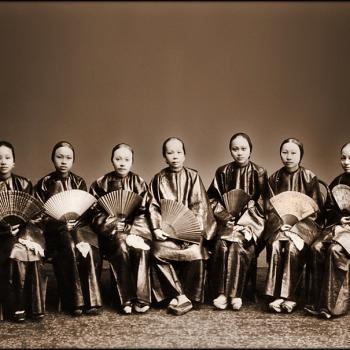
The Ministry of Women in the Chinese Church

"Grace in the City" Shares Sermons from Chinese...

4 Factors Influencing Cultural Adjustment and Retention of...
TRENDING AT PATHEOS Evangelical

Ansley Gordon Brings Faith and Fresh Stories to...
For screenwriter and actress Ansley Gordon, Christmas has always been about more...

Chris Pratt on Veterans, Faith, “The Way of...
For Chris Pratt, service is not something that ends when a person...

Chapter 5, Sarah: The Quest for Safety in...
Open and Relational Theology & Social Psychology About this series: This series...

When Worry Gets You Nowhere, How Can Faith...
Sometimes, we think that by worrying, we can somehow predict the future....

The Wasp And I: Meditations on Repentance
How can we enter the power and joy of the repentant self...

Reflections on the Evangelical Theological Society
As I mentioned before, this year, for the first time since 2005,...
view all Evangelical blogs
Ad-Free & Subscriber Log-In Subscription Support
- About Us
- 2026 Calendar
- Videos
- Podcasts
- Library of World Religions
- Faith In Media Tracker
- Advertise With Us
- Write for Us
- Privacy Policy
- Terms of Service
- Do Not Sell My Data
- Contact Us
- Radiant Digital
- Manage Newsletter Subscriptions
- Unsubscribe From Notifications
- Sitemap
Copyright 2008-2026, Patheos, part of the Radiant Digital network of media brands. All rights reserved.
Subscription Support Ad-Free & Subscriber Log-In
Follow Patheos