
BuddhistCatholicContemplativeEvangelicalGeneral ChristianHinduJewishLatter-day SaintMuslimNew VisionsProgressive Christian
Beliefs
- Buddhist
- Catholic
- Contemplative
- Evangelical
- General Christian
- Hindu
- Jewish
- Latter-day Saint
- More Voices
- Muslim
- New Visions
- Pagan
- Progressive Christian
Topics
- Religion News
- Food and Religion
- Sports and Religion
- Religious Art
- Religious Music and Entertainment
- Religious Events
- History and Religion
- Style and Religion
- Politics and Religion
- Women in Religion
- Recreation Outdoors and Religion
- Business Finance and Religion
- Careers Workplace and Religion
- Education and Religion
- Family Parenting and Religion
- Health Fitness and Religion
- Home and Religion
- Relationships and Religion
- Technology and Religion
- Travel and Religion
Columnists
- Buddhist Columnists
- Business Finance and Religion Columnists
- Careers Workplace and Religion Columnists
- Catholic Columnists
- Contemplative Columnists
- Education and Religion Columnists
- Evangelists Columnists
- Family Parenting and Religion Columnists
- General Christian Columnists
- Health Fitness and Religion Columnists
- Hindu Columnists
- History and Religion Columnists
- Home and Religion Columnists
- Jewish Columnists
- More Voices Columnists
- Latter Day Columnists
- Muslim Columnists
- New Visions Columnists
- Nonreligious Columnists
- Pagan Columnists
- Politics and Religion Columnists
- Progressive Columnists
- Recreation Outdoors and Religion Columnists
- Relationships and Religion Columnists
- Religion News Columnists
- Religious Art Columnists
- Religious Events Columnists
- Religious Music and Entertainment Columnists
- Sports and Religion Columnists
- Style and Religion Columnists
- Technology and Religion Columnists
- Travel and Religion Columnists
- Women in Religion Columnists
Resource Library
- 2026 Calendar
- Library of World Religions
- The 100 Most Holy Places on Earth
- Patheos Answers
- Podcasts
- Videos
- Faith Leaders Database
- Anglican Episcopalian
- Bahai
- Baptist
- Buddhism
- Christianity
- Confucianism
- Eastern Orthodoxy
- Hinduism
- Holiness and Pentecostal
- ISKCON
- Islam
- Judaism
- Lutheran
- Methodist
- The Church of Jesus Christ of Latter-day Saints
- New Age
- Paganism
- Presbytarian and Reformed
- Protestantism
- Religion Behind the Scenes
- Roman Catholic
- Scientology
- Shia Islam
- Sikhism
- Sufism
- Sunni Islam
- Taoism
- Zen
- See all religions
Research Tools
 Ad-Free & Subscriber Log-In Subscription Support
Follow Patheos 

- Trending:
- Advent
- |
- Forgiveness
- |
- Thanksgiving
- |
- Election
- |
- Seasonal Holidays
- |
- Marriage

-
Tools
-
Support the Work
- Home
- Evangelical
- When Good Missionaries Get the Bible Wrong (Part 1)
When Good Missionaries Get the Bible Wrong (Part 1)
Last updated on: March 13, 2019 at 12:30 am by Brad Vaughn
When Good Missionaries Get the Bible Wrong (Part 1) 2019-02-06T15:46:20-07:00 Brad Vaughn
Patheos Explore the world's faith through different perspectives on religion and spirituality! Patheos has the views of the prevalent religions and spiritualities of the world.

Someone advised me not to write this article. But silence is exactly why we have so many poorly written mission books. Missionaries are hesitant to disagree in print. And so, we stifle dialogue.
I’ve written previously about the dangers of being an evangelical missiologist. In this post, I think you’ll see the risk one takes by critically engaging godly writers, particularly when it comes to their use of Scripture. As I emphasized in “There are No Church Planting Movements in the Bible,” we must engage one another about the ways the Bible influences our mission methods.
This post is Part 1 of a two-part series.
The Bible or “Best Practices”?
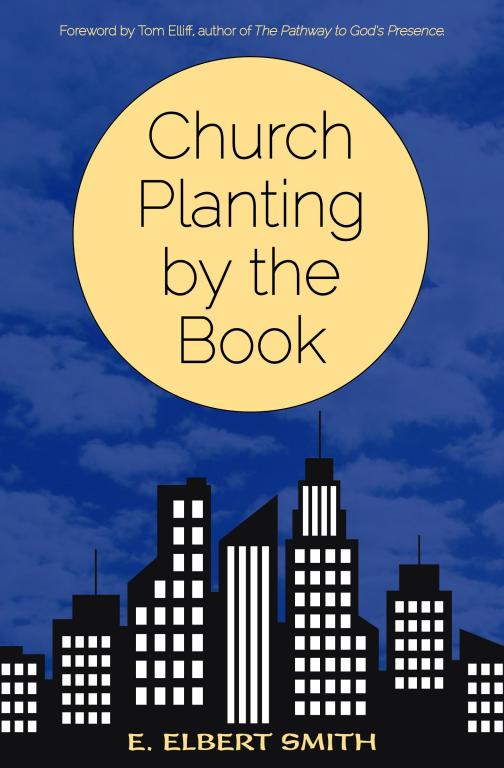 I’ve learned much from Elbert Smith. His graciousness toward people is matched only by his zeal for the Bible and God’s mission. Anyone who spends time with Elbert will eventually hear him ask, “What does the Book say?” I’m sure he’d agree that having a high view of Scripture does not guarantee we rightly interpret the Bible. This is why I’ve chosen Smith’s 2015 book Church Planting by the Book to illustrate such a tension.
Even the most earnest of missionaries unwittingly use the Bible to justify “best practices.” Of course, not all “best practices” are unbiblical. Yet, we ought not to assume or imply that Scripture advocates such “best practices.”
An early warning sign is found on the back cover, which explains the goal of Smith’s book. He tries to identify “common threads between the first nine churches featured in Acts and modern-church planting practices.” One should immediately ask whether this is a worthwhile goal. The Bible has authority to suggest or even prescribe ministry methods. However, the same cannot be said about the latter.
Any account of current “best practices” is no more than a description, not a prescription. By “identifying common threads,” his book blurs the distinction. Consequently, it inadvertently lends biblical authority to contemporary methods.
In fact, the similarities between the Bible and popular mission strategies often are superficial. Some activities, like “prayer” and “evangelism”, characterize countless church planting efforts. They are not unique to the method endorsed by Smith.
When Proof is Not in the Text
Missions books subtly teach biblical interpretation. This is unfortunate. In order to keep things simple, they frequently are counterproductive inasmuch as they demonstrate sub-par exegesis. I’ll offer a few examples from Smith’s book. Then I’ll highlight their significance.
Stretching the Missionary or the Bible?
Speaking about Acts 20, Smith writes
Paul not only mentioned that he worked hard, he repeated the same references to time: “night and day.” Sometimes our work, or work with certain people, can best be done in the day. Work with other people has to be done at night.
The church planter must be willing to adjust his or her personal preferences to the opportunities that come to evangelize and disciple people, night and day. (p. 123)
I won’t add much comment. I think the misapplication is apparent. We should be careful not to make profound what context and common experience make plain enough. We certainly must adjust our schedules to meet with different sorts of people. But that is neither Luke nor Paul’s point.
Was Samuel a tentmaker?
Smith says tent-making serves at least two purposes––securing financial support and getting access to difficult places. He illustrates the latter motive with a proof text. Smith cites 1 Sam 16, where Samuel wants to anoint one of Jesse’s sons but fears Saul’s retaliation. God tells him to sacrifice a heifer in Bethlehem as a way of gaining safe passage. A sacrifice, of course, would not raise suspicion. Thus,
“Sacrificing a heifer provided Samuel a secondary, legitimate reason to be in the city while he obeyed the Lord’s primary command.” (p. 133)
One is left asking questions like, “What does Samuel’s action have to do with tent-making?” “Do we need a text illustrating the motive to access difficult places?” “Does this use of 1 Samuel 16 distract us from the text’s actual purpose?”
Finally, in a book about Acts, why not simply quote Acts 18:13, which says, “…because [Paul] was of the same trade he stayed with [Aquila and Priscilla] and worked, for they were tentmakers by trade.”
Co-opting Biblical Language for the Sake of Missions
Many missionary terms and tools use biblical language. Of course, borrowing biblical language does not imply the Bible advocates a given method or strategy. Below are a few examples where Smith inadvertently borrows biblical authority to explain or defend concepts commonly heard among missionaries.
“Seed sowing” versus evangelism?
Smith claims that “broad seed sowing” is “preparation for evangelism” (pp. 24–25). His conclusion depends on his definition of terms. This is how he defines evangelism:
The presentation of the good news of Jesus’ death for our sin and of His burial and resurrection according to the Scriptures in an understandable way that calls for a response of faith and repentance. (p 24)
From this, he determines that the believers at Pentecost did “what we would call ‘broad seed sowing’ rather than direct evangelism” (p. 25). Citing the parable of the sower, Smith adds, “The seed sown in Jesus’ parable was ‘the word of God’ (Luke 8:11) –– not a specific gospel message but broad seed sowing of the Word of God.” Smith’s exegesis is well-intentioned but fatally flawed.
In effect, contemporary missions vernacular shapes his interpretation of the Bible.
Credit:Flickr/pictoquotes; Photo: condesign
First, he implicitly accepts the common (but highly debatable) distinction between “seed sowing” and evangelism. He then uses the text from which we get “seed sowing” language (Luke 8) to interpret an unrelated passage (Acts 2).
Also problematic is his distinguishing the gospel from the “word of God.” In the parable, the seed is called the “word of the kingdom” (Matthew 13:19). Within this seed parable, “the secrets of the kingdom of God” are either known or hidden (Luke 8:10).
Luke, who also wrote Acts, repeatedly uses “the word” as shorthand for an evangelistic message.
Acts 4
In Acts 4:2, 4, “they were teaching the people and proclaiming in Jesus the resurrection from the dead…. But many of those who had heard the word believed, and the number of the men came to about five thousand.” After being threatened by the authorities, they “continued to speak the word of God with boldness” (4:31).
Acts 8
Among those scattered who were “preaching of the word”, Philip “proclaimed to them the Christ” (8:4–5). “Now when the apostles at Jerusalem heard that Samaria had received the word of God, they sent to them Peter and John…” (8:14). Finally, “when they had testified and spoken the word of the Lord, they returned to Jerusalem, preaching the gospel to many villages of the Samaritans” (8:25).
Smith’s explanation seems inconsistent. Later, he explains that the believers in Acts 8 “shared the gospel” (pp. 53–54), though Acts 8 refers to “the word of God.”
Acts 17
“But when the Jews from Thessalonica learned that the word of God was proclaimed by Paul at Berea also, they came there too, agitating and stirring up the crowds.” (Acts 17:13)
What was this “word of God”? Check out vv. 2–3,
“And Paul went in, as was his custom, and on three Sabbath days he reasoned with them from the Scriptures, explaining and proving that it was necessary for the Christ to suffer and to rise from the dead, and saying, “This Jesus, whom I proclaim to you, is the Christ.” (17:2–3)
Cf. Acts 6:7; 10:36; 12:24; 13:5, 46; 15:7 among others.
So what does the book say?
It simply states they told “the mighty works of God.” This phrasing is simply too general for us to know the content of their message. But we should at least ask, “Should we not consider the resurrection a “might deed of God”? (cf. 2:22–24)
In Part 2, I’ll identify other ways that we might misapply or misinterpret the Bible when talking about mission practice.
For related posts and articles, check out:
- There are No Church Planting Movements in the Bible
- Doing Missions by Darwinian Evolution
- Thoughts on David Garrison’s reply to my article on CPMs
Previous Post

March 6, 2019
How Shame Can Prevent People from Repenting
Next Post

March 20, 2019 “Sinicized Christianity” is Not Christianity
Browse Our Archives
Select a Category Atonement Biblical Theology Book Reviews China Chinese Church Chinese Culture Chinese Language Collectivism Contextualization Culture (General) Ecclesiology Evangelism Gospel Honor & Shame (Face) Interpretation/Exegesis Justification/Righteousness Missiology Mission Methods One Gospel for All Nations Other Practical Contextualization Reading Romans with Eastern Eyes Resources Romans Salvation (General) Saving God's Face Seeking God's Face The Cross in Context Theological Contextualization Theological Education Theology Uncategorized
Select a Month November 2026 October 2026 September 2026 August 2026 July 2026 June 2026 May 2026 April 2026 March 2026 February 2026 January 2026 December 2025 November 2025 October 2025 September 2025 August 2025 July 2025 June 2025 May 2025 April 2025 March 2025 February 2025 January 2025 December 2024 November 2024 October 2024 September 2024 August 2024 July 2024 June 2024 May 2024 April 2024 March 2024 February 2024 January 2024 December 2023 November 2023 October 2023 September 2023 August 2023 July 2023 June 2023 May 2023 April 2023 March 2023 February 2023 January 2023 December 2022 November 2022 October 2022 September 2022 August 2022 July 2022 June 2022 May 2022 April 2022 March 2022 February 2022 January 2022 December 2021 November 2021 October 2021 September 2021 August 2021 July 2021 June 2021 May 2021 April 2021 March 2021 February 2021 January 2021 December 2020 November 2020 October 2020 September 2020 August 2020 July 2020 June 2020 May 2020 April 2020 March 2020 February 2020 January 2020 December 2019 November 2019 October 2019 September 2019 August 2019 July 2019 June 2019 May 2019 April 2019 March 2019 February 2019 January 2019 December 2018 November 2018 October 2018 September 2018 August 2018 July 2018 June 2018 May 2018 April 2018 March 2018 February 2018 January 2018 December 2017 November 2017 October 2017 September 2017 August 2017 July 2017 June 2017 May 2017 April 2017 March 2017 February 2017 January 2017 December 2016 November 2016 October 2016 September 2016 August 2016 July 2016 June 2016 May 2016 April 2016 March 2016 February 2016 January 2016 December 2015 November 2015 October 2015 September 2015 August 2015 July 2015 June 2015 May 2015 April 2015 March 2015 February 2015 January 2015 December 2014 November 2014 October 2014 September 2014 August 2014 July 2014 June 2014 May 2014 April 2014 March 2014 February 2014 January 2014 December 2013 November 2013 October 2013 September 2013 August 2013 July 2013 June 2013 May 2013 April 2013 March 2013 February 2013 January 2013 December 2012 November 2012
Follow Us!
TAKE THE
Religious Wisdom Quiz
What does "Messiah" mean in both Hebrew and Greek?
Select your answer to see how you score.
Chosen Sacrifice Beloved Anointed one
Books by This Author Books by Brad Vaughn
Related posts from Saving God's Face
How Technique Undermines Mission

Pride Economy: When Passion Becomes Workplace Exploitation
Tribal is a book worth reading!

Honor and Shame in Shakespeare’s Othello
TRENDING AT PATHEOS Evangelical

Rock N' Roll-- Morphing into/for a New Generation...
Well, should we be grateful, or is rock n' roll just dead? ...

Ansley Gordon Brings Faith and Fresh Stories to...
For screenwriter and actress Ansley Gordon, Christmas has always been about more...

Chris Pratt on Veterans, Faith, “The Way of...
For Chris Pratt, service is not something that ends when a person...

Chapter 5, Sarah: The Quest for Safety in...
Open and Relational Theology & Social Psychology About this series: This series...

When Worry Gets You Nowhere, How Can Faith...
Sometimes, we think that by worrying, we can somehow predict the future....

The Wasp And I: Meditations on Repentance
How can we enter the power and joy of the repentant self...
view all Evangelical blogs
Ad-Free & Subscriber Log-In Subscription Support
- About Us
- 2026 Calendar
- Videos
- Podcasts
- Library of World Religions
- Faith In Media Tracker
- Advertise With Us
- Write for Us
- Privacy Policy
- Terms of Service
- Do Not Sell My Data
- Contact Us
- Radiant Digital
- Manage Newsletter Subscriptions
- Unsubscribe From Notifications
- Sitemap
Copyright 2008-2026, Patheos, part of the Radiant Digital network of media brands. All rights reserved.
Subscription Support Ad-Free & Subscriber Log-In
Follow Patheos