
BuddhistCatholicContemplativeEvangelicalGeneral ChristianHinduJewishLatter-day SaintMuslimNew VisionsProgressive Christian
Beliefs
- Buddhist
- Catholic
- Contemplative
- Evangelical
- General Christian
- Hindu
- Jewish
- Latter-day Saint
- More Voices
- Muslim
- New Visions
- Pagan
- Progressive Christian
Topics
- Religion News
- Food and Religion
- Sports and Religion
- Religious Art
- Religious Music and Entertainment
- Religious Events
- History and Religion
- Style and Religion
- Politics and Religion
- Women in Religion
- Recreation Outdoors and Religion
- Business Finance and Religion
- Careers Workplace and Religion
- Education and Religion
- Family Parenting and Religion
- Health Fitness and Religion
- Home and Religion
- Relationships and Religion
- Technology and Religion
- Travel and Religion
Columnists
- Buddhist Columnists
- Business Finance and Religion Columnists
- Careers Workplace and Religion Columnists
- Catholic Columnists
- Contemplative Columnists
- Education and Religion Columnists
- Evangelists Columnists
- Family Parenting and Religion Columnists
- General Christian Columnists
- Health Fitness and Religion Columnists
- Hindu Columnists
- History and Religion Columnists
- Home and Religion Columnists
- Jewish Columnists
- More Voices Columnists
- Latter Day Columnists
- Muslim Columnists
- New Visions Columnists
- Nonreligious Columnists
- Pagan Columnists
- Politics and Religion Columnists
- Progressive Columnists
- Recreation Outdoors and Religion Columnists
- Relationships and Religion Columnists
- Religion News Columnists
- Religious Art Columnists
- Religious Events Columnists
- Religious Music and Entertainment Columnists
- Sports and Religion Columnists
- Style and Religion Columnists
- Technology and Religion Columnists
- Travel and Religion Columnists
- Women in Religion Columnists
Resource Library
- 2026 Calendar
- Library of World Religions
- The 100 Most Holy Places on Earth
- Patheos Answers
- Podcasts
- Videos
- Faith Leaders Database
- Anglican Episcopalian
- Bahai
- Baptist
- Buddhism
- Christianity
- Confucianism
- Eastern Orthodoxy
- Hinduism
- Holiness and Pentecostal
- ISKCON
- Islam
- Judaism
- Lutheran
- Methodist
- The Church of Jesus Christ of Latter-day Saints
- New Age
- Paganism
- Presbytarian and Reformed
- Protestantism
- Religion Behind the Scenes
- Roman Catholic
- Scientology
- Shia Islam
- Sikhism
- Sufism
- Sunni Islam
- Taoism
- Zen
- See all religions
Research Tools
 Ad-Free & Subscriber Log-In Subscription Support
Ad-Free & Subscriber Log-In Subscription Support
Follow Patheos 

- Trending:
- Forgiveness
- |
- Marriage
- |
- Consciousness
- |
- Death Penalty
- |
- Election
- |
- Halloween

-
Tools
-
Support the Work
- Home
- Evangelical
- Honor, Shame, and Imposter Syndrome
Honor, Shame, and Imposter Syndrome
Last updated on: February 20, 2019 at 6:42 am by Brad Vaughn
Honor, Shame, and Imposter Syndrome 2019-02-20T06:42:26-07:00 Brad Vaughn
Patheos Explore the world's faith through different perspectives on religion and spirituality! Patheos has the views of the prevalent religions and spiritualities of the world.
Imposter syndrome is the belief that you’re “an inadequate and incompetent failure, despite evidence that indicates you’re skilled and quite successful.” You fear being exposed as the fraud you are (or at least think you are).
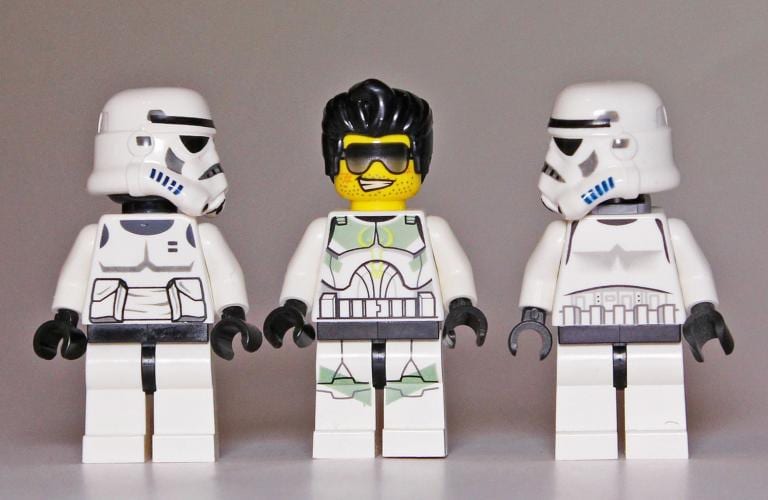
Credit: Flickr/Transport Pixels
Imposter syndrome affects countless people in a wide range of ways. Our job might be the most common area we might experience imposter syndrome. We think, “How in the world did I get this job, promotion, or praise from my supervisor? If they really knew….”
Parenting is another place we easily fall into the trap of imposter syndrome. The problem, however, is that kids are well-equipped to remind us and the world that we have not perfected the science art ultramarathon called “parenting.” Therefore, the compulsion internally to minimize what we do well only intensifies.
I’m not describing hypocrisy or deception. People in the throes of imposter syndrome have difficulty internalizing success and affirmation from others. I’m also not describing mere humility. Rather, imposter syndrome causes us to discredit whatever good thing we do and perhaps to question others’ judgment of us. A writer might say, “How do they like what I’ve written? They must lack knowledge on this topic or maybe they are just flattering me.”
Causes of Imposter Syndrome
A few factors exacerbate the problems related to imposter syndrome.
The first is one’s childhood. Someone who was routinely criticized when young will often struggle to trust the genuineness of others’ praise or acceptance. They might wonder why they “suddenly” did well in this area in life when they apparently had done poorly in all the years prior.
Second, Christians, in particular, are prone to suffer from imposter syndrome for several reasons. For instance, common teachings about our having a “sin nature” can foster the impression that we can do nothing well. Likewise, the desire to be humble can easily become a twisted view of oneself. The practice of deflecting encouragement or a sense of achievement creates a distorted sense of reality. We only see our flaws and so discredit evidence of good within us.
Dr. Valerie Young categorizes imposter syndrome into five types:
- The Perfectionist
- The Superwoman/man
- The Natural Genius
- The Soloist
- The Expert
In this Fast Company article, “The Five Types of Imposter Syndrome and How to Beat Them,” she explains how these types differ and their effects. It’s well worth reading.
A Self-Fueling Fire of Shame
Because a fire consumes oxygen, it will eventually weaken and exhaust itself when depleted of oxygen. What makes imposter syndrome so pernicious is that it produces the fuel needed to perpetuate itself.
Consider what happens we experience some perceived “success.” The fear of being exposed as a fraud (contrary to objective evidence) drives us to work even harder and to strive for perfection. Accordingly, we will either hide our self-diagnosed flaws or live up to the praise we think we don’t deserve.
Similarly, someone who is proficient in a field or skill will wrongly suppose they must have all the answers; otherwise, they are idiots whose opinions should be ignored. Others subtlety think all skill and intelligence is natural or “God-given” rather than the fruit of hard work. So, they make excuses and quit when they experience failure, despite their prior track record of success.
The consequence is predicable –– shame.
We feel shame for not measuring up to some standard in our minds. We might feel shame because we think we are fooling people. We are ashamed of our self-perceived “hypocrisy.” We then feel shame because our lifestyles get out of balance and begin to neglect important areas of our lives, like health and family relationships.

Credit: Flickr/torbakhopper
What’s the relationship between imposter syndrome and public honor/status? Is this just low self-esteem or hurt pride?
Not at all. Imposter syndrome, in fact, is less about winning the approval of others and more concerns our ability to accurately perceive reality. In the name of “humility,” “excellence,” or “glorifying God,” we habitualize various distortions in thinking, including dichotomous thinking, negative filtering, etc.
We always feel like failures. The shame of “perpetual” failure deepens our shame of feeling like an imposter. With more hard work comes genuine achievement in a certain area of life; with it comes more acknowledge from others. Yet, imposter syndrome then kicks in and reminds us once again of the “frauds” we really are.
Honoring What God Has Done
We can take steps to counter imposter syndrome. For now, I want to highlight a couple of biblical responses that can help Christians who struggle with imposter syndrome.
Many Christians have long had the misconception that honoring God entails not honoring people (including ourselves). This notion is so patently false that one wonders how it persists in our minds. Think of the proud parents who enjoy honor when their child wins an academic scholarship after years of hard work (on the part of both child and parents). In this case, their honor is entwined.
Here are two ways of honoring God that also combat imposter syndrome.
-
The Image of God
What does it mean to be made in the image of God? Without delving into a full exposition of the doctrine, we can highlight a few ideas.
Humans have the honor of representing God as his “vice-regents” through whom God rules his world. Psalm 8 begins and ends with praise to God, “O Lord, our Lord, how majestic is your name in all the earth!” (vv. 1, 9). The psalmist shows how humanity’s honor magnifies the glory of God.
When I look at your heavens, the work of your fingers, the moon and the stars, which you have set in place, 4 what is man that you are mindful of him, and the son of man that you care for him? 5 Yet you have made him a little lower than the heavenly beings and crowned him with glory and honor. 6 You have given him dominion over the works of your hands; you have put all things under his feet, 7 all sheep and oxen, and also the beasts of the field, 8 the birds of the heavens, and the fish of the sea, whatever passes along the paths of the seas. (Psalm 8:3-8)
Instead of linking God’s and our honor, we tend to polarize them. Consequently, Christians and Chinese, for example, talk past one another when it comes to the topic of human nature. When someone claims that people are born good, Christians become alarmed and miss an opportunity to find an area of agreement.
(On this point, check out Gregg Ten Elshof’s “Might Christians and Confucians Actually Agree about Human Nature?“)
As Christians, we can mentally translate this Confucian idea into biblical language. Essentially, claims that people are “born good” typically emphasize a particular point: humans have a great capacity for much good. This is precisely a lesson we can draw from the doctrine of our being made in God’s image.
-
New Covenant
A central yet oft-overlooked promise of the new covenant is found in Ezekiel 36:26-27.
I will give you a new heart, and a new spirit I will put within you. And I will remove the heart of stone from your flesh and give you a heart of flesh. And I will put my Spirit within you, and cause you to walk in my statutes and be careful to obey my rules.
Through Christ, God gives us new hearts so that we obey him “from the heart” (Romans 6:17). This truth is clear enough that I won’t belabor it with much explanation.
Instead, I draw this post to a close by summarizing a key takeaway: Because of what God has done in Christ, we can live genuinely God-honoring lives. At least in certain respects, we need not regard ourselves as imposters.
To deny the real goodness within us is to deprive God of the honor he deserves.
Previous Post

February 13, 2019
The Coddling of the American Missionary
Next Post
February 27, 2019 Should Evangelism Provoke Guilt or Expose Shame?
Browse Our Archives
Select a Category Atonement Biblical Theology Book Reviews China Chinese Church Chinese Culture Chinese Language Collectivism Contextualization Culture (General) Ecclesiology Evangelism Gospel Honor & Shame (Face) Interpretation/Exegesis Justification/Righteousness Missiology Mission Methods One Gospel for All Nations Other Practical Contextualization Reading Romans with Eastern Eyes Resources Romans Salvation (General) Saving God's Face Seeking God's Face The Cross in Context Theological Contextualization Theological Education Theology Uncategorized
Select a Month October 2026 September 2026 August 2026 July 2026 June 2026 May 2026 April 2026 March 2026 February 2026 January 2026 December 2025 November 2025 October 2025 September 2025 August 2025 July 2025 June 2025 May 2025 April 2025 March 2025 February 2025 January 2025 December 2024 November 2024 October 2024 September 2024 August 2024 July 2024 June 2024 May 2024 April 2024 March 2024 February 2024 January 2024 December 2023 November 2023 October 2023 September 2023 August 2023 July 2023 June 2023 May 2023 April 2023 March 2023 February 2023 January 2023 December 2022 November 2022 October 2022 September 2022 August 2022 July 2022 June 2022 May 2022 April 2022 March 2022 February 2022 January 2022 December 2021 November 2021 October 2021 September 2021 August 2021 July 2021 June 2021 May 2021 April 2021 March 2021 February 2021 January 2021 December 2020 November 2020 October 2020 September 2020 August 2020 July 2020 June 2020 May 2020 April 2020 March 2020 February 2020 January 2020 December 2019 November 2019 October 2019 September 2019 August 2019 July 2019 June 2019 May 2019 April 2019 March 2019 February 2019 January 2019 December 2018 November 2018 October 2018 September 2018 August 2018 July 2018 June 2018 May 2018 April 2018 March 2018 February 2018 January 2018 December 2017 November 2017 October 2017 September 2017 August 2017 July 2017 June 2017 May 2017 April 2017 March 2017 February 2017 January 2017 December 2016 November 2016 October 2016 September 2016 August 2016 July 2016 June 2016 May 2016 April 2016 March 2016 February 2016 January 2016 December 2015 November 2015 October 2015 September 2015 August 2015 July 2015 June 2015 May 2015 April 2015 March 2015 February 2015 January 2015 December 2014 November 2014 October 2014 September 2014 August 2014 July 2014 June 2014 May 2014 April 2014 March 2014 February 2014 January 2014 December 2013 November 2013 October 2013 September 2013 August 2013 July 2013 June 2013 May 2013 April 2013 March 2013 February 2013 January 2013 December 2012 November 2012
Follow Us!
TAKE THE
Religious Wisdom Quiz
"Train up a child in the way he should go" is found in which book?
Select your answer to see how you score.
Proverbs Job Matthew Jonah
Books by This Author Books by Brad Vaughn
Related posts from Saving God's Face

No King forgets his crown. Why do we?

Recovering Moral Vision Between Shame and Shamelessness

Refuge, Confession, and the End of Shame

Psalm 25 and the Fear of Being Put...
TRENDING AT PATHEOS Evangelical

When Halloween Unmasks Married Hearts
Written by Dr. David K. Ewen from Eternal Truth Bible College Behind...

Aristotle. He’s been called the father of logic, the father of the...

Methodist Central Hall and Westminster Abbey
Situated on the same square is Methodist Central Hall and Westminster Abbey. ...

57th Dove Awards Honor Dolly Parton, Crown New...
On gospel music’s biggest night, the 57th annual GMA Dove Awards honored...

The First Eucharistic Controversy: Christ’s Real Presence
For Catholics, the Eucharist is the source and summit of the Christian...

What a Stop Sign Can Teach Us About...
How to Make a Decision When You Can't Hear God Main point:...
view all Evangelical blogs
Ad-Free & Subscriber Log-In Subscription Support
- About Us
- 2026 Calendar
- Videos
- Podcasts
- Library of World Religions
- Faith In Media Tracker
- Advertise With Us
- Write for Us
- Privacy Policy
- Terms of Service
- Do Not Sell My Data
- Contact Us
- Radiant Digital
- Manage Newsletter Subscriptions
- Unsubscribe From Notifications
- Sitemap
Copyright 2008-2026, Patheos. All rights reserved.
Subscription Support Ad-Free & Subscriber Log-In
Follow Patheos