
BuddhistCatholicContemplativeEvangelicalGeneral ChristianHinduJewishLatter-day SaintMuslimNew VisionsProgressive Christian
Beliefs
- Buddhist
- Catholic
- Contemplative
- Evangelical
- General Christian
- Hindu
- Jewish
- Latter-day Saint
- More Voices
- Muslim
- New Visions
- Pagan
- Progressive Christian
Topics
- Religion News
- Food and Religion
- Sports and Religion
- Religious Art
- Religious Music and Entertainment
- Religious Events
- History and Religion
- Style and Religion
- Politics and Religion
- Women in Religion
- Recreation Outdoors and Religion
- Business Finance and Religion
- Careers Workplace and Religion
- Education and Religion
- Family Parenting and Religion
- Health Fitness and Religion
- Home and Religion
- Relationships and Religion
- Technology and Religion
- Travel and Religion
Columnists
- Buddhist Columnists
- Business Finance and Religion Columnists
- Careers Workplace and Religion Columnists
- Catholic Columnists
- Contemplative Columnists
- Education and Religion Columnists
- Evangelists Columnists
- Family Parenting and Religion Columnists
- General Christian Columnists
- Health Fitness and Religion Columnists
- Hindu Columnists
- History and Religion Columnists
- Home and Religion Columnists
- Jewish Columnists
- More Voices Columnists
- Latter Day Columnists
- Muslim Columnists
- New Visions Columnists
- Nonreligious Columnists
- Pagan Columnists
- Politics and Religion Columnists
- Progressive Columnists
- Recreation Outdoors and Religion Columnists
- Relationships and Religion Columnists
- Religion News Columnists
- Religious Art Columnists
- Religious Events Columnists
- Religious Music and Entertainment Columnists
- Sports and Religion Columnists
- Style and Religion Columnists
- Technology and Religion Columnists
- Travel and Religion Columnists
- Women in Religion Columnists
Resource Library
- 2026 Calendar
- Library of World Religions
- The 100 Most Holy Places on Earth
- Patheos Answers
- Podcasts
- Videos
- Faith Leaders Database
- Anglican Episcopalian
- Bahai
- Baptist
- Buddhism
- Christianity
- Confucianism
- Eastern Orthodoxy
- Hinduism
- Holiness and Pentecostal
- ISKCON
- Islam
- Judaism
- Lutheran
- Methodist
- The Church of Jesus Christ of Latter-day Saints
- New Age
- Paganism
- Presbytarian and Reformed
- Protestantism
- Religion Behind the Scenes
- Roman Catholic
- Scientology
- Shia Islam
- Sikhism
- Sufism
- Sunni Islam
- Taoism
- Zen
- See all religions
Research Tools
 Ad-Free & Subscriber Log-In Subscription Support
Ad-Free & Subscriber Log-In Subscription Support
Follow Patheos 

- Trending:
- Forgiveness
- |
- Marriage
- |
- Consciousness
- |
- Death Penalty
- |
- Election
- |
- Halloween

-
Tools
-
Support the Work
- Home
- Evangelical
- “What’s a n***er?” How I answered my adopted daughter (Guest Post)
“What’s a n***er?” How I answered my adopted daughter (Guest Post)
Last updated on: January 30, 2019 at 10:42 pm by Brad Vaughn
“What’s a n***er?” How I answered my adopted daughter (Guest Post) 2019-01-30T22:42:43-07:00 Brad Vaughn
Patheos Explore the world's faith through different perspectives on religion and spirituality! Patheos has the views of the prevalent religions and spiritualities of the world.
The following guest post comes from a missionary, “David”, who serves in a location that cannot be disclosed due to security concerns. He and his wife are white but have an adopted black daughter.
Our family was engrossed in a family night movie when I barely hear my daughter’s soft voice ask, “What’s a n*gger?” A part of me would rather have the sεχ talk or explain what m@stvrb*tion is. But that’s not my wife and I signed up for when we adopted her years ago.
An Out of Culture Experience
Credit: Wikimedia Commons
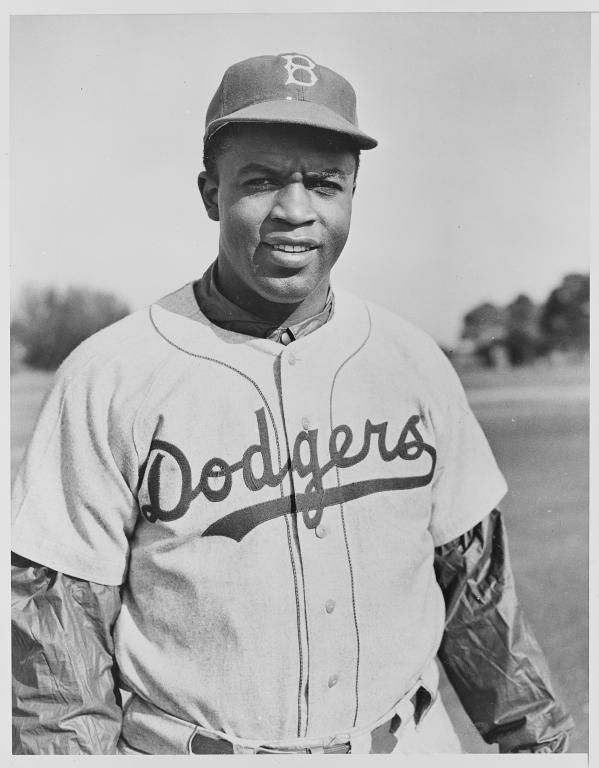
We were watching 42, a movie based on the true story of Jackie Robinson. He was the first black player to play in major league baseball when in 1947 he joined the Brooklyn Dodgers. The movie is PG-13 because of the subject matter and racial slurs. Ever since she was little, we’ve been very open about her background. We’ve celebrated figures in black history and watch Martin Luther King’s “I Have a Dream” speech every year on MLK Day.
We don’t live in America. We live overseas as missionaries. Our family stands out from the people around us, especially with our being white parents of both white and black kids. We all have American passports, but nothing in our daily lives naturally leads us to think about America’s history and race conflicts.
She is a TCK (“Third Culture Kid”), which means she is neither fully the culture of her parents (her mother and I) nor that of the place we live. She is a mix of both. At the same time, we are well aware that she will likely spend much or most of her life in the United States. When she lives in the States, she’ll inherit a cultural history that is otherwise foreign to her own experience. Where we live, people are curious when they see her. Some local people have never seen a black person except perhaps in a movie or on TV. Still, they treat her with kindness and respect.
As parents, we face a delicate problem. How do we make her aware of America’s problems and past without instilling fear in her as though nothing had changed since the 1860s? How do we prepare her for the fact she could face prejudice by certain Americans but not infuse in her an unhealthy victim mentality?
We’ve recently expanded the range of movies we allow our kids to watch. By doing so, we’ve increased the amount they’ve been exposed to more serious social issues, like racism. In 42, as you’d imagine, haters of Jackie Robinson call him ever disgusting thing you could think of, and probably worse than you might think.
“What’s a nigger?”
When I heard her ask the question, it felt like one of those movie moments when everything goes silent in your mind. Somehow 30 minutes of flashback and hypothetical conversations fly through one’s mind in a span of 0.8 seconds. I immediately got up and paused the movie. I had no idea what exactly what I’d say. I knew this day would come, but we hadn’t formulated a packaged speech.
I returned to the couch and asked her to repeat her question so that everyone could hear it and, in part, to give me a few extra seconds to figure out what I’d say. Here is a rough summary of what I said.
The word “nigger” is a mean name people used to call black people. The term originally referred to people who didn’t know stuff. People thought black people didn’t know things. You know how people, for some reason, call others by names just to be mean? Through history, groups have been mean to each other. French didn’t like English people. Germans didn’t like Russians. Chinese haven’t like Japanese. Kids at school do this sort of thing too right? And so, one thing people do in those situations is call people names. It’s not just black people who get called names.
People used to call Jews “kikes,” Mexicans were called “spics.” Italians, people from Italy, was called “wops.” I have no idea what that even means. So, in the past, people used to call black people “nigger.” It’s sad, but this kind of thing has happened all over the world throughout history.
But today, we never want to use that word. Does that make sense?
She just sat silent, listening intently to each word. No one moved or interrupted when I paused. She has seen kids treat one another in mean ways and has seen bad people depicted in movies. She was not especially alarmed. She didn’t express any personal offense or anxiety. If anything, she expected confusion and sadness that someone would be so cruel to other people.
God hates hate. Period.
One of my hopes in answering the way I did was simply to properly frame the issue of black-white racism. Racism exists everywhere, not just America. And it’s evil everywhere, not only in America. God detests hatred even when it doesn’t make the news.

Public Domain
When I first began to learn the local language as a missionary, someone once asked, “Do you know what the hardest language is to learn?” I guessed Japanese, Chinese or Arabic. “It’s whatever language you are learning now at the moment.”
In the same way, we tend to think the problems we see or experience are the absolute worst there are. It certainly feels that way. But racism or something like it exists everywhere else too, whether in the Middle East, Asia, and Africa.
Hatred and ignorance are parts of the human problem. At any given moment, it could be said that we are both oppressed and oppressors.
When we focus on only one form of hatred, it’s possible that we create a host of other problems. We risk conjuring an unhealthy paralyzing fear and reciprocal hatred that makes reconciliation virtually impossible. Also, we might unknowingly excuse other types of racism and sexism. We could easily overlook or minimize other prejudice that exists around us or in our own hearts.
I answered my sweet daughter as I did not because I want to minimize the deplorable treatment of black people in American history. Rather, I want her to hate all forms of injustice with right disgust. I want her resolute in opposing evil in every manifestation, not only the kind that affects people who look like her.
That night after the movie, when everyone else went to bed, I could not sleep. I empathized with the feelings that she could have had if she knew more personally the gravity of her question. For generations, black kids found out from hard experience what was meant by words like “negro” and “nigger.”
Because of heroes like Jackie Robinson, she was fortunate to learn by asking her dad, “What’s a nigger?” And for that, I’m grateful.
A Final Comment from Jackson Wu
I wanted to post David’s story for multiple reasons, several that concern many themes discussed on this site.
I’ve seen the movie 42. So, in light of the above post, I decided to look up some dialogue I recall from the movie. During the opening scene, the Dodgers’ owner has a conversation with two of his assistants.
The following comes from the screenplay.
BRANCH RICKEY
I’m going to bring a Negro ballplayer to the Brooklyn Dodgers.
HAROLD PARROTT
With all due respect, sir, have you lost your mind? Imagine the abuse you’ll take from the newspapers alone. Never mind how it’ll play on Flatbush. Please, Mr. Rickey.
BRANCH RICKEY
There’s no law against it, Clyde.
CLYDE SUKEFORTH
There’s a code. Break a law and get away with it, some people think you’re smart. Break an unwritten law though, you’ll be an outcast.
It’s the last line that I find so powerful. Sukeforth articulates a significant insight about honor and shame. We often think of morality merely in terms or rules: “Do this. Don’t Do that.”
But Sukeforth speaks of a “code,” and “unwritten law,” that governs people’s hearts. This code dictates what is deemed honorable or shameful. This code is often unconscious. And for that reasons, we must be diligent to discern its impact on lives and community.
Previous Post

January 23, 2019
How does grace change our perspective of honor?
Browse Our Archives
Select a Category Atonement Biblical Theology Book Reviews China Chinese Church Chinese Culture Chinese Language Collectivism Contextualization Culture (General) Ecclesiology Evangelism Gospel Honor & Shame (Face) Interpretation/Exegesis Justification/Righteousness Missiology Mission Methods One Gospel for All Nations Other Practical Contextualization Reading Romans with Eastern Eyes Resources Romans Salvation (General) Saving God's Face Seeking God's Face The Cross in Context Theological Contextualization Theological Education Theology Uncategorized
Select a Month October 2026 September 2026 August 2026 July 2026 June 2026 May 2026 April 2026 March 2026 February 2026 January 2026 December 2025 November 2025 October 2025 September 2025 August 2025 July 2025 June 2025 May 2025 April 2025 March 2025 February 2025 January 2025 December 2024 November 2024 October 2024 September 2024 August 2024 July 2024 June 2024 May 2024 April 2024 March 2024 February 2024 January 2024 December 2023 November 2023 October 2023 September 2023 August 2023 July 2023 June 2023 May 2023 April 2023 March 2023 February 2023 January 2023 December 2022 November 2022 October 2022 September 2022 August 2022 July 2022 June 2022 May 2022 April 2022 March 2022 February 2022 January 2022 December 2021 November 2021 October 2021 September 2021 August 2021 July 2021 June 2021 May 2021 April 2021 March 2021 February 2021 January 2021 December 2020 November 2020 October 2020 September 2020 August 2020 July 2020 June 2020 May 2020 April 2020 March 2020 February 2020 January 2020 December 2019 November 2019 October 2019 September 2019 August 2019 July 2019 June 2019 May 2019 April 2019 March 2019 February 2019 January 2019 December 2018 November 2018 October 2018 September 2018 August 2018 July 2018 June 2018 May 2018 April 2018 March 2018 February 2018 January 2018 December 2017 November 2017 October 2017 September 2017 August 2017 July 2017 June 2017 May 2017 April 2017 March 2017 February 2017 January 2017 December 2016 November 2016 October 2016 September 2016 August 2016 July 2016 June 2016 May 2016 April 2016 March 2016 February 2016 January 2016 December 2015 November 2015 October 2015 September 2015 August 2015 July 2015 June 2015 May 2015 April 2015 March 2015 February 2015 January 2015 December 2014 November 2014 October 2014 September 2014 August 2014 July 2014 June 2014 May 2014 April 2014 March 2014 February 2014 January 2014 December 2013 November 2013 October 2013 September 2013 August 2013 July 2013 June 2013 May 2013 April 2013 March 2013 February 2013 January 2013 December 2012 November 2012
Follow Us!
TAKE THE
Religious Wisdom Quiz
Who was the Roman emperor during Jesus’ birth?
Select your answer to see how you score.
Herod Caesar Augustus Nero Tiberius
Books by This Author Books by Brad Vaughn
Related posts from Saving God's Face

No King forgets his crown. Why do we?

Recovering Moral Vision Between Shame and Shamelessness

Refuge, Confession, and the End of Shame

Psalm 25 and the Fear of Being Put...
TRENDING AT PATHEOS Evangelical

Letters on Living the Faith by C.S. Lewis
Most of us met C.S. Lewis as a public intellectual. Mere Christianity....

When Halloween Unmasks Married Hearts
Written by Dr. David K. Ewen from Eternal Truth Bible College Behind...

Aristotle. He’s been called the father of logic, the father of the...

Methodist Central Hall and Westminster Abbey
Situated on the same square is Methodist Central Hall and Westminster Abbey. ...

57th Dove Awards Honor Dolly Parton, Crown New...
On gospel music’s biggest night, the 57th annual GMA Dove Awards honored...

The First Eucharistic Controversy: Christ’s Real Presence
For Catholics, the Eucharist is the source and summit of the Christian...
view all Evangelical blogs
Ad-Free & Subscriber Log-In Subscription Support
- About Us
- 2026 Calendar
- Videos
- Podcasts
- Library of World Religions
- Faith In Media Tracker
- Advertise With Us
- Write for Us
- Privacy Policy
- Terms of Service
- Do Not Sell My Data
- Contact Us
- Radiant Digital
- Manage Newsletter Subscriptions
- Unsubscribe From Notifications
- Sitemap
Copyright 2008-2026, Patheos. All rights reserved.
Subscription Support Ad-Free & Subscriber Log-In
Follow Patheos