
BuddhistCatholicContemplativeEvangelicalGeneral ChristianHinduJewishLatter-day SaintMuslimNew VisionsProgressive Christian
Beliefs
- Buddhist
- Catholic
- Contemplative
- Evangelical
- General Christian
- Hindu
- Jewish
- Latter-day Saint
- More Voices
- Muslim
- New Visions
- Pagan
- Progressive Christian
Topics
- Religion News
- Food and Religion
- Sports and Religion
- Religious Art
- Religious Music and Entertainment
- Religious Events
- History and Religion
- Style and Religion
- Politics and Religion
- Women in Religion
- Recreation Outdoors and Religion
- Business Finance and Religion
- Careers Workplace and Religion
- Education and Religion
- Family Parenting and Religion
- Health Fitness and Religion
- Home and Religion
- Relationships and Religion
- Technology and Religion
- Travel and Religion
Columnists
- Buddhist Columnists
- Business Finance and Religion Columnists
- Careers Workplace and Religion Columnists
- Catholic Columnists
- Contemplative Columnists
- Education and Religion Columnists
- Evangelists Columnists
- Family Parenting and Religion Columnists
- General Christian Columnists
- Health Fitness and Religion Columnists
- Hindu Columnists
- History and Religion Columnists
- Home and Religion Columnists
- Jewish Columnists
- More Voices Columnists
- Latter Day Columnists
- Muslim Columnists
- New Visions Columnists
- Nonreligious Columnists
- Pagan Columnists
- Politics and Religion Columnists
- Progressive Columnists
- Recreation Outdoors and Religion Columnists
- Relationships and Religion Columnists
- Religion News Columnists
- Religious Art Columnists
- Religious Events Columnists
- Religious Music and Entertainment Columnists
- Sports and Religion Columnists
- Style and Religion Columnists
- Technology and Religion Columnists
- Travel and Religion Columnists
- Women in Religion Columnists
Resource Library
- 2026 Calendar
- Library of World Religions
- The 100 Most Holy Places on Earth
- Patheos Answers
- Podcasts
- Videos
- Faith Leaders Database
- Anglican Episcopalian
- Bahai
- Baptist
- Buddhism
- Christianity
- Confucianism
- Eastern Orthodoxy
- Hinduism
- Holiness and Pentecostal
- ISKCON
- Islam
- Judaism
- Lutheran
- Methodist
- The Church of Jesus Christ of Latter-day Saints
- New Age
- Paganism
- Presbytarian and Reformed
- Protestantism
- Religion Behind the Scenes
- Roman Catholic
- Scientology
- Shia Islam
- Sikhism
- Sufism
- Sunni Islam
- Taoism
- Zen
- See all religions
Research Tools
 Ad-Free & Subscriber Log-In Subscription Support
Ad-Free & Subscriber Log-In Subscription Support
Follow Patheos 

- Trending:
- Forgiveness
- |
- Marriage
- |
- Consciousness
- |
- Death Penalty
- |
- Election
- |
- Halloween

-
Tools
-
Support the Work
- Home
- Evangelical
- Adam, Israel, and Union with Christ in Romans
Adam, Israel, and Union with Christ in Romans
Last updated on: September 12, 2018 at 1:00 am by Brad Vaughn
Adam, Israel, and Union with Christ in Romans 2018-08-28T16:04:34-07:00 Brad Vaughn
Patheos Explore the world's faith through different perspectives on religion and spirituality! Patheos has the views of the prevalent religions and spiritualities of the world.
If you ask 100 Christians to list the foundational doctrines of the faith, I suspect few would mention “union with Christ.” If so, Wendel Sun’s claim is even more striking and significant. In his new book A New People in Christ: Adam, Israel, and Union with Christ in Romans, he argues that “union with Christ” is central to New Testament theology.

Public Domain
Central? Really?
To make that assertion, one had better defend it from the Bible. Otherwise, we should dismiss it such claims as being a mere personal preference, a theologian’s “pet doctrine.”
Sun does more than list a few proof texts to defend the importance of union with Christ. He traces this theme throughout the entire letter of Romans. The advantage of this approach is that readers are not lost in a myriad of texts were Sun to survey the entire New Testament. By focusing on a Romans, we see how the doctrine functions in context. What’s more, demonstrating the primacy of this doctrine within Romans should alert us to its importance elsewhere.
Paul goes old school
I like bold theologians… so long as they do rigorous exegesis, not mere speculation theologizing. If Sun only demonstrated that “union with Christ” pervades the book of Romans, that would be an accomplishment. But he goes further.
He states his thesis in a sentence:
A study of Romans with careful attention given to Paul’s use of the OT shows that the Adam and Israel stories together form the background of union with Christ within the epistle. (p. 2)
When I first heard this suggestion, I wondered, “How is Sun going to show that?” Although many theologians have explained Paul’s use of the OT within Romans, few people give extensive attention to the link between union with Christ and the OT. Typically, such discussions are limited to passing references to Adam, especially in the context of Romans 5.
While reading A New People in Christ, one is reminded that we can barely understand Paul’s message without grasping the significance of Israel’s story. Accordingly, the value of Sun’s book goes well beyond understanding a single doctrine “union with Christ.” It serves as an excellent example of theological and exegetical method. Along the way, he introduces readers to several critical issues in biblical theology, demonstrating how Paul weaves them into a single theological tapestry.
Restoring the glory of God
Sun takes a surprising but fresh approach and so exposes a major gap in the literature. He says,
The argument here will show that when one recognizes the importance of union with Christ in Romans, it will lead to a complementary recognition of the honor/shame motif. (p. 37)
That grabbed my attention. “How so?” one might ask. Sun answers,
The concept of union with Christ will be shown to include the notion of restored honor and this restoration is equal among all those who are “in Christ.” (p. 38)
The emphasis of this book is Paul’s use of honor and shame with regard to 1) one’s standing before God and 2) one’s status as a member of the new covenant community. Further, particular to the argument offered here is the use of honor and shame in Paul’s exposition of union with Christ in Romans. In short, Paul presents union with Christ as a restoration of the shared glory of God, which was lost through the sin of Adam. (p. 38)
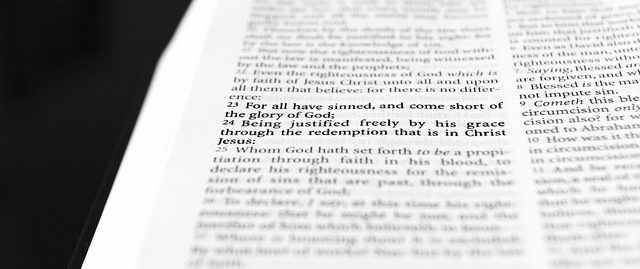
Credit: Flickr/TobiasVanDerElst
Sun rightly treats honor and shame as a social and theological theme. His perspective adds to a growing body of work that contributes to a theology of honor and shame. Fortunately, I was able to incorporate several of Sun’s insights in Reading Romans with Eastern Eyes (coming out in February).
We “in Christ” join Israel’s story
Sun’s method aptly draws from various scholars who demonstrate the fundamental importance of narrative for interpreting Paul’s letters. With this perspective, one does not mentally dichotomize the stories of Adam and Israel. In fact, Sun argues,
Paul understands the stories of Adam and Israel as intimately related such that together they form one continuous metanarrative. Rather than isolated stories, the Adam and Israel narratives are pieces of a unified story. The integration of these narratives can be seen from the first chapter of Romans and each additional occurrence of an allusion to Adam: an allusion to Israel’s story, usually related to Israel’s sin, is found within the near context. (p. 230; cf. 77, 131–32)
So, where does the “in Christ” part come into play? Sun’s answer is a summary rooted in Romans 1–8.
Jesus’s resurrection is his vindication (Rom 1:3–4), but the vindication of believers comes via identification with Jesus in his death and resurrection (Rom 6:1–11). Indeed, the death and resurrection of Christ is clearly the grounds for “no condemnation” (Rom 8:1, 32). Thus, the vindication of the servant (Jesus) is also vindication for his people as they participate in his story. (p. 202)
Christ is the embodiment of Israel story and the resolution of Adam’s story. To be “in Christ” is to join in a narrative that spans all of human history.
Let’s not forget Romans 12–16
Sun’s presentation in A New People in Christ is both balanced and broad. On the one hand, Sun does not find union with Christ beneath every textual rock. Where Paul is less explicit, he offers an honest assessment.
while “in Christ” and related phrases are not used in Rom 9:30—10:21, the concept can be detected beneath the surface of the argument through Paul’s OT narrative-based Christology. As in Rom 1–8, the focus on Christ as the τέλος of the OT story calls people, Jew and Gentile alike, to participate in his story through faith. (p. 217)
On the other hand, Sun explores all of Paul’s letter. Like so many other doctrines, many people treat union with Christ as a teaching limited to Romans 1–11. Sun does not settle for good enough. He considers how Paul applies this doctrine in the final chapters of Romans.
In Rom 12–16, Paul demonstrates the outworking of union with Christ in church life. Fundamental to this teaching is the new identity of believers: they are the people of God in Christ. As such, social status and ethnicity are set aside for the more fundamental identity as a people, Jew and Gentile together, united to Christ. (p. 232)
Implications for Contextualization
A New People in Christ is the groundwork for Sun’s article in ChinaSource titled “Union with Christ and Contextualization in China.” I won’t rehash everything he says there. Sun’s writing style is clear and easy to read. His article is an excellent introduction for anyone interested to know how union with Christ might help us to contextualize ministry in China and elsewhere.
Previous Post

September 5, 2018
Union with Christ creates a new people in Christ
Next Post

September 19, 2018 We are not made for online praise and blame
Browse Our Archives
Select a Category Atonement Biblical Theology Book Reviews China Chinese Church Chinese Culture Chinese Language Collectivism Contextualization Culture (General) Ecclesiology Evangelism Gospel Honor & Shame (Face) Interpretation/Exegesis Justification/Righteousness Missiology Mission Methods One Gospel for All Nations Other Practical Contextualization Reading Romans with Eastern Eyes Resources Romans Salvation (General) Saving God's Face Seeking God's Face The Cross in Context Theological Contextualization Theological Education Theology Uncategorized
Select a Month October 2026 September 2026 August 2026 July 2026 June 2026 May 2026 April 2026 March 2026 February 2026 January 2026 December 2025 November 2025 October 2025 September 2025 August 2025 July 2025 June 2025 May 2025 April 2025 March 2025 February 2025 January 2025 December 2024 November 2024 October 2024 September 2024 August 2024 July 2024 June 2024 May 2024 April 2024 March 2024 February 2024 January 2024 December 2023 November 2023 October 2023 September 2023 August 2023 July 2023 June 2023 May 2023 April 2023 March 2023 February 2023 January 2023 December 2022 November 2022 October 2022 September 2022 August 2022 July 2022 June 2022 May 2022 April 2022 March 2022 February 2022 January 2022 December 2021 November 2021 October 2021 September 2021 August 2021 July 2021 June 2021 May 2021 April 2021 March 2021 February 2021 January 2021 December 2020 November 2020 October 2020 September 2020 August 2020 July 2020 June 2020 May 2020 April 2020 March 2020 February 2020 January 2020 December 2019 November 2019 October 2019 September 2019 August 2019 July 2019 June 2019 May 2019 April 2019 March 2019 February 2019 January 2019 December 2018 November 2018 October 2018 September 2018 August 2018 July 2018 June 2018 May 2018 April 2018 March 2018 February 2018 January 2018 December 2017 November 2017 October 2017 September 2017 August 2017 July 2017 June 2017 May 2017 April 2017 March 2017 February 2017 January 2017 December 2016 November 2016 October 2016 September 2016 August 2016 July 2016 June 2016 May 2016 April 2016 March 2016 February 2016 January 2016 December 2015 November 2015 October 2015 September 2015 August 2015 July 2015 June 2015 May 2015 April 2015 March 2015 February 2015 January 2015 December 2014 November 2014 October 2014 September 2014 August 2014 July 2014 June 2014 May 2014 April 2014 March 2014 February 2014 January 2014 December 2013 November 2013 October 2013 September 2013 August 2013 July 2013 June 2013 May 2013 April 2013 March 2013 February 2013 January 2013 December 2012 November 2012
Follow Us!
TAKE THE
Religious Wisdom Quiz
What does the Bible warn about "idle chatter"?
Select your answer to see how you score.
Is entertaining Is educational Leads to poverty Is holy
Books by This Author Books by Brad Vaughn
Related posts from Saving God's Face

Should We Emphasize Jesus as King to People...

Why Egalitarians Can Stay in a Complementarian Church

"Why Have You Forsaken Me?” and the Problem...

What motivates obedience when I don’t want to...
TRENDING AT PATHEOS Evangelical

The First Eucharistic Controversy: Christ’s Real Presence
For Catholics, the Eucharist is the source and summit of the Christian...

What a Stop Sign Can Teach Us About...
How to Make a Decision When You Can't Hear God Main point:...

Archdiocese Hosts Military Marriage Retreat in Germany
RASTATT, Germany — The transient military lifestyle, with its frequent deployments and...

Nearly every morning, I make the drive to Detroit with my high-school-age...

The Real AI Story Is Adoption Without Trust
Artificial intelligence has crossed a political threshold. It is no longer a...

A new article, written by Jeff Lindsay and Gale L. Pooley,...
view all Evangelical blogs
Ad-Free & Subscriber Log-In Subscription Support
- About Us
- 2026 Calendar
- Videos
- Podcasts
- Library of World Religions
- Faith In Media Tracker
- Advertise With Us
- Write for Us
- Privacy Policy
- Terms of Service
- Do Not Sell My Data
- Contact Us
- Radiant Digital
- Manage Newsletter Subscriptions
- Unsubscribe From Notifications
- Sitemap
Copyright 2008-2026, Patheos. All rights reserved.
Subscription Support Ad-Free & Subscriber Log-In
Follow Patheos