
BuddhistCatholicContemplativeEvangelicalGeneral ChristianHinduJewishLatter-day SaintMuslimNew VisionsProgressive Christian
Beliefs
- Buddhist
- Catholic
- Contemplative
- Evangelical
- General Christian
- Hindu
- Jewish
- Latter-day Saint
- More Voices
- Muslim
- New Visions
- Pagan
- Progressive Christian
Topics
- Religion News
- Food and Religion
- Sports and Religion
- Religious Art
- Religious Music and Entertainment
- Religious Events
- History and Religion
- Style and Religion
- Politics and Religion
- Women in Religion
- Recreation Outdoors and Religion
- Business Finance and Religion
- Careers Workplace and Religion
- Education and Religion
- Family Parenting and Religion
- Health Fitness and Religion
- Home and Religion
- Relationships and Religion
- Technology and Religion
- Travel and Religion
Columnists
- Buddhist Columnists
- Business Finance and Religion Columnists
- Careers Workplace and Religion Columnists
- Catholic Columnists
- Contemplative Columnists
- Education and Religion Columnists
- Evangelists Columnists
- Family Parenting and Religion Columnists
- General Christian Columnists
- Health Fitness and Religion Columnists
- Hindu Columnists
- History and Religion Columnists
- Home and Religion Columnists
- Jewish Columnists
- More Voices Columnists
- Latter Day Columnists
- Muslim Columnists
- New Visions Columnists
- Nonreligious Columnists
- Pagan Columnists
- Politics and Religion Columnists
- Progressive Columnists
- Recreation Outdoors and Religion Columnists
- Relationships and Religion Columnists
- Religion News Columnists
- Religious Art Columnists
- Religious Events Columnists
- Religious Music and Entertainment Columnists
- Sports and Religion Columnists
- Style and Religion Columnists
- Technology and Religion Columnists
- Travel and Religion Columnists
- Women in Religion Columnists
Resource Library
- 2026 Calendar
- Library of World Religions
- The 100 Most Holy Places on Earth
- Patheos Answers
- Podcasts
- Videos
- Faith Leaders Database
- Anglican Episcopalian
- Bahai
- Baptist
- Buddhism
- Christianity
- Confucianism
- Eastern Orthodoxy
- Hinduism
- Holiness and Pentecostal
- ISKCON
- Islam
- Judaism
- Lutheran
- Methodist
- The Church of Jesus Christ of Latter-day Saints
- New Age
- Paganism
- Presbytarian and Reformed
- Protestantism
- Religion Behind the Scenes
- Roman Catholic
- Scientology
- Shia Islam
- Sikhism
- Sufism
- Sunni Islam
- Taoism
- Zen
- See all religions
Research Tools
 Ad-Free & Subscriber Log-In Subscription Support
Ad-Free & Subscriber Log-In Subscription Support
Follow Patheos 

- Trending:
- Forgiveness
- |
- Marriage
- |
- Consciousness
- |
- Death Penalty
- |
- Election
- |
- Halloween

-
Tools
-
Support the Work
- Home
- Evangelical
- We are defined by what we honor and shame
We are defined by what we honor and shame
Last updated on: July 3, 2018 at 6:45 am by Brad Vaughn
We are defined by what we honor and shame 2018-07-03T06:45:49-07:00 Brad Vaughn
Patheos Explore the world's faith through different perspectives on religion and spirituality! Patheos has the views of the prevalent religions and spiritualities of the world.
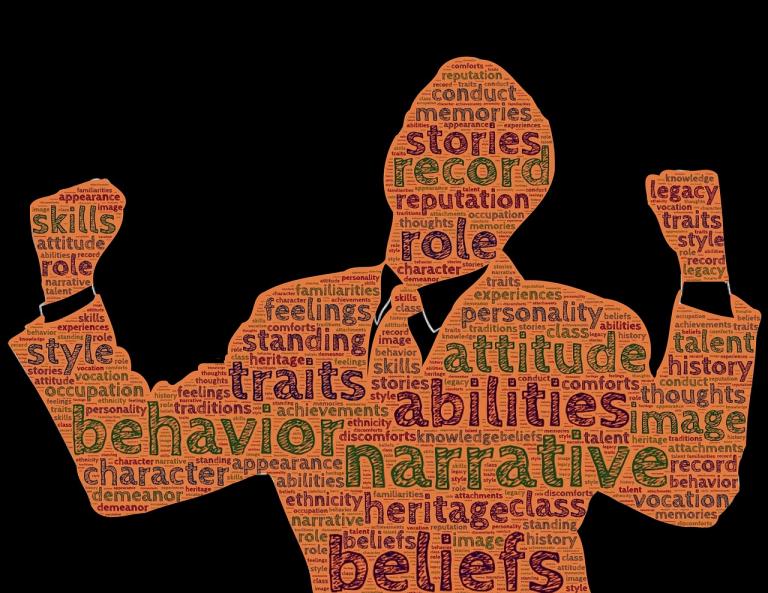
“We are our memories,” so we think. It turns out that’s not true. Various studies indicate the things we honor and shame determine our identity more than do our memories.
Public Domain
Morality defines “me”
In her book Passing Judgment, Terri Apter summarizes the findings of several empirical studies. She writes,
In fact, our judgments are more integral to who we are than our memories. It is widely recognized that brain damage can change one’s personality: those who suffer dementia, for example, are sometimes perceived as no longer being the same person. The perception of whether or not someone is the “same person,” though, depends far more on those responses and preferences and interactions shaped by judgment than on retention of their memory.
This is rather intuitive once we think about it. The problem, however, is people tend to speak more about our memories and experiences than value judgments. When we recognize that we are what we praise and blame, we discern the critical role of honor and shame in shaping our identity, indeed, our entire life.
“Identity” according to whom?
Research studies have considered the issue of identity from two perspectives:
(a) Person X’s view of self
(b) Others’ view of Person X.
My own sense of identity could differ from my identity in the eyes of others. In both cases, however, one’s identity eventually circles back to one’s moral values, i.e., what a person honors or shames, praises or blames.
When studying dementia patients, researchers observed,
“As long as core moral capacities are preserved, perceived identity will remain largely intact.” In fact, they add, “The primacy of morality in determining identity holds up even for dementia types in which moral impairment is not the characteristic or dominant feature.” [1]
In other words, a dementia patient’s relatives and friends regarded him/her as a “different person” when their moral behaviors changed, not when they lost memories.
An individual’s sense of “identity”
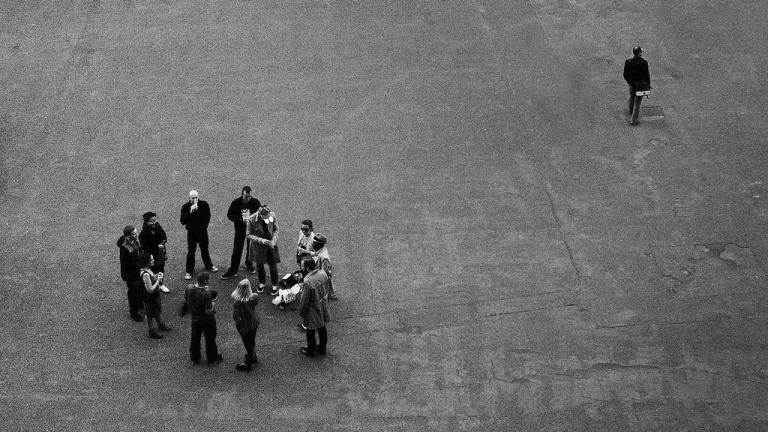
What about an individual’s own sense of identity. A group of researchers found “the degree to which [people] judge [whether] changing characteristics will change identity is based on the extent to which those characteristics contribute to communal ties.”[2]
Credit: Flickr/StewartBlack
In such cases, the most fundamental characteristic that determines identity is the group’s moral beliefs. Yet, not all moral beliefs have the same influence on identity:
“widely shared moral beliefs (e.g., about whether murder is wrong) to be more central to identity than controversial moral beliefs (e.g., about whether abortion is wrong) because widely shared moral beliefs are more strongly linked with community relationships.
When pondering a question that draws attention to the self—who am I?— even adults in an individualistic culture appear to focus on their connections with other people. Uniting psychology and philosophy, the current work highlights the joint role of morality and community in judgments of identity.”[3]
What constitutes a “shared moral belief” and a “controversial moral belief” depends on the particular social group. Within the general public, the two examples above (murder and abortion) typify “controversial” from “shared” beliefs.
However, in the church, we would need to adjust the examples, since a vast number of Christ-followers disapprove abortion. Perhaps a “widely shared moral belief” would be the need to be faithful to one’s spouse; “controversial moral beliefs” might include drinking alcohol (without getting drunk), using pirated movie or software, buying expensive luxury cars, maybe gambling, etc.
 As a Christian, faithfulness to one’s spouse is a widely shared moral belief and so more strongly links us with community relationships. Committing adultery is far more likely to change a person’s sense identity than would changing one’s view on watching Rated-R movies.
It should go without saying that neither I nor the above researchers refer to temporary identities, such as being a member of a weekend softball team, etc. We describe a person’s “essential self.”[4]
Can we separate morality and memories?
Briefly, I’ll respond to an objection I know people will raise. “You can’t separate morality and memory,” they’ll say. We certainly cannot. But their having a close relationship does not make them indistinguishable.
Here’s a simple way to look at it: Having a moral perspective (i.e., a sense of honor-shame) entails having various memories (Moral –> Memories). By contrast, retaining memories does not necessarily imply keeping one’s moral sensibility.[5]
Honor & shame are fundamental to identity
In summary, our identity is rooted in our honor-shame perspective. What we regard as praiseworthy and blameworthy determines both our personal sense of identity as well as the way others judge our identity. These observations should wake us up to the crucial role of honor and shame in forming who we are and thus the work of gospel ministry.
[1] Nina Strohminger and Shaun Nichols. “Neurodegeneration and Identity.” Psychological Science. Vol. 26, no. 9 (2015): 1469–1479. A concise summary of above article is Bobby Azarian, “Morals, Not Memories, Define Who We Are” Scientific American. September 29, 2015.
[2] Heiphetz et al. “The Role of Moral Beliefs, Memories, and Preferences in Representations of Identity.” Cognitive Science 41 (2017): 746–47 [744–767].
[3] Heiphetz et al, 762.
[4] In fact, one article on the subject by Nina Strohminger and Shaun Nichols is titled “The essential moral self.” Cognition 131 (2014): 159–171.
[5] Logically, this would be a fallacy of affirming the consequent whereby one mistakenly thinks memories –> morality.
Previous Post
June 27, 2018
Integrating Symbol, Story, and Ritual (by Tom Steffen)
Next Post

July 11, 2018 Train Up a Child …But How?
Browse Our Archives
Select a Category Atonement Biblical Theology Book Reviews China Chinese Church Chinese Culture Chinese Language Collectivism Contextualization Culture (General) Ecclesiology Evangelism Gospel Honor & Shame (Face) Interpretation/Exegesis Justification/Righteousness Missiology Mission Methods One Gospel for All Nations Other Practical Contextualization Reading Romans with Eastern Eyes Resources Romans Salvation (General) Saving God's Face Seeking God's Face The Cross in Context Theological Contextualization Theological Education Theology Uncategorized
Select a Month October 2026 September 2026 August 2026 July 2026 June 2026 May 2026 April 2026 March 2026 February 2026 January 2026 December 2025 November 2025 October 2025 September 2025 August 2025 July 2025 June 2025 May 2025 April 2025 March 2025 February 2025 January 2025 December 2024 November 2024 October 2024 September 2024 August 2024 July 2024 June 2024 May 2024 April 2024 March 2024 February 2024 January 2024 December 2023 November 2023 October 2023 September 2023 August 2023 July 2023 June 2023 May 2023 April 2023 March 2023 February 2023 January 2023 December 2022 November 2022 October 2022 September 2022 August 2022 July 2022 June 2022 May 2022 April 2022 March 2022 February 2022 January 2022 December 2021 November 2021 October 2021 September 2021 August 2021 July 2021 June 2021 May 2021 April 2021 March 2021 February 2021 January 2021 December 2020 November 2020 October 2020 September 2020 August 2020 July 2020 June 2020 May 2020 April 2020 March 2020 February 2020 January 2020 December 2019 November 2019 October 2019 September 2019 August 2019 July 2019 June 2019 May 2019 April 2019 March 2019 February 2019 January 2019 December 2018 November 2018 October 2018 September 2018 August 2018 July 2018 June 2018 May 2018 April 2018 March 2018 February 2018 January 2018 December 2017 November 2017 October 2017 September 2017 August 2017 July 2017 June 2017 May 2017 April 2017 March 2017 February 2017 January 2017 December 2016 November 2016 October 2016 September 2016 August 2016 July 2016 June 2016 May 2016 April 2016 March 2016 February 2016 January 2016 December 2015 November 2015 October 2015 September 2015 August 2015 July 2015 June 2015 May 2015 April 2015 March 2015 February 2015 January 2015 December 2014 November 2014 October 2014 September 2014 August 2014 July 2014 June 2014 May 2014 April 2014 March 2014 February 2014 January 2014 December 2013 November 2013 October 2013 September 2013 August 2013 July 2013 June 2013 May 2013 April 2013 March 2013 February 2013 January 2013 December 2012 November 2012
Follow Us!
TAKE THE
Religious Wisdom Quiz
What was worn as a sign of mourning in biblical times?
Select your answer to see how you score.
Purple robe Linen Sackcloth Fur
Books by This Author Books by Brad Vaughn
Related posts from Saving God's Face

No King forgets his crown. Why do we?

Recovering Moral Vision Between Shame and Shamelessness

Refuge, Confession, and the End of Shame

Psalm 25 and the Fear of Being Put...
TRENDING AT PATHEOS Evangelical

57th Dove Awards Honor Dolly Parton, Crown New...
On gospel music’s biggest night, the 57th annual GMA Dove Awards honored...

The First Eucharistic Controversy: Christ’s Real Presence
For Catholics, the Eucharist is the source and summit of the Christian...

What a Stop Sign Can Teach Us About...
How to Make a Decision When You Can't Hear God Main point:...

Archdiocese Hosts Military Marriage Retreat in Germany
RASTATT, Germany — The transient military lifestyle, with its frequent deployments and...

Nearly every morning, I make the drive to Detroit with my high-school-age...

The Real AI Story Is Adoption Without Trust
Artificial intelligence has crossed a political threshold. It is no longer a...
view all Evangelical blogs
Ad-Free & Subscriber Log-In Subscription Support
- About Us
- 2026 Calendar
- Videos
- Podcasts
- Library of World Religions
- Faith In Media Tracker
- Advertise With Us
- Write for Us
- Privacy Policy
- Terms of Service
- Do Not Sell My Data
- Contact Us
- Radiant Digital
- Manage Newsletter Subscriptions
- Unsubscribe From Notifications
- Sitemap
Copyright 2008-2026, Patheos. All rights reserved.
Subscription Support Ad-Free & Subscriber Log-In
Follow Patheos