
BuddhistCatholicContemplativeEvangelicalGeneral ChristianHinduJewishLatter-day SaintMuslimNew VisionsProgressive Christian
Beliefs
- Buddhist
- Catholic
- Contemplative
- Evangelical
- General Christian
- Hindu
- Jewish
- Latter-day Saint
- More Voices
- Muslim
- New Visions
- Pagan
- Progressive Christian
Topics
- Religion News
- Food and Religion
- Sports and Religion
- Religious Art
- Religious Music and Entertainment
- Religious Events
- History and Religion
- Style and Religion
- Politics and Religion
- Women in Religion
- Recreation Outdoors and Religion
- Business Finance and Religion
- Careers Workplace and Religion
- Education and Religion
- Family Parenting and Religion
- Health Fitness and Religion
- Home and Religion
- Relationships and Religion
- Technology and Religion
- Travel and Religion
Columnists
- Buddhist Columnists
- Business Finance and Religion Columnists
- Careers Workplace and Religion Columnists
- Catholic Columnists
- Contemplative Columnists
- Education and Religion Columnists
- Evangelists Columnists
- Family Parenting and Religion Columnists
- General Christian Columnists
- Health Fitness and Religion Columnists
- Hindu Columnists
- History and Religion Columnists
- Home and Religion Columnists
- Jewish Columnists
- More Voices Columnists
- Latter Day Columnists
- Muslim Columnists
- New Visions Columnists
- Nonreligious Columnists
- Pagan Columnists
- Politics and Religion Columnists
- Progressive Columnists
- Recreation Outdoors and Religion Columnists
- Relationships and Religion Columnists
- Religion News Columnists
- Religious Art Columnists
- Religious Events Columnists
- Religious Music and Entertainment Columnists
- Sports and Religion Columnists
- Style and Religion Columnists
- Technology and Religion Columnists
- Travel and Religion Columnists
- Women in Religion Columnists
Resource Library
- 2026 Calendar
- Library of World Religions
- The 100 Most Holy Places on Earth
- Patheos Answers
- Podcasts
- Videos
- Faith Leaders Database
- Anglican Episcopalian
- Bahai
- Baptist
- Buddhism
- Christianity
- Confucianism
- Eastern Orthodoxy
- Hinduism
- Holiness and Pentecostal
- ISKCON
- Islam
- Judaism
- Lutheran
- Methodist
- The Church of Jesus Christ of Latter-day Saints
- New Age
- Paganism
- Presbytarian and Reformed
- Protestantism
- Religion Behind the Scenes
- Roman Catholic
- Scientology
- Shia Islam
- Sikhism
- Sufism
- Sunni Islam
- Taoism
- Zen
- See all religions
Research Tools
 Ad-Free & Subscriber Log-In Subscription Support
Ad-Free & Subscriber Log-In Subscription Support
Follow Patheos 

- Trending:
- Forgiveness
- |
- Marriage
- |
- Consciousness
- |
- Death Penalty
- |
- Election
- |
- Halloween

-
Tools
-
Support the Work
- Home
- Evangelical
- Integrating Symbol, Story, and Ritual (by Tom Steffen)
Integrating Symbol, Story, and Ritual (by Tom Steffen)
Last updated on: June 27, 2018 at 7:45 am by Brad Vaughn
Integrating Symbol, Story, and Ritual (by Tom Steffen) 2018-06-11T17:51:05-07:00 Brad Vaughn
Patheos Explore the world's faith through different perspectives on religion and spirituality! Patheos has the views of the prevalent religions and spiritualities of the world.
I’ve asked Tom Steffen to introduce some big ideas you’ll find within his new book, Worldview-based Storying: The Integration of Symbol, Story, and Ritual. This second post introduces part 2 of the book.
Tom is a longtime a leader in the orality movement. Having taught for years at Biola, he is the author of many articles and books, including Reconnecting God’s Story to Ministry and The Facilitator Era.
My first post concluded by highlighting a weakness within the contemporary Orality Movement that requires some repair: We must understand the worldview of the host audience in order to improve the clarity of our communication.

Ptolemaic geocentric worldview (Public Doman)
Why is this necessary? Because “Just telling Bible stories does not guarantee Bible meaning” (Steffen, 2011, 137). When the Sawi make Judas the superhero in Don Richardson’s Peace Child, “Houston we have a problem.” Wise Bible storytellers who do their cultural homework most likely would have anticipated the Sawi’s misunderstanding of Jesus or searched for Palawano’s myths to discover communication bridges and barriers.
But how? Worldview is so comprehensive, so complex! This post examines the second half of my forthcoming book, which makes the case for worldview-based storying (see book outline below). This requires a usable research tool that is simple to use, yet not simplistic.
The Trilogy: Symbol, Story, and Ritual
I have a theory that can help us discover a host culture’s worldview. By “cultural worldview,” I mean one’s filtered perceptions/assumptions of the world through which (s)he interprets all of life (culture). This privileged perspective emerges from a symbol/story/ritual-grid through which people learn, establish systematized priorities to constantly evaluate themselves and others, and “lean into life.” The theory posits that key aspects of worldview can be identified where the trilogy of symbol, story, and ritual intersect (Steffen 1996, 2005).
And I’m in good company. This trilogy is found under different terminology in N. T. Wright’s The New Testament and the People of God. Wright says worldview is composed of four integrated elements: story, symbol, praxis (which leads to ritual), questions.
The trilogy of symbol, story, and ritual can be found in Understanding Folk Religion by Paul Hiebert, Daniel Shaw, and Tite Tiénou. The authors go further than Wright, developing a single chapter on each part. Part 2 of the book unveils a tool to investigate worldview in any cross-cultural context, illustrated by the Ifugao (of the Philippines) marriage process that takes a couple of years to complete.
Next, I’ll briefly review the process to discover the worldview of a different culture using the trilogy of symbol, story, ritual (see Figure 1 below).
Discovering a Culture’s Worldview
One assumption behind this research tool is that culture is integrated (notice the broken lines in Figure 1). While I separate symbol, story, and ritual for discussion purposes in chapters 5-7, in life they are thoroughly integrated, influencing the construction, deconstruction, and reconstruction of one’s worldview. Chapter 8 shows the integrative nature of the trilogy by analyzing Ifugao marriage.
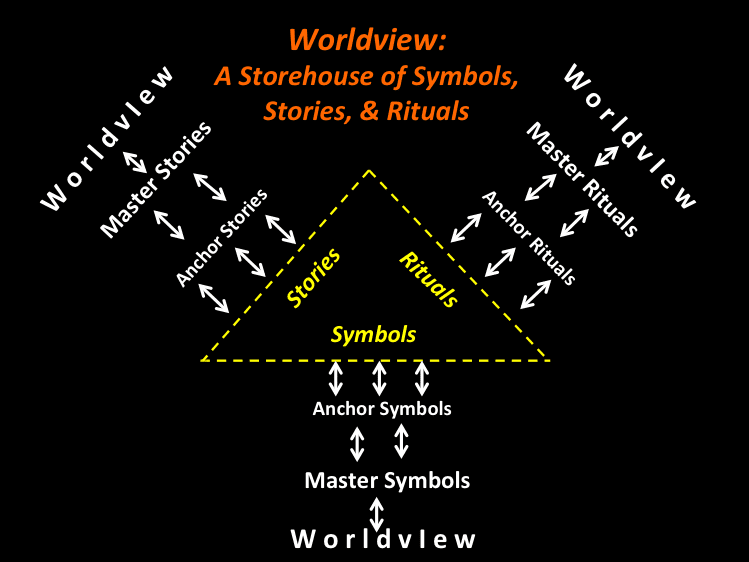 Figure 1: Worldview: A Storehouse of Symbols, Stories, and Rituals
Not all symbols, stories, or rituals are of equal importance in a culture. To distinguish higher levels of value, I differentiate between anchor and master symbols, stories, and rituals (see Figure 1).
I define an anchor as that entity that crisscrosses multiple cultural domains (economic, political, religious, social structure, etc.) as it brings emotive, imaginative, and factual focus within a given culture. Becoming an anchor symbol, story, or ritual can take time, and requires much repetition to rise above all the common ones within a culture.
A master refers to a synthesis of multiple anchor symbols, stories, or rituals. Compared to an anchor, it’s on steroids, showing up in multiple cultural institutions, often with an extended history. It reviews, reflects, and reinforces one’s worldview.
Deconstructing Worldviews
If one’s worldview is constructed through the integration of symbol and story rehearsed through ritual on the anchor and master levels, it will be deconstructed the same way so that it can be reconstructed. Rival symbols, stories, and rituals, in an integrative way, must replace ones that formerly gave allegiance to false gods.
Transforming one’s worldview is the replacement of formerly held symbols, stories, and rituals with rival ones. This re-symboling, re-storying, and re-ritualing results in much more than changed observable behavior; it results in the deep-level alteration of the heart; it results in a new worldview script, new symbols, all of which are rehearsed through new rituals.
Why take the time and effort for such research? Because communication in our own culture is fraught with land mines. Multiply that a thousand times when communicating cross-culturally.
When we don’t do our cultural homework in relation to Bible storying, split-level Christianity, syncretism (like among the Palawanos), legalism, and a host of other “-isms” can easily result. This is not to deny or minimize the work of the Holy Spirit. It is to recognize our stewardship role as cross-cultural co-communicators of the greatest story ever told. The integrative roles of symbol, story, and ritual will do much more than transfix one’s observers; it will transform them, their families, their communities, and their nations for Christ.
Here’s the outline of the book:
Introduction
Part One: Tracking the Orality Movement
1 Pioneers of the Past
2 Rural Roots
3 City Connections
4 Movement Morphings
Part Two: Making the Case for Worldview-based Storying
5 Making the Case for Symbol
6 Making the Case for Story
7 Making the Case for Ritual
8 Making the Case for Worldview-based Storying
9 Envisioning the Future
References:
Hiebert et al., Understanding Folk Religion, 1999.
Steffen, Reconnecting God’s Story to Ministry, 2005, 111, 168.
_______. The Facilitator Era, 2011, 137.
Wright, The New Testament and the People of God, 1992, 124.
Save
Save
Save
Previous Post

June 20, 2018
Looking Back on the Orality Movement (Tom Steffen)
Next Post

July 3, 2018 We are defined by what we honor and shame
Browse Our Archives
Select a Category Atonement Biblical Theology Book Reviews China Chinese Church Chinese Culture Chinese Language Collectivism Contextualization Culture (General) Ecclesiology Evangelism Gospel Honor & Shame (Face) Interpretation/Exegesis Justification/Righteousness Missiology Mission Methods One Gospel for All Nations Other Practical Contextualization Reading Romans with Eastern Eyes Resources Romans Salvation (General) Saving God's Face Seeking God's Face The Cross in Context Theological Contextualization Theological Education Theology Uncategorized
Select a Month October 2026 September 2026 August 2026 July 2026 June 2026 May 2026 April 2026 March 2026 February 2026 January 2026 December 2025 November 2025 October 2025 September 2025 August 2025 July 2025 June 2025 May 2025 April 2025 March 2025 February 2025 January 2025 December 2024 November 2024 October 2024 September 2024 August 2024 July 2024 June 2024 May 2024 April 2024 March 2024 February 2024 January 2024 December 2023 November 2023 October 2023 September 2023 August 2023 July 2023 June 2023 May 2023 April 2023 March 2023 February 2023 January 2023 December 2022 November 2022 October 2022 September 2022 August 2022 July 2022 June 2022 May 2022 April 2022 March 2022 February 2022 January 2022 December 2021 November 2021 October 2021 September 2021 August 2021 July 2021 June 2021 May 2021 April 2021 March 2021 February 2021 January 2021 December 2020 November 2020 October 2020 September 2020 August 2020 July 2020 June 2020 May 2020 April 2020 March 2020 February 2020 January 2020 December 2019 November 2019 October 2019 September 2019 August 2019 July 2019 June 2019 May 2019 April 2019 March 2019 February 2019 January 2019 December 2018 November 2018 October 2018 September 2018 August 2018 July 2018 June 2018 May 2018 April 2018 March 2018 February 2018 January 2018 December 2017 November 2017 October 2017 September 2017 August 2017 July 2017 June 2017 May 2017 April 2017 March 2017 February 2017 January 2017 December 2016 November 2016 October 2016 September 2016 August 2016 July 2016 June 2016 May 2016 April 2016 March 2016 February 2016 January 2016 December 2015 November 2015 October 2015 September 2015 August 2015 July 2015 June 2015 May 2015 April 2015 March 2015 February 2015 January 2015 December 2014 November 2014 October 2014 September 2014 August 2014 July 2014 June 2014 May 2014 April 2014 March 2014 February 2014 January 2014 December 2013 November 2013 October 2013 September 2013 August 2013 July 2013 June 2013 May 2013 April 2013 March 2013 February 2013 January 2013 December 2012 November 2012
Follow Us!
TAKE THE
Religious Wisdom Quiz
What does "Nebuchadnezzar" mean in Akkadian?
Select your answer to see how you score.
King of Babylon O Nabu, protect my heir The Lord reigns Chosen by the gods
Books by This Author Books by Brad Vaughn
Related posts from Saving God's Face

The Real Crisis Beneath America’s Social Crises (Part...

America’s Crisis Is Deeper Than Politics

Independent Thinking Isn’t What You Think

The Gulag Theology of One Day in the...
TRENDING AT PATHEOS Evangelical

The First Eucharistic Controversy: Christ’s Real Presence
For Catholics, the Eucharist is the source and summit of the Christian...

What a Stop Sign Can Teach Us About...
How to Make a Decision When You Can't Hear God Main point:...

Archdiocese Hosts Military Marriage Retreat in Germany
RASTATT, Germany — The transient military lifestyle, with its frequent deployments and...

Nearly every morning, I make the drive to Detroit with my high-school-age...

The Real AI Story Is Adoption Without Trust
Artificial intelligence has crossed a political threshold. It is no longer a...

A new article, written by Jeff Lindsay and Gale L. Pooley,...
view all Evangelical blogs
Ad-Free & Subscriber Log-In Subscription Support
- About Us
- 2026 Calendar
- Videos
- Podcasts
- Library of World Religions
- Faith In Media Tracker
- Advertise With Us
- Write for Us
- Privacy Policy
- Terms of Service
- Do Not Sell My Data
- Contact Us
- Radiant Digital
- Manage Newsletter Subscriptions
- Unsubscribe From Notifications
- Sitemap
Copyright 2008-2026, Patheos. All rights reserved.
Subscription Support Ad-Free & Subscriber Log-In
Follow Patheos