
BuddhistCatholicContemplativeEvangelicalGeneral ChristianHinduJewishLatter-day SaintMuslimNew VisionsProgressive Christian
Beliefs
- Buddhist
- Catholic
- Contemplative
- Evangelical
- General Christian
- Hindu
- Jewish
- Latter-day Saint
- More Voices
- Muslim
- New Visions
- Pagan
- Progressive Christian
Topics
- Religion News
- Food and Religion
- Sports and Religion
- Religious Art
- Religious Music and Entertainment
- Religious Events
- History and Religion
- Style and Religion
- Politics and Religion
- Women in Religion
- Recreation Outdoors and Religion
- Business Finance and Religion
- Careers Workplace and Religion
- Education and Religion
- Family Parenting and Religion
- Health Fitness and Religion
- Home and Religion
- Relationships and Religion
- Technology and Religion
- Travel and Religion
Columnists
- Buddhist Columnists
- Business Finance and Religion Columnists
- Careers Workplace and Religion Columnists
- Catholic Columnists
- Contemplative Columnists
- Education and Religion Columnists
- Evangelists Columnists
- Family Parenting and Religion Columnists
- General Christian Columnists
- Health Fitness and Religion Columnists
- Hindu Columnists
- History and Religion Columnists
- Home and Religion Columnists
- Jewish Columnists
- More Voices Columnists
- Latter Day Columnists
- Muslim Columnists
- New Visions Columnists
- Nonreligious Columnists
- Pagan Columnists
- Politics and Religion Columnists
- Progressive Columnists
- Recreation Outdoors and Religion Columnists
- Relationships and Religion Columnists
- Religion News Columnists
- Religious Art Columnists
- Religious Events Columnists
- Religious Music and Entertainment Columnists
- Sports and Religion Columnists
- Style and Religion Columnists
- Technology and Religion Columnists
- Travel and Religion Columnists
- Women in Religion Columnists
Resource Library
- 2026 Calendar
- Library of World Religions
- The 100 Most Holy Places on Earth
- Patheos Answers
- Podcasts
- Videos
- Faith Leaders Database
- Anglican Episcopalian
- Bahai
- Baptist
- Buddhism
- Christianity
- Confucianism
- Eastern Orthodoxy
- Hinduism
- Holiness and Pentecostal
- ISKCON
- Islam
- Judaism
- Lutheran
- Methodist
- The Church of Jesus Christ of Latter-day Saints
- New Age
- Paganism
- Presbytarian and Reformed
- Protestantism
- Religion Behind the Scenes
- Roman Catholic
- Scientology
- Shia Islam
- Sikhism
- Sufism
- Sunni Islam
- Taoism
- Zen
- See all religions
Research Tools
 Ad-Free & Subscriber Log-In Subscription Support
Ad-Free & Subscriber Log-In Subscription Support
Follow Patheos 

- Trending:
- Forgiveness
- |
- Marriage
- |
- Consciousness
- |
- Death Penalty
- |
- Election
- |
- Halloween

-
Tools
-
Support the Work
- Home
- Evangelical
- Honor and Shameful Retribution in Ancient and Biblical Laws
Honor and Shameful Retribution in Ancient and Biblical Laws
Last updated on: March 29, 2022 at 7:37 am by Brad Vaughn
Honor and Shameful Retribution in Ancient and Biblical Laws 2022-03-29T07:37:14-07:00 Brad Vaughn
Patheos Explore the world's faith through different perspectives on religion and spirituality! Patheos has the views of the prevalent religions and spiritualities of the world.
Conventionally, people contrast “honor and shame” with “law.” We need to reflect more on their inter-relationship. I’ve previously illustrated the relationship of these two metaphors. Now I want to turn attention to the way “honor and shame” (H&S) influence ancient laws. Then we can consider how the Mosaic Law challenges or reshapes prevailing views about H&S.
Credit: Public Domain
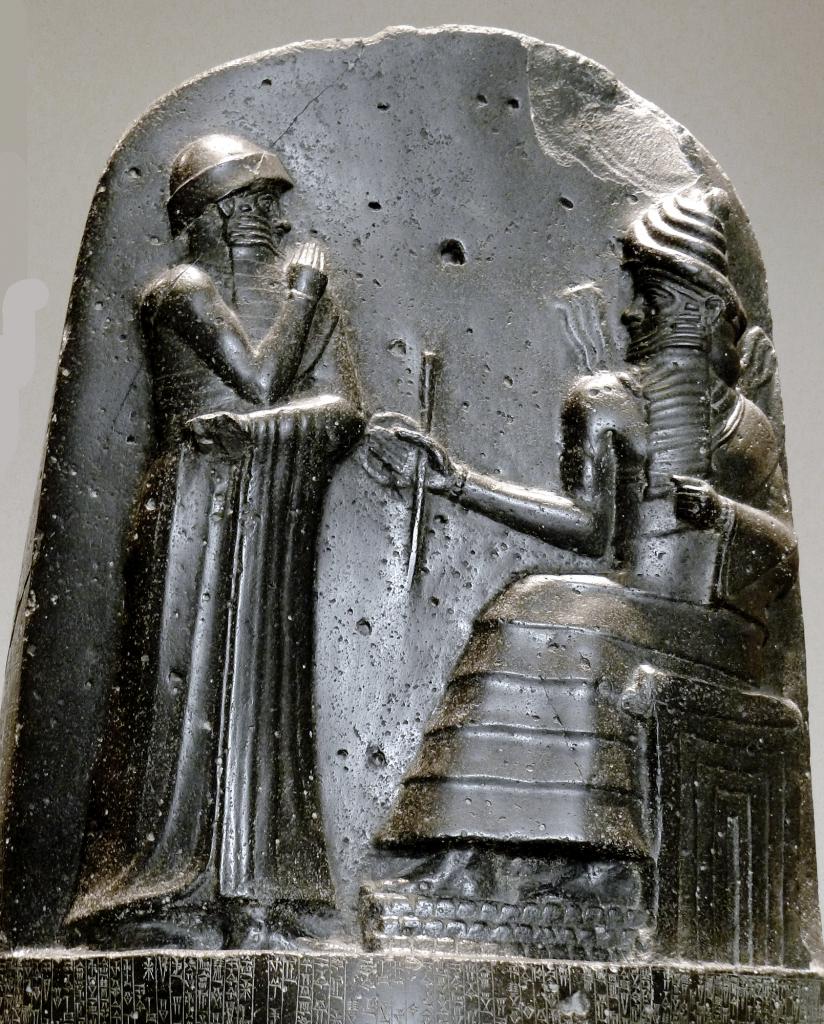
Status in the Laws of Hammurabi
Ancient law codes did not function the way modern laws work. They typically were not widely published for all to read. Instead, a select group of judges and royal officials used or recorded such “laws” much like “case law” is today. Specific examples of situations gave insight as to how to handle other similar instances.
The Code of Hammurabi is perhaps the best-known example of an ancient law code (outside the Bible). Hammurabi was a Babylonian king who ruled approximately from 1792 to 1750 B.C.
These laws explicitly dictated consequences for offenses based on social rank.
200. If a man knocks out the teeth of his equal, his teeth shall be knocked out.
201. If anyone strikes the body of a man higher in rank than he, he shall receive sixty blows with an ox-whip in public.
202. If a free-born man strikes the body of another free-born man or equal rank, he shall pay one gold mina*.*
203. If the slave of a freed man strikes the body of a freed man, his ear shall be cut off.
Law #200 will look familiar (lex talionis, A tooth for a tooth), but it only applies to social equals. Penalties were assessed based on the social rank of the offender and the offended. Just imagine what might happen to foreigners (who have no status in society) if they committed some offense!
The law itself favored those honored in society while lower status persons were subject to greater degrees of shaming. In other words, I’m not describing unjust application of the law; rather, the law itself encoded or reinforced honor-shame codes.

Credit: Public Domain
Biblical Honor-Shame Codes
The principle of lex talionis [“eye for eye, tooth for tooth”] is deeply etched on what remains of the Western conscience. Because people do not know the honor-shame dynamics of the ancient world, a problem hangs over how most people understand this biblical principle.
The Bible affirms lex talionis in a few places (Exod 21:20–25; Lev 24:19–22; Deut 19:18–21; Gen 9:6). As with all Scripture, context is king. Lev 24:17–22 offers clarifying rationale.
Whoever takes a human life shall surely be put to death. 18 Whoever takes an animal’s life shall make it good, life for life. 19 If anyone injures his neighbor, as he has done it shall be done to him, 20 fracture for fracture, eye for eye, tooth for tooth; whatever injury he has given a person shall be given to him. 21 Whoever kills an animal shall make it good, and whoever kills a person shall be put to death. 22 You shall have the same rule for the sojourner and for the native, for I am the Lord your God.
Whereas other ancient codes dictated punishments based on social rank, the Mosaic Law espoused equality, even for foreigners.
Christopher D. Marshall offers a good summary:
It is crucial to understand that, contrary to popular perception, the lex talionis was never intended to sanction revenge. Revenge is expressly forbidden in biblical law (Lev. 19:18; Deut. 32:35; cf. Prov. 20:22; 24:29). Instead, the lex served the twofold purpose of limiting the destructive effects of retribution on the one hand, especially in blood feuds between clans and families, and providing an equitable basis for making restitution or reparation in personal injury cases on the other. Far from encouraging aging revenge, the lex limited retaliation to the appropriate measure of the offense, so that excessive reprisal was ruled out. The “eye for an eye” was a law of proportion: only an eye for an eye and no more. (Beyond Retribution, p. 80)
The Law Defends Human Honor
In the Bible, lex talionis [“eye for eye, tooth for tooth”] treats the lowly with honor; it expresses mercy. When an outsider and low-status person commits wrong, he ought not suffer the shame of unjust punishments that the social elites avoid. Thus Krause states, “The lex talionis is a way to restrain the action of anger” (Jesus Christ our Lord, 225).
God repeatedly emphasizes his desire in the Pentateuch. Here are just a couple of examples:
There shall be one law for the native and for the stranger who sojourns among you. (Exod 12:49)
When a stranger sojourns with you in your land, you shall not do him wrong. 34 You shall treat the stranger who sojourns with you as the native among you, and you shall love him as yourself, for you were strangers in the land of Egypt: I am the LORD your God. 35 “You shall do no wrong in judgment, in measures of length or weight or quantity. 36 You shall have just balances, just weights, a just ephah, and a just hin: I am the LORD your God, who brought you out of the land of Egypt.” (Lev 19:33–36)
Also, cf. Deut 10:16–19; Numb 9:14; 15:15–16
Accordingly, Michael Coogan explains the purpose of this principle was “to prevent people from taking the law into their own hands and exacting disproportionate vengeance for offenses committed against them” (A Brief Introduction to the Old Testament, p. 112).
Laws are not Sacred. Honor Is.
How might these observations affect the relationship between law, honor, and shame? Here are a few important observations.
1. Legal metaphors are not inherently sacred. “Law” is just one metaphor among others. Laws can be just or unjust.
2. Laws encode social ideas about honor and shame.
3. Understanding how honor and shame function in societies is important both for interpreting the Bible and applying it in our day.
4. The Mosaic Law demonstrates how God protects the honor his image-bearers, but not based on social convention.
What other implications do you draw from these observations?
Previous Post

April 4, 2018
A review of Honor Restored (Cru's new evangelism tract)
Next Post
April 18, 2018 Won’t this cause you to lose face?
Browse Our Archives
Select a Category Atonement Biblical Theology Book Reviews China Chinese Church Chinese Culture Chinese Language Collectivism Contextualization Culture (General) Ecclesiology Evangelism Gospel Honor & Shame (Face) Interpretation/Exegesis Justification/Righteousness Missiology Mission Methods One Gospel for All Nations Other Practical Contextualization Reading Romans with Eastern Eyes Resources Romans Salvation (General) Saving God's Face Seeking God's Face The Cross in Context Theological Contextualization Theological Education Theology Uncategorized
Select a Month October 2026 September 2026 August 2026 July 2026 June 2026 May 2026 April 2026 March 2026 February 2026 January 2026 December 2025 November 2025 October 2025 September 2025 August 2025 July 2025 June 2025 May 2025 April 2025 March 2025 February 2025 January 2025 December 2024 November 2024 October 2024 September 2024 August 2024 July 2024 June 2024 May 2024 April 2024 March 2024 February 2024 January 2024 December 2023 November 2023 October 2023 September 2023 August 2023 July 2023 June 2023 May 2023 April 2023 March 2023 February 2023 January 2023 December 2022 November 2022 October 2022 September 2022 August 2022 July 2022 June 2022 May 2022 April 2022 March 2022 February 2022 January 2022 December 2021 November 2021 October 2021 September 2021 August 2021 July 2021 June 2021 May 2021 April 2021 March 2021 February 2021 January 2021 December 2020 November 2020 October 2020 September 2020 August 2020 July 2020 June 2020 May 2020 April 2020 March 2020 February 2020 January 2020 December 2019 November 2019 October 2019 September 2019 August 2019 July 2019 June 2019 May 2019 April 2019 March 2019 February 2019 January 2019 December 2018 November 2018 October 2018 September 2018 August 2018 July 2018 June 2018 May 2018 April 2018 March 2018 February 2018 January 2018 December 2017 November 2017 October 2017 September 2017 August 2017 July 2017 June 2017 May 2017 April 2017 March 2017 February 2017 January 2017 December 2016 November 2016 October 2016 September 2016 August 2016 July 2016 June 2016 May 2016 April 2016 March 2016 February 2016 January 2016 December 2015 November 2015 October 2015 September 2015 August 2015 July 2015 June 2015 May 2015 April 2015 March 2015 February 2015 January 2015 December 2014 November 2014 October 2014 September 2014 August 2014 July 2014 June 2014 May 2014 April 2014 March 2014 February 2014 January 2014 December 2013 November 2013 October 2013 September 2013 August 2013 July 2013 June 2013 May 2013 April 2013 March 2013 February 2013 January 2013 December 2012 November 2012
Follow Us!
TAKE THE
Religious Wisdom Quiz
Who is described as "a beloved physician" and accompanied Paul?
Select your answer to see how you score.
Silas Titus Mark Luke
Books by This Author Books by Brad Vaughn
Related posts from Saving God's Face

Recovering Moral Vision Between Shame and Shamelessness

Psalm 25 and the Fear of Being Put...

You're Either a Louse or a Legend?

Should We Emphasize Jesus as King to People...
TRENDING AT PATHEOS Evangelical

Letters on Living the Faith by C.S. Lewis
Most of us met C.S. Lewis as a public intellectual. Mere Christianity....

When Halloween Unmasks Married Hearts
Written by Dr. David K. Ewen from Eternal Truth Bible College Behind...

Aristotle. He’s been called the father of logic, the father of the...

Methodist Central Hall and Westminster Abbey
Situated on the same square is Methodist Central Hall and Westminster Abbey. ...

57th Dove Awards Honor Dolly Parton, Crown New...
On gospel music’s biggest night, the 57th annual GMA Dove Awards honored...

The First Eucharistic Controversy: Christ’s Real Presence
For Catholics, the Eucharist is the source and summit of the Christian...
view all Evangelical blogs
Ad-Free & Subscriber Log-In Subscription Support
- About Us
- 2026 Calendar
- Videos
- Podcasts
- Library of World Religions
- Faith In Media Tracker
- Advertise With Us
- Write for Us
- Privacy Policy
- Terms of Service
- Do Not Sell My Data
- Contact Us
- Radiant Digital
- Manage Newsletter Subscriptions
- Unsubscribe From Notifications
- Sitemap
Copyright 2008-2026, Patheos. All rights reserved.
Subscription Support Ad-Free & Subscriber Log-In
Follow Patheos