
BuddhistCatholicContemplativeEvangelicalGeneral ChristianHinduJewishLatter-day SaintMuslimNew VisionsProgressive Christian
Beliefs
- Buddhist
- Catholic
- Contemplative
- Evangelical
- General Christian
- Hindu
- Jewish
- Latter-day Saint
- More Voices
- Muslim
- New Visions
- Pagan
- Progressive Christian
Topics
- Religion News
- Food and Religion
- Sports and Religion
- Religious Art
- Religious Music and Entertainment
- Religious Events
- History and Religion
- Style and Religion
- Politics and Religion
- Women in Religion
- Recreation Outdoors and Religion
- Business Finance and Religion
- Careers Workplace and Religion
- Education and Religion
- Family Parenting and Religion
- Health Fitness and Religion
- Home and Religion
- Relationships and Religion
- Technology and Religion
- Travel and Religion
Columnists
- Buddhist Columnists
- Business Finance and Religion Columnists
- Careers Workplace and Religion Columnists
- Catholic Columnists
- Contemplative Columnists
- Education and Religion Columnists
- Evangelists Columnists
- Family Parenting and Religion Columnists
- General Christian Columnists
- Health Fitness and Religion Columnists
- Hindu Columnists
- History and Religion Columnists
- Home and Religion Columnists
- Jewish Columnists
- More Voices Columnists
- Latter Day Columnists
- Muslim Columnists
- New Visions Columnists
- Nonreligious Columnists
- Pagan Columnists
- Politics and Religion Columnists
- Progressive Columnists
- Recreation Outdoors and Religion Columnists
- Relationships and Religion Columnists
- Religion News Columnists
- Religious Art Columnists
- Religious Events Columnists
- Religious Music and Entertainment Columnists
- Sports and Religion Columnists
- Style and Religion Columnists
- Technology and Religion Columnists
- Travel and Religion Columnists
- Women in Religion Columnists
Resource Library
- 2026 Calendar
- Library of World Religions
- The 100 Most Holy Places on Earth
- Patheos Answers
- Podcasts
- Videos
- Faith Leaders Database
- Anglican Episcopalian
- Bahai
- Baptist
- Buddhism
- Christianity
- Confucianism
- Eastern Orthodoxy
- Hinduism
- Holiness and Pentecostal
- ISKCON
- Islam
- Judaism
- Lutheran
- Methodist
- The Church of Jesus Christ of Latter-day Saints
- New Age
- Paganism
- Presbytarian and Reformed
- Protestantism
- Religion Behind the Scenes
- Roman Catholic
- Scientology
- Shia Islam
- Sikhism
- Sufism
- Sunni Islam
- Taoism
- Zen
- See all religions
Research Tools
 Ad-Free & Subscriber Log-In Subscription Support
Ad-Free & Subscriber Log-In Subscription Support
Follow Patheos 

- Trending:
- Forgiveness
- |
- Marriage
- |
- Consciousness
- |
- Death Penalty
- |
- Election
- |
- Halloween

-
Tools
-
Support the Work
- Home
- Evangelical
- “Holiness, holiness is what I need.” Really?
“Holiness, holiness is what I need.” Really?
Last updated on: February 7, 2018 at 8:13 am by Brad Vaughn
“Holiness, holiness is what I need.” Really? 2017-12-19T15:03:56-07:00 Brad Vaughn
Patheos Explore the world's faith through different perspectives on religion and spirituality! Patheos has the views of the prevalent religions and spiritualities of the world.
If you ever sang “Take my Life” in church, you have probably been taught that “ holiness ” refers to a moral condition, a state or moral purity that reflects God’s unique character. Accordingly, you were taught Lev 19:2, “Be holy because I, the Lord your God, am holy.”[1]
However, both the Hebrew and the Greek Septuagint of Lev 19:2 use indicative, not imperative, verbs. In other words, you are holy because I, the Lord your God, am holy. In The Lost World of the Israelite Conquest , John and Harvey Walton suggest that Lev 19 makes a statement of fact, not a command.
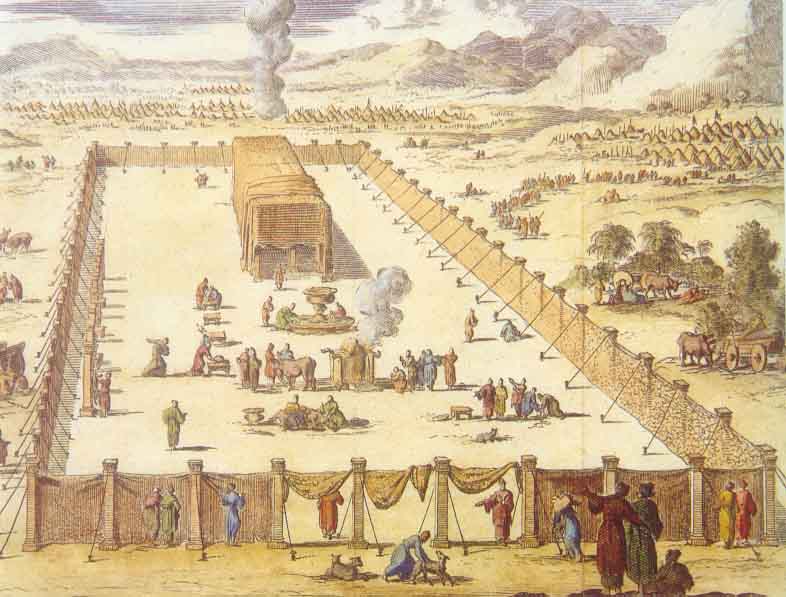
Public Domain
But let’s not get ahead of ourselves and import the New Testament into the Old Testament. Did Israel need holiness? Could ancient Jewish youth have sat around the fire singing,
Holiness (Holiness) is what I long for.
Holiness (Holiness) is what I need.
Holiness (Holiness) is what You want for me
Tradition is not Wholly True
The Waltons explain the problem with common views about holiness and cleanliness in the Bible.
Concerning “holy”:
The problem with this specific interpretation is that the word translated “holy” (Hebrew root qdš) cannot possibly mean “having a certain moral character.” The vast majority of things designated as holy are inanimate objects such as the ark, the altar, and the lampstands for the tabernacle. …The only persons (potential moral agents) designated as a holy thing are the priests, but this is never interpreted to imply that the priests are more moral or have a different moral character from the rest of the assembly. (p. 105)
Concerning “clean”:
The concept of cleanliness is connected to the idea of suitability for cultic ritual use or participation. Clean (ṭāhôr) cannot mean “moral” for the same reasons that “holy” (qdš) cannot; many unclean actions are not sinful (menstruation, attending a funeral), and many unclean things have no moral agency (animals, molds, locations).
Cleanliness is tangentially related to immorality in the sense that sin (as immorality) is one possible cultic contaminant, but impurity (ṭūmʾâ) and immorality (e.g., ḥaṭṭāʾt) are in no way interchangeable. Humans can make themselves clean or unclean, but holiness is a status that is conferred by God. It cannot be earned or acquired (or lost) through behavior. (pp. 106-107)
So, if the Waltons are correct, which I think they are, then we can easily see how easy it is to confuse part of the truth for the whole of the truth.
(In this series, click for Part 1, Part 2, Part 3)
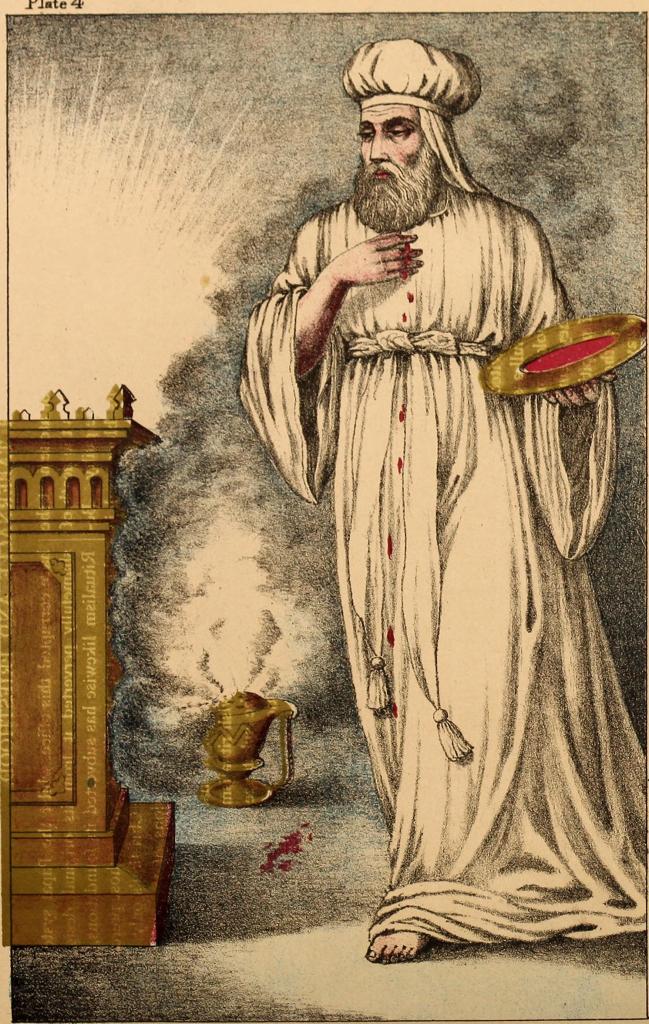
Public Domain
What then is holiness?
To be “holy” means to be identified or associated with God. Therefore, God does not and cannot demand holiness of people. Why?
Holiness is a status. It is granted, not earned nor related to moral performance.
What does this mean concerning the conquest of Canaan?
since holiness refers to co-identification with deity and is not to be equated with morality or with meeting standards of cleanness, no one, neither Israelites nor Canaanites, can be guilty of not being holy. (p. 117)
The nation of Israel is reckoned holy, even if individuals were not morally upright.
As a conclusion, let’s relate holiness back to the previous point about the Law’s purpose.
“the purpose of the holiness code is to define order; more precisely, however, its purpose is to define the order that specifically defines the nation that defines Yahweh.” (p. 120)
Ancient Text for Modern Contexts
I know some readers will be tempted to dismiss this book simply because it sounds too strange or different from tradition. But I would urge you to not to do that for two reasons.
1) Tradition must never trump Scripture.
2) The Waltons give close attention to the biblical text such that any disagreement ought to be based on their handling of the text, nothing else.
I surmise this book will cause us to adjust and rethink various and subtle ways we teach the Bible in cross cultural contexts. I expect that a more biblically and historically faithful reading of the text will better connect with non-Western cultures.
[1] Peter’s application of Lev 19:2 often confuses people. In 1 Peter 1:15–16, he writes: As obedient children, do not be conformed to the passions of your former ignorance, 15 but as he who called you is holy, you also be holy in all your conduct, since it is written, “You shall be holy, for I am holy.” Peter does add “in all your conduct” and bases the command on the indicative in v. 16.
Previous Post

January 31, 2018
Did the Canaanites actually break God’s Law?
Next Post
February 8, 2018 Why Jen Hatmaker Gets Contextualization Wrong
Browse Our Archives
Select a Category Atonement Biblical Theology Book Reviews China Chinese Church Chinese Culture Chinese Language Collectivism Contextualization Culture (General) Ecclesiology Evangelism Gospel Honor & Shame (Face) Interpretation/Exegesis Justification/Righteousness Missiology Mission Methods One Gospel for All Nations Other Practical Contextualization Reading Romans with Eastern Eyes Resources Romans Salvation (General) Saving God's Face Seeking God's Face The Cross in Context Theological Contextualization Theological Education Theology Uncategorized
Select a Month October 2026 September 2026 August 2026 July 2026 June 2026 May 2026 April 2026 March 2026 February 2026 January 2026 December 2025 November 2025 October 2025 September 2025 August 2025 July 2025 June 2025 May 2025 April 2025 March 2025 February 2025 January 2025 December 2024 November 2024 October 2024 September 2024 August 2024 July 2024 June 2024 May 2024 April 2024 March 2024 February 2024 January 2024 December 2023 November 2023 October 2023 September 2023 August 2023 July 2023 June 2023 May 2023 April 2023 March 2023 February 2023 January 2023 December 2022 November 2022 October 2022 September 2022 August 2022 July 2022 June 2022 May 2022 April 2022 March 2022 February 2022 January 2022 December 2021 November 2021 October 2021 September 2021 August 2021 July 2021 June 2021 May 2021 April 2021 March 2021 February 2021 January 2021 December 2020 November 2020 October 2020 September 2020 August 2020 July 2020 June 2020 May 2020 April 2020 March 2020 February 2020 January 2020 December 2019 November 2019 October 2019 September 2019 August 2019 July 2019 June 2019 May 2019 April 2019 March 2019 February 2019 January 2019 December 2018 November 2018 October 2018 September 2018 August 2018 July 2018 June 2018 May 2018 April 2018 March 2018 February 2018 January 2018 December 2017 November 2017 October 2017 September 2017 August 2017 July 2017 June 2017 May 2017 April 2017 March 2017 February 2017 January 2017 December 2016 November 2016 October 2016 September 2016 August 2016 July 2016 June 2016 May 2016 April 2016 March 2016 February 2016 January 2016 December 2015 November 2015 October 2015 September 2015 August 2015 July 2015 June 2015 May 2015 April 2015 March 2015 February 2015 January 2015 December 2014 November 2014 October 2014 September 2014 August 2014 July 2014 June 2014 May 2014 April 2014 March 2014 February 2014 January 2014 December 2013 November 2013 October 2013 September 2013 August 2013 July 2013 June 2013 May 2013 April 2013 March 2013 February 2013 January 2013 December 2012 November 2012
Follow Us!
TAKE THE
Religious Wisdom Quiz
True or False: John is the only Gospel that records Jesus washing the disciples' feet.
Select your answer to see how you score.
TRUE FALSE
Books by This Author Books by Brad Vaughn
Related posts from Saving God's Face
How Biblical Sacrifices Vindicate God’s Glory

What Exactly Does Christ Purify?
What are Essential Elements of Atonement?

The Heart of Biblical Sacrifice Is Not Blood...
TRENDING AT PATHEOS Evangelical

The Iron Gates and the Lion of the...
Yesterday, I didn't finish my report about, well, yesterday. So I'll...

Dolly Parton’s Last Song Wins Dove Award with...
Bluegrass band The Grascals, speaking on the red carpet at the 57th...

The Image: On the Horror of Capitalism and...
The Image Then went the Pharisees, and took counsel how they might...

We are approaching the date of our new American national holiday: October...

Letters on Living the Faith by C.S. Lewis
Most of us met C.S. Lewis as a public intellectual. Mere Christianity....

When Halloween Unmasks Married Hearts
Written by Dr. David K. Ewen from Eternal Truth Bible College Behind...
view all Evangelical blogs
Ad-Free & Subscriber Log-In Subscription Support
- About Us
- 2026 Calendar
- Videos
- Podcasts
- Library of World Religions
- Faith In Media Tracker
- Advertise With Us
- Write for Us
- Privacy Policy
- Terms of Service
- Do Not Sell My Data
- Contact Us
- Radiant Digital
- Manage Newsletter Subscriptions
- Unsubscribe From Notifications
- Sitemap
Copyright 2008-2026, Patheos. All rights reserved.
Subscription Support Ad-Free & Subscriber Log-In
Follow Patheos