
BuddhistCatholicContemplativeEvangelicalGeneral ChristianHinduJewishLatter-day SaintMuslimNew VisionsProgressive Christian
Beliefs
- Buddhist
- Catholic
- Contemplative
- Evangelical
- General Christian
- Hindu
- Jewish
- Latter-day Saint
- More Voices
- Muslim
- New Visions
- Pagan
- Progressive Christian
Topics
- Religion News
- Food and Religion
- Sports and Religion
- Religious Art
- Religious Music and Entertainment
- Religious Events
- History and Religion
- Style and Religion
- Politics and Religion
- Women in Religion
- Recreation Outdoors and Religion
- Business Finance and Religion
- Careers Workplace and Religion
- Education and Religion
- Family Parenting and Religion
- Health Fitness and Religion
- Home and Religion
- Relationships and Religion
- Technology and Religion
- Travel and Religion
Columnists
- Buddhist Columnists
- Business Finance and Religion Columnists
- Careers Workplace and Religion Columnists
- Catholic Columnists
- Contemplative Columnists
- Education and Religion Columnists
- Evangelists Columnists
- Family Parenting and Religion Columnists
- General Christian Columnists
- Health Fitness and Religion Columnists
- Hindu Columnists
- History and Religion Columnists
- Home and Religion Columnists
- Jewish Columnists
- More Voices Columnists
- Latter Day Columnists
- Muslim Columnists
- New Visions Columnists
- Nonreligious Columnists
- Pagan Columnists
- Politics and Religion Columnists
- Progressive Columnists
- Recreation Outdoors and Religion Columnists
- Relationships and Religion Columnists
- Religion News Columnists
- Religious Art Columnists
- Religious Events Columnists
- Religious Music and Entertainment Columnists
- Sports and Religion Columnists
- Style and Religion Columnists
- Technology and Religion Columnists
- Travel and Religion Columnists
- Women in Religion Columnists
Resource Library
- 2026 Calendar
- Library of World Religions
- The 100 Most Holy Places on Earth
- Patheos Answers
- Podcasts
- Videos
- Faith Leaders Database
- Anglican Episcopalian
- Bahai
- Baptist
- Buddhism
- Christianity
- Confucianism
- Eastern Orthodoxy
- Hinduism
- Holiness and Pentecostal
- ISKCON
- Islam
- Judaism
- Lutheran
- Methodist
- The Church of Jesus Christ of Latter-day Saints
- New Age
- Paganism
- Presbytarian and Reformed
- Protestantism
- Religion Behind the Scenes
- Roman Catholic
- Scientology
- Shia Islam
- Sikhism
- Sufism
- Sunni Islam
- Taoism
- Zen
- See all religions
Research Tools
 Ad-Free & Subscriber Log-In Subscription Support
Ad-Free & Subscriber Log-In Subscription Support
Follow Patheos 

- Trending:
- Forgiveness
- |
- Marriage
- |
- Consciousness
- |
- Death Penalty
- |
- Election
- |
- Halloween

-
Tools
-
Support the Work
- Home
- Evangelical
- What the Bible Does Not Say about the Canaanites
What the Bible Does Not Say about the Canaanites
Last updated on: January 29, 2018 at 8:56 pm by Brad Vaughn
What the Bible Does Not Say about the Canaanites 2018-01-29T20:56:46-07:00 Brad Vaughn
Patheos Explore the world's faith through different perspectives on religion and spirituality! Patheos has the views of the prevalent religions and spiritualities of the world.
The more I study the Bible, the more I discover what it does not say.

Public Domain
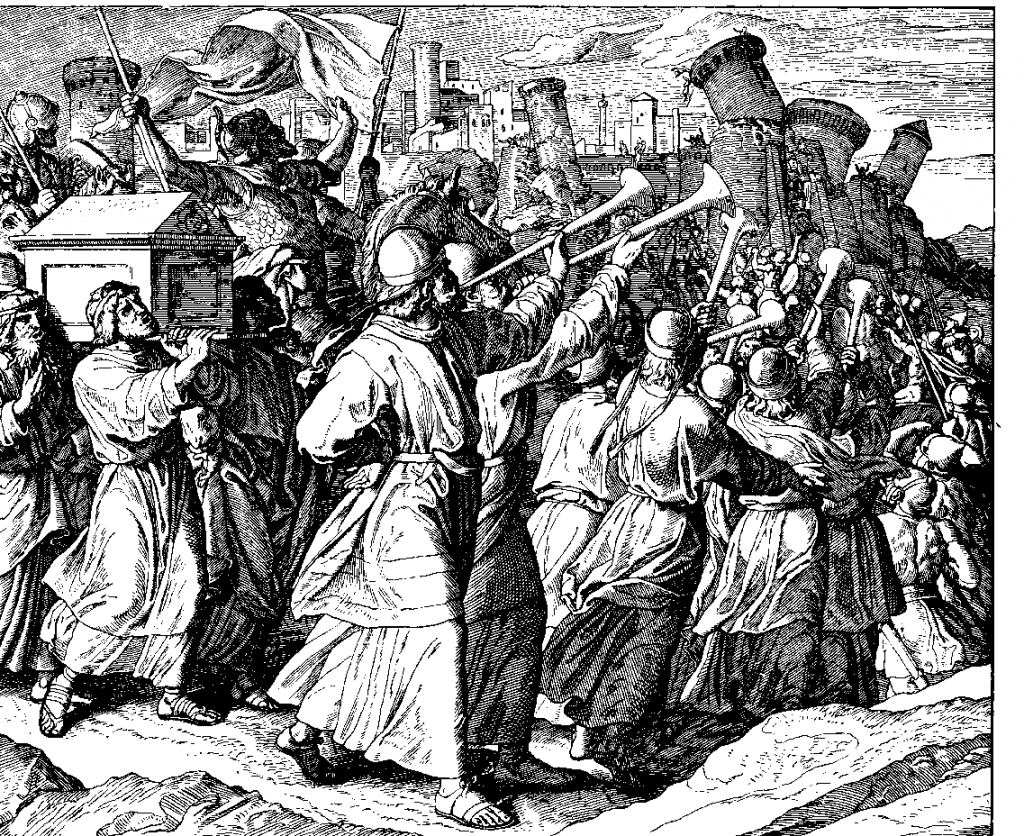
Why did Israel attempt to clear the Canaanites from the promised land? Various reasons have been given but they can be simplified in this way: the Canaanites had so much sin that God had to judge them.
Does suffering imply guilt?
In The Lost World of the Israelite Conquest (TLWIC), John and Harvey Walton challenge conventional wisdom about the Canaanites. They make an astute observation. While people quickly eschew prosperity theology, a similar kind of thinking affects our reading of Joshua. Interpreters often assume God’s decree that people suffer somehow implies God’s judgment against them for guilt. They remind us,
“God’s gifts, blessings, and grace are not dispensed based on merit. What we often fail to appreciate is that the reverse is also true, that suffering can also be dispensed without merit…. God’s actions are not limited to responses to our behavior (or misbehavior).” (p. 34).
You would think reading Job would remind us of God’s ways of working in the world. “God can strike without cause, but God does not strike without purpose” (p. 37).
In systematic theology classes, students tend to privilege certain aspects of God’s character in isolation with other characteristics.
“God’s wisdom, not God’s justice, forms the basis of God’s activity in the world. Faith trusts that God is wise and that therefore his purposes are good, even if they don’t seem that way to any system we can understand. God does not need to be defended; he wants to be trusted” (p. 35).
By slowing down, we gain balance and a perspective of goodness.
What is God’s plan?
In typical Walton fashion, he explores other ancient near eastern documents that describe other nations’ conquest of lands. The purpose is simply to consider whether other possible ways Israel might explain their conquest of Canaan. The authors summarize their conclusion in this way:
Two themes are described and continuously repeated: Yahweh is both able and willing to carry out the covenant promises made to the ancestors of Israel. If the Canaanite nations are allowed to remain, the Israelite nation will be unable to survive under the covenant. (p. 45)
This alternative suggestion does not suit our modern sensibilities but it does fit the text and ancient biblical context.
Public Domain
Is the Fourth Generation Full of Sin?
“Wait a minute,” you might object, “What about Genesis 15:16?” Common translations of this key verse read something like this: God will wait to give Abraham the land “because the sin of the Amorites has not yet reached its full measure.”
Walton carefully demonstrates the various problems with this reading. Nearly every key word is contestable. Whatever will happen to the Amorites will come in the fourth generation. This common idiom that refers to “the first one that the patriarch is not going to see into adulthood” (p. 60).
Even the fact that God only mentions the Amorites (not all Canaanites) is a clue. They tied together multiple details often missed or not explained.
“Now it becomes perfectly clear why the idea of the destiny of the Amorites is tied to the idea of peace in Abram’s time; he isn’t only concerned about his own fate but also that of his allies. By delaying the displacement of the Amorites until sometime in the distant future, Yahweh assures Abram that his children will not negatively affect the people to whom he has some attachment.” (p. 61)
Even if one is not immediately persuaded, the explanatory power of this view cannot be ignored.
Thou Shalt Steal the Canaanites’ Land?
Is someone guilty of stealing? Scholars have made this claim in both directions, saying each side steals land from the other. Walton explains why this interpretation does not fit the text or the historical context. Instead,
“an appropriate analogy is not appeal to property rights but rather eminent domain. Eminent domain is something that the government has a legal right to do, but whether exercising that right is civil service or tyranny depends on the context in which it is employed. The government is not necessarily justified merely because it possesses the legal right; neither is it necessarily vilified because observers (or victims) of the action are not happy about it.” (p. 70)
How does this apply to God’s actions in Canaan? The authors conclude,
The conquest works the same way; the value of the action is not determined by the specifics of the action, but by the purpose that the action is intended to fulfill. Therefore, the conquest should be evaluated (positively or negatively) on the basis of the purpose for which it was done, not on the basis of the legal rights of any of the parties involved. (p. 71)
This final quote takes us back to the observations made in my previous post. In part 1 of the series, we highlighted a critical starting point for interpretation.
What the text means largely depends on why the text exists.
In the coming post, we’ll shift attention to a provocative claim; namely, the Bible does not depict the Canaanites as breaking God’s Law.
Previous Post

January 18, 2018
Reviewing "The Lost World of the Israelite Conquest"
Next Post
January 31, 2018 Did the Canaanites actually break God’s Law?
Browse Our Archives
Select a Category Atonement Biblical Theology Book Reviews China Chinese Church Chinese Culture Chinese Language Collectivism Contextualization Culture (General) Ecclesiology Evangelism Gospel Honor & Shame (Face) Interpretation/Exegesis Justification/Righteousness Missiology Mission Methods One Gospel for All Nations Other Practical Contextualization Reading Romans with Eastern Eyes Resources Romans Salvation (General) Saving God's Face Seeking God's Face The Cross in Context Theological Contextualization Theological Education Theology Uncategorized
Select a Month October 2026 September 2026 August 2026 July 2026 June 2026 May 2026 April 2026 March 2026 February 2026 January 2026 December 2025 November 2025 October 2025 September 2025 August 2025 July 2025 June 2025 May 2025 April 2025 March 2025 February 2025 January 2025 December 2024 November 2024 October 2024 September 2024 August 2024 July 2024 June 2024 May 2024 April 2024 March 2024 February 2024 January 2024 December 2023 November 2023 October 2023 September 2023 August 2023 July 2023 June 2023 May 2023 April 2023 March 2023 February 2023 January 2023 December 2022 November 2022 October 2022 September 2022 August 2022 July 2022 June 2022 May 2022 April 2022 March 2022 February 2022 January 2022 December 2021 November 2021 October 2021 September 2021 August 2021 July 2021 June 2021 May 2021 April 2021 March 2021 February 2021 January 2021 December 2020 November 2020 October 2020 September 2020 August 2020 July 2020 June 2020 May 2020 April 2020 March 2020 February 2020 January 2020 December 2019 November 2019 October 2019 September 2019 August 2019 July 2019 June 2019 May 2019 April 2019 March 2019 February 2019 January 2019 December 2018 November 2018 October 2018 September 2018 August 2018 July 2018 June 2018 May 2018 April 2018 March 2018 February 2018 January 2018 December 2017 November 2017 October 2017 September 2017 August 2017 July 2017 June 2017 May 2017 April 2017 March 2017 February 2017 January 2017 December 2016 November 2016 October 2016 September 2016 August 2016 July 2016 June 2016 May 2016 April 2016 March 2016 February 2016 January 2016 December 2015 November 2015 October 2015 September 2015 August 2015 July 2015 June 2015 May 2015 April 2015 March 2015 February 2015 January 2015 December 2014 November 2014 October 2014 September 2014 August 2014 July 2014 June 2014 May 2014 April 2014 March 2014 February 2014 January 2014 December 2013 November 2013 October 2013 September 2013 August 2013 July 2013 June 2013 May 2013 April 2013 March 2013 February 2013 January 2013 December 2012 November 2012
Follow Us!
TAKE THE
Religious Wisdom Quiz
I prayed that God would bless me and enlarge my territory, and He granted my request. Who am I?
Select your answer to see how you score.
Solomon Hezekiah Jabez David
Books by This Author Books by Brad Vaughn
Related posts from Saving God's Face

Should We Emphasize Jesus as King to People...

Why Egalitarians Can Stay in a Complementarian Church
"Why Have You Forsaken Me?” and the Problem...

What motivates obedience when I don’t want to...
TRENDING AT PATHEOS Evangelical

Methodist Central Hall and Westminster Abbey
Situated on the same square is Methodist Central Hall and Westminster Abbey. ...

57th Dove Awards Honor Dolly Parton, Crown New...
On gospel music’s biggest night, the 57th annual GMA Dove Awards honored...

The First Eucharistic Controversy: Christ’s Real Presence
For Catholics, the Eucharist is the source and summit of the Christian...

What a Stop Sign Can Teach Us About...
How to Make a Decision When You Can't Hear God Main point:...

Archdiocese Hosts Military Marriage Retreat in Germany
RASTATT, Germany — The transient military lifestyle, with its frequent deployments and...

Nearly every morning, I make the drive to Detroit with my high-school-age...
view all Evangelical blogs
Ad-Free & Subscriber Log-In Subscription Support
- About Us
- 2026 Calendar
- Videos
- Podcasts
- Library of World Religions
- Faith In Media Tracker
- Advertise With Us
- Write for Us
- Privacy Policy
- Terms of Service
- Do Not Sell My Data
- Contact Us
- Radiant Digital
- Manage Newsletter Subscriptions
- Unsubscribe From Notifications
- Sitemap
Copyright 2008-2026, Patheos. All rights reserved.
Subscription Support Ad-Free & Subscriber Log-In
Follow Patheos