
BuddhistCatholicContemplativeEvangelicalGeneral ChristianHinduJewishLatter-day SaintMuslimNew VisionsProgressive Christian
Beliefs
- Buddhist
- Catholic
- Contemplative
- Evangelical
- General Christian
- Hindu
- Jewish
- Latter-day Saint
- More Voices
- Muslim
- New Visions
- Pagan
- Progressive Christian
Topics
- Religion News
- Food and Religion
- Sports and Religion
- Religious Art
- Religious Music and Entertainment
- Religious Events
- History and Religion
- Style and Religion
- Politics and Religion
- Women in Religion
- Recreation Outdoors and Religion
- Business Finance and Religion
- Careers Workplace and Religion
- Education and Religion
- Family Parenting and Religion
- Health Fitness and Religion
- Home and Religion
- Relationships and Religion
- Technology and Religion
- Travel and Religion
Columnists
- Buddhist Columnists
- Business Finance and Religion Columnists
- Careers Workplace and Religion Columnists
- Catholic Columnists
- Contemplative Columnists
- Education and Religion Columnists
- Evangelists Columnists
- Family Parenting and Religion Columnists
- General Christian Columnists
- Health Fitness and Religion Columnists
- Hindu Columnists
- History and Religion Columnists
- Home and Religion Columnists
- Jewish Columnists
- More Voices Columnists
- Latter Day Columnists
- Muslim Columnists
- New Visions Columnists
- Nonreligious Columnists
- Pagan Columnists
- Politics and Religion Columnists
- Progressive Columnists
- Recreation Outdoors and Religion Columnists
- Relationships and Religion Columnists
- Religion News Columnists
- Religious Art Columnists
- Religious Events Columnists
- Religious Music and Entertainment Columnists
- Sports and Religion Columnists
- Style and Religion Columnists
- Technology and Religion Columnists
- Travel and Religion Columnists
- Women in Religion Columnists
Resource Library
- 2026 Calendar
- Library of World Religions
- The 100 Most Holy Places on Earth
- Patheos Answers
- Podcasts
- Videos
- Faith Leaders Database
- Anglican Episcopalian
- Bahai
- Baptist
- Buddhism
- Christianity
- Confucianism
- Eastern Orthodoxy
- Hinduism
- Holiness and Pentecostal
- ISKCON
- Islam
- Judaism
- Lutheran
- Methodist
- The Church of Jesus Christ of Latter-day Saints
- New Age
- Paganism
- Presbytarian and Reformed
- Protestantism
- Religion Behind the Scenes
- Roman Catholic
- Scientology
- Shia Islam
- Sikhism
- Sufism
- Sunni Islam
- Taoism
- Zen
- See all religions
Research Tools
 Ad-Free & Subscriber Log-In Subscription Support
Ad-Free & Subscriber Log-In Subscription Support
Follow Patheos 

- Trending:
- Forgiveness
- |
- Marriage
- |
- Consciousness
- |
- Death Penalty
- |
- Election
- |
- Halloween

-
Tools
-
Support the Work
- Home
- Evangelical
- Women and Ascribed Shame (by Moyra Dale)
Women and Ascribed Shame (by Moyra Dale)
Last updated on: January 3, 2018 at 8:10 am by Brad Vaughn
Women and Ascribed Shame (by Moyra Dale) 2017-12-07T11:10:33-07:00 Brad Vaughn
Patheos Explore the world's faith through different perspectives on religion and spirituality! Patheos has the views of the prevalent religions and spiritualities of the world.
Today’s guest post comes from Moyra Dale, who spent over two decades in the Middle East and holds doctorates in education and theology. See her full bio below.
It has been good to see further discussion in western journals and books on the subject of shame and honour in the past few years. We welcome the recognition of shame and honour as significant categories, both in the Bible and in contemporary cultures, including western society. US author Brené Brown in her book on Women and Shame, comments,
“…most of us, if not all, have built significant parts of our lives around shame. Individuals, families and communities use shame as a tool to change others and protect themselves.”[i]
However while shame is a widespread dynamic, the expression of it is gendered in many cultures.
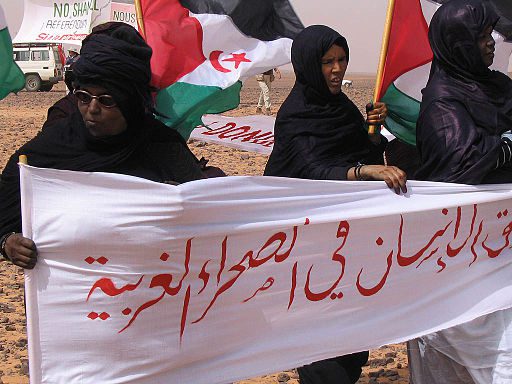 David deSilva echoes the same intertwining of gendered honour and shame in many societies, where the woman “is embedded in the identity and honour of some male (her father, if she is unmarried, her husband after she marries).”[iv]
The often-quoted Arab proverb, that “the honour of a man lies between the legs of a woman” is also found in other cultures around the world, including Latin America.[v]
Bruce Malina, in his earlier book on the New Testament in the light of cultural anthropology, reminds us:
“In the area of individual, concrete behaviour, honor and shame are gender specific. … individual males symbol honor and individual females symbol shame. … feelings of ‘shame’ to reveal nakedness, modesty, shyness, blushing, timidity, restraint, sexual exclusiveness – all this is positive shame (sic) for the female and makes her honorable.”[vi]
I want to suggest three ways in which shame finds particular female embodiment across different cultures. The three dimensions are ascribed shame, embodied shame, and the female universal of menstruation. These are part of the lived experience of women around the world.
If shame is symbolized more in women’s bodies in cultures around the world, how does the good news of Jesus Messiah speak to the embodied nature of our shame?
In this blog we will look at the first dimension, ascribed shame.
Ascribed shame
Shame is ascribed proportionally more to women in many situations. Sometimes even when they are the victims they bear the blame for what has happened to them.
Traditionally women have been held to be responsible when a couple has been unable to have children (or only produce daughters instead of sons).[vii] After a divorce, a British report this month noted that women were found to be twice as likely as men to feel shame.[viii] Even when it was the man who walked out of the marriage or initiated the divorce, the women (wives and daughters) describe their feelings of shame.
In New Testament times, it was almost impossible for women to initiate divorce: that power belonged to men.[ix] Yet the Samaritan woman (John chapter 4) who had had five husbands is often described by commentators as an ‘immoral woman’. A group of Bangladeshi women, hearing the story, commented, “She was probably unable to have children, which is why they kept divorcing her.” Was she immoral or abused?
Distorting shame
Around the world, women are made to carry the responsibility for men’s desire or violent actions. This is used to justify some of the required rules of women’s covering in different cultures. In the west also, by preferring language which describes a woman as ‘hot’ rather than talking about his own sexual desires, the man is placing the locus of control within the woman’s body, thus absolving him of responsibility for his sexual feelings – making it ‘her fault’ if he gets turned on – or if he doesn’t.[x]
When desire is wrongly directed it can demean and distort human relationships: and by ascribing to women the responsibility for creating desire, shame becomes embedded in women as female bodies.[xi]
Shockingly, even in situations of violence such as rape, women are frequently told it was their fault because of how they dressed or behaved. Is this the reason that some commentators prefer to ascribe blame to Bathsheba for David’s actions? While they might question the power imbalance between a woman and the king, the Bible is clear in attributing fault to David.[xii]
And similarly in domestic violence, it is often assumed that the woman provoked the violence or was responsible for it. More frighteningly, women are encouraged to remain within the lived fear and shame of experiencing violence in the home – often even in the name of religion: and this occurs both in Islam and Christianity.  Tucker describes a minister who was offering marriage counseling, telling her that submission to her violently abusive husband was submission to God – and that included not reporting her husband’s sexual abuse of their foster daughter.[xiii] And ‘honour’ killings endorse the ascription – and punishment – of shame in female bodies.
Ascribed shame – Public vindication
Shame causes us to want to hide, to omit facts, lie or keep secrets, thinking that we will be rejected if people know the truth about us. However Travis Stewart suggests that the only way out of shame is through it.
“When we allow ourselves to be known, especially at our worst, we experience true acceptance and intimacy. Shame is grounded on the belief that if we are fully known we will not be accepted. Only by being fully known and accepted will we defeat shame.”[xiv]
While shame is being increasingly recognized as a category in western behaviour, some suggest that it is more felt within the individual, rather than publically constructed. So we seek someone safe to whom we are able to reveal ourselves, in order to find freedom from shame.
In collectivist cultures, shame is about the public perception of people. Our instinct, in dealing with people carrying shame, may be to talk with them secretly, wanting to protect them.
So it can be confronting when we see how openly Jesus deals with women who are carrying ascribed shame.
Jesus’ response to ascribed shame
In a stunning reversal of ascribed honour and shame, he affirms the love and forgiveness of the sinful woman at Simon the Pharisee’s house in front of everyone present. In the synagogue he calls the crippled woman over to where he is teaching everyone, and heals her. And the woman who is healed of the flow of blood, he again calls out in front of everyone to name her affliction – and healing.[xv] Rather than colluding with shame’s hiddenness, he exposes the situation for public vindication.
Women may tend to take in and hold what has happened to them, but in that holding of it is the crippling misery of shame. A public telling of the story may be how the trauma of shame is dealt with.
The Bible publishes the story of people ascribed community shame: but then continues on with their stories and how God went on to use them in His purposes! Their stories include that of Rahab (a prostitute), Bathsheba (whether her story is read as adultery or rape), and also Peter (denying his Lord).
When we see how Jesus dealt with people ascribed communal shame, we see the harmful hiddenness of shame unmasked, in a public statement of acceptance, forgiveness (when needed) and vindication, allowing the communal restoration of relationships and status.
And these narratives point us towards how Jesus Messiah took our shame and that of all the world, enduring the public dishonor of the cross, and how he is publically vindicated, seated now at the right hand of the throne of God. Hence we also are now reconciled with God and exalted, seated with him in the heavenly places in Jesus Messiah.
This article is reposted with permission. It originally appeared May 27, 2017 on whenwomenspeak.net, where you will find the series in which this post originally appeared.
Moyra Dale spent over two decades in the Middle East (particularly Egypt, Jordan, and Syria) with her family working in education, specializing in Adult Literacy (Arabic) and teacher training. She is an ethnographer whose research has included exploring adult literacy in Egypt and the women’s mosque movement in Syria through women’s accounts and understanding of their own lives and realities. Currently based in Melbourne, Australia, she writes, teaches, trains, and supervises students in Islam and cross-cultural understanding, with a focus on Muslim women. Moyra holds a PhD in Education (La Trobe University) and DTh (Melbourne School of Theology).
Top image: commons.wikimedia.org/wiki/File:Sahrawi_women_against_the_wall_of_shame.jpg
[i] Brown, B., 2004. Women & Shame: Reaching Out, Speaking Truths and Building Connection. 3C Press, Austin, Texas, p. 2.
[iv] deSilva, D.A., 2000. Honor, Patronage, Kinship & Purity. Unlocking the New Testament Culture. IVP Academic, Illinois, p. 34.
[v] Sex and World Peace. Valerie M. Hudson, Bonnie Ballif-Spanvill, Mary Caprioli, Chad F. Emmett. (2012) p.8.
[vi] Malina, B.J., 2001. The New Testament World. Insights from Cultural Anthropology., 3rd ed. Westminster John Knox Press, Louisville, p.49.
[vii] Luke 1:7, 25
[viii] Tucker, R.A., 2016. Black and White Bible, Black and Blue Wife. My Story of Finding Hope after Domestic Abuse. Zondervan, Grand Rapids, MI, 169-170.
[ix] Hence Jesus’ warnings to those men who took too easy advantage of their power: Matthew 5:31-2.
[x] Jessica Carpenter, Online: https://medium.com/@emmalindsay/why-does-dating-men-make-me-feel-like-shit-12c25e539021.
[xi] So Tamar: 1 Samuel 13:1-20.
[xii] 2 Samuel 12:1-14, 1 Kings 15:5, Matthew 1:6.
[xiv] https://www.eatingdisorderhope.com/information/bulimia/shame-and-bulimia.
[xv] Luke 7:36-50, 13:10-17, 7:40-48.
Previous Post
December 27, 2017
Theologians and Pastors are Always the Biggest Hypocrites
Next Post
January 10, 2018 Five Problems with Dividing Training and Teaching
Browse Our Archives
Select a Category Atonement Biblical Theology Book Reviews China Chinese Church Chinese Culture Chinese Language Collectivism Contextualization Culture (General) Ecclesiology Evangelism Gospel Honor & Shame (Face) Interpretation/Exegesis Justification/Righteousness Missiology Mission Methods One Gospel for All Nations Other Practical Contextualization Reading Romans with Eastern Eyes Resources Romans Salvation (General) Saving God's Face Seeking God's Face The Cross in Context Theological Contextualization Theological Education Theology Uncategorized
Select a Month October 2026 September 2026 August 2026 July 2026 June 2026 May 2026 April 2026 March 2026 February 2026 January 2026 December 2025 November 2025 October 2025 September 2025 August 2025 July 2025 June 2025 May 2025 April 2025 March 2025 February 2025 January 2025 December 2024 November 2024 October 2024 September 2024 August 2024 July 2024 June 2024 May 2024 April 2024 March 2024 February 2024 January 2024 December 2023 November 2023 October 2023 September 2023 August 2023 July 2023 June 2023 May 2023 April 2023 March 2023 February 2023 January 2023 December 2022 November 2022 October 2022 September 2022 August 2022 July 2022 June 2022 May 2022 April 2022 March 2022 February 2022 January 2022 December 2021 November 2021 October 2021 September 2021 August 2021 July 2021 June 2021 May 2021 April 2021 March 2021 February 2021 January 2021 December 2020 November 2020 October 2020 September 2020 August 2020 July 2020 June 2020 May 2020 April 2020 March 2020 February 2020 January 2020 December 2019 November 2019 October 2019 September 2019 August 2019 July 2019 June 2019 May 2019 April 2019 March 2019 February 2019 January 2019 December 2018 November 2018 October 2018 September 2018 August 2018 July 2018 June 2018 May 2018 April 2018 March 2018 February 2018 January 2018 December 2017 November 2017 October 2017 September 2017 August 2017 July 2017 June 2017 May 2017 April 2017 March 2017 February 2017 January 2017 December 2016 November 2016 October 2016 September 2016 August 2016 July 2016 June 2016 May 2016 April 2016 March 2016 February 2016 January 2016 December 2015 November 2015 October 2015 September 2015 August 2015 July 2015 June 2015 May 2015 April 2015 March 2015 February 2015 January 2015 December 2014 November 2014 October 2014 September 2014 August 2014 July 2014 June 2014 May 2014 April 2014 March 2014 February 2014 January 2014 December 2013 November 2013 October 2013 September 2013 August 2013 July 2013 June 2013 May 2013 April 2013 March 2013 February 2013 January 2013 December 2012 November 2012
Follow Us!
TAKE THE
Religious Wisdom Quiz
What did God tell Moses from the burning bush?
Select your answer to see how you score.
That he would lead Israel out of Egypt That he would be king of Israel That he would build the temple That he would become Pharaoh
Books by This Author Books by Brad Vaughn
Related posts from Saving God's Face

No King forgets his crown. Why do we?

Recovering Moral Vision Between Shame and Shamelessness

Refuge, Confession, and the End of Shame

Psalm 25 and the Fear of Being Put...
TRENDING AT PATHEOS Evangelical

Methodist Central Hall and Westminster Abbey
Situated on the same square is Methodist Central Hall and Westminster Abbey. ...

57th Dove Awards Honor Dolly Parton, Crown New...
On gospel music’s biggest night, the 57th annual GMA Dove Awards honored...

The First Eucharistic Controversy: Christ’s Real Presence
For Catholics, the Eucharist is the source and summit of the Christian...

What a Stop Sign Can Teach Us About...
How to Make a Decision When You Can't Hear God Main point:...

Archdiocese Hosts Military Marriage Retreat in Germany
RASTATT, Germany — The transient military lifestyle, with its frequent deployments and...

Nearly every morning, I make the drive to Detroit with my high-school-age...
view all Evangelical blogs
Ad-Free & Subscriber Log-In Subscription Support
- About Us
- 2026 Calendar
- Videos
- Podcasts
- Library of World Religions
- Faith In Media Tracker
- Advertise With Us
- Write for Us
- Privacy Policy
- Terms of Service
- Do Not Sell My Data
- Contact Us
- Radiant Digital
- Manage Newsletter Subscriptions
- Unsubscribe From Notifications
- Sitemap
Copyright 2008-2026, Patheos. All rights reserved.
Subscription Support Ad-Free & Subscriber Log-In
Follow Patheos