
BuddhistCatholicContemplativeEvangelicalGeneral ChristianHinduJewishLatter-day SaintMuslimNew VisionsProgressive Christian
Beliefs
- Buddhist
- Catholic
- Contemplative
- Evangelical
- General Christian
- Hindu
- Jewish
- Latter-day Saint
- More Voices
- Muslim
- New Visions
- Pagan
- Progressive Christian
Topics
- Religion News
- Food and Religion
- Sports and Religion
- Religious Art
- Religious Music and Entertainment
- Religious Events
- History and Religion
- Style and Religion
- Politics and Religion
- Women in Religion
- Recreation Outdoors and Religion
- Business Finance and Religion
- Careers Workplace and Religion
- Education and Religion
- Family Parenting and Religion
- Health Fitness and Religion
- Home and Religion
- Relationships and Religion
- Technology and Religion
- Travel and Religion
Columnists
- Buddhist Columnists
- Business Finance and Religion Columnists
- Careers Workplace and Religion Columnists
- Catholic Columnists
- Contemplative Columnists
- Education and Religion Columnists
- Evangelists Columnists
- Family Parenting and Religion Columnists
- General Christian Columnists
- Health Fitness and Religion Columnists
- Hindu Columnists
- History and Religion Columnists
- Home and Religion Columnists
- Jewish Columnists
- More Voices Columnists
- Latter Day Columnists
- Muslim Columnists
- New Visions Columnists
- Nonreligious Columnists
- Pagan Columnists
- Politics and Religion Columnists
- Progressive Columnists
- Recreation Outdoors and Religion Columnists
- Relationships and Religion Columnists
- Religion News Columnists
- Religious Art Columnists
- Religious Events Columnists
- Religious Music and Entertainment Columnists
- Sports and Religion Columnists
- Style and Religion Columnists
- Technology and Religion Columnists
- Travel and Religion Columnists
- Women in Religion Columnists
Resource Library
- 2026 Calendar
- Library of World Religions
- The 100 Most Holy Places on Earth
- Patheos Answers
- Podcasts
- Videos
- Faith Leaders Database
- Anglican Episcopalian
- Bahai
- Baptist
- Buddhism
- Christianity
- Confucianism
- Eastern Orthodoxy
- Hinduism
- Holiness and Pentecostal
- ISKCON
- Islam
- Judaism
- Lutheran
- Methodist
- The Church of Jesus Christ of Latter-day Saints
- New Age
- Paganism
- Presbytarian and Reformed
- Protestantism
- Religion Behind the Scenes
- Roman Catholic
- Scientology
- Shia Islam
- Sikhism
- Sufism
- Sunni Islam
- Taoism
- Zen
- See all religions
Research Tools
 Ad-Free & Subscriber Log-In Subscription Support
Ad-Free & Subscriber Log-In Subscription Support
Follow Patheos 

- Trending:
- Forgiveness
- |
- Marriage
- |
- Consciousness
- |
- Death Penalty
- |
- Election
- |
- Halloween

-
Tools
-
Support the Work
- Home
- Evangelical
- Does Paul use shame to challenge or correct the Corinthians?
Does Paul use shame to challenge or correct the Corinthians?
Last updated on: November 8, 2017 at 7:50 am by Brad Vaughn
Does Paul use shame to challenge or correct the Corinthians? 2017-10-18T17:15:39-07:00 Brad Vaughn
Patheos Explore the world's faith through different perspectives on religion and spirituality! Patheos has the views of the prevalent religions and spiritualities of the world.

Public Domain
In the past year, a number of interesting articles have been published about honor and shame in the Bible. Te-Li Lau looks at Paul’s language in 1 Corinthians in an article titled “I write these things not to shame you” (JETS 60, no. 1 (2017): 105–24).
Paul’s Contrary Uses of Shame
Lau focuses on 1 Cor 4:14. To remind you of the context, 1 Cor 4:13–15 says
…when slandered, we entreat. We have become, and are still, like the scum of the world, the refuse of all things. I do not write these things to make you ashamed, but to admonish you as my beloved children. For though you have countless guides in Christ, you do not have many fathers. For I became your father in Christ Jesus through the gospel.
Given Paul’s sarcasm in the prior paragraph, one would think he intends to shame them. By contrast, Paul elsewhere says directly that he wants to shame them (1 Cor 6:5; 15:34). The article attempts to make sense of this shaming-language in 1 Corinthians.
Lau’s conclusion appears counterintuitive. Despite Paul’s explicit statement, Lau says Paul actually intends to shame the Corinthians in 4:14. According to Lau,
Paul differentiates between two uses of shame: a rhetoric of shame that tears down and a rhetoric that build up. Specifically, there is a rhetoric of shame that the wandering sophists employ and which Paul repudiates. Nevertheless, there is also a rhetoric of shame that a loving father might employ to instruct his children; this is the rhetoric that Paul employs.
Ultimately, shaming is a tool to transform their minds.
Does Lau contradict Paul?
Lau’s augment largely hangs on a potential distinction between ἐντροπή, used in 4:14, 6:5; 15:34, and the αισχρος-word group, which Paul more frequently uses for “shame.” He quotes Richard Trench, who claims ἐντροπή “conveys at least a hint of that change of conduct, that return of a man upon himself, which a wholesome shame brings with it in him who is its subject.”[1]
I agree that shame can be used positively and negatively, yet I do wonder if Lau makes too much of Trench’s conjecture. Suppose ἐντροπή refers to an edifying use of shame, whereas αισχρος connotes a destructive humiliation. This distinction does not explain Paul’s contrary uses of ἐντροπή. Compare each verse below.
“I do not write these things to make you ashamed, but to admonish you as my beloved children.” (4:14)
“So if you have such cases, why do you lay them before those who have no standing in the church? I say this to your shame.” (6:5)
“Wake up from your drunken stupor, as is right, and do not go on sinning. For some have no knowledge of God. I say this to your shame.” (15:34)
In each case, Paul seeks a change in their behavior or perspective. Lau suggests that the “οὐ… ἀλλά” construction in 4:14 reads something like “I do not write these things merely to make you ashamed, but …” (cf. 1 Cor 1:17). Shaming and admonishing are not opposites. Thus, Paul does write to shame them (but for a good purpose).
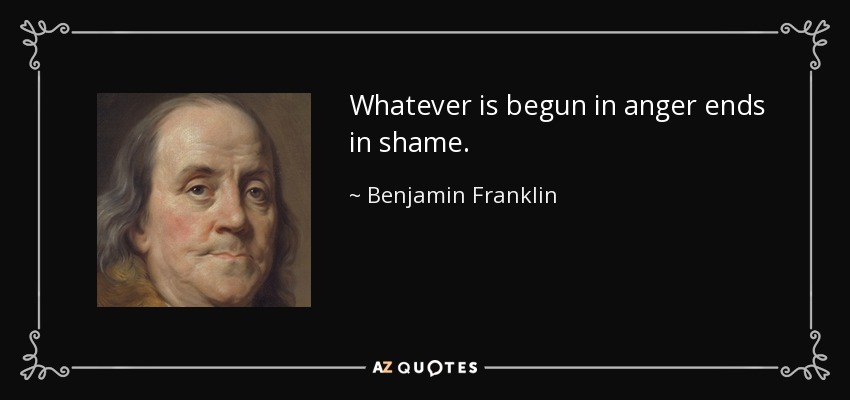
If Lau is correct, a problem remains: 1 Cor 4:14 seems redundant since ἐντροπή would already connote an admonition. Whereas “baptize” and “preach” are distinct in 1:17 (which uses “οὐ… ἀλλά”), the distinction seems to collapse in 4:14.
How Shaming Challenges and Corrects
Might Paul have another intention? I propose the following for your consideration. I invite your feedback as I continue to reflect on Paul’s meaning.
In both 1 Cor 6:5, 15:34, Paul uses shame to rebuke wrong behavior. He wants readers to see the incongruity of their actions with their identity. This is not the explicit intention of 4:14. Paul in 1 Cor 4:16 says, “I urge you, then, be imitators of me.” From the previous context, he exhorts the Corinthians to be faithful to the ways of Christ (cf. 4:1–2, 17).
What then can we conclude? Paul uses shame to stop shameful behavior. But he does not use shame to motivate positive behavior.
By contrast, people often use shaming as a tactic to pressure people to do something. Yet, if people do something merely to avoid shame, they don’t act out of their identity. Paul wants the Corinthians to have the mind of Christ. This means they their sense of identity will positively shape their lives, i.e. doing and thinking this or that way. On the other hand, when we do wrong, we need reminding that our actions do not accord with calling or belonging.
I agree with Lau that Paul’s two uses of shame have a positive and negative sense. However, it seems Paul is simply coming at the goal (of edification) from two directions. In 4:14, he wants to spur a way of life. In 6:5, 15:34, Paul wants to stop a pattern of life. The former is constructive; the latter is corrective.
If this reading is right, these observations are quite applicable to our lives.
What do you think?
[1] Cited from Richard Trench, Synonyms of the New Testament (London; Macmillan, 1880), 69.
Previous Post

November 1, 2017
How Can Chinese Christians Foster a Reformation Spirit?
Next Post

November 15, 2017 Is the glory of God intrinsic to humanity? Rethinking Romans 3:23
Browse Our Archives
Select a Category Atonement Biblical Theology Book Reviews China Chinese Church Chinese Culture Chinese Language Collectivism Contextualization Culture (General) Ecclesiology Evangelism Gospel Honor & Shame (Face) Interpretation/Exegesis Justification/Righteousness Missiology Mission Methods One Gospel for All Nations Other Practical Contextualization Reading Romans with Eastern Eyes Resources Romans Salvation (General) Saving God's Face Seeking God's Face The Cross in Context Theological Contextualization Theological Education Theology Uncategorized
Select a Month October 2026 September 2026 August 2026 July 2026 June 2026 May 2026 April 2026 March 2026 February 2026 January 2026 December 2025 November 2025 October 2025 September 2025 August 2025 July 2025 June 2025 May 2025 April 2025 March 2025 February 2025 January 2025 December 2024 November 2024 October 2024 September 2024 August 2024 July 2024 June 2024 May 2024 April 2024 March 2024 February 2024 January 2024 December 2023 November 2023 October 2023 September 2023 August 2023 July 2023 June 2023 May 2023 April 2023 March 2023 February 2023 January 2023 December 2022 November 2022 October 2022 September 2022 August 2022 July 2022 June 2022 May 2022 April 2022 March 2022 February 2022 January 2022 December 2021 November 2021 October 2021 September 2021 August 2021 July 2021 June 2021 May 2021 April 2021 March 2021 February 2021 January 2021 December 2020 November 2020 October 2020 September 2020 August 2020 July 2020 June 2020 May 2020 April 2020 March 2020 February 2020 January 2020 December 2019 November 2019 October 2019 September 2019 August 2019 July 2019 June 2019 May 2019 April 2019 March 2019 February 2019 January 2019 December 2018 November 2018 October 2018 September 2018 August 2018 July 2018 June 2018 May 2018 April 2018 March 2018 February 2018 January 2018 December 2017 November 2017 October 2017 September 2017 August 2017 July 2017 June 2017 May 2017 April 2017 March 2017 February 2017 January 2017 December 2016 November 2016 October 2016 September 2016 August 2016 July 2016 June 2016 May 2016 April 2016 March 2016 February 2016 January 2016 December 2015 November 2015 October 2015 September 2015 August 2015 July 2015 June 2015 May 2015 April 2015 March 2015 February 2015 January 2015 December 2014 November 2014 October 2014 September 2014 August 2014 July 2014 June 2014 May 2014 April 2014 March 2014 February 2014 January 2014 December 2013 November 2013 October 2013 September 2013 August 2013 July 2013 June 2013 May 2013 April 2013 March 2013 February 2013 January 2013 December 2012 November 2012
Follow Us!
TAKE THE
Religious Wisdom Quiz
What city did Jesus grow up in?
Select your answer to see how you score.
Bethlehem Nazareth Jerusalem Jericho
Books by This Author Books by Brad Vaughn
Related posts from Saving God's Face

No King forgets his crown. Why do we?

Recovering Moral Vision Between Shame and Shamelessness

Refuge, Confession, and the End of Shame

Psalm 25 and the Fear of Being Put...
TRENDING AT PATHEOS Evangelical

Methodist Central Hall and Westminster Abbey
Situated on the same square is Methodist Central Hall and Westminster Abbey. ...

57th Dove Awards Honor Dolly Parton, Crown New...
On gospel music’s biggest night, the 57th annual GMA Dove Awards honored...

The First Eucharistic Controversy: Christ’s Real Presence
For Catholics, the Eucharist is the source and summit of the Christian...

What a Stop Sign Can Teach Us About...
How to Make a Decision When You Can't Hear God Main point:...

Archdiocese Hosts Military Marriage Retreat in Germany
RASTATT, Germany — The transient military lifestyle, with its frequent deployments and...

Nearly every morning, I make the drive to Detroit with my high-school-age...
view all Evangelical blogs
Ad-Free & Subscriber Log-In Subscription Support
- About Us
- 2026 Calendar
- Videos
- Podcasts
- Library of World Religions
- Faith In Media Tracker
- Advertise With Us
- Write for Us
- Privacy Policy
- Terms of Service
- Do Not Sell My Data
- Contact Us
- Radiant Digital
- Manage Newsletter Subscriptions
- Unsubscribe From Notifications
- Sitemap
Copyright 2008-2026, Patheos. All rights reserved.
Subscription Support Ad-Free & Subscriber Log-In
Follow Patheos