
BuddhistCatholicContemplativeEvangelicalGeneral ChristianHinduJewishLatter-day SaintMuslimNew VisionsProgressive Christian
Beliefs
- Buddhist
- Catholic
- Contemplative
- Evangelical
- General Christian
- Hindu
- Jewish
- Latter-day Saint
- More Voices
- Muslim
- New Visions
- Pagan
- Progressive Christian
Topics
- Religion News
- Food and Religion
- Sports and Religion
- Religious Art
- Religious Music and Entertainment
- Religious Events
- History and Religion
- Style and Religion
- Politics and Religion
- Women in Religion
- Recreation Outdoors and Religion
- Business Finance and Religion
- Careers Workplace and Religion
- Education and Religion
- Family Parenting and Religion
- Health Fitness and Religion
- Home and Religion
- Relationships and Religion
- Technology and Religion
- Travel and Religion
Columnists
- Buddhist Columnists
- Business Finance and Religion Columnists
- Careers Workplace and Religion Columnists
- Catholic Columnists
- Contemplative Columnists
- Education and Religion Columnists
- Evangelists Columnists
- Family Parenting and Religion Columnists
- General Christian Columnists
- Health Fitness and Religion Columnists
- Hindu Columnists
- History and Religion Columnists
- Home and Religion Columnists
- Jewish Columnists
- More Voices Columnists
- Latter Day Columnists
- Muslim Columnists
- New Visions Columnists
- Nonreligious Columnists
- Pagan Columnists
- Politics and Religion Columnists
- Progressive Columnists
- Recreation Outdoors and Religion Columnists
- Relationships and Religion Columnists
- Religion News Columnists
- Religious Art Columnists
- Religious Events Columnists
- Religious Music and Entertainment Columnists
- Sports and Religion Columnists
- Style and Religion Columnists
- Technology and Religion Columnists
- Travel and Religion Columnists
- Women in Religion Columnists
Resource Library
- 2026 Calendar
- Library of World Religions
- The 100 Most Holy Places on Earth
- Patheos Answers
- Podcasts
- Videos
- Faith Leaders Database
- Anglican Episcopalian
- Bahai
- Baptist
- Buddhism
- Christianity
- Confucianism
- Eastern Orthodoxy
- Hinduism
- Holiness and Pentecostal
- ISKCON
- Islam
- Judaism
- Lutheran
- Methodist
- The Church of Jesus Christ of Latter-day Saints
- New Age
- Paganism
- Presbytarian and Reformed
- Protestantism
- Religion Behind the Scenes
- Roman Catholic
- Scientology
- Shia Islam
- Sikhism
- Sufism
- Sunni Islam
- Taoism
- Zen
- See all religions
Research Tools
 Ad-Free & Subscriber Log-In Subscription Support
Ad-Free & Subscriber Log-In Subscription Support
Follow Patheos 

- Trending:
- Forgiveness
- |
- Marriage
- |
- Consciousness
- |
- Death Penalty
- |
- Election
- |
- Halloween

-
Tools
-
Support the Work
- Home
- Evangelical
- How Rhetoric Ruins Missions
How Rhetoric Ruins Missions
Last updated on: October 14, 2017 at 6:41 am by Brad Vaughn
How Rhetoric Ruins Missions 2017-10-14T06:41:29-07:00 Brad Vaughn
Patheos Explore the world's faith through different perspectives on religion and spirituality! Patheos has the views of the prevalent religions and spiritualities of the world.
“Whoever tells the best story wins.” This is one of the truest quotes I’ve ever heard. Unfortunately, this truism works for or against us. Among missionaries (and pastors), another saying could be used: “Whoever uses the best rhetoric rules.”
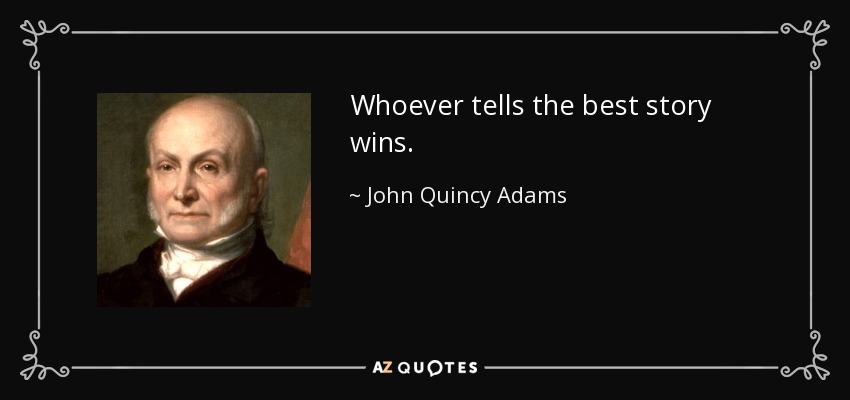
Our rhetoric too often hinders the work of missions. Consider meetings where people debate ministry strategy. Whoever frames the conversion wins based on rhetorical alone.
The Problem with Our Rhetoric
Sadly, missionary rhetoric suffers from two problems.
It is all too reductionistic, oversimplifying the problems faced.
It allows a commonly held principle to serve as the overarching value above or at the expense of all others.
I’ll give a few examples below, but I first want to ask, “How does this rhetoric cause problems?”
Above all, it silences dialogue by pressuring people to settle for what is merely true. It obscures the difference between “good” and “best.” Such rhetoric plants the seeds of division.
One side presumes to defend biblical truth against compromised methods and strategies. The other side intuitively senses they are being put in as box and not being heard.
As a result, strategic silos become the norm and ministry suffers.
Rhetorical Traps
I mention the following examples so that we can consciously avoid rhetorical traps.
“The gospel is…”
Conventional gospel summaries go something like this: “The gospel is the good news that God loves you and sent Jesus to die for you so that we can now be saved by faith, not by works.” This statement is rich with glorious gospel truths yet does not represent the way biblical writers explicitly present the gospel. (I’ve written extensively about his question in OGFAN.)
God’s love and the mechanics of salvation are essential realities that make the gospel “good news.” But confusing the doctrine of salvation and the gospel is like confusing a car with its engine. As critical as the engine is, few 16-year-olds say, “Yeah, I got a V8 for my birthday!!”
What happens when someone tries to refocus the message back to Christ’s kingship within the grand biblical narrative?
That person is accused of making little of God’s love and salvation. People forge a false dichotomy as if we said the gospel had nothing to do with salvation and God’s love. Or perhaps, one’s comments are dismissed as if (s)he were complicating the gospel.
“Practical, not theological…”
When our team started our seminary, even some of our advocates said things like, “We want to be practical and not simply give people ‘head knowledge.’” Opponents of our work were more severe. They complained, “People don’t need theology [insert stressed tone]; they don’t even obey what they already know.”
At one level, we can’t disagree… if we accept the way they frame the issue of ministry priorities. However, the above comments are highly problematic and so stunt the church’s maturity.
This sort of thinking is either contradictory or short-sighted.
(1) Every Christian who has ever lived obeys less than they know.
People don’t obey what they don’t know. In every church, pastors and churches are always bigger “hypocrites” by virtue of the fact they have more learning. They have more ways to fall short. This normal phenomenon does not excuse leaving people in ignorance.
Ironically, those who make these objections quickly forget how they have benefited from theological training.
(2) These critics misunderstand the nature of application.
“Application” entails our total response to God’s revelation. It involves our head, heart, and hands. Such “practical” rhetorical tends to reduce application with mere doing (i.e., hands). Consequently, ministry strategy suffers inasmuch as it is not holistic. Long-term growth is compromised.
Click here to see posts where I more fully explain this holistic view of application.

Public Domain
“The task is urgent…”
In recent decades, people increasingly emphasize “rapidity.” Why? Because “billions of people die every day and so the task is urgent.” How can one argue with this? Who is going to say, “Nah, we can take our time. I don’t care about dying people who need the gospel”?
This rhetoric comes from a heart of compassion and conviction, but it sows the seeds of compromise. Such language drives people not only to prioritize evangelism and church planting but do so at the expense and exclusion of other aspects of ministry. After all, why do anything else since the task is so urgent?
“The gospel is always relevant.”
This remark is generally made in discussions about contextualization. It is especially annoying because it manipulates people’s words to attack a strawman. When people speak of “making the gospel relevant” (a phrase that I agree isn’t helpful), they mean: “to communicate the gospel in a way that people perceive its relevance.”
Anyone who advocates for contextualization will agree “the gospel is always relevant.” By agreeing, however, they seemingly adopt the same suspicion of contextualization when, in fact, they do not regard it so negatively.
Subtly and Tone
Other verbal traps are more subtle and so are more difficult to guard against. For example,…
- Some speak about contextualization only with a wary tone, rarely if ever in positive, constructive manner.
- People advocate for “…healthy, multiplying churches.”
Of course, I’d love for these churches to exist. However, isn’t this phrase redundant? Won’t “healthy” churches also be “multiplying” churches (whether individual believers, small groups, other churches, etc.)? The redundancy subtly emphasizes multiplication above other aspects of health.
- What is “simple” is deemed more true or important than what is “complex.”
One presumes the Bible is (or should be) “simple.” Ideally, we could wish that all biblical truths were plain and simple. No doubt, many parts are; yet, the Bible reveals the infinitely majestic God of the universe whose sovereign work in history is mysterious is countless ways. So why is it we have such low expectations of the Bible? Peter found Paul hard to understand (cf. 2 Peter 3) and he was the Lord’s closest disciple!
- People use the word “Western” pejoratively to dismiss any number of things.
Certainly Western culture has its limitations and weaknesses, but simply being “Western” does not make it wrong nor imperialistic. One sometimes hears people complain about “Western logic.”
This moaning often amounts to sheer drama. For thousands of years, even before Aristotle, civilizations have understood basic logical rules like (a) the law of non-contradiction (A and ~A cannot both be true at the same time and in the same way) and (b) modus ponens (A –> B, A, therefore, B).
We could list many other examples (e.g., “relationship, not religion”, the inconsistent use of metaphors, etc.).
How have you seen rhetorical traps that impede constructive dialogue about ministry methods and strategy?
Previous Post

October 4, 2017
What the Chinese Church Teaches Me About Obligation and Love
Next Post

October 17, 2017 Coming to ETS and SBL? Join me for these sessions
Browse Our Archives
Select a Category Atonement Biblical Theology Book Reviews China Chinese Church Chinese Culture Chinese Language Collectivism Contextualization Culture (General) Ecclesiology Evangelism Gospel Honor & Shame (Face) Interpretation/Exegesis Justification/Righteousness Missiology Mission Methods One Gospel for All Nations Other Practical Contextualization Reading Romans with Eastern Eyes Resources Romans Salvation (General) Saving God's Face Seeking God's Face The Cross in Context Theological Contextualization Theological Education Theology Uncategorized
Select a Month October 2026 September 2026 August 2026 July 2026 June 2026 May 2026 April 2026 March 2026 February 2026 January 2026 December 2025 November 2025 October 2025 September 2025 August 2025 July 2025 June 2025 May 2025 April 2025 March 2025 February 2025 January 2025 December 2024 November 2024 October 2024 September 2024 August 2024 July 2024 June 2024 May 2024 April 2024 March 2024 February 2024 January 2024 December 2023 November 2023 October 2023 September 2023 August 2023 July 2023 June 2023 May 2023 April 2023 March 2023 February 2023 January 2023 December 2022 November 2022 October 2022 September 2022 August 2022 July 2022 June 2022 May 2022 April 2022 March 2022 February 2022 January 2022 December 2021 November 2021 October 2021 September 2021 August 2021 July 2021 June 2021 May 2021 April 2021 March 2021 February 2021 January 2021 December 2020 November 2020 October 2020 September 2020 August 2020 July 2020 June 2020 May 2020 April 2020 March 2020 February 2020 January 2020 December 2019 November 2019 October 2019 September 2019 August 2019 July 2019 June 2019 May 2019 April 2019 March 2019 February 2019 January 2019 December 2018 November 2018 October 2018 September 2018 August 2018 July 2018 June 2018 May 2018 April 2018 March 2018 February 2018 January 2018 December 2017 November 2017 October 2017 September 2017 August 2017 July 2017 June 2017 May 2017 April 2017 March 2017 February 2017 January 2017 December 2016 November 2016 October 2016 September 2016 August 2016 July 2016 June 2016 May 2016 April 2016 March 2016 February 2016 January 2016 December 2015 November 2015 October 2015 September 2015 August 2015 July 2015 June 2015 May 2015 April 2015 March 2015 February 2015 January 2015 December 2014 November 2014 October 2014 September 2014 August 2014 July 2014 June 2014 May 2014 April 2014 March 2014 February 2014 January 2014 December 2013 November 2013 October 2013 September 2013 August 2013 July 2013 June 2013 May 2013 April 2013 March 2013 February 2013 January 2013 December 2012 November 2012
Follow Us!
TAKE THE
Religious Wisdom Quiz
What does Revelation say will wipe away every tear from their eyes?
Select your answer to see how you score.
The river of life God himself An angel The tree of life
Books by This Author Books by Brad Vaughn
Related posts from Saving God's Face
How Technique Undermines Mission

God both exceeds and undermines our expectations

Implications of Dignity, Honor, and Face Cultures for...

Should multiplication be the goal of missions?
TRENDING AT PATHEOS Evangelical

Methodist Central Hall and Westminster Abbey
Situated on the same square is Methodist Central Hall and Westminster Abbey. ...

57th Dove Awards Honor Dolly Parton, Crown New...
On gospel music’s biggest night, the 57th annual GMA Dove Awards honored...

The First Eucharistic Controversy: Christ’s Real Presence
For Catholics, the Eucharist is the source and summit of the Christian...

What a Stop Sign Can Teach Us About...
How to Make a Decision When You Can't Hear God Main point:...

Archdiocese Hosts Military Marriage Retreat in Germany
RASTATT, Germany — The transient military lifestyle, with its frequent deployments and...

Nearly every morning, I make the drive to Detroit with my high-school-age...
view all Evangelical blogs
Ad-Free & Subscriber Log-In Subscription Support
- About Us
- 2026 Calendar
- Videos
- Podcasts
- Library of World Religions
- Faith In Media Tracker
- Advertise With Us
- Write for Us
- Privacy Policy
- Terms of Service
- Do Not Sell My Data
- Contact Us
- Radiant Digital
- Manage Newsletter Subscriptions
- Unsubscribe From Notifications
- Sitemap
Copyright 2008-2026, Patheos. All rights reserved.
Subscription Support Ad-Free & Subscriber Log-In
Follow Patheos