
BuddhistCatholicContemplativeEvangelicalGeneral ChristianHinduJewishLatter-day SaintMuslimNew VisionsProgressive Christian
Beliefs
- Buddhist
- Catholic
- Contemplative
- Evangelical
- General Christian
- Hindu
- Jewish
- Latter-day Saint
- More Voices
- Muslim
- New Visions
- Pagan
- Progressive Christian
Topics
- Religion News
- Food and Religion
- Sports and Religion
- Religious Art
- Religious Music and Entertainment
- Religious Events
- History and Religion
- Style and Religion
- Politics and Religion
- Women in Religion
- Recreation Outdoors and Religion
- Business Finance and Religion
- Careers Workplace and Religion
- Education and Religion
- Family Parenting and Religion
- Health Fitness and Religion
- Home and Religion
- Relationships and Religion
- Technology and Religion
- Travel and Religion
Columnists
- Buddhist Columnists
- Business Finance and Religion Columnists
- Careers Workplace and Religion Columnists
- Catholic Columnists
- Contemplative Columnists
- Education and Religion Columnists
- Evangelists Columnists
- Family Parenting and Religion Columnists
- General Christian Columnists
- Health Fitness and Religion Columnists
- Hindu Columnists
- History and Religion Columnists
- Home and Religion Columnists
- Jewish Columnists
- More Voices Columnists
- Latter Day Columnists
- Muslim Columnists
- New Visions Columnists
- Nonreligious Columnists
- Pagan Columnists
- Politics and Religion Columnists
- Progressive Columnists
- Recreation Outdoors and Religion Columnists
- Relationships and Religion Columnists
- Religion News Columnists
- Religious Art Columnists
- Religious Events Columnists
- Religious Music and Entertainment Columnists
- Sports and Religion Columnists
- Style and Religion Columnists
- Technology and Religion Columnists
- Travel and Religion Columnists
- Women in Religion Columnists
Resource Library
- 2026 Calendar
- Library of World Religions
- The 100 Most Holy Places on Earth
- Patheos Answers
- Podcasts
- Videos
- Faith Leaders Database
- Anglican Episcopalian
- Bahai
- Baptist
- Buddhism
- Christianity
- Confucianism
- Eastern Orthodoxy
- Hinduism
- Holiness and Pentecostal
- ISKCON
- Islam
- Judaism
- Lutheran
- Methodist
- The Church of Jesus Christ of Latter-day Saints
- New Age
- Paganism
- Presbytarian and Reformed
- Protestantism
- Religion Behind the Scenes
- Roman Catholic
- Scientology
- Shia Islam
- Sikhism
- Sufism
- Sunni Islam
- Taoism
- Zen
- See all religions
Research Tools
 Ad-Free & Subscriber Log-In Subscription Support
Ad-Free & Subscriber Log-In Subscription Support
Follow Patheos 

- Trending:
- Forgiveness
- |
- Marriage
- |
- Consciousness
- |
- Death Penalty
- |
- Election
- |
- Halloween

-
Tools
-
Support the Work
- Home
- Evangelical
- Do they protest with honor and shame but not wisdom?
Do they protest with honor and shame but not wisdom?
Last updated on: September 28, 2017 at 8:33 pm by Brad Vaughn
Do they protest with honor and shame but not wisdom? 2017-09-28T20:33:16-07:00 Brad Vaughn
Patheos Explore the world's faith through different perspectives on religion and spirituality! Patheos has the views of the prevalent religions and spiritualities of the world.
Flickr/Fibonacci Blue
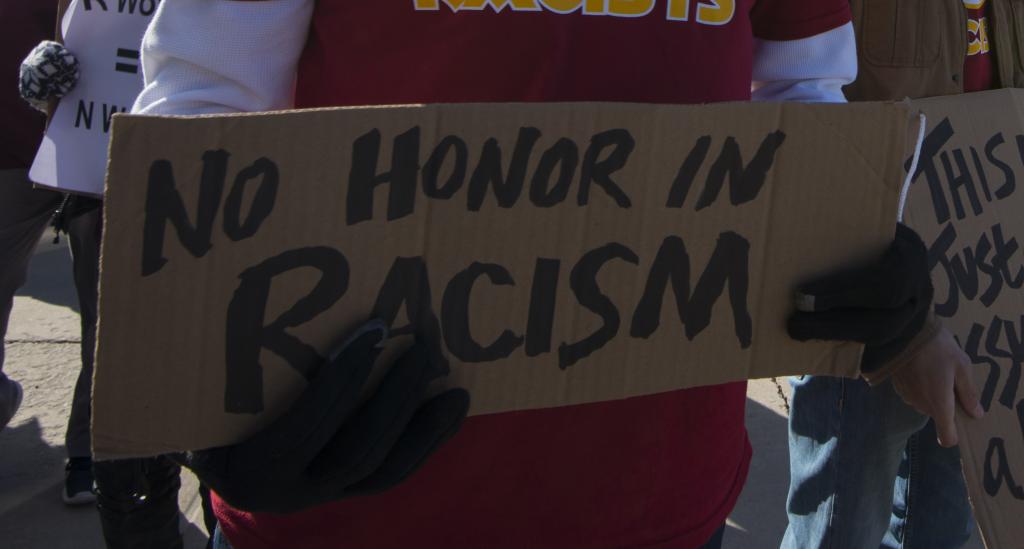
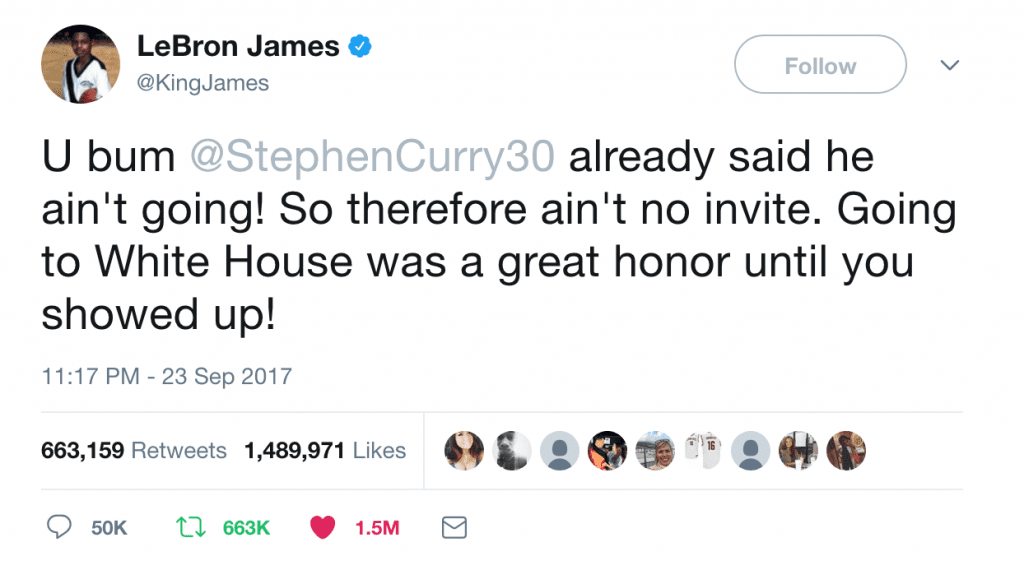
Whoever said America was not an honor-shame society? Just this week, the President of the United States and LeBron “King” James exchanged barbs on Twitter that concerned whether being invited to the White House is an “honor.” Also, millions of Americans are incensed that NFL players expressed protest during the national anthem and so “disrespect” the flag and “dishonor” US soldiers.
What provokes so many people? They are not debating “legality” and absolute moral standards. Ultimately the hubbub is about collective identity. It’s about who and how someone honors or shames America.
What I don’t hear is a conversation about how Christians should respond. Should Christians be offended? Might Christians have the wisdom to offer amid the arguments?
This post explores these and other less asked questions. I’ll likely offend both sides, but that probably means I’m making sense. I first want to clarify a few honor-shame dynamics at work. As a result, we might be able to respond to the situation with wisdom.
People and the Power of Symbols
Want to know who you are? Take a look at what offends you. Especially look at the symbols in your life, whether your clothing or the national flag. For various reasons, many Americas underappreciate the significance of symbols and symbolic gestures (hence, the rise of l entertainment model churches and the belittling of sacred ordinances).
Ironically, both sides of the debate about kneeling during the anthem think they are honoring the what the flag represents. The symbol that should represent unity is dividing the country. Ironic. Why do symbols divide?
Symbols have honor (and thus can be disrespected) because of the narrative they imply. A common narrative is essential for collective unity. The problem of late is that Americans have divergent narratives with different protagonists.
Trump and others think the flag represents soldiers. This, of course, is a half-truth, which is eloquently addressed by Bob Costas in the video below.
Soldiers don’t die for flags
His comments perfectly capture an underlying problem with the popular narrative about the protests. Even within the Trump narrative, we mustn’t forget an essential point: Soldiers don’t die for flags.
Rather, they die for people and the principles that flags represent. One principle is the right to protest, even if you disagree with the issue at stake. By NFL players’ own account, they are protesting because they want to see American become better, to live up to its claimed ideals.

Twitter/Brennan Gilmore
This is precisely why a 97-year-old WWII veteran kneeled in solidarity with protesters but for a different reason, saying, “Those kids have every right to protest.”
By contrast, protesters tell a different narrative. The flag represents all Americans (not only soldiers) and the right to publically express grievances that one thinks hurt the country. They ask, “Which honors the nation more? Standing for a flag or standing by its values?”
How aware are we of our collective narrative? Try identifying and explaining the symbols around you.
Popularity and Political Currency
I often say to people, “Learn from others’ mistakes so that you can make new mistakes.” Accordingly, let’s see what we can glean from President Trump’s own lack of wisdom in handling recent events.
Honor and shame are highly contextual. That is, honor depends on one’s social sphere. It is akin to social currency, being both limited and context specific. When Trump asserts himself within the sports world, he wrongly presumes that others will “give him face” simply because he is the President.
When he publically pouts about the opinion of a single athlete, Stephen Curry, by uninviting an entire team, he trivializes his own position and effectively brings shame to the Office. In a sense, he “lowers himself” by acting like the “rest of us.”
Trump does not understand that honor-capital is limited. One preserves honor by spending it less, i.e., by showing restraint. (Not even Jesus made everything a war)
Trump made Curry’s implicit honor challenge far more public. As a result, he magnified the weight of that challenge. Furthermore, by public shaming people who are publically respected, he compounds his own loss of face.
Provocation and Protesting with Honor
How might we need to respond to these events? Both Trump and the protesters have something in common. They emphasize what it permissible, right or wrong but do not consider what is most wise.
Wisdom requires that we distinguish what we do and how we do something. For instance, we should love everyone, but how we love individual people will differ. We should honor everyone (1 Pet 2:17). But how we do it make a big difference (cf. 1 Tim 5:17).
“The wise will inherit honor, but fools get disgrace.” (Prov 3:35)
“Like one who binds the stone in the sling is one who gives honor to a fool.” (Prov 26:8)
The key issue is not whether players have the right to protest. They do. Sadly, people are not outraged about the players’ specific concerns. There’s little constructive debate about the real issues. Why the communication problem?
How they protest distracts people from what they are protesting.
In effect, the protesters make a wound without a plan for healing. How so? Because kneeling before the flag is highly susceptible to misunderstanding and offense by far more people than have the power to actually change the problem.
The protesters do not have specific, concrete demands with defined measures of success within any achievable future. No foreseeable end exists to the protest. Protesting the existence of inequality, in general, is not sufficiently constructive since various sorts of inequality have and will always exist in some form.
If they protest unfair treatment by certain cops, then what are actionable policy changes that would amount to a victorious protest? In the heat of the moment, the protests will not stop a hasty cop who fears people of other ethnicities. Yet, the manner of protest continues to offend millions who can do little to nothing to rectify these social problems in any foreseeable future.
If the goal simply is “raising awareness,” then when do such highly offensive protests stop? Typically, awareness campaigns have well-defined limits (i.e., 1 month, once a year, etc.).
In short, protests without a purpose are mere provocation.
“Answer not a fool according to his folly, lest you be like him yourself. Answer a fool according to his folly, lest he be wise in his own eyes.” (Prov 26:4–5)
Unfortunately, the social narrative has now shifted from the important issues of race to whether people have a “right” to protest in this manner. This is a tragedy.
Honor Everyone
The Bible is not entirely silent. We often see instances where national loyalties muddied people’s perspective of truth. For example, Stephen’s accusers
“set up false witnesses who said,‘This man never ceases to speak words against this holy place and the law, for we have heard him say that this Jesus of Nazareth will destroy this place and will change the customs that Moses delivered to us.’” (Acts 6:13–14)
Jesus well grasped the importance of symbolism. But he also had a lot to say about people who honor symbols but forget their substance. Whatever the social significance of a symbol, Jesus saw the bigger issues at stake and people involved in a dispute.
We should honor everyone but not in every way.
The command to “honor everyone” applies even to the best and worst of society, to say nothing of those we simply disagree with. The emperor who Peter said to honor (1 Peter 2:17) was neither democratically elected nor just in his treatment of his subjects. Paul writes to Timothy,
“Let all who are under a yoke as bondservants regard their own masters as worthy of all honor, so that the name of God and the teaching may not be reviled.” (1 Tim 6:1)
What should motive our response to those whom we might regard as shameful? The desire to honor God’s name. Like Trump, we might sully the church’s reputation by overspending our (perceived or actual) social capital defending the honor of a mere flag rather than genuine injustice against people.
What does it say about those Christians who get so riled up about kneeling during the national anthem? Might they honor America more than Christ?
Perhaps. If so, that would be a shame.
Previous Post
September 27, 2017
6 Ways Honor and Shame Make Disciples (Not Converts)
Next Post

October 4, 2017 What the Chinese Church Teaches Me About Obligation and Love
Browse Our Archives
Select a Category Atonement Biblical Theology Book Reviews China Chinese Church Chinese Culture Chinese Language Collectivism Contextualization Culture (General) Ecclesiology Evangelism Gospel Honor & Shame (Face) Interpretation/Exegesis Justification/Righteousness Missiology Mission Methods One Gospel for All Nations Other Practical Contextualization Reading Romans with Eastern Eyes Resources Romans Salvation (General) Saving God's Face Seeking God's Face The Cross in Context Theological Contextualization Theological Education Theology Uncategorized
Select a Month October 2026 September 2026 August 2026 July 2026 June 2026 May 2026 April 2026 March 2026 February 2026 January 2026 December 2025 November 2025 October 2025 September 2025 August 2025 July 2025 June 2025 May 2025 April 2025 March 2025 February 2025 January 2025 December 2024 November 2024 October 2024 September 2024 August 2024 July 2024 June 2024 May 2024 April 2024 March 2024 February 2024 January 2024 December 2023 November 2023 October 2023 September 2023 August 2023 July 2023 June 2023 May 2023 April 2023 March 2023 February 2023 January 2023 December 2022 November 2022 October 2022 September 2022 August 2022 July 2022 June 2022 May 2022 April 2022 March 2022 February 2022 January 2022 December 2021 November 2021 October 2021 September 2021 August 2021 July 2021 June 2021 May 2021 April 2021 March 2021 February 2021 January 2021 December 2020 November 2020 October 2020 September 2020 August 2020 July 2020 June 2020 May 2020 April 2020 March 2020 February 2020 January 2020 December 2019 November 2019 October 2019 September 2019 August 2019 July 2019 June 2019 May 2019 April 2019 March 2019 February 2019 January 2019 December 2018 November 2018 October 2018 September 2018 August 2018 July 2018 June 2018 May 2018 April 2018 March 2018 February 2018 January 2018 December 2017 November 2017 October 2017 September 2017 August 2017 July 2017 June 2017 May 2017 April 2017 March 2017 February 2017 January 2017 December 2016 November 2016 October 2016 September 2016 August 2016 July 2016 June 2016 May 2016 April 2016 March 2016 February 2016 January 2016 December 2015 November 2015 October 2015 September 2015 August 2015 July 2015 June 2015 May 2015 April 2015 March 2015 February 2015 January 2015 December 2014 November 2014 October 2014 September 2014 August 2014 July 2014 June 2014 May 2014 April 2014 March 2014 February 2014 January 2014 December 2013 November 2013 October 2013 September 2013 August 2013 July 2013 June 2013 May 2013 April 2013 March 2013 February 2013 January 2013 December 2012 November 2012
Follow Us!
TAKE THE
Religious Wisdom Quiz
Which disciple of Jesus was a former zealot?
Select your answer to see how you score.
Judas Iscariot Bartholomew Thaddeus Simon
Books by This Author Books by Brad Vaughn
Related posts from Saving God's Face

No King forgets his crown. Why do we?

Recovering Moral Vision Between Shame and Shamelessness

Refuge, Confession, and the End of Shame

Psalm 25 and the Fear of Being Put...
TRENDING AT PATHEOS Evangelical

When Halloween Unmasks Married Hearts
Written by Dr. David K. Ewen from Eternal Truth Bible College Behind...

Aristotle. He’s been called the father of logic, the father of the...

Methodist Central Hall and Westminster Abbey
Situated on the same square is Methodist Central Hall and Westminster Abbey. ...

57th Dove Awards Honor Dolly Parton, Crown New...
On gospel music’s biggest night, the 57th annual GMA Dove Awards honored...

The First Eucharistic Controversy: Christ’s Real Presence
For Catholics, the Eucharist is the source and summit of the Christian...

What a Stop Sign Can Teach Us About...
How to Make a Decision When You Can't Hear God Main point:...
view all Evangelical blogs
Ad-Free & Subscriber Log-In Subscription Support
- About Us
- 2026 Calendar
- Videos
- Podcasts
- Library of World Religions
- Faith In Media Tracker
- Advertise With Us
- Write for Us
- Privacy Policy
- Terms of Service
- Do Not Sell My Data
- Contact Us
- Radiant Digital
- Manage Newsletter Subscriptions
- Unsubscribe From Notifications
- Sitemap
Copyright 2008-2026, Patheos. All rights reserved.
Subscription Support Ad-Free & Subscriber Log-In
Follow Patheos