
BuddhistCatholicContemplativeEvangelicalGeneral ChristianHinduJewishLatter-day SaintMuslimNew VisionsProgressive Christian
Beliefs
- Buddhist
- Catholic
- Contemplative
- Evangelical
- General Christian
- Hindu
- Jewish
- Latter-day Saint
- More Voices
- Muslim
- New Visions
- Pagan
- Progressive Christian
Topics
- Religion News
- Food and Religion
- Sports and Religion
- Religious Art
- Religious Music and Entertainment
- Religious Events
- History and Religion
- Style and Religion
- Politics and Religion
- Women in Religion
- Recreation Outdoors and Religion
- Business Finance and Religion
- Careers Workplace and Religion
- Education and Religion
- Family Parenting and Religion
- Health Fitness and Religion
- Home and Religion
- Relationships and Religion
- Technology and Religion
- Travel and Religion
Columnists
- Buddhist Columnists
- Business Finance and Religion Columnists
- Careers Workplace and Religion Columnists
- Catholic Columnists
- Contemplative Columnists
- Education and Religion Columnists
- Evangelists Columnists
- Family Parenting and Religion Columnists
- General Christian Columnists
- Health Fitness and Religion Columnists
- Hindu Columnists
- History and Religion Columnists
- Home and Religion Columnists
- Jewish Columnists
- More Voices Columnists
- Latter Day Columnists
- Muslim Columnists
- New Visions Columnists
- Nonreligious Columnists
- Pagan Columnists
- Politics and Religion Columnists
- Progressive Columnists
- Recreation Outdoors and Religion Columnists
- Relationships and Religion Columnists
- Religion News Columnists
- Religious Art Columnists
- Religious Events Columnists
- Religious Music and Entertainment Columnists
- Sports and Religion Columnists
- Style and Religion Columnists
- Technology and Religion Columnists
- Travel and Religion Columnists
- Women in Religion Columnists
Resource Library
- 2026 Calendar
- Library of World Religions
- The 100 Most Holy Places on Earth
- Patheos Answers
- Podcasts
- Videos
- Faith Leaders Database
- Anglican Episcopalian
- Bahai
- Baptist
- Buddhism
- Christianity
- Confucianism
- Eastern Orthodoxy
- Hinduism
- Holiness and Pentecostal
- ISKCON
- Islam
- Judaism
- Lutheran
- Methodist
- The Church of Jesus Christ of Latter-day Saints
- New Age
- Paganism
- Presbytarian and Reformed
- Protestantism
- Religion Behind the Scenes
- Roman Catholic
- Scientology
- Shia Islam
- Sikhism
- Sufism
- Sunni Islam
- Taoism
- Zen
- See all religions
Research Tools
 Ad-Free & Subscriber Log-In Subscription Support
Ad-Free & Subscriber Log-In Subscription Support
Follow Patheos 

- Trending:
- Forgiveness
- |
- Marriage
- |
- Consciousness
- |
- Death Penalty
- |
- Election
- |
- Halloween

-
Tools
-
Support the Work
- Home
- Evangelical
- The Power of “Popularity” in the Church
The Power of “Popularity” in the Church
Last updated on: August 9, 2017 at 7:30 am by Brad Vaughn
The Power of “Popularity” in the Church 2017-08-08T05:18:31-07:00 Brad Vaughn
Patheos Explore the world's faith through different perspectives on religion and spirituality! Patheos has the views of the prevalent religions and spiritualities of the world.
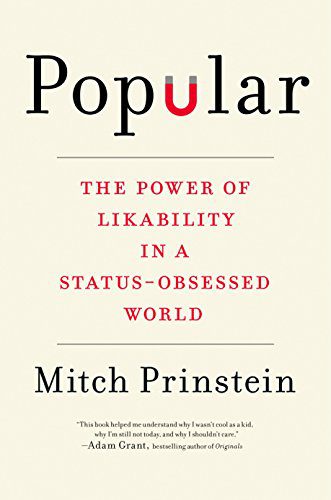 Few subjects are so paradoxical as popularity.
- “Popular” kids often are the most liked and disliked people in school.
- Youth seek it above anything else; as adults, popular kids don’t always fair well.
- Although adults bemoan the popularity contests of adolescence, these dynamics still exist in companies and organizations.
- Popularity is both helpful and harmful.
These are a few observations noted in Popular: The Power of Likability in a Status-Obsessed World (by Mitch Prinstein).
In this post, I’ll highlight a few of Prinstein’s observations then consider potential implications for the church and the work of missions.
Who is “popular”?
Popularity is our earliest introduction to the concept(s) of honor & shame.
Of course, popularity is just one dimension of a much larger dynamic. Its influence on our lives (not only childhood) is far reaching. For anyone who wants to understand how honor-shame cultures work, popularity is a common starting point.
Prinstein distinguishes two forms of “popularity.”
-
Status
-
Likeability
Both involve approval within groups. But they have important differences. “Status” refers to one’s power, recognition, visibility, etc. The meaning of “likeability” is self-evident and depends on things like generosity, selflessness, sociability, etc.
The qualities that make people popular (or not) tend to reproduce themselves in different groups. This makes sense. We tend to carry similar social behaviors with us (e.g. sense of humor, aggressiveness, manner of speaking, agreeability).
Some aspects of popularity vary across cultures. For instance, popularity and social aggressiveness are more closely linked in the West than in China, where such personalities are less liked and less popular.
Should we seek popularity?
You’d think this would be easy to answer. It’s not. As relational beings, we’re wired to desire acceptance, to be liked. This is an essential aspect of belonging to a group. As worshipers, we also grasp the value of status.

Flickr/ Jason Rogers
Prinstein explains that people are both extremes of the popularity pendulum are most likely to suffer adverse effects over the years.
For example, those who were popular as youth tend to have more difficulty in establishing close friendships, satisfying romantic relationships, and are more likely to engage in riskier social behaviors.
What about unpopular people? Intriguingly, longitudinal studies show they have more health problems and higher mortality rates than those with average or high popularity in their younger years.[1]
Who versus Why?
Contemporary society has turned social recognition into a commodity. The right persona secures a certain degree of power. Not surprisingly, people begin to think happiness depends on the quantity of people who know them, who like their FB page, etc. Their social status becomes the measure of their worth.
As Prinstein suggests, happiness is more closely linked to likability. This is what creates quality relationships (not merely quantity of “friends”). So, the key question is not “who” knows us but “why” are we known.
Maintaining status is external dependent, contingent on others’ opinions. C.S. Lewis’ “Inner Circle” analogy is apt in that those with status live within an “inner circle” (socially speaking); status is competitive and thrives on differences and exclusion.
On the other hand, likeability is correlated to comradery, compassion, and cooperation. It brings people together around some set of common behaviors or values.
At different stages of life, the criteria for high status changes, whereas the characteristics that make us likable are more stable.
Implications for Mission & the Church
In the church, the effects of popularity are subtle but significant. We are all susceptible to popularity’s social influence. This is one reason marketing is big business. Popular products, books, and movies grab our attention.
“Popularity” becomes a form of social validation, a safeguard that an item, trend, or idea is worth our attention.
How does this manifest in the church? Simply because speakers, books, and ministry methods become popular, that popularity itself generates even greater popularity among the masses. Their ideas and methods are either normalized or assumed to be beneficial.

Credit: Public Domain
After all, how can so many people be wrong? One must think twice before criticizing popular notions and approaches, lest you be marginalized as a malcontent. Before you are quick to disregard “popularity”, ask yourself this question: “What do you call something that is popular over a long period of time?” …. Tradition.
It’s only natural to yield to the herd mentality. Generally, it’s a good rule of thumb to consider others’ opinions and practices, since we individuals cannot know and test everything. Persistent individualism is not virtue.
However, consider how popularity influences our theology and ministry methods.
How many gospel tracts, theological ideas, etc. have been used simply because the originator had the money and position to popularize it. In other words, their ideas gained popularity because of their name, their institution, affiliation, or some set of unique circumstances.
We can become too dependent on popularity as a filter for both orthodoxy and orthopraxis. We cease looking at ideas with a critical eye. I am often stunned that certain blogs and websites receive the attention they do. The posts and articles frequently lack substance. Their arguments are muddled or trite. This is not healthy for the church.
One can too quickly confuse the popularity with what is profound.
The potential implications of this subject extend well beyond what I can imagine or write about in this post. I encourage you to reflect on the topic yourself. Leave a comment or write your own post exploring ways that popularity (in its various forms) can affect the church and its ministry.
- For a shorter NY Times article “Popular People Live Longer” by Prinstein, click here.
- For Prinstein’s free online course “Psychology of Popularity,” click here.
[1] What is striking about this finding is that the study does not include suicides.
Previous Post

August 2, 2017
How does the Bible explain the gospel? (Session 3 Training Video)
Next Post

August 16, 2017 A Balanced Critique of Popular Missiological Methods
Browse Our Archives
Select a Category Atonement Biblical Theology Book Reviews China Chinese Church Chinese Culture Chinese Language Collectivism Contextualization Culture (General) Ecclesiology Evangelism Gospel Honor & Shame (Face) Interpretation/Exegesis Justification/Righteousness Missiology Mission Methods One Gospel for All Nations Other Practical Contextualization Reading Romans with Eastern Eyes Resources Romans Salvation (General) Saving God's Face Seeking God's Face The Cross in Context Theological Contextualization Theological Education Theology Uncategorized
Select a Month October 2026 September 2026 August 2026 July 2026 June 2026 May 2026 April 2026 March 2026 February 2026 January 2026 December 2025 November 2025 October 2025 September 2025 August 2025 July 2025 June 2025 May 2025 April 2025 March 2025 February 2025 January 2025 December 2024 November 2024 October 2024 September 2024 August 2024 July 2024 June 2024 May 2024 April 2024 March 2024 February 2024 January 2024 December 2023 November 2023 October 2023 September 2023 August 2023 July 2023 June 2023 May 2023 April 2023 March 2023 February 2023 January 2023 December 2022 November 2022 October 2022 September 2022 August 2022 July 2022 June 2022 May 2022 April 2022 March 2022 February 2022 January 2022 December 2021 November 2021 October 2021 September 2021 August 2021 July 2021 June 2021 May 2021 April 2021 March 2021 February 2021 January 2021 December 2020 November 2020 October 2020 September 2020 August 2020 July 2020 June 2020 May 2020 April 2020 March 2020 February 2020 January 2020 December 2019 November 2019 October 2019 September 2019 August 2019 July 2019 June 2019 May 2019 April 2019 March 2019 February 2019 January 2019 December 2018 November 2018 October 2018 September 2018 August 2018 July 2018 June 2018 May 2018 April 2018 March 2018 February 2018 January 2018 December 2017 November 2017 October 2017 September 2017 August 2017 July 2017 June 2017 May 2017 April 2017 March 2017 February 2017 January 2017 December 2016 November 2016 October 2016 September 2016 August 2016 July 2016 June 2016 May 2016 April 2016 March 2016 February 2016 January 2016 December 2015 November 2015 October 2015 September 2015 August 2015 July 2015 June 2015 May 2015 April 2015 March 2015 February 2015 January 2015 December 2014 November 2014 October 2014 September 2014 August 2014 July 2014 June 2014 May 2014 April 2014 March 2014 February 2014 January 2014 December 2013 November 2013 October 2013 September 2013 August 2013 July 2013 June 2013 May 2013 April 2013 March 2013 February 2013 January 2013 December 2012 November 2012
Follow Us!
TAKE THE
Religious Wisdom Quiz
What does "Sabbath" mean in Hebrew?
Select your answer to see how you score.
Holy Day Rest Offering Worship
Books by This Author Books by Brad Vaughn
Related posts from Saving God's Face

No King forgets his crown. Why do we?

Recovering Moral Vision Between Shame and Shamelessness

Refuge, Confession, and the End of Shame

Psalm 25 and the Fear of Being Put...
TRENDING AT PATHEOS Evangelical

57th Dove Awards Honor Dolly Parton, Crown New...
On gospel music’s biggest night, the 57th annual GMA Dove Awards honored...

The First Eucharistic Controversy: Christ’s Real Presence
For Catholics, the Eucharist is the source and summit of the Christian...

What a Stop Sign Can Teach Us About...
How to Make a Decision When You Can't Hear God Main point:...

Archdiocese Hosts Military Marriage Retreat in Germany
RASTATT, Germany — The transient military lifestyle, with its frequent deployments and...

Nearly every morning, I make the drive to Detroit with my high-school-age...

The Real AI Story Is Adoption Without Trust
Artificial intelligence has crossed a political threshold. It is no longer a...
view all Evangelical blogs
Ad-Free & Subscriber Log-In Subscription Support
- About Us
- 2026 Calendar
- Videos
- Podcasts
- Library of World Religions
- Faith In Media Tracker
- Advertise With Us
- Write for Us
- Privacy Policy
- Terms of Service
- Do Not Sell My Data
- Contact Us
- Radiant Digital
- Manage Newsletter Subscriptions
- Unsubscribe From Notifications
- Sitemap
Copyright 2008-2026, Patheos. All rights reserved.
Subscription Support Ad-Free & Subscriber Log-In
Follow Patheos