
BuddhistCatholicContemplativeEvangelicalGeneral ChristianHinduJewishLatter-day SaintMuslimNew VisionsProgressive Christian
Beliefs
- Buddhist
- Catholic
- Contemplative
- Evangelical
- General Christian
- Hindu
- Jewish
- Latter-day Saint
- More Voices
- Muslim
- New Visions
- Pagan
- Progressive Christian
Topics
- Religion News
- Food and Religion
- Sports and Religion
- Religious Art
- Religious Music and Entertainment
- Religious Events
- History and Religion
- Style and Religion
- Politics and Religion
- Women in Religion
- Recreation Outdoors and Religion
- Business Finance and Religion
- Careers Workplace and Religion
- Education and Religion
- Family Parenting and Religion
- Health Fitness and Religion
- Home and Religion
- Relationships and Religion
- Technology and Religion
- Travel and Religion
Columnists
- Buddhist Columnists
- Business Finance and Religion Columnists
- Careers Workplace and Religion Columnists
- Catholic Columnists
- Contemplative Columnists
- Education and Religion Columnists
- Evangelists Columnists
- Family Parenting and Religion Columnists
- General Christian Columnists
- Health Fitness and Religion Columnists
- Hindu Columnists
- History and Religion Columnists
- Home and Religion Columnists
- Jewish Columnists
- More Voices Columnists
- Latter Day Columnists
- Muslim Columnists
- New Visions Columnists
- Nonreligious Columnists
- Pagan Columnists
- Politics and Religion Columnists
- Progressive Columnists
- Recreation Outdoors and Religion Columnists
- Relationships and Religion Columnists
- Religion News Columnists
- Religious Art Columnists
- Religious Events Columnists
- Religious Music and Entertainment Columnists
- Sports and Religion Columnists
- Style and Religion Columnists
- Technology and Religion Columnists
- Travel and Religion Columnists
- Women in Religion Columnists
Resource Library
- 2026 Calendar
- Library of World Religions
- The 100 Most Holy Places on Earth
- Patheos Answers
- Podcasts
- Videos
- Faith Leaders Database
- Anglican Episcopalian
- Bahai
- Baptist
- Buddhism
- Christianity
- Confucianism
- Eastern Orthodoxy
- Hinduism
- Holiness and Pentecostal
- ISKCON
- Islam
- Judaism
- Lutheran
- Methodist
- The Church of Jesus Christ of Latter-day Saints
- New Age
- Paganism
- Presbytarian and Reformed
- Protestantism
- Religion Behind the Scenes
- Roman Catholic
- Scientology
- Shia Islam
- Sikhism
- Sufism
- Sunni Islam
- Taoism
- Zen
- See all religions
Research Tools
 Ad-Free & Subscriber Log-In Subscription Support
Ad-Free & Subscriber Log-In Subscription Support
Follow Patheos 

- Trending:
- Forgiveness
- |
- Marriage
- |
- Consciousness
- |
- Death Penalty
- |
- Election
- |
- Halloween

-
Tools
-
Support the Work
- Home
- Evangelical
- How do we “embody” theology?
How do we “embody” theology?
Last updated on: May 10, 2017 at 7:13 am by Brad Vaughn
How do we “embody” theology? 2017-05-02T15:48:17-07:00 Brad Vaughn
Patheos Explore the world's faith through different perspectives on religion and spirituality! Patheos has the views of the prevalent religions and spiritualities of the world.


His recent book Theology in the Flesh: How Embodiment and Culture Shape the Way We Think about Truth, Morality, and God (2016) will be a game changer for many people. Sanders explains why cognitive linguistics is so significant for biblical interpretation and theological discourse.
With terms like “embodiment” and “cognitive linguistics,” one might suspect the book is too abstract or erudite for non-specialists. No true. Sanders’ argument is immensely practical; his explanations and examples are concrete and common.
Theology is Limited by Thinking
Sanders’ basic thesis is that all theology is “based upon the cognitive processes available to humans” (p. 23). He spends most of the book illustrating and applying this insight, which influences our understanding of truth, meaning, morality, various doctrine, and even our views about God. For some, his point will seem mundane, but the implications are massive.
Consider the significance of these two basic claims:
- “We use our everyday conceptual structures to think about God and religion” (p. 5).
- “Culture plays an important role in the construction of meaning” (p. 6).
While finding the first statement uncontroversial, many people get nervous about the second claim, despite the fact it is logically follows from the first.
Let’s clarify what he means by the first statement.
Credit: Public Domain
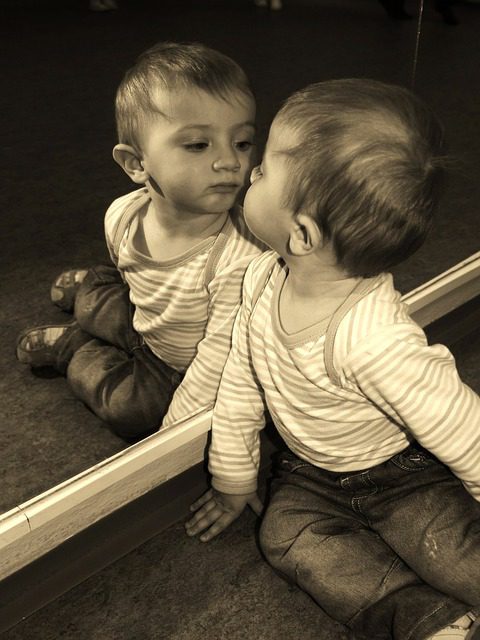
He explains, “Human cognition is dependent upon embodied human experiences” (pp. 20–23). By this, he means people cannot perceive or conceive of anything that does not stem from embodied experience. Our five senses and our perception of time, for instance, both make possible and constrain our ability to think about truth, meaning, and the Bible.
Imagine we are jellyfish. In that case, “We would not, for example, have the concept in front of since jellyfish have no faces nor would we use seeing or hearing to mean understanding something.”
By implication, “all human understanding is perspectival” (pp. 23–25).
But Sanders anticipates reader concerns:
“This book is opposed to absolute relativism. There is truth and correct belief, but we typically cannot demonstrate the truth of our convictions in such a way that convinces everyone.” (p. 8)
He reinforces the point later.
“There is a real world that exists independently of us, but our understanding of it is shaped by our embodied minds. Some mistakenly interpret this situation to mean nothing can be said about objective truth or that the existence of God is now out of the question. [Rather] our understanding of God and truth will be dependent upon our limited embodied cognitive processes.” (pp. 24–25)
Although this point should be common sense (i.e. all understanding depends on and is limited by one’s perspective), many Christians hesitate to admit it. Few people take practical steps allowing it to shape how they theologize and contextualize.
A Relative Perspective on Absolute Truth
Sanders highlights an idea long ignored by the church: God’s people have a relative perspective on absolute truth.
By acknowledging this fact, we can seize several opportunities. Sanders’ comments simply reinforce much of what I have argued about contextualization. I’ll list three areas affected by the book’s basic thesis. (Later posts will explore other aspects of Sanders’ argument.)
1. Humility
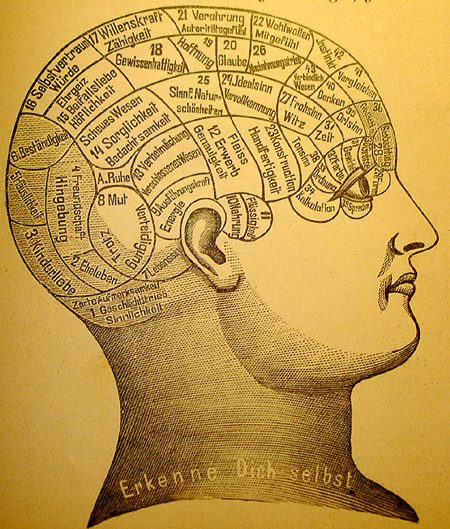
If the book does anything, it should foster humility in readers. I don’t refer to a false wishy-washy humility that lacks conviction about truth. Instead, people need to realize that cultures and churches use different metaphors and concepts available to them from their experiences. For example…
Credit: Public Domain
Morality
One group might use the Moral Accounting metaphor whereas another conceives of Morality as a Journey (pp. 141–44). Both are legitimate conceptions of morality but each functions differently to guide moral thought.
Truth
Truth as an Object is a common metaphor (“We have the truth”). But the Bible also presents Truth as a Guide, as when we should “follow the truth wherever it leads” (pp. 81–83). Also, we are to “do the truth” (John 3:21), “walk in truth” (2 John 4). Jesus himself said, “I am the truth” (John 14:6).
We need humility to listen and embrace the full range of ways people talk about the world, rather than play one against the other.
2. Hermeneutics
This fact––that human cognition is based on our embodied experience––has countless implications for biblical interpretation and theology. Here are a few broad strokes:
Limits: Our perspectives on Scripture are limited (though not necessarily wrong).
Diversity: Biblical truth is expressed in diverse ways, many of which may be less familiar to us and our culture.
Layers: Any given passage might have layers of interwoven meanings.
Accessibility: Biblical truth is accessible to people across cultures and ages, though not equally so, depending on varying experiences and cultures.
Meaning: The line between “literal” and “metaphorical” is often a mirage (pp. 121–29).
3. Homiletics
Our teaching and preaching ought to account for the fact that humans are dependent on context and experience to understand meaning. Metaphors are so common within human cognition partly because we rely on concrete experience to understand abstract ideas.
By implication, we should give more attention to the value of biblical theology and storying. Missionaries and pastors over rely on systematic theology to provide quick, short answers to people’s questions. All the while, the Bible increasing feels more removed from people’s lives.
In coming posts, we’ll specifically look at the significance of “frames” and metaphors for our ministries.
Save
Save
Save
Save
Previous Post

May 2, 2017
Are these seminary professors actually racist?
Next Post

May 17, 2017 What Cognitive Science Teaches about Contextualization
Browse Our Archives
Select a Category Atonement Biblical Theology Book Reviews China Chinese Church Chinese Culture Chinese Language Collectivism Contextualization Culture (General) Ecclesiology Evangelism Gospel Honor & Shame (Face) Interpretation/Exegesis Justification/Righteousness Missiology Mission Methods One Gospel for All Nations Other Practical Contextualization Reading Romans with Eastern Eyes Resources Romans Salvation (General) Saving God's Face Seeking God's Face The Cross in Context Theological Contextualization Theological Education Theology Uncategorized
Select a Month October 2026 September 2026 August 2026 July 2026 June 2026 May 2026 April 2026 March 2026 February 2026 January 2026 December 2025 November 2025 October 2025 September 2025 August 2025 July 2025 June 2025 May 2025 April 2025 March 2025 February 2025 January 2025 December 2024 November 2024 October 2024 September 2024 August 2024 July 2024 June 2024 May 2024 April 2024 March 2024 February 2024 January 2024 December 2023 November 2023 October 2023 September 2023 August 2023 July 2023 June 2023 May 2023 April 2023 March 2023 February 2023 January 2023 December 2022 November 2022 October 2022 September 2022 August 2022 July 2022 June 2022 May 2022 April 2022 March 2022 February 2022 January 2022 December 2021 November 2021 October 2021 September 2021 August 2021 July 2021 June 2021 May 2021 April 2021 March 2021 February 2021 January 2021 December 2020 November 2020 October 2020 September 2020 August 2020 July 2020 June 2020 May 2020 April 2020 March 2020 February 2020 January 2020 December 2019 November 2019 October 2019 September 2019 August 2019 July 2019 June 2019 May 2019 April 2019 March 2019 February 2019 January 2019 December 2018 November 2018 October 2018 September 2018 August 2018 July 2018 June 2018 May 2018 April 2018 March 2018 February 2018 January 2018 December 2017 November 2017 October 2017 September 2017 August 2017 July 2017 June 2017 May 2017 April 2017 March 2017 February 2017 January 2017 December 2016 November 2016 October 2016 September 2016 August 2016 July 2016 June 2016 May 2016 April 2016 March 2016 February 2016 January 2016 December 2015 November 2015 October 2015 September 2015 August 2015 July 2015 June 2015 May 2015 April 2015 March 2015 February 2015 January 2015 December 2014 November 2014 October 2014 September 2014 August 2014 July 2014 June 2014 May 2014 April 2014 March 2014 February 2014 January 2014 December 2013 November 2013 October 2013 September 2013 August 2013 July 2013 June 2013 May 2013 April 2013 March 2013 February 2013 January 2013 December 2012 November 2012
Follow Us!
TAKE THE
Religious Wisdom Quiz
Who said, 'The Lord gives and the Lord takes away'?
Select your answer to see how you score.
Solomon David Job Moses
Books by This Author Books by Brad Vaughn
Related posts from Saving God's Face

Should We Emphasize Jesus as King to People...

Why Egalitarians Can Stay in a Complementarian Church
"Why Have You Forsaken Me?” and the Problem...

What motivates obedience when I don’t want to...
TRENDING AT PATHEOS Evangelical

57th Dove Awards Honor Dolly Parton, Crown New...
On gospel music’s biggest night, the 57th annual GMA Dove Awards honored...

The First Eucharistic Controversy: Christ’s Real Presence
For Catholics, the Eucharist is the source and summit of the Christian...

What a Stop Sign Can Teach Us About...
How to Make a Decision When You Can't Hear God Main point:...

Archdiocese Hosts Military Marriage Retreat in Germany
RASTATT, Germany — The transient military lifestyle, with its frequent deployments and...

Nearly every morning, I make the drive to Detroit with my high-school-age...

The Real AI Story Is Adoption Without Trust
Artificial intelligence has crossed a political threshold. It is no longer a...
view all Evangelical blogs
Ad-Free & Subscriber Log-In Subscription Support
- About Us
- 2026 Calendar
- Videos
- Podcasts
- Library of World Religions
- Faith In Media Tracker
- Advertise With Us
- Write for Us
- Privacy Policy
- Terms of Service
- Do Not Sell My Data
- Contact Us
- Radiant Digital
- Manage Newsletter Subscriptions
- Unsubscribe From Notifications
- Sitemap
Copyright 2008-2026, Patheos. All rights reserved.
Subscription Support Ad-Free & Subscriber Log-In
Follow Patheos