
BuddhistCatholicContemplativeEvangelicalGeneral ChristianHinduJewishLatter-day SaintMuslimNew VisionsProgressive Christian
Beliefs
- Buddhist
- Catholic
- Contemplative
- Evangelical
- General Christian
- Hindu
- Jewish
- Latter-day Saint
- More Voices
- Muslim
- New Visions
- Pagan
- Progressive Christian
Topics
- Religion News
- Food and Religion
- Sports and Religion
- Religious Art
- Religious Music and Entertainment
- Religious Events
- History and Religion
- Style and Religion
- Politics and Religion
- Women in Religion
- Recreation Outdoors and Religion
- Business Finance and Religion
- Careers Workplace and Religion
- Education and Religion
- Family Parenting and Religion
- Health Fitness and Religion
- Home and Religion
- Relationships and Religion
- Technology and Religion
- Travel and Religion
Columnists
- Buddhist Columnists
- Business Finance and Religion Columnists
- Careers Workplace and Religion Columnists
- Catholic Columnists
- Contemplative Columnists
- Education and Religion Columnists
- Evangelists Columnists
- Family Parenting and Religion Columnists
- General Christian Columnists
- Health Fitness and Religion Columnists
- Hindu Columnists
- History and Religion Columnists
- Home and Religion Columnists
- Jewish Columnists
- More Voices Columnists
- Latter Day Columnists
- Muslim Columnists
- New Visions Columnists
- Nonreligious Columnists
- Pagan Columnists
- Politics and Religion Columnists
- Progressive Columnists
- Recreation Outdoors and Religion Columnists
- Relationships and Religion Columnists
- Religion News Columnists
- Religious Art Columnists
- Religious Events Columnists
- Religious Music and Entertainment Columnists
- Sports and Religion Columnists
- Style and Religion Columnists
- Technology and Religion Columnists
- Travel and Religion Columnists
- Women in Religion Columnists
Resource Library
- 2026 Calendar
- Library of World Religions
- The 100 Most Holy Places on Earth
- Patheos Answers
- Podcasts
- Videos
- Faith Leaders Database
- Anglican Episcopalian
- Bahai
- Baptist
- Buddhism
- Christianity
- Confucianism
- Eastern Orthodoxy
- Hinduism
- Holiness and Pentecostal
- ISKCON
- Islam
- Judaism
- Lutheran
- Methodist
- The Church of Jesus Christ of Latter-day Saints
- New Age
- Paganism
- Presbytarian and Reformed
- Protestantism
- Religion Behind the Scenes
- Roman Catholic
- Scientology
- Shia Islam
- Sikhism
- Sufism
- Sunni Islam
- Taoism
- Zen
- See all religions
Research Tools
 Ad-Free & Subscriber Log-In Subscription Support
Ad-Free & Subscriber Log-In Subscription Support
Follow Patheos 

- Trending:
- Forgiveness
- |
- Marriage
- |
- Consciousness
- |
- Death Penalty
- |
- Election
- |
- Halloween

-
Tools
-
Support the Work
- Home
- Evangelical
- Can Christians eat blood?
Can Christians eat blood?
Last updated on: April 12, 2017 at 7:28 am by Brad Vaughn
Can Christians eat blood? 2017-02-09T17:01:54-07:00 Brad Vaughn
Patheos Explore the world's faith through different perspectives on religion and spirituality! Patheos has the views of the prevalent religions and spiritualities of the world.
An oft debated question among Chinese Christians is this, “Can Christians eat blood?”

Flickr/Matthew Kang
For some, the answer is a straightforward “no” based on Old Testament prohibitions and on Acts 15:20, 28; 21:25, which record the Jerusalem church’s letter to the believing Gentiles. The Acts verses are not so clear cut. The letter seems to blend cultural and absolute prohibitions. After all, Paul in 1 Cor 8–10, Rom 14, for example, clearly says that eating food sacrificed to idols is not sin.
How do we help fellow Christians understand the Bible’s teaching, to discern what is “cultural” from what is “absolute”?
Rather than rehash debates over Acts 15, we will consider the OT’s rational about why Jews were forbidden from eating blood. The command’s rational, not the it mere existence, will help us grasp the broader issues.
God eats blood and fat
One of many OT passages that forbid eating blood is Lev 17:10–12,
If any one of the house of Israel or of the strangers who sojourn among them eats any blood, I will set my face against that person who eats blood and will cut him off from among his people. For the life of the flesh is in the blood, and I have given it for you on the altar to make atonement for your souls, for it is the blood that makes atonement by the life. Therefore I have said to the people of Israel, No person among you shall eat blood, neither shall any stranger who sojourns among you eat blood.
For various reasons, many Christians have so emphasized “blood” that they overlook a significant observation: what the OT says about blood applies to an animal’s fat (chelev) as well.
The significance of fat burned at sacrifice parallels the significance given to sacrificial blood. Lev 17:11 prohibition may parallel the similar prohibition on eating the fat of oxen, sheep and goats. That portion is always offered to the Lord.
The Bible consistently links the application of blood and burning of fat. They are gifts to God. The fat is considered food symbolically gifted to God (e.g. Lev 1:9; 3:11, 16). In effect, sacrifices are routinely presented as “meals” offered to God.
Have you ever asked yourself, “What is the only thing common to every sacrifice?” It’s not blood (cf. grain offering).
For each offering, worshippers, burn the sacrificial gift on the altar. As a result, the smoke produces a “pleasing aroma.” Compare following passages:
- Burnt Offering (Lev 1:9, 13, 17)
- Grain Offering (Lev 2:2, 12; 6:15, 21)
- Peace Offering (Lev 3:5, 11, 16)
- Sin Offering (Lev 4:19–20, 26, 31, 35)
- Guilt Offering (Lev 7:2–7; “burned” but no mention of “pleasing aroma”)
For further on this, see Christian Eberhart’s important article, “A Neglected Feature of Sacrifice in the Hebrew Bible: Remarks on the Burning Rite on the Altar.”

Flickr/wonderlane
Eberhart notes,
…it is worth mentioning that the formula about atonement and forgiveness (Lev 4:20b, 26b, 31b, 35b) is repeated not after each description of the blood rite, but rather after the description of how each offering is to be burned on the altar (Lev 4:19–20a, 26a, 31a, 35a). The conjunction of the atonement formula with each description of the burning rite underlines the importance of this ritual step for the sin offering.
Even outside Leviticus, the Bible presents burning as the climax of the sacrifice (e.g., 1 Sam 2:28; Deut 33:10).
Both blood and fat are forbidden
Since the fat and blood are gifts for God alone (not even shared with priests), people are forbidden from eating them. For example, in Lev 3:16–17; 7:22–27, people are forbidden from eating an animal’s fat. The command refers to a specific type of fat, which is mentioned in Lev 3:9–10:
he shall remove the whole fat tail, cut off close to the backbone, and the fat that covers the entrails and all the fat that is on the entrails and the two kidneys with the fat that is on them at the loins and the long lobe of the liver that he shall remove with the kidneys. (cf. Lev 3:3–4, 9–10, 14–15)
Sometimes, a verse only prohibits eating the fat (Lev 7:23), only the blood (Lev 17:12), and at other times both (Lev 3:17).
This explains God’s anger in Ezek 44:6b–7,
Thus says the Lord GOD: O house of Israel, enough of all your abominations, in admitting foreigners, uncircumcised in heart and flesh, to be in my sanctuary, profaning my temple, when you offer to me my food, the fat and the blood. You have broken my covenant, in addition to all your abominations.
In short, the OT prohibition on eating blood was due to the fact God “ate” the blood and fat (figuratively speaking).
Not sacrifice. No Problem.
What about today? We do not live under the Mosaic covenant, by which sacrifices brought people to God. Jesus’ death and resurrection typify the OT’s blood and fragrant aroma that ascends to God.
Given this new state of affairs, neither blood nor fat are not offered to God as symbolic food. Therefore, the basis for the prohibition is gone. We may eat blood and the fat (chelev), if you so choose.
One last note–– for those who insist on our not being able to eat blood, in order to be consistent, you’ll need to make sure you are not eating of the fat (chelev) prohibited by the OT as well. Have fun with that.
Note:
Christian Eberhart, “A Neglected Feature of Sacrifice in the Hebrew Bible: Remarks on the Burning Rite on the Altar.” Harvard Theological Review, 97:4 (2004): 485–93.
Previous Post

April 5, 2017
The Physics of the Church
Next Post

April 13, 2017 Does the Easter story have authority?
Browse Our Archives
Select a Category Atonement Biblical Theology Book Reviews China Chinese Church Chinese Culture Chinese Language Collectivism Contextualization Culture (General) Ecclesiology Evangelism Gospel Honor & Shame (Face) Interpretation/Exegesis Justification/Righteousness Missiology Mission Methods One Gospel for All Nations Other Practical Contextualization Reading Romans with Eastern Eyes Resources Romans Salvation (General) Saving God's Face Seeking God's Face The Cross in Context Theological Contextualization Theological Education Theology Uncategorized
Select a Month October 2026 September 2026 August 2026 July 2026 June 2026 May 2026 April 2026 March 2026 February 2026 January 2026 December 2025 November 2025 October 2025 September 2025 August 2025 July 2025 June 2025 May 2025 April 2025 March 2025 February 2025 January 2025 December 2024 November 2024 October 2024 September 2024 August 2024 July 2024 June 2024 May 2024 April 2024 March 2024 February 2024 January 2024 December 2023 November 2023 October 2023 September 2023 August 2023 July 2023 June 2023 May 2023 April 2023 March 2023 February 2023 January 2023 December 2022 November 2022 October 2022 September 2022 August 2022 July 2022 June 2022 May 2022 April 2022 March 2022 February 2022 January 2022 December 2021 November 2021 October 2021 September 2021 August 2021 July 2021 June 2021 May 2021 April 2021 March 2021 February 2021 January 2021 December 2020 November 2020 October 2020 September 2020 August 2020 July 2020 June 2020 May 2020 April 2020 March 2020 February 2020 January 2020 December 2019 November 2019 October 2019 September 2019 August 2019 July 2019 June 2019 May 2019 April 2019 March 2019 February 2019 January 2019 December 2018 November 2018 October 2018 September 2018 August 2018 July 2018 June 2018 May 2018 April 2018 March 2018 February 2018 January 2018 December 2017 November 2017 October 2017 September 2017 August 2017 July 2017 June 2017 May 2017 April 2017 March 2017 February 2017 January 2017 December 2016 November 2016 October 2016 September 2016 August 2016 July 2016 June 2016 May 2016 April 2016 March 2016 February 2016 January 2016 December 2015 November 2015 October 2015 September 2015 August 2015 July 2015 June 2015 May 2015 April 2015 March 2015 February 2015 January 2015 December 2014 November 2014 October 2014 September 2014 August 2014 July 2014 June 2014 May 2014 April 2014 March 2014 February 2014 January 2014 December 2013 November 2013 October 2013 September 2013 August 2013 July 2013 June 2013 May 2013 April 2013 March 2013 February 2013 January 2013 December 2012 November 2012
Follow Us!
TAKE THE
Religious Wisdom Quiz
Which king rebuilt the high places Solomon had built for foreign gods?
Select your answer to see how you score.
Jehu Josiah Hezekiah Manasseh
Books by This Author Books by Brad Vaughn
Related posts from Saving God's Face
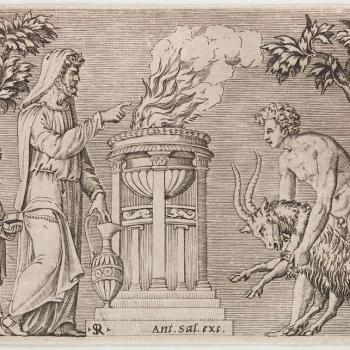
How Biblical Sacrifices Vindicate God’s Glory
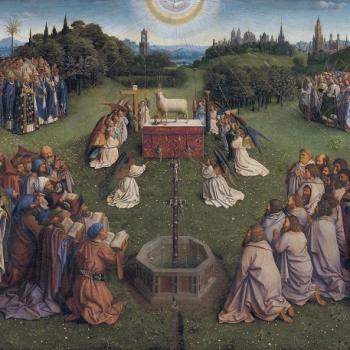
What Exactly Does Christ Purify?
Why Do I Wear a Guillotine Around My...
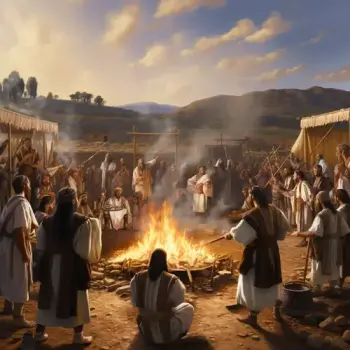
What are Essential Elements of Atonement?
TRENDING AT PATHEOS Evangelical

Emotion in Early Christianity by Andrew Crislip
Andrew Crislip’s Emotion in Early Christianity examines an often overlooked dimension of...

16 Spiritual Touchstones for a More Grounded Life
After decades of spiritual study, here are 16 principles I try...

Catholic Evangelization: Sharing Your Faith Every Day
Welcome back to the Graceful Awakening mini-series called, “From Faith to Mission.” ...

The Pillar of the Boatmen: the Ancient Monument...
The Pillar of the Boatmen is a Romano-Gaulish sculpture that dates from...

In one sense walking into Westminster Abbey is like walking down the...

'Super Scam Me' Exposes AI Jon Bon Jovi...
Leslie Pickett believed she was in a relationship with Jon Bon Jovi....
view all Evangelical blogs
Ad-Free & Subscriber Log-In Subscription Support
- About Us
- 2026 Calendar
- Videos
- Podcasts
- Library of World Religions
- Faith In Media Tracker
- Advertise With Us
- Write for Us
- Privacy Policy
- Terms of Service
- Do Not Sell My Data
- Contact Us
- Radiant Digital
- Manage Newsletter Subscriptions
- Unsubscribe From Notifications
- Sitemap
Copyright 2008-2026, Patheos. All rights reserved.
Subscription Support Ad-Free & Subscriber Log-In
Follow Patheos