
BuddhistCatholicContemplativeEvangelicalGeneral ChristianHinduJewishLatter-day SaintMuslimNew VisionsProgressive Christian
Beliefs
- Buddhist
- Catholic
- Contemplative
- Evangelical
- General Christian
- Hindu
- Jewish
- Latter-day Saint
- More Voices
- Muslim
- New Visions
- Pagan
- Progressive Christian
Topics
- Religion News
- Food and Religion
- Sports and Religion
- Religious Art
- Religious Music and Entertainment
- Religious Events
- History and Religion
- Style and Religion
- Politics and Religion
- Women in Religion
- Recreation Outdoors and Religion
- Business Finance and Religion
- Careers Workplace and Religion
- Education and Religion
- Family Parenting and Religion
- Health Fitness and Religion
- Home and Religion
- Relationships and Religion
- Technology and Religion
- Travel and Religion
Columnists
- Buddhist Columnists
- Business Finance and Religion Columnists
- Careers Workplace and Religion Columnists
- Catholic Columnists
- Contemplative Columnists
- Education and Religion Columnists
- Evangelists Columnists
- Family Parenting and Religion Columnists
- General Christian Columnists
- Health Fitness and Religion Columnists
- Hindu Columnists
- History and Religion Columnists
- Home and Religion Columnists
- Jewish Columnists
- More Voices Columnists
- Latter Day Columnists
- Muslim Columnists
- New Visions Columnists
- Nonreligious Columnists
- Pagan Columnists
- Politics and Religion Columnists
- Progressive Columnists
- Recreation Outdoors and Religion Columnists
- Relationships and Religion Columnists
- Religion News Columnists
- Religious Art Columnists
- Religious Events Columnists
- Religious Music and Entertainment Columnists
- Sports and Religion Columnists
- Style and Religion Columnists
- Technology and Religion Columnists
- Travel and Religion Columnists
- Women in Religion Columnists
Resource Library
- 2026 Calendar
- Library of World Religions
- The 100 Most Holy Places on Earth
- Patheos Answers
- Podcasts
- Videos
- Faith Leaders Database
- Anglican Episcopalian
- Bahai
- Baptist
- Buddhism
- Christianity
- Confucianism
- Eastern Orthodoxy
- Hinduism
- Holiness and Pentecostal
- ISKCON
- Islam
- Judaism
- Lutheran
- Methodist
- The Church of Jesus Christ of Latter-day Saints
- New Age
- Paganism
- Presbytarian and Reformed
- Protestantism
- Religion Behind the Scenes
- Roman Catholic
- Scientology
- Shia Islam
- Sikhism
- Sufism
- Sunni Islam
- Taoism
- Zen
- See all religions
Research Tools
 Ad-Free & Subscriber Log-In Subscription Support
Ad-Free & Subscriber Log-In Subscription Support
Follow Patheos 

- Trending:
- Forgiveness
- |
- Marriage
- |
- Consciousness
- |
- Death Penalty
- |
- Election
- |
- Halloween

-
Tools
-
Support the Work
- Home
- Evangelical
- How Story Structure Can Clarify Ideas
How Story Structure Can Clarify Ideas
Last updated on: March 8, 2017 at 7:18 am by Brad Vaughn
How Story Structure Can Clarify Ideas 2017-02-09T17:03:24-07:00 Brad Vaughn
Patheos Explore the world's faith through different perspectives on religion and spirituality! Patheos has the views of the prevalent religions and spiritualities of the world.
“Story” is an extremely useful tool for clarifying our key ideas and bringing focus to our message. This won’t make sense to some people. Whatever you think about “story,” set that aside for a moment.
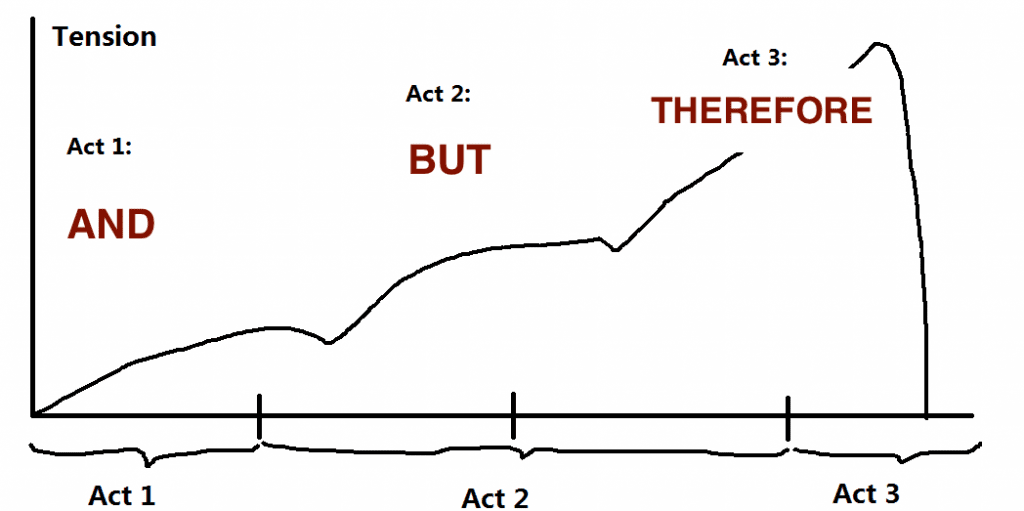
The word “story” conjures contrary reactions among missionaries and theologians. Some see “storying” as a critical tool for sharing the gospel; others are more cautious, unsure of the relationship between story and theology.
Scientists and Theologians Need Story
The release of Star Wars popularized the search for a universal story structure. George Lucas applied Joseph Campbell’s research concerning “The Hero’s Journey,” a story pattern found in myths across human history.
In recent years, people like Kendall Haven and Randy Olson have noted the inability of scientists to communicate their findings to a broader community. These men left careers as profession scientists in order to understand how story works and so help fellow scientists more effectively communicate their ideas.
But scientists aren’t the only people who have a hard time conveying their thoughts. Anyone who teaches the Bible often struggles with simplify complex ideas but without dumbing down the content.
We want structure but without systems
Many people assume theology must be systematic. They regard story as something different than theology, perhaps its background or a tool for illustration. But what they forget is that stories have structures. They’re not mere loosey-goosey compilations of detail in need of analysis.
Anytime we hear a story, we all have certain expectations. Different genres have distinct unwritten rules. Ever watched a romantic comedy? Arguably, then, you’ve seen them all. That’s not exactly true but it feels like it because romantic comedies rarely disguise their structure. Other story-genres (e.g., mystery, action adventure, Disney princess movies) are no less structured.
Explanations are not stories. Think about it––what makes a bad story? When people drone on, when they seem to have no purpose or sense of direction. They essential say, “This…and this…and that…and this other thing….”
Syllogisms are not stories. I love tight, logical arguments, but honestly, we know that logical syllogisms are far less effective in persuading people that stories. Blame this on the “Fall” is you like, but stories are the inherent structure of human experience. No wonder people generally regard stories as being more interesting, memorable, and practical.
The DNA of Story
Randy Olson identifies the most basic structure of any story. Whatever the plot variation and complications of a story, we always find a similar ABT pattern. Olsen says, “ABT is the DNA of story.”[1]
What is ABT? It stands for And…But…Therefore.[2]
And –– represents the basic fact, context or circumstance of a story.
But –– signifies the story’s complication or problem(s) to be overcome.
Therefore –– refers to the conclusion of the story. It highlights what must be done to overcome the challenge presented by the “but.”
Like scientists, Christians sometimes forget to think about and explain why some idea matters. Pragmatists overreact to this problem by minimizing rigorous theology, regarding it as abstract or impractical. Therefore, theologically-minded people further insist on the importance of theology, since the Bible and thinking are both important.
ABT can resolve this impasse.
This structure is memorable. It’s built into our minds through the hearing of stories. We don’t want a list of facts. We want to know why certain fact matter. What problems emerge amid said facts and what should we do about them? However, ABT helps us do more than simply tell good stories.
The ABT structure clarifies our thinking and communication, even if we do not explicitly tell “stories.”
But what does this look like?
Anyone familiar with Haddon Robinson’s Biblical Preaching knows the value of finding “the big idea” when preparing to preach. Robinson tells students to identify the one major idea you want to communicate and state it in a single sentence. It’s harder than you might think. But it is incredibly useful! The ABT structure similarly helpful.
Here are a few examples:
- We have the gospel AND all need it BUT few grasp its meaning or significance SO we must contextualize.
- Contextualization includes communication AND application BUT starts with interpretation SO we should teach exegesis and biblical theology.
In this post, I’ve used multiple layers of ABT. For example, at a big-picture level, my argument looks something like this:
- Many people struggle to communicate complex theological ideas AND they think theology is systematic and abstract. BUT story has an inherent structure that is memorable and meaningful. THEREFORE, we should use the ABT structure to clarify our thinking and teaching.
So what can I do from here?
Notice that the 3 examples above are not overt stories in the sense of “Once upon a time….” However, they do contain an implicit narrative about the world. They reflect our lived experience, with problems and a call to action.
AND
We cannot convey a thought that is not clear in our minds. One reason we communicate so poorly is because we don’t always know what we want to say.
BUT
After years of thinking of theology and doctrine in systematic terms, it’s doubtful we will naturally and clearly present our ideas consistently in a way that makes sense to others.
THEREFORE
I recommend you use the ABT structure to simplify your idea in your own head. The process will help you organize your thoughts. Then practice using it whenever you prepare a lesson, write a blog post or article, and prepare a message. Although you might not reveal the ABT structure so overtly, ABT will ensure you will convey your ideas more coherently and concretely.
I look forward to hearing your stories.
Below is a fuller presentation by Randy Olson explaining ABT.
[1] Randy Olson, Houston, We Have a Narrative, p. 17.
[2] You can substitute other words. For example, I like ABS, meaning “And…But…So”.
Previous Post

March 1, 2017
Individualism with "Chinese Characteristics"?
Next Post

March 14, 2017 Which box do you belong in?
Browse Our Archives
Select a Category Atonement Biblical Theology Book Reviews China Chinese Church Chinese Culture Chinese Language Collectivism Contextualization Culture (General) Ecclesiology Evangelism Gospel Honor & Shame (Face) Interpretation/Exegesis Justification/Righteousness Missiology Mission Methods One Gospel for All Nations Other Practical Contextualization Reading Romans with Eastern Eyes Resources Romans Salvation (General) Saving God's Face Seeking God's Face The Cross in Context Theological Contextualization Theological Education Theology Uncategorized
Select a Month October 2026 September 2026 August 2026 July 2026 June 2026 May 2026 April 2026 March 2026 February 2026 January 2026 December 2025 November 2025 October 2025 September 2025 August 2025 July 2025 June 2025 May 2025 April 2025 March 2025 February 2025 January 2025 December 2024 November 2024 October 2024 September 2024 August 2024 July 2024 June 2024 May 2024 April 2024 March 2024 February 2024 January 2024 December 2023 November 2023 October 2023 September 2023 August 2023 July 2023 June 2023 May 2023 April 2023 March 2023 February 2023 January 2023 December 2022 November 2022 October 2022 September 2022 August 2022 July 2022 June 2022 May 2022 April 2022 March 2022 February 2022 January 2022 December 2021 November 2021 October 2021 September 2021 August 2021 July 2021 June 2021 May 2021 April 2021 March 2021 February 2021 January 2021 December 2020 November 2020 October 2020 September 2020 August 2020 July 2020 June 2020 May 2020 April 2020 March 2020 February 2020 January 2020 December 2019 November 2019 October 2019 September 2019 August 2019 July 2019 June 2019 May 2019 April 2019 March 2019 February 2019 January 2019 December 2018 November 2018 October 2018 September 2018 August 2018 July 2018 June 2018 May 2018 April 2018 March 2018 February 2018 January 2018 December 2017 November 2017 October 2017 September 2017 August 2017 July 2017 June 2017 May 2017 April 2017 March 2017 February 2017 January 2017 December 2016 November 2016 October 2016 September 2016 August 2016 July 2016 June 2016 May 2016 April 2016 March 2016 February 2016 January 2016 December 2015 November 2015 October 2015 September 2015 August 2015 July 2015 June 2015 May 2015 April 2015 March 2015 February 2015 January 2015 December 2014 November 2014 October 2014 September 2014 August 2014 July 2014 June 2014 May 2014 April 2014 March 2014 February 2014 January 2014 December 2013 November 2013 October 2013 September 2013 August 2013 July 2013 June 2013 May 2013 April 2013 March 2013 February 2013 January 2013 December 2012 November 2012
Follow Us!
TAKE THE
Religious Wisdom Quiz
How many plagues did God send upon Egypt?
Select your answer to see how you score.
Twenty Ten Twelve Seven
Books by This Author Books by Brad Vaughn
Related posts from Saving God's Face
How Technique Undermines Mission
God both exceeds and undermines our expectations

Implications of Dignity, Honor, and Face Cultures for...

Should multiplication be the goal of missions?
TRENDING AT PATHEOS Evangelical

Methodist Central Hall and Westminster Abbey
Situated on the same square is Methodist Central Hall and Westminster Abbey. ...

57th Dove Awards Honor Dolly Parton, Crown New...
On gospel music’s biggest night, the 57th annual GMA Dove Awards honored...

The First Eucharistic Controversy: Christ’s Real Presence
For Catholics, the Eucharist is the source and summit of the Christian...

What a Stop Sign Can Teach Us About...
How to Make a Decision When You Can't Hear God Main point:...

Archdiocese Hosts Military Marriage Retreat in Germany
RASTATT, Germany — The transient military lifestyle, with its frequent deployments and...

Nearly every morning, I make the drive to Detroit with my high-school-age...
view all Evangelical blogs
Ad-Free & Subscriber Log-In Subscription Support
- About Us
- 2026 Calendar
- Videos
- Podcasts
- Library of World Religions
- Faith In Media Tracker
- Advertise With Us
- Write for Us
- Privacy Policy
- Terms of Service
- Do Not Sell My Data
- Contact Us
- Radiant Digital
- Manage Newsletter Subscriptions
- Unsubscribe From Notifications
- Sitemap
Copyright 2008-2026, Patheos. All rights reserved.
Subscription Support Ad-Free & Subscriber Log-In
Follow Patheos