
BuddhistCatholicContemplativeEvangelicalGeneral ChristianHinduJewishLatter-day SaintMuslimNew VisionsProgressive Christian
Beliefs
- Buddhist
- Catholic
- Contemplative
- Evangelical
- General Christian
- Hindu
- Jewish
- Latter-day Saint
- More Voices
- Muslim
- New Visions
- Pagan
- Progressive Christian
Topics
- Religion News
- Food and Religion
- Sports and Religion
- Religious Art
- Religious Music and Entertainment
- Religious Events
- History and Religion
- Style and Religion
- Politics and Religion
- Women in Religion
- Recreation Outdoors and Religion
- Business Finance and Religion
- Careers Workplace and Religion
- Education and Religion
- Family Parenting and Religion
- Health Fitness and Religion
- Home and Religion
- Relationships and Religion
- Technology and Religion
- Travel and Religion
Columnists
- Buddhist Columnists
- Business Finance and Religion Columnists
- Careers Workplace and Religion Columnists
- Catholic Columnists
- Contemplative Columnists
- Education and Religion Columnists
- Evangelists Columnists
- Family Parenting and Religion Columnists
- General Christian Columnists
- Health Fitness and Religion Columnists
- Hindu Columnists
- History and Religion Columnists
- Home and Religion Columnists
- Jewish Columnists
- More Voices Columnists
- Latter Day Columnists
- Muslim Columnists
- New Visions Columnists
- Nonreligious Columnists
- Pagan Columnists
- Politics and Religion Columnists
- Progressive Columnists
- Recreation Outdoors and Religion Columnists
- Relationships and Religion Columnists
- Religion News Columnists
- Religious Art Columnists
- Religious Events Columnists
- Religious Music and Entertainment Columnists
- Sports and Religion Columnists
- Style and Religion Columnists
- Technology and Religion Columnists
- Travel and Religion Columnists
- Women in Religion Columnists
Resource Library
- 2026 Calendar
- Library of World Religions
- The 100 Most Holy Places on Earth
- Patheos Answers
- Podcasts
- Videos
- Faith Leaders Database
- Anglican Episcopalian
- Bahai
- Baptist
- Buddhism
- Christianity
- Confucianism
- Eastern Orthodoxy
- Hinduism
- Holiness and Pentecostal
- ISKCON
- Islam
- Judaism
- Lutheran
- Methodist
- The Church of Jesus Christ of Latter-day Saints
- New Age
- Paganism
- Presbytarian and Reformed
- Protestantism
- Religion Behind the Scenes
- Roman Catholic
- Scientology
- Shia Islam
- Sikhism
- Sufism
- Sunni Islam
- Taoism
- Zen
- See all religions
Research Tools
 Ad-Free & Subscriber Log-In Subscription Support
Ad-Free & Subscriber Log-In Subscription Support
Follow Patheos 

- Trending:
- Forgiveness
- |
- Marriage
- |
- Consciousness
- |
- Death Penalty
- |
- Election
- |
- Halloween

-
Tools
-
Support the Work
- Home
- Evangelical
- Individualism with “Chinese Characteristics”?
Individualism with “Chinese Characteristics”?
Last updated on: March 1, 2017 at 7:20 am by Brad Vaughn
Individualism with “Chinese Characteristics”? 2017-02-24T11:23:08-07:00 Brad Vaughn
Patheos Explore the world's faith through different perspectives on religion and spirituality! Patheos has the views of the prevalent religions and spiritualities of the world.
“Traditional” views of Chinese culture as so Qing dynasty. That’s what Danny Hsu argues in his recent article in Missiology.

In many respects, Hsu is right. My saying this might surprise some people. Last year, he directly challenged my work in a published article. And, yes, he reiterates his criticism in this recent essay.
However, he doesn’t sufficiently understand of my views and so presents a caricature of my thinking. The journal Studies in World Christianity graciously allowed me to write a response to Hsu longer criticism; my rejoinder will be published in its upcoming April issue.
Talking about (Chinese) culture
I must pause here to give a suggestion for dialoguing about (Chinese) culture. We must be allowed to speak in broad terms when speaking about large cultural characteristics. Cultures are too complex. No one can discuss relevant issues if we are forced to qualify every exception and nuance.
Why do I say this? Many people (like Hsu) object to models that use general categories (e.g., collectivist vs. individualist, guilt vs. honor-shame, etc.). Such criticism is prone to exaggeration. Scholars and practitioners all know that broad labels reflect prominent themes or emphases. Exceptions abound. Reality is a continuum.
This caveat is an important reminder for anyone reading Hsu’s article (and others like it). While likely not intending to do so, writers verge on making strawman arguments by claiming that scholars are saying more than they are.
What Hsu gets right
Differences aside, Hsu highlights several significant points that have implications for missiology. His basic thesis is something like this:
“Traditional” views of Chinese culture are no longer viable; rather, China has a hybrid culture in which individualism is growing more pervasive, especially in cities.
Anyone living in China cannot argue with this. Nothing I’ve written contradicts this claim. Rather, I simply turn our attention to aspects of (traditional) Chinese culture that continue to have a pervasive influence on people, even as younger people become “individuals with Chinese characteristics.”
I’ll list a few highlights from the article, leaving it to you to read the rest.
Regarding social media:
“As a way to avoid the danger of shame and non-conformity to cultural and relational expectations, youth are purposefully turning to social media platforms to construct anonymous identities as a means to learn to express their emotions by interacting with strangers.” (p. 105)
What does Chinese individualism look like? Uncivilized Hybrids?
“[T]he current individualism is the product of a reaction against the state’s former intrusive influence in everyday life under Maoism (which also destroyed many traditional kinship-based community forms) in combination with the current retreat of the state (lack of fostering new forms of civic commitment) and the introduction of a new market-economy ethics (calculated balanced exchange). The result is the rise of what Yan has labeled the “uncivil individual,” whose emphasis on rights is not balanced by an equal respect for other individuals and results in a host of uncaring behaviors and lack of regard for others.” (p. 105)
Regarding China’s lack of narrative:
“In particular, the current crisis experienced by many in China stems from the inability to locate one’s story—and hence, orient one’s life direction— within a greater story…. Yet, this inability to place one’s story within a larger narrative is exactly the predicament that many Chinese presently find themselves.” (p. 107)
I think we should think more earnestly about the link between individualism and the lack of an overarching narrative.
Missiological Implications
Hsu nicely integrates narrative and ethics when he says,
“[I]f the Bible does tell the ultimate story of humanity, then there should be some compelling ways for this story to be communicated within the current Chinese milieu. Here, James K.A. Smith’s suggestion for the church to embrace the narrative nature of the Bible by bringing the “story of Yahweh” to life through the cultivation of liturgical practices and via aesthetic experiences (i.e. literature and art) provides some important ideas for consideration in the Chinese context.” (p. 109)
Ironically, many of Hsu’s suggestions echo traditional Chinese wisdom concerning the cultivation of character. He cites Western theologians but his applications highlight the importance of ritual or liturgy to foster a practical ethic. He writes,
“Contextualization efforts, therefore, should include the development of a cultural literacy/theology of everyday life, an approach Kevin Vanhoozer (2007) and his col- leagues have advocated for the purpose of achieving a Christian understanding of what is happening in culture, why it is happening, and how to respond.” (p. 110)
He reinforces these ideas in contrast to “traditional” (Western) approaches:
“[F]uture contextualization efforts should perhaps place greater focus on the formation of spiritual habits and practices, rather than just the traditional emphasis on winning the mind.” (p. 111)
Hsu has other creative suggestions that deserve attention:
“I would argue, in addition, greater emphasis, both in missions work and research, should also be given to understanding the capacity of music to communicate the narrative of faith to a generation of Chinese seeking greater meaning.” (p. 110)
“In many ways, young Chinese are seeking narratives for their own lives through the stories they read. What are some of these popular stories that grip this generation’s imaginations? Do any of these stories point readers to a reality beyond that of the mundane world?” (p. 110)
I’m thankful for Hsu’s fine scholarship. His essay is a helpful contribution that will he us all to “grapple with the complex and messy realities of Chinese society and culture” (p. 112).
Previous Post

February 28, 2017
Let Us NOT Praise Famous Men: Success in Ministry
Next Post
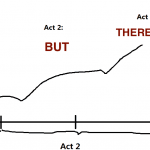
March 8, 2017 How Story Structure Can Clarify Ideas
Browse Our Archives
Select a Category Atonement Biblical Theology Book Reviews China Chinese Church Chinese Culture Chinese Language Collectivism Contextualization Culture (General) Ecclesiology Evangelism Gospel Honor & Shame (Face) Interpretation/Exegesis Justification/Righteousness Missiology Mission Methods One Gospel for All Nations Other Practical Contextualization Reading Romans with Eastern Eyes Resources Romans Salvation (General) Saving God's Face Seeking God's Face The Cross in Context Theological Contextualization Theological Education Theology Uncategorized
Select a Month October 2026 September 2026 August 2026 July 2026 June 2026 May 2026 April 2026 March 2026 February 2026 January 2026 December 2025 November 2025 October 2025 September 2025 August 2025 July 2025 June 2025 May 2025 April 2025 March 2025 February 2025 January 2025 December 2024 November 2024 October 2024 September 2024 August 2024 July 2024 June 2024 May 2024 April 2024 March 2024 February 2024 January 2024 December 2023 November 2023 October 2023 September 2023 August 2023 July 2023 June 2023 May 2023 April 2023 March 2023 February 2023 January 2023 December 2022 November 2022 October 2022 September 2022 August 2022 July 2022 June 2022 May 2022 April 2022 March 2022 February 2022 January 2022 December 2021 November 2021 October 2021 September 2021 August 2021 July 2021 June 2021 May 2021 April 2021 March 2021 February 2021 January 2021 December 2020 November 2020 October 2020 September 2020 August 2020 July 2020 June 2020 May 2020 April 2020 March 2020 February 2020 January 2020 December 2019 November 2019 October 2019 September 2019 August 2019 July 2019 June 2019 May 2019 April 2019 March 2019 February 2019 January 2019 December 2018 November 2018 October 2018 September 2018 August 2018 July 2018 June 2018 May 2018 April 2018 March 2018 February 2018 January 2018 December 2017 November 2017 October 2017 September 2017 August 2017 July 2017 June 2017 May 2017 April 2017 March 2017 February 2017 January 2017 December 2016 November 2016 October 2016 September 2016 August 2016 July 2016 June 2016 May 2016 April 2016 March 2016 February 2016 January 2016 December 2015 November 2015 October 2015 September 2015 August 2015 July 2015 June 2015 May 2015 April 2015 March 2015 February 2015 January 2015 December 2014 November 2014 October 2014 September 2014 August 2014 July 2014 June 2014 May 2014 April 2014 March 2014 February 2014 January 2014 December 2013 November 2013 October 2013 September 2013 August 2013 July 2013 June 2013 May 2013 April 2013 March 2013 February 2013 January 2013 December 2012 November 2012
Follow Us!
TAKE THE
Religious Wisdom Quiz
What natural disaster did God use to destroy the earth in Noah’s time?
Select your answer to see how you score.
Fire Famine Flood Earthquake
Books by This Author Books by Brad Vaughn
Related posts from Saving God's Face

Why Christianity Needs Individuals but Rejects Individualism

Glory, Violence, and the Gospel of Peace

“I’ll be wherever you call me.”

Biblical Foundations for Local Embodiment
TRENDING AT PATHEOS Evangelical

A new article, written by Jeff Lindsay and Gale L. Pooley,...

Swimfan: Forgotten Aughts Pleasures
This is a recovery effort. In 2002, My Big Fat Greek Wedding...

Top Three Anti-Catholic Lies About Catholicism
This is my initial transcript for the video, "THE 3 WORST...

Pope Leo Celebrates Mass for Nurses & Docs...
I don't have any idea how he did it, but Pope Leo...

The Sermon on the Mount, Part I: Matthew...
The Sermon on the Mount, Part I (Matthew 4:12-5:12) St. Matthew moves...

What's up from Crossway: Reviewing some of their latest A few weeks...
view all Evangelical blogs
Ad-Free & Subscriber Log-In Subscription Support
- About Us
- 2026 Calendar
- Videos
- Podcasts
- Library of World Religions
- Faith In Media Tracker
- Advertise With Us
- Write for Us
- Privacy Policy
- Terms of Service
- Do Not Sell My Data
- Contact Us
- Radiant Digital
- Manage Newsletter Subscriptions
- Unsubscribe From Notifications
- Sitemap
Copyright 2008-2026, Patheos. All rights reserved.
Subscription Support Ad-Free & Subscriber Log-In
Follow Patheos