
BuddhistCatholicContemplativeEvangelicalGeneral ChristianHinduJewishLatter-day SaintMuslimNew VisionsProgressive Christian
Beliefs
- Buddhist
- Catholic
- Contemplative
- Evangelical
- General Christian
- Hindu
- Jewish
- Latter-day Saint
- More Voices
- Muslim
- New Visions
- Pagan
- Progressive Christian
Topics
- Religion News
- Food and Religion
- Sports and Religion
- Religious Art
- Religious Music and Entertainment
- Religious Events
- History and Religion
- Style and Religion
- Politics and Religion
- Women in Religion
- Recreation Outdoors and Religion
- Business Finance and Religion
- Careers Workplace and Religion
- Education and Religion
- Family Parenting and Religion
- Health Fitness and Religion
- Home and Religion
- Relationships and Religion
- Technology and Religion
- Travel and Religion
Columnists
- Buddhist Columnists
- Business Finance and Religion Columnists
- Careers Workplace and Religion Columnists
- Catholic Columnists
- Contemplative Columnists
- Education and Religion Columnists
- Evangelists Columnists
- Family Parenting and Religion Columnists
- General Christian Columnists
- Health Fitness and Religion Columnists
- Hindu Columnists
- History and Religion Columnists
- Home and Religion Columnists
- Jewish Columnists
- More Voices Columnists
- Latter Day Columnists
- Muslim Columnists
- New Visions Columnists
- Nonreligious Columnists
- Pagan Columnists
- Politics and Religion Columnists
- Progressive Columnists
- Recreation Outdoors and Religion Columnists
- Relationships and Religion Columnists
- Religion News Columnists
- Religious Art Columnists
- Religious Events Columnists
- Religious Music and Entertainment Columnists
- Sports and Religion Columnists
- Style and Religion Columnists
- Technology and Religion Columnists
- Travel and Religion Columnists
- Women in Religion Columnists
Resource Library
- 2026 Calendar
- Library of World Religions
- The 100 Most Holy Places on Earth
- Patheos Answers
- Podcasts
- Videos
- Faith Leaders Database
- Anglican Episcopalian
- Bahai
- Baptist
- Buddhism
- Christianity
- Confucianism
- Eastern Orthodoxy
- Hinduism
- Holiness and Pentecostal
- ISKCON
- Islam
- Judaism
- Lutheran
- Methodist
- The Church of Jesus Christ of Latter-day Saints
- New Age
- Paganism
- Presbytarian and Reformed
- Protestantism
- Religion Behind the Scenes
- Roman Catholic
- Scientology
- Shia Islam
- Sikhism
- Sufism
- Sunni Islam
- Taoism
- Zen
- See all religions
Research Tools
 Ad-Free & Subscriber Log-In Subscription Support
Ad-Free & Subscriber Log-In Subscription Support
Follow Patheos 

- Trending:
- Forgiveness
- |
- Marriage
- |
- Consciousness
- |
- Death Penalty
- |
- Election
- |
- Halloween

-
Tools
-
Support the Work
- Home
- Evangelical
- Must Chinese elders have believing children?
Must Chinese elders have believing children?
Last updated on: November 2, 2016 at 7:10 am by Brad Vaughn
Must Chinese elders have believing children? 2016-09-28T09:48:40-07:00 Brad Vaughn
Patheos Explore the world's faith through different perspectives on religion and spirituality! Patheos has the views of the prevalent religions and spiritualities of the world.
What qualifies a person to be a pastor? Are you aware of a controversial translation in Titus 3 that influences how many Chinese church leaders think about this question?
How we interpret the text has important implications (or consequences) for the church. I refer to Titus 1:6. I’ll quote the ESV in context followed by the translation of v. 6 in the CUV (和合本).
This is why I left you in Crete, so that you might put what remained into order, and appoint elders in every town as I directed you— 6 if anyone is above reproach, the husband of one wife, and his children are believers and not open to the charge of debauchery or insubordination. 7 For an overseer, as God’s steward, must be above reproach. He must not be arrogant or quick-tempered or a drunkard or violent or greedy for gain, 8 but hospitable, a lover of good, self-controlled, upright, holy, and disciplined. 9 He must hold firm to the trustworthy word as taught, so that he may be able to give instruction in sound doctrine and also to rebuke those who contradict it.
若有无可指责的人, 只作一个妇人的丈夫, 儿女也是信主的, 没有人告他们是放荡不服约束的, 就可以设立 (题多1:6)
A wooden translation of the Chinese (CUV) says: “…children also believe the Lord.”
By contrast, other translations echo the HCSB, which says, “…having faithful children not accused of wildness or rebellion” (cf. NKJV, NET). Obviously, the difference in translation is neither subtle nor trivial.
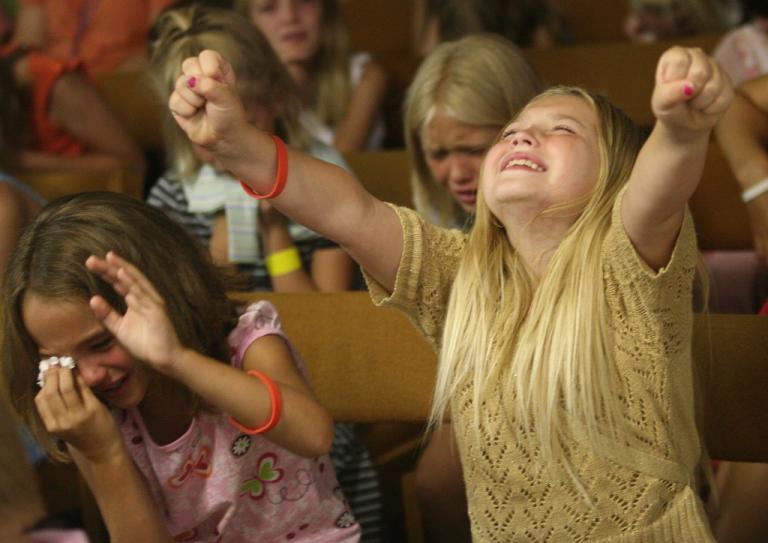
credit: wikipedia
“Believing” or “faithful” children?
In my interpretation below, don’t worry when you see Greek words. I add it for those familiar with the language. Even if you don’t know Greek, you’ll see the observations I highlight.
Let’s first look at the Greek before considering the context and other relevant passages. Verse 6 in Greek says:
εἴ τίς ἐστιν ἀνέγκλητος, μιᾶς γυναικὸς ἀνήρ, τέκνα ἔχων πιστά, μὴ ἐν κατηγορίᾳ ἀσωτίας ἢ ἀνυπότακτα.
The Greek τέκνα ἔχων πιστά by itself could certainly be translated “children having faith”; however, this is not only possibility (as we see above). In my view, Paul speaks of children’s conduct/behavior, not whether they are believers.
To understand why, compare what Paul says in the near context and elsewhere, especially Paul’s specific wording. Below, I’ve outlined Titus 1:6
εἴ τίς ἐστιν ἀνέγκλητος, μιᾶς γυναικὸς ἀνήρ,
τέκνα ἔχων πιστά,
μὴ ἐν κατηγορίᾳ ἀσωτίας ἢ ἀνυπότακτα
… having faithful children,
not open to the charge of debauchery or insubordination.
Many people don’t notice or realize the last phrase (grammatically) describes the children, not the church elder. Accordingly, the last clause clarifies the point of πιστά (“faithful”). An elder should raise his children so they will not be unruly, out of control, disrespectful, etc. In other words, they are faithful children, living in a manner respectful to their parents.
“Faith(fulness)” in Context
Compare Paul’s wording in Titus 2 as well as in 1 Timothy (where Paul also speaks of an elder’s qualifications). In the following passages, we’ll see how frequently Paul mentions the expectation that people show moral “faith(fulness)”, not simply “have faith.”
In Titus 2:9–10, Paul writes,
Bondservants are to be submissive [ὑποτάσσω] to their own masters in everything; they are to be well-pleasing, not argumentative, not pilfering, but showing all good faith [ἀλλὰ πᾶσαν πίστιν ἐνδεικνυμένους ἀγαθήν].
In a moment, we’ll again see the word ὑποτάσσω [be submissive], on which Paul elaborates using the word “faith” [πίστιν]. For those curious, the CUV translates the latter as “要显为忠诚” [“showing loyalty”].
First Timothy 3 reinforces the above interpretation. What Paul says negatively in Titus 1:6, he states positively in 1 Tim 3:4–5, which I outline below.
He must manage his own household well,
having children [who are] in submission
[who have] with all dignity
for if someone does not know how to manage his own household,
how will he care for God’s church?
In Greek:
τοῦ ἰδίου οἴκου καλῶς προϊστάμενον,
τέκνα ἔχοντα ἐν ὑποταγῇ
μετὰ πάσης σεμνότητος·
[FOR] εἰ δέ τις τοῦ ἰδίου οἴκου προστῆναι οὐκ οἶδεν,
πῶς ἐκκλησίας θεοῦ ἐπιμελήσεται;
Paul combines the wording from Titus 1:6, 2:9–10. The children should be submissive [ὑποταγῇ]. Yet, he now adds the word σεμνότητος [“dignity”], which appears a few verses later.
In 1 Tim 3:11, Paul says, “Their wives likewise must be dignified [σεμνάς], not slanderers, but sober-minded, faithful in all things [πιστὰς ἐν πᾶσιν].”
Once again, when speaking of the qualification of an elder, Paul refers to the faithfulness [πιστὰς] of a close relative. (The CUV says, “凡事忠心”, i.e. “loyal in all things”). Interestingly, v. 11 uses the same descriptor for both children and wife (1 Titus 1:6), namely “dignified” (both using forms of σεμνός).
A Summary of Paul’s Idea
What is Paul’s point?
As 1 Tim 3:4–5 makes explicit, elders should manage their home in such a way that their wives and children are faithful, honorable, and respectful. The interchange of descriptions (submission, dignified, etc.) and his multiple references to faith(fullness) show that Paul is thinking about character not conversion.
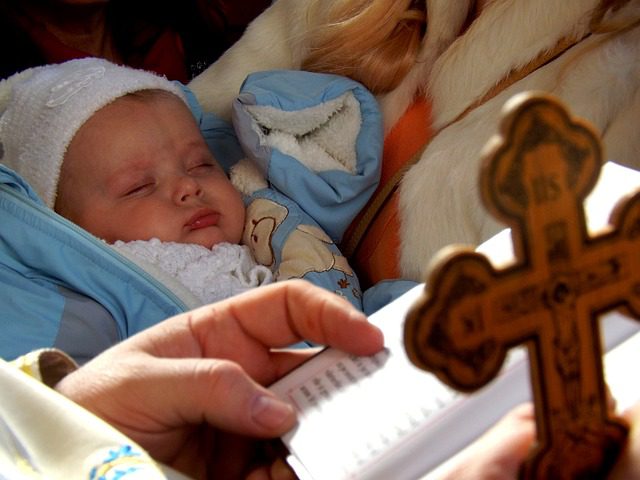
credit: CC/pixabay
Disastrous Consequences
Here are a few problems with the CUV and ESV’s translating Titus 1:6 to mean “believing children”.
- Theologically
If we say a person is disqualified from being an elder because his children do not follow the Lord, what does this imply?
It suggests a father has the power to change his child’s heart. This is preposterous for two reasons. First, only God changes hearts. Second, the child’s heart does not reflect on the elder’s character since he cannot control another’s faith.
If one accepts the CUV/ESV, readers might infer that they do have that ability––to control whether others in fact believe or not believe (rather than God).
- Evangelistically
Pastors will feel incredible inward pressure to compel or force their children to believe (as if that were actually possible). If a child does not believe in a timely manner, one will be tempted to manipulate a child to “make a decision” for Christ.
At the very least, he’ll likely be content to accept any sign of faith yet without helping the child to probe more deeply his/her heart. Further discussion is needed to make sure the child does not merely assume (s)he has faith because the parents have faith. If an elder is not careful, he might unwittingly turn a blind eye to his children’s self-deception.
- Pastorally
What happens as children grow?
Let’s say that a child eventually changes his profession and says he does not believe, what happens to the pastor? Even if the elder has shared the gospel, given a godly witness and urged faith/repentance, that elder (according to the CUV/ESV) becomes disqualified from pastoring.
This possibility casts a shadow over the pastor’s ministry. The fear of losing one’s job or being discredited for what he can’t control can lead to unhealthy responses. For example, he might compromise his parenting in order to “ensure” the child does not go wayward (at least outwardly). This could take the form of overly strict discipline or excessive appeasing of the child.
Furthermore, the pastor might compromise the church’s theology by affirming a type of “easy-believism.” He could claim his prodigal child is definitely saved since he “prayed a prayer of salvation” when he was a small child, despite overwhelming contrary evidence the young child never had true faith (but simply wanted to please his/her parents).
Let me know what you think? Have you run into this issue where you live? Have you ever discussed Titus 1:6 with your local friends?
If you don’t use Chinese, how does the Bible in your local language translate this passage?
Save
Previous Post
October 25, 2016
My most useful contextualization tool (Part 2)
Next Post

November 3, 2016 How Christ saves God’s face . . . and ours (new article)
Browse Our Archives
Select a Category Atonement Biblical Theology Book Reviews China Chinese Church Chinese Culture Chinese Language Collectivism Contextualization Culture (General) Ecclesiology Evangelism Gospel Honor & Shame (Face) Interpretation/Exegesis Justification/Righteousness Missiology Mission Methods One Gospel for All Nations Other Practical Contextualization Reading Romans with Eastern Eyes Resources Romans Salvation (General) Saving God's Face Seeking God's Face The Cross in Context Theological Contextualization Theological Education Theology Uncategorized
Select a Month October 2026 September 2026 August 2026 July 2026 June 2026 May 2026 April 2026 March 2026 February 2026 January 2026 December 2025 November 2025 October 2025 September 2025 August 2025 July 2025 June 2025 May 2025 April 2025 March 2025 February 2025 January 2025 December 2024 November 2024 October 2024 September 2024 August 2024 July 2024 June 2024 May 2024 April 2024 March 2024 February 2024 January 2024 December 2023 November 2023 October 2023 September 2023 August 2023 July 2023 June 2023 May 2023 April 2023 March 2023 February 2023 January 2023 December 2022 November 2022 October 2022 September 2022 August 2022 July 2022 June 2022 May 2022 April 2022 March 2022 February 2022 January 2022 December 2021 November 2021 October 2021 September 2021 August 2021 July 2021 June 2021 May 2021 April 2021 March 2021 February 2021 January 2021 December 2020 November 2020 October 2020 September 2020 August 2020 July 2020 June 2020 May 2020 April 2020 March 2020 February 2020 January 2020 December 2019 November 2019 October 2019 September 2019 August 2019 July 2019 June 2019 May 2019 April 2019 March 2019 February 2019 January 2019 December 2018 November 2018 October 2018 September 2018 August 2018 July 2018 June 2018 May 2018 April 2018 March 2018 February 2018 January 2018 December 2017 November 2017 October 2017 September 2017 August 2017 July 2017 June 2017 May 2017 April 2017 March 2017 February 2017 January 2017 December 2016 November 2016 October 2016 September 2016 August 2016 July 2016 June 2016 May 2016 April 2016 March 2016 February 2016 January 2016 December 2015 November 2015 October 2015 September 2015 August 2015 July 2015 June 2015 May 2015 April 2015 March 2015 February 2015 January 2015 December 2014 November 2014 October 2014 September 2014 August 2014 July 2014 June 2014 May 2014 April 2014 March 2014 February 2014 January 2014 December 2013 November 2013 October 2013 September 2013 August 2013 July 2013 June 2013 May 2013 April 2013 March 2013 February 2013 January 2013 December 2012 November 2012
Follow Us!
TAKE THE
Religious Wisdom Quiz
What is the repeated phrase at the end of Psalm 136?
Select your answer to see how you score.
Let everything praise him Blessed be the Lord Praise the Lord His love endures forever
Books by This Author Books by Brad Vaughn
Related posts from Saving God's Face

Why Christianity Needs Individuals but Rejects Individualism

Chinese Christians Have Faith in the Wilderness. Will...
The Ministry of Women in the Chinese Church

7 Reasons Why Sinicization is Not Rhetoric This...
TRENDING AT PATHEOS Evangelical

When Halloween Unmasks Married Hearts
Written by Dr. David K. Ewen from Eternal Truth Bible College Behind...

Aristotle. He’s been called the father of logic, the father of the...

Methodist Central Hall and Westminster Abbey
Situated on the same square is Methodist Central Hall and Westminster Abbey. ...

57th Dove Awards Honor Dolly Parton, Crown New...
On gospel music’s biggest night, the 57th annual GMA Dove Awards honored...

The First Eucharistic Controversy: Christ’s Real Presence
For Catholics, the Eucharist is the source and summit of the Christian...

What a Stop Sign Can Teach Us About...
How to Make a Decision When You Can't Hear God Main point:...
view all Evangelical blogs
Ad-Free & Subscriber Log-In Subscription Support
- About Us
- 2026 Calendar
- Videos
- Podcasts
- Library of World Religions
- Faith In Media Tracker
- Advertise With Us
- Write for Us
- Privacy Policy
- Terms of Service
- Do Not Sell My Data
- Contact Us
- Radiant Digital
- Manage Newsletter Subscriptions
- Unsubscribe From Notifications
- Sitemap
Copyright 2008-2026, Patheos. All rights reserved.
Subscription Support Ad-Free & Subscriber Log-In
Follow Patheos