
BuddhistCatholicContemplativeEvangelicalGeneral ChristianHinduJewishLatter-day SaintMuslimNew VisionsProgressive Christian
Beliefs
- Buddhist
- Catholic
- Contemplative
- Evangelical
- General Christian
- Hindu
- Jewish
- Latter-day Saint
- More Voices
- Muslim
- New Visions
- Pagan
- Progressive Christian
Topics
- Religion News
- Food and Religion
- Sports and Religion
- Religious Art
- Religious Music and Entertainment
- Religious Events
- History and Religion
- Style and Religion
- Politics and Religion
- Women in Religion
- Recreation Outdoors and Religion
- Business Finance and Religion
- Careers Workplace and Religion
- Education and Religion
- Family Parenting and Religion
- Health Fitness and Religion
- Home and Religion
- Relationships and Religion
- Technology and Religion
- Travel and Religion
Columnists
- Buddhist Columnists
- Business Finance and Religion Columnists
- Careers Workplace and Religion Columnists
- Catholic Columnists
- Contemplative Columnists
- Education and Religion Columnists
- Evangelists Columnists
- Family Parenting and Religion Columnists
- General Christian Columnists
- Health Fitness and Religion Columnists
- Hindu Columnists
- History and Religion Columnists
- Home and Religion Columnists
- Jewish Columnists
- More Voices Columnists
- Latter Day Columnists
- Muslim Columnists
- New Visions Columnists
- Nonreligious Columnists
- Pagan Columnists
- Politics and Religion Columnists
- Progressive Columnists
- Recreation Outdoors and Religion Columnists
- Relationships and Religion Columnists
- Religion News Columnists
- Religious Art Columnists
- Religious Events Columnists
- Religious Music and Entertainment Columnists
- Sports and Religion Columnists
- Style and Religion Columnists
- Technology and Religion Columnists
- Travel and Religion Columnists
- Women in Religion Columnists
Resource Library
- 2026 Calendar
- Library of World Religions
- The 100 Most Holy Places on Earth
- Patheos Answers
- Podcasts
- Videos
- Faith Leaders Database
- Anglican Episcopalian
- Bahai
- Baptist
- Buddhism
- Christianity
- Confucianism
- Eastern Orthodoxy
- Hinduism
- Holiness and Pentecostal
- ISKCON
- Islam
- Judaism
- Lutheran
- Methodist
- The Church of Jesus Christ of Latter-day Saints
- New Age
- Paganism
- Presbytarian and Reformed
- Protestantism
- Religion Behind the Scenes
- Roman Catholic
- Scientology
- Shia Islam
- Sikhism
- Sufism
- Sunni Islam
- Taoism
- Zen
- See all religions
Research Tools
 Ad-Free & Subscriber Log-In Subscription Support
Ad-Free & Subscriber Log-In Subscription Support
Follow Patheos 

- Trending:
- Forgiveness
- |
- Marriage
- |
- Consciousness
- |
- Death Penalty
- |
- Election
- |
- Halloween

-
Tools
-
Support the Work
- Home
- Evangelical
- “White privilege” in missions. Really?
“White privilege” in missions. Really?
Last updated on: October 21, 2016 at 10:00 pm by Brad Vaughn
“White privilege” in missions. Really? 2016-10-21T22:00:17-07:00 Brad Vaughn
Patheos Explore the world's faith through different perspectives on religion and spirituality! Patheos has the views of the prevalent religions and spiritualities of the world.
My aunt is attracted black men. That means I now have two black cousins related by blood. During middle school, my dad, one of my cousins and I went to the store. I kept my distance from them, at least 20 yards.
It was not until adulthood that I found out my actions were grossly misunderstood. Apparently, my father supposed I was embarrassed to have a black cousin. I was appalled at the suggestion. I love my cousin deeply. We were close. In actual fact, I was embarrassed to be around my dad! (I won’t go into my reasons at the time.)
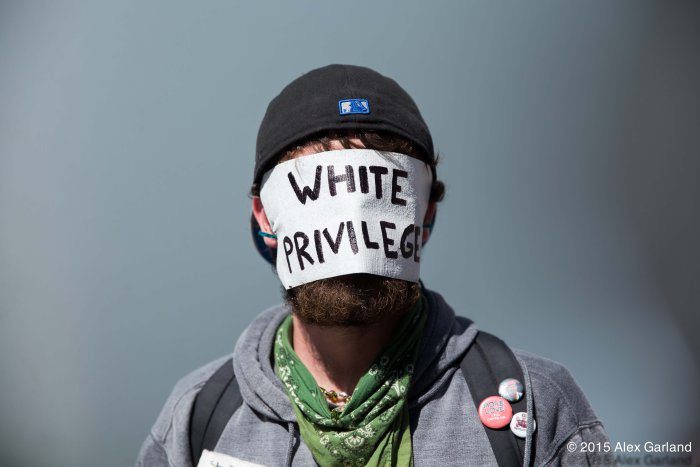
Credit: flickr/backbone_campaign
This story illustrates how prone we are to misinterpret and mislabel people’s actions. Everyone has personal baggage. Our background shades our perspective. We create narratives that filter our experience and can unfairly condemn even those near us.
What is “white privilege”?
At A Life Overseas, an Asian writer Grace Lee complains of “white privilege” in western missions. She doesn’t define the term. Instead, she gives examples of past offenses.
As a missionary, she frequently feels “ignored and irrelevant within the predominantly white missions community.” She recounts a time
our missions agency was considering mobilization of internationals. Leaders from around the region gathered together to discuss the pros and cons of such an endeavor. I and other minority members expressed our apprehension of recruiting locals into a primarily white organization, citing concerns about expansionism and assimilation.
She concludes, “instead of hearing [her] reservations,” the task force moved ahead with plan to mobilize internationals in an integrated fashion.
She then adds,
I think of my father, who has written countless books about missions, is a sought-after speaker for conferences, and has five decades of ministry experience as a missionary, pastor, professor, and mobilizer. Go anywhere in the world and ask any believer with my ethnic background, and they probably know of him. Yet very few white missionaries have ever heard of his name.
Her experiences teach her that non-whites are “invisible”, “ignored” and “unheard.” Thus,
When those with white privilege are the only people with influence, people of color inevitability feel stripped of power. When theirs are the only voices we hear, people of color feel unheard. When there is a lack of representation and diversity within the missions community, people of color feel dismissed.
I’m deeply saddened by her pain. Various things in her past have obviously left her feeling wounded. As I reflect on her comments, a few thoughts come to mind.
A lingering question is this: What is “white privilege”? Although the answer seems obvious, I’ll explain why the question deserves attention.

Credit: Flickr/Carolyntiry
On the one hand, “white privilege” could be a mere description. As such, the term describes a historical and social phenomenon whereby white people have gained certain privileges as a result of various unfortunate events in the past.
On the other hand, it might carry negative connotations about those with white privilege. Specifically, the term could suggest that such people continue to have prejudice and so actively protect certain privileges for white people to the exclusion of non-whites.
Both circumstances are lamentable. But the second claim is far more incendiary and represents a grievous obstacle to the church’s unity and mission. How we understand “white privilege” makes a significant difference not only in how we understand her complaints but how we move forward as Christ’s followers.
In my opinion, her strong words suggest the second, more provocative meaning. They imply a systemic albeit subtle effort (in her words) to “dismiss”, “ignore” “silence” and “disenfranchise” people of color.
If so, her blog post is riddled with problems. Furthermore, it represents a destructive approach to a multifaceted problem that is easier to name than solve.
Where is “white privilege”?
Lee asks for “compassion”, which she explains as “suffering with” those like herself. As our sister, we desire to empathize with her. Yet, Jesus-like compassion has an active, problem-solving nature (cf. Matt 14:14; 15:32; Luke 10:33).[1]
What is the basic problem underlying Lee’s essay? It lacks generosity.
By this, I mean she seems to assume the worst––or something thoroughly negative––about believers, especially missionaries. While no one is perfect, we have many reasons to assume the contrary–– that most white missionaries are not prejudiced against non-white missionaries. She assumes ill of others without considering other possible reasons for her complaints.
I’ll begin with the items that least support her contention.
1. The organization did not listen to her advice
This is a flawed example for multiple reasons. First, considering someone’s advice and agreeing with their advice are entirely different. Second, a task force receives a lot of (contrary) input from many people. It’s possible that other non-Caucasians (whether from inside or outside the organization) agreed with their decision. There is no reason to insinuate prejudice. Third, they might simply disagree with Lee’s view. Being non-white does not entail always being right.
Someone could just as well argue that creating organization silos based on ethnicity or skin color perpetuates our basic problem. A more integrative method, even if it’s messy, might work better in the long run.
2. Few white missionaries know her father’s name
Her objection sounds more like a statement of love for her father than a legitimate reason for claiming “white privilege” (as subtle prejudice). It seems she wants people to know her father but many do not. So, she feels hurt on his behalf. Her affection for her father is admirable. That doesn’t make it good evidence for her argument.
For one thing, we must accept her word that he is as famous as she claims. Also, she presumes to know what white people know or don’t know about him. That’s a big claim. What’s more, we know nothing about the nature of his ministry, who he published with, how many books are published in what languages and about what topics, where he traveled, where he’s taught, etc.
Moreover, she seems unaware of a more basic consideration. Even white people are relatively clueless about many very famous white theologians and missiologists.
For example, I know many missionaries that have never heard of N. T. Wright, despite the fact he probably is the most well-known or influential theologian alive. Not only that, I’ve found that theologians don’t know famous missiologists and missiologists are unfamiliar with well-known theologians. It’s not a color thing.
3. The disproportionate number of white missionaries
This point seems to be Lee’s root concern. Obviously, there are many historical reasons for this. Contemporary missionaries cannot be blamed. Systemic change takes time.
She does not entertain possible influences that might explain why progress is not more rapid. For instance, many Asia families ––including Christian families––fiercely resist their children becoming missionaries because it lacks the prestige or does not provide a high income.
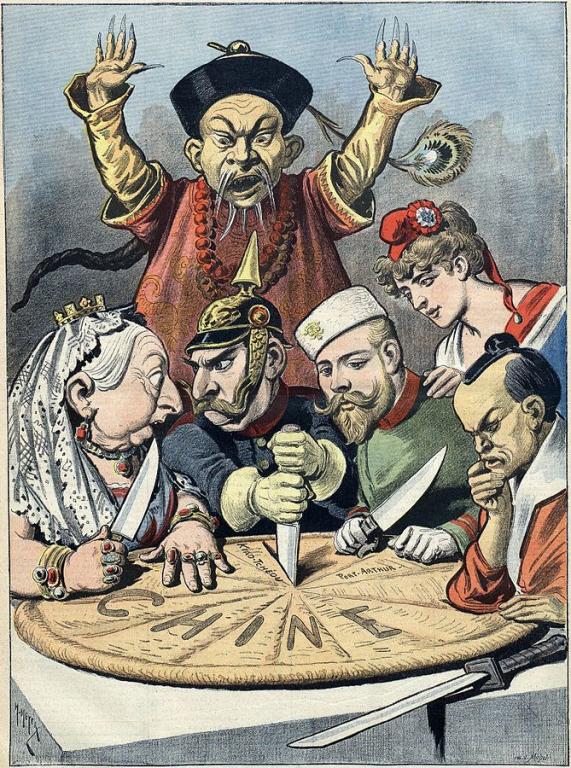
Credit: Public Domain
It’s also possible that many churches insufficiently emphasize missions. I have listened for hours to people from New York’s Chinatown as they rant with anger about Mainland China. Many of them still hold grudges and prejudice against China. One should not ignore factors like this, not to mention other possible aversions people might have to cross cultural work.
One person responded to her post, “I have been struck by how very non-diverse American missionaries seem to be.” The question remains––who is to blame? I don’t think it’s missionaries, the people who serve people who typically have a different ethnic background. By analogy, most NBA players are not Caucasians. Are we to assume the reason is that non-white players are discriminating against whites?
“Everyone is overlooked sometimes.”
We need to engage in debates about discrimination and prejudice in more productive and generous ways. A Life Overseas posted Lee’s article on Facebook. One women, Lisa, wrote
The use of the term “white privilege” was a poor choice. White privilege discussions are about shaming white people. We should not be doing that in the body of Christ. I’m a white missionary who has been on the field for more than thirteen years. My husband is Asian and an ethnic minority. I have not seen him ignored by my white colleagues. They are usually interested in his perspective. However, I have seen him railroaded by Asian colleagues, some of whom are Chinese.
Lisa then points out, “Everyone is overlooked sometimes.” J. K. Rowling’s Harry Potter was rejected 12 times before begin accepted. William Golding’s Lord of the Flies was rejected 20 times. Should we blame those rejections on the fact that Rowling is a woman or that Golding is a British white male?
I could likewise share stories of “Asian privilege” where people assumed––based on skin color–– that new American-born Chinese missionaries (who could not speak Mandarin) understood Mainland China better than long-term white missionaries.
Lee unleashes her personal hurt in a way that ultimately undermines the goal she seeks. She offers a compelling personal narrative that ultimate distracts from more concrete forms of discrimination. A very common example exists among Chinese pastors (not white missionaries). Potential church leaders are routinely passed over for no other reason than because they originally came from “out of town” (外来的人).

Credit: flickr/mindonfire
Finally, we not only need to change our terms and our tone; we should rethink our tactics. By framing her argument in terms of “white privilege”, Lee accomplishes two things, neither of which is healthy.
1. Lee shields herself from criticism.
This is because anyone who disagrees with her would have to talk past the emotive appeal of her argument. Objections from white people can be written off immediately as further validation of “white privilege.”
2. It’s so difficult to prove people’s motives.
As a result, her accusations are almost unassailable. As long as her rationale is somewhat plausible, one is hard pressed to provide counter evidence that completely dislodges the narrative she offers.
I am thankful for Grace Lee’s willingness to share her concerns. I hope a fruit of her article will be that we begin self-reflecting. Where might we engage in attitudes and practices that do not foster genuine unity?
As we do this, I urge people to give pause and also consider how they discuss these sensitive subjects. We should offer careful, clear and constructive arguments that advance the conversation. Are we accusing or asking genuine questions? Are there more generous ways to interpret others’ actions? What is a personal problem and what is a broader issue of prejudice?
And by His grace, we will honor one another in the process.
[1] Also, Matt 9:36; Mark 6:34; 8:2; 9:22; Luke 7:13; 15:20.
Save
Save
Save
Previous Post
October 19, 2016
My most useful contextualization tool (Part 1)
Next Post
October 25, 2016 My most useful contextualization tool (Part 2)
Browse Our Archives
Select a Category Atonement Biblical Theology Book Reviews China Chinese Church Chinese Culture Chinese Language Collectivism Contextualization Culture (General) Ecclesiology Evangelism Gospel Honor & Shame (Face) Interpretation/Exegesis Justification/Righteousness Missiology Mission Methods One Gospel for All Nations Other Practical Contextualization Reading Romans with Eastern Eyes Resources Romans Salvation (General) Saving God's Face Seeking God's Face The Cross in Context Theological Contextualization Theological Education Theology Uncategorized
Select a Month October 2026 September 2026 August 2026 July 2026 June 2026 May 2026 April 2026 March 2026 February 2026 January 2026 December 2025 November 2025 October 2025 September 2025 August 2025 July 2025 June 2025 May 2025 April 2025 March 2025 February 2025 January 2025 December 2024 November 2024 October 2024 September 2024 August 2024 July 2024 June 2024 May 2024 April 2024 March 2024 February 2024 January 2024 December 2023 November 2023 October 2023 September 2023 August 2023 July 2023 June 2023 May 2023 April 2023 March 2023 February 2023 January 2023 December 2022 November 2022 October 2022 September 2022 August 2022 July 2022 June 2022 May 2022 April 2022 March 2022 February 2022 January 2022 December 2021 November 2021 October 2021 September 2021 August 2021 July 2021 June 2021 May 2021 April 2021 March 2021 February 2021 January 2021 December 2020 November 2020 October 2020 September 2020 August 2020 July 2020 June 2020 May 2020 April 2020 March 2020 February 2020 January 2020 December 2019 November 2019 October 2019 September 2019 August 2019 July 2019 June 2019 May 2019 April 2019 March 2019 February 2019 January 2019 December 2018 November 2018 October 2018 September 2018 August 2018 July 2018 June 2018 May 2018 April 2018 March 2018 February 2018 January 2018 December 2017 November 2017 October 2017 September 2017 August 2017 July 2017 June 2017 May 2017 April 2017 March 2017 February 2017 January 2017 December 2016 November 2016 October 2016 September 2016 August 2016 July 2016 June 2016 May 2016 April 2016 March 2016 February 2016 January 2016 December 2015 November 2015 October 2015 September 2015 August 2015 July 2015 June 2015 May 2015 April 2015 March 2015 February 2015 January 2015 December 2014 November 2014 October 2014 September 2014 August 2014 July 2014 June 2014 May 2014 April 2014 March 2014 February 2014 January 2014 December 2013 November 2013 October 2013 September 2013 August 2013 July 2013 June 2013 May 2013 April 2013 March 2013 February 2013 January 2013 December 2012 November 2012
Follow Us!
TAKE THE
Religious Wisdom Quiz
What does "Sabbath" mean in Hebrew?
Select your answer to see how you score.
Holy Day Rest Offering Worship
Books by This Author Books by Brad Vaughn
Related posts from Saving God's Face

Why Christianity Needs Individuals but Rejects Individualism

Glory, Violence, and the Gospel of Peace

“I’ll be wherever you call me.”

Biblical Foundations for Local Embodiment
TRENDING AT PATHEOS Evangelical

57th Dove Awards Honor Dolly Parton, Crown New...
On gospel music’s biggest night, the 57th annual GMA Dove Awards honored...

The First Eucharistic Controversy: Christ’s Real Presence
For Catholics, the Eucharist is the source and summit of the Christian...

What a Stop Sign Can Teach Us About...
How to Make a Decision When You Can't Hear God Main point:...

Archdiocese Hosts Military Marriage Retreat in Germany
RASTATT, Germany — The transient military lifestyle, with its frequent deployments and...

Nearly every morning, I make the drive to Detroit with my high-school-age...

The Real AI Story Is Adoption Without Trust
Artificial intelligence has crossed a political threshold. It is no longer a...
view all Evangelical blogs
Ad-Free & Subscriber Log-In Subscription Support
- About Us
- 2026 Calendar
- Videos
- Podcasts
- Library of World Religions
- Faith In Media Tracker
- Advertise With Us
- Write for Us
- Privacy Policy
- Terms of Service
- Do Not Sell My Data
- Contact Us
- Radiant Digital
- Manage Newsletter Subscriptions
- Unsubscribe From Notifications
- Sitemap
Copyright 2008-2026, Patheos. All rights reserved.
Subscription Support Ad-Free & Subscriber Log-In
Follow Patheos