
BuddhistCatholicContemplativeEvangelicalGeneral ChristianHinduJewishLatter-day SaintMuslimNew VisionsProgressive Christian
Beliefs
- Buddhist
- Catholic
- Contemplative
- Evangelical
- General Christian
- Hindu
- Jewish
- Latter-day Saint
- More Voices
- Muslim
- New Visions
- Pagan
- Progressive Christian
Topics
- Religion News
- Food and Religion
- Sports and Religion
- Religious Art
- Religious Music and Entertainment
- Religious Events
- History and Religion
- Style and Religion
- Politics and Religion
- Women in Religion
- Recreation Outdoors and Religion
- Business Finance and Religion
- Careers Workplace and Religion
- Education and Religion
- Family Parenting and Religion
- Health Fitness and Religion
- Home and Religion
- Relationships and Religion
- Technology and Religion
- Travel and Religion
Columnists
- Buddhist Columnists
- Business Finance and Religion Columnists
- Careers Workplace and Religion Columnists
- Catholic Columnists
- Contemplative Columnists
- Education and Religion Columnists
- Evangelists Columnists
- Family Parenting and Religion Columnists
- General Christian Columnists
- Health Fitness and Religion Columnists
- Hindu Columnists
- History and Religion Columnists
- Home and Religion Columnists
- Jewish Columnists
- More Voices Columnists
- Latter Day Columnists
- Muslim Columnists
- New Visions Columnists
- Nonreligious Columnists
- Pagan Columnists
- Politics and Religion Columnists
- Progressive Columnists
- Recreation Outdoors and Religion Columnists
- Relationships and Religion Columnists
- Religion News Columnists
- Religious Art Columnists
- Religious Events Columnists
- Religious Music and Entertainment Columnists
- Sports and Religion Columnists
- Style and Religion Columnists
- Technology and Religion Columnists
- Travel and Religion Columnists
- Women in Religion Columnists
Resource Library
- 2026 Calendar
- Library of World Religions
- The 100 Most Holy Places on Earth
- Patheos Answers
- Podcasts
- Videos
- Faith Leaders Database
- Anglican Episcopalian
- Bahai
- Baptist
- Buddhism
- Christianity
- Confucianism
- Eastern Orthodoxy
- Hinduism
- Holiness and Pentecostal
- ISKCON
- Islam
- Judaism
- Lutheran
- Methodist
- The Church of Jesus Christ of Latter-day Saints
- New Age
- Paganism
- Presbytarian and Reformed
- Protestantism
- Religion Behind the Scenes
- Roman Catholic
- Scientology
- Shia Islam
- Sikhism
- Sufism
- Sunni Islam
- Taoism
- Zen
- See all religions
Research Tools
 Ad-Free & Subscriber Log-In Subscription Support
Ad-Free & Subscriber Log-In Subscription Support
Follow Patheos 

- Trending:
- Forgiveness
- |
- Marriage
- |
- Consciousness
- |
- Death Penalty
- |
- Election
- |
- Halloween

-
Tools
-
Support the Work
- Home
- Evangelical
- Building the Biblical Story
Building the Biblical Story
Last updated on: September 21, 2016 at 7:30 am by Brad Vaughn
Building the Biblical Story 2016-09-18T20:03:43-07:00 Brad Vaughn
Patheos Explore the world's faith through different perspectives on religion and spirituality! Patheos has the views of the prevalent religions and spiritualities of the world.
In order to teach the Bible and share the gospel, we do best to understand both how stories work and how people learn. If we lack sufficient knowledge of either, we might create unnecessary challenges to our ministry.
 In mission circles, “story” is often linked with orality and UPG work. Among theologians, the entire Bible is frequently described as one grand “Story.” Whoever we are, all people both enjoy but think in terms of story. Story is the brain’s most efficient and natural means of storing and organizing information in meaningful ways.
Given the storied nature of the Bible, it follows that theology at its best has a narrative framework. This post suggests a practical implication of this observation. This approach simplifies how we think about teaching the Bible and the ease that people grasp our meaning when we present the gospel Story.
Typical Methods
Two major factors typically shape the way evangelicals share the biblical Story.
- TIME SEQUENCE
Of course, time is important. Much teaching follows the sequence of biblical events. Chronological Bible Storying is probably the most famous example of this approach. The advantage of this method is obvious. However, the disadvantage might only become clear with use: It takes a long time to get through the Story. Some story sets get as large as 120 stories.
- THEOLOGICAL SEQUENCE
What if you don’t have time to teach a long list of passages/stories to give a sufficient overview of the grand biblical Story?
In this case, theology determines which stories and ideas are prioritized. The approach ensures that we clearly communicate the main ideas we want to convey. One can get through the Story efficiently. Naturally, theological priorities shape the way one sees how the Bible held together.
Keep in mind that theological doctrines are shorthand markers for ideas found within the larger Story. Before long, we try to find ways to show how various doctrines cohere together. In so doing, we begin to systematize and thus truncate the larger narrative. Although unavoidable at times, the problem comes when we mentally or practically settle for these shorthand summaries.
We can forget that our rending of the Story originates from our choice in theological priorities and might not reflect the inherent plot-line of the Bible.
How we conceive and communicate the grand Story has important implications. Our methods will influence…
- how easily people remember the message
- the stories we select &
- how naturally the Story shapes disciples’ worldviews
How to we tell the biblical Story in a way that best accounts for these concerns?
Building the Story
Good contextualization is both biblically faithful and culturally meaningful. Therefore, our approach account for both text and context.
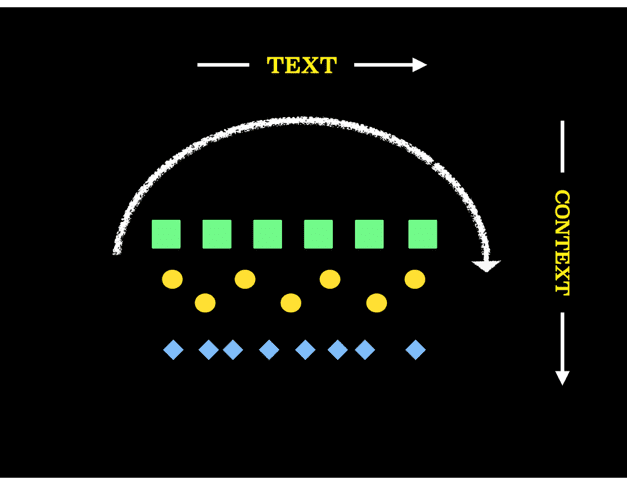
Check out the graph below. Moving horizontally, the text determines the sequence of stories (naturally reflecting the events in the Bible). You can see the teaching stages represented vertically, moving from top to bottom.
1. Text
In stage one, identify 6–7 key stories that already serve as foundational building blocks for the biblical narrative. This is primarily a literary decision, not a theological decision. Like any story, certain passages or scenes are so influential on the overall narrative that the larger story would be irreparably altered without them.
For example, in the movie Titanic, the sinking of the ship is essential. In Star Wars, the use of the force and the relationship between Vader and Luke are basic elements.
In the Bible, a few such examples include the Abrahamic covenant, the Exodus, and the Davidic covenant. Without these three covenants, the Bible ceases to be the book it is.
The story plot in the text determines how we share and teach the Bible.
What is the step-by-step process?
In stage one, we provide an overview of the grand Story according to its inherent plot structure. In stage two, we provide a more thorough telling of the Story, adding appropriate sub-stories and ideas that reinforce the broader framework. Third and successive stages continue the process, adding details that gradually round out the Story.
Notice what happens along the way. When you complete the third stage, you have reinforced the main storyline three times with greater depth. You’ve emphasized primary things and not allowed additional layers to overshadow the broader narrative and its plot movements.
In so doing, we ensure listeners grasp the gospel’s firm framework. In addition, this approach helps us teach the Bible in a balanced manner.
The challenging part is not forcing an alternative story line that is not intrinsic to the Bible at a literary and historical level. One faces the temptation to reshape the narrative to highlight certain theological ideas. Resist the temptation! God inspired the Bible as a Story, not a system (even if our philosophical systems are true).
The basic narrative framework of the Bible naturally gives rise to every theological truth.
2. Context
Every situation, culture and conversation provide a different set of challenges and opportunities. Sometimes we have 10 minutes; at other times, we may have weeks and months to share the gospel and train others. The model I suggest in this post grants us flexibility to handle the spectrum of circumstances.
So, if you only have 10 minutes, you will only be able to share the first layer of foundational stories, i.e. the main plot of the Bible. Ultimately, any and everything we ever talk about from the Bible will elaborate on that grand Story.
As we progress in successive stages, we have greater and greater freedom in selecting which stories and themes we focus on. Of course, the supporting stories and ideas must support the larger framework laid out in Stage One (if not Two).
Yet, the Bible uses a number of motifs to tell the same grand Story. The various images and plot-lines consistently intersect and converge to reinforce the overarching Story of the Bible. Depending on one’s context, different themes and stories will be chosen to communicate the message in a culturally meaningful way. For instance, we might select more passages with honor-shame language. Alternatively, we might highlight family imagery or recount stories that emphasize God’s power.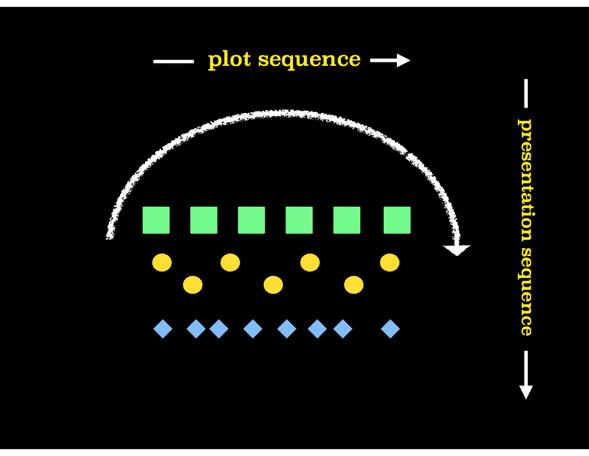
One Story for All Nations
In effect, the above model applies the observations discussed in One Gospel for All Nations and surveyed on the blog.
The gospel Story consistently uses of two kinds of themes: framework themes (creation, covenant, and kingdom) as well as explanation themes. The latter always shape the firm message the gospel presentation in the Bible. Explanation themes clarify the significance of the gospel and give speakers flexibility when sharing the gospel Story.
With this observation in mind, we can discern how the text itself can and should shape our teaching. Our initial stories set the firm framework on which everything else depends, every story or doctrine that we might share in the future.
Ultimately, we should retell the Story about how the Creator keeps His Covenant promises through Christ, who establishes God’s kingdom among all nations.
This model suggested reflect the firm and flexible model of contextualization we see in the Bible. The Bible frames our approach in two ways.
1. The biblical narrative has an inherent structure that prioritizes certain passages and events above others (in terms of literary influence).
2. The Bible of course determines the sequence of our story. We can’t selectively share passages according to our personal liking.
On the other hand, we have the flexibility we need to engage any cultural context. While framework themes are more prominent in the initial stages, later stages increasingly intersperse various explanation themes. We can choose the best explanation themes to convey a culturally meaningful message.
Final Words
Stories are not systems.
In their way, both stories and systems have an inherent degree of coherency. My proposal suggests that we let the Bible’s inherent Story provide the coherency. This requires taking into account the broader literary context, not simply those passages that prioritize our favorite theological ideas.
Systems are NOT bad. We all make mental models (mini-systems) to serve as short hand for a more complete telling of the truth. Doctrines are merely sign markers. They are true and good in what they affirm, in keeping with their function. They point to a greater reality than themselves.
A system may be true in what it affirms but may not sufficiently allow for certain data. We must be aware that they also tend towards particular dangers. They tend to truncate our message. Compared to the Bible’s inherent structure, systems are more prone to both cultural and theological syncretism.
We all want to teach the Bible in ways that give clarity and are as comprehensive as possible. However, we might be surprised when we take a second look at the Bible itself. How does it achieve that goal? Simply contrast stories and systems and you’ll get the answer.
Stories are more concrete than conceptual.
At times, stories can be ambiguous and might not answer all of our questions. That was ok with God when he inspired Scripture. In the same way, we need to ok with ambiguity that comes with telling the Story of God’s self-revelation in history.
The Bible gives us a firm and flexible approach sufficient for teaching the Bible in any context.
Save
Save
Save
Next Post

September 28, 2016 What LGBT Teaches the Church about Shame (Part 1)
Browse Our Archives
Select a Category Atonement Biblical Theology Book Reviews China Chinese Church Chinese Culture Chinese Language Collectivism Contextualization Culture (General) Ecclesiology Evangelism Gospel Honor & Shame (Face) Interpretation/Exegesis Justification/Righteousness Missiology Mission Methods One Gospel for All Nations Other Practical Contextualization Reading Romans with Eastern Eyes Resources Romans Salvation (General) Saving God's Face Seeking God's Face The Cross in Context Theological Contextualization Theological Education Theology Uncategorized
Select a Month October 2026 September 2026 August 2026 July 2026 June 2026 May 2026 April 2026 March 2026 February 2026 January 2026 December 2025 November 2025 October 2025 September 2025 August 2025 July 2025 June 2025 May 2025 April 2025 March 2025 February 2025 January 2025 December 2024 November 2024 October 2024 September 2024 August 2024 July 2024 June 2024 May 2024 April 2024 March 2024 February 2024 January 2024 December 2023 November 2023 October 2023 September 2023 August 2023 July 2023 June 2023 May 2023 April 2023 March 2023 February 2023 January 2023 December 2022 November 2022 October 2022 September 2022 August 2022 July 2022 June 2022 May 2022 April 2022 March 2022 February 2022 January 2022 December 2021 November 2021 October 2021 September 2021 August 2021 July 2021 June 2021 May 2021 April 2021 March 2021 February 2021 January 2021 December 2020 November 2020 October 2020 September 2020 August 2020 July 2020 June 2020 May 2020 April 2020 March 2020 February 2020 January 2020 December 2019 November 2019 October 2019 September 2019 August 2019 July 2019 June 2019 May 2019 April 2019 March 2019 February 2019 January 2019 December 2018 November 2018 October 2018 September 2018 August 2018 July 2018 June 2018 May 2018 April 2018 March 2018 February 2018 January 2018 December 2017 November 2017 October 2017 September 2017 August 2017 July 2017 June 2017 May 2017 April 2017 March 2017 February 2017 January 2017 December 2016 November 2016 October 2016 September 2016 August 2016 July 2016 June 2016 May 2016 April 2016 March 2016 February 2016 January 2016 December 2015 November 2015 October 2015 September 2015 August 2015 July 2015 June 2015 May 2015 April 2015 March 2015 February 2015 January 2015 December 2014 November 2014 October 2014 September 2014 August 2014 July 2014 June 2014 May 2014 April 2014 March 2014 February 2014 January 2014 December 2013 November 2013 October 2013 September 2013 August 2013 July 2013 June 2013 May 2013 April 2013 March 2013 February 2013 January 2013 December 2012 November 2012
Follow Us!
TAKE THE
Religious Wisdom Quiz
What did Nehemiah rebuild in Jerusalem amid much opposition?
Select your answer to see how you score.
The Temple The city wall The palace The tower of Siloam
Books by This Author Books by Brad Vaughn
Related posts from Saving God's Face
How Technique Undermines Mission
God both exceeds and undermines our expectations

Implications of Dignity, Honor, and Face Cultures for...

Romans 7 Does Not Say People Have a...
TRENDING AT PATHEOS Evangelical

The First Eucharistic Controversy: Christ’s Real Presence
For Catholics, the Eucharist is the source and summit of the Christian...

How to Make a Decision When You Can't...
Main point: It’s much more valuable to stay close to God so...

Archdiocese Hosts Military Marriage Retreat in Germany
RASTATT, Germany — The transient military lifestyle, with its frequent deployments and...

Nearly every morning, I make the drive to Detroit with my high-school-age...

The Real AI Story Is Adoption Without Trust
Artificial intelligence has crossed a political threshold. It is no longer a...

A new article, written by Jeff Lindsay and Gale L. Pooley,...
view all Evangelical blogs
Ad-Free & Subscriber Log-In Subscription Support
- About Us
- 2026 Calendar
- Videos
- Podcasts
- Library of World Religions
- Faith In Media Tracker
- Advertise With Us
- Write for Us
- Privacy Policy
- Terms of Service
- Do Not Sell My Data
- Contact Us
- Radiant Digital
- Manage Newsletter Subscriptions
- Unsubscribe From Notifications
- Sitemap
Copyright 2008-2026, Patheos. All rights reserved.
Subscription Support Ad-Free & Subscriber Log-In
Follow Patheos