
BuddhistCatholicContemplativeEvangelicalGeneral ChristianHinduJewishLatter-day SaintMuslimNew VisionsProgressive Christian
Beliefs
- Buddhist
- Catholic
- Contemplative
- Evangelical
- General Christian
- Hindu
- Jewish
- Latter-day Saint
- More Voices
- Muslim
- New Visions
- Pagan
- Progressive Christian
Topics
- Religion News
- Food and Religion
- Sports and Religion
- Religious Art
- Religious Music and Entertainment
- Religious Events
- History and Religion
- Style and Religion
- Politics and Religion
- Women in Religion
- Recreation Outdoors and Religion
- Business Finance and Religion
- Careers Workplace and Religion
- Education and Religion
- Family Parenting and Religion
- Health Fitness and Religion
- Home and Religion
- Relationships and Religion
- Technology and Religion
- Travel and Religion
Columnists
- Buddhist Columnists
- Business Finance and Religion Columnists
- Careers Workplace and Religion Columnists
- Catholic Columnists
- Contemplative Columnists
- Education and Religion Columnists
- Evangelists Columnists
- Family Parenting and Religion Columnists
- General Christian Columnists
- Health Fitness and Religion Columnists
- Hindu Columnists
- History and Religion Columnists
- Home and Religion Columnists
- Jewish Columnists
- More Voices Columnists
- Latter Day Columnists
- Muslim Columnists
- New Visions Columnists
- Nonreligious Columnists
- Pagan Columnists
- Politics and Religion Columnists
- Progressive Columnists
- Recreation Outdoors and Religion Columnists
- Relationships and Religion Columnists
- Religion News Columnists
- Religious Art Columnists
- Religious Events Columnists
- Religious Music and Entertainment Columnists
- Sports and Religion Columnists
- Style and Religion Columnists
- Technology and Religion Columnists
- Travel and Religion Columnists
- Women in Religion Columnists
Resource Library
- 2026 Calendar
- Library of World Religions
- The 100 Most Holy Places on Earth
- Patheos Answers
- Podcasts
- Videos
- Faith Leaders Database
- Anglican Episcopalian
- Bahai
- Baptist
- Buddhism
- Christianity
- Confucianism
- Eastern Orthodoxy
- Hinduism
- Holiness and Pentecostal
- ISKCON
- Islam
- Judaism
- Lutheran
- Methodist
- The Church of Jesus Christ of Latter-day Saints
- New Age
- Paganism
- Presbytarian and Reformed
- Protestantism
- Religion Behind the Scenes
- Roman Catholic
- Scientology
- Shia Islam
- Sikhism
- Sufism
- Sunni Islam
- Taoism
- Zen
- See all religions
Research Tools
 Ad-Free & Subscriber Log-In Subscription Support
Ad-Free & Subscriber Log-In Subscription Support
Follow Patheos 

- Trending:
- Forgiveness
- |
- Marriage
- |
- Consciousness
- |
- Death Penalty
- |
- Election
- |
- Halloween

-
Tools
-
Support the Work
- Home
- Evangelical
- The Yin-Yang of Contextualization
The Yin-Yang of Contextualization
Last updated on: June 16, 2021 at 3:24 am by Brad Vaughn
The Yin-Yang of Contextualization 2021-06-16T03:24:40-07:00 Brad Vaughn
Patheos Explore the world's faith through different perspectives on religion and spirituality! Patheos has the views of the prevalent religions and spiritualities of the world.
The male students in my class agreed, “The Bible says that men are more important than women.” In Chinese culture, one never wants to provoke a teacher, but that is exactly what they did that day.
Of all people, my Chinese students should grasp the interdependence of maleness (yang) and femaleness (yin). The yin-yang symbol signifies the balance of contrasts, male-female, dark-light, and perhaps we might add Bible-culture.
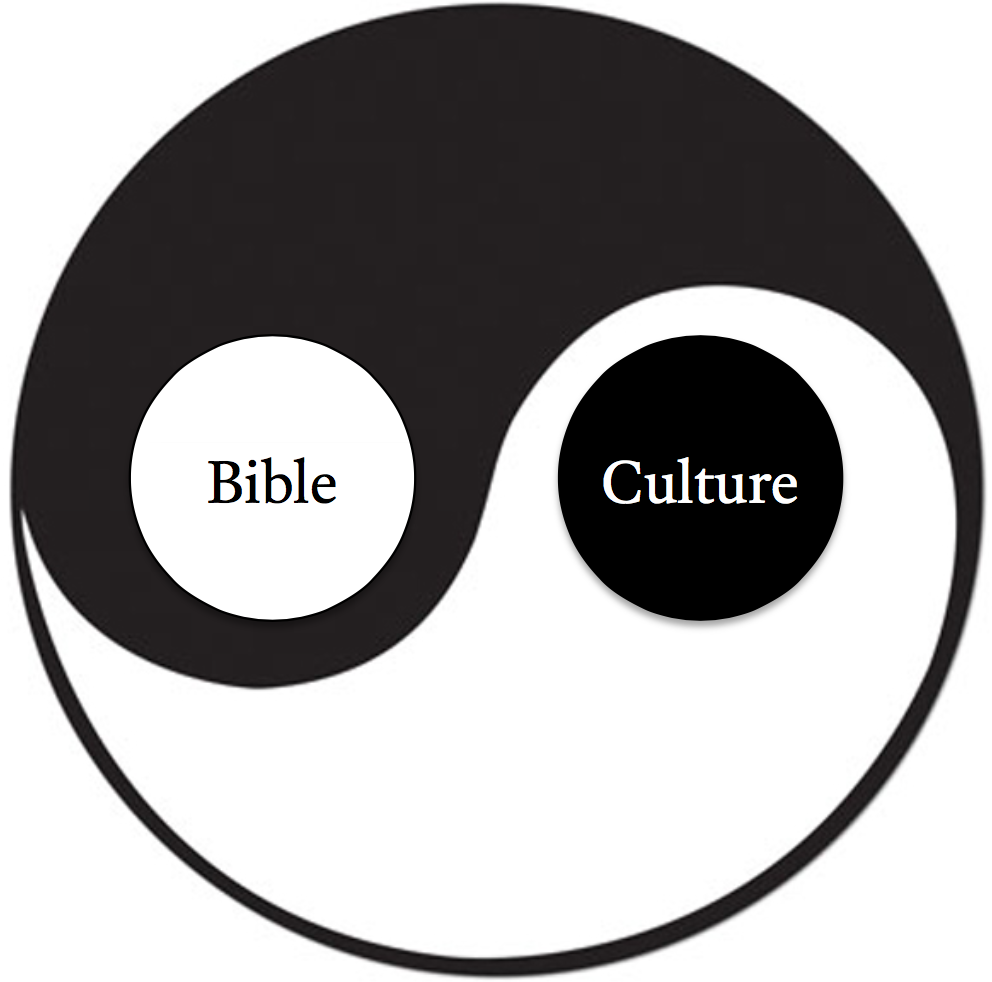 When discussing contextualization, evangelicals make a similar mistake as my students. How? By too sharply separating Bible and culture. We ask, “What has priority? The Bible or culture?” In Saving God’s Face, I explain . . .
The argument hinges on an order fallacy. To ask whether the Bible or culture has “priority” is unclear. The idea of “priority” can refer either to temporal sequence (i.e. what comes first) or to authoritative rank (i.e. what has authority). According to the fallacy, it is supposed that whatever comes first temporally has greater authority. To the contrary, sequence is not always supreme. For example, in the apologetics . . . one can easily see how reason initially has epistemological authority (over revelation) in its defense of sola scriptura. (SGF, 60)
In other words, the Bible may have ultimate authority (not culture); yet, God reveals himself through human cultures (which already existed). God used cultures to contextualize his self-revelation. The fact that culture is sequentially prior to revelation does not undermine biblical authority.
Afraid of contextualization?
credit: openbible.info
Evangelical “purists” get nervous when they hear talk like this. They are afraid of “eisegesis,” reading culture into the Bible. People get so afraid of cultural syncretism (wherein culture usurps the Bible) that they overlook a more subtle problem––theological syncretism. By this, I refer to the tendency to read the Bible through the lens of our denomination, organization, ministry strategy, etc., and therefore miss so much more of what God reveals in Scripture.
I’ve heard people ask, “Why can’t we just read the Bible and apply it directly to our lives? Why do we have to contextualize? We have the Holy Spirit.” I wish it were that simple.
The way we see the world and thus read Scripture is influenced to some degree by countless cultures and subcultures. We can also add an additional layer—history. We don’t interpret the Bible in a vacuum. Two thousand years of church history shape our assumptions about the Bible and even the questions we ask of certain passages.
We can’t simply claim that the Spirit guards us against cultural influences by illuminating the meaning of a passage to us. First of all, we have to remember that the Holy Spirit guided the biblical writers, who wrote using words, metaphors, and symbols rooted in specific cultures (cf. 2 Pet 1:20, 21).
Second, whose illumination do we trust? One person might say the Spirit gave him illumination that only affirms believer baptism; another might argue that the Spirit revealed that infants could be baptized. The Spirit only teaches finite, culturally bound people with limited perspectives. We mustn’t try to apply the doctrine of illumination abstracted from the facts of history.
Interpreting Biblical Text in Cultural Context
In my new book, One Gospel for All Nations, I not only illustrate the relationship between Bible and culture; I also show why it matters practically for contextualization.
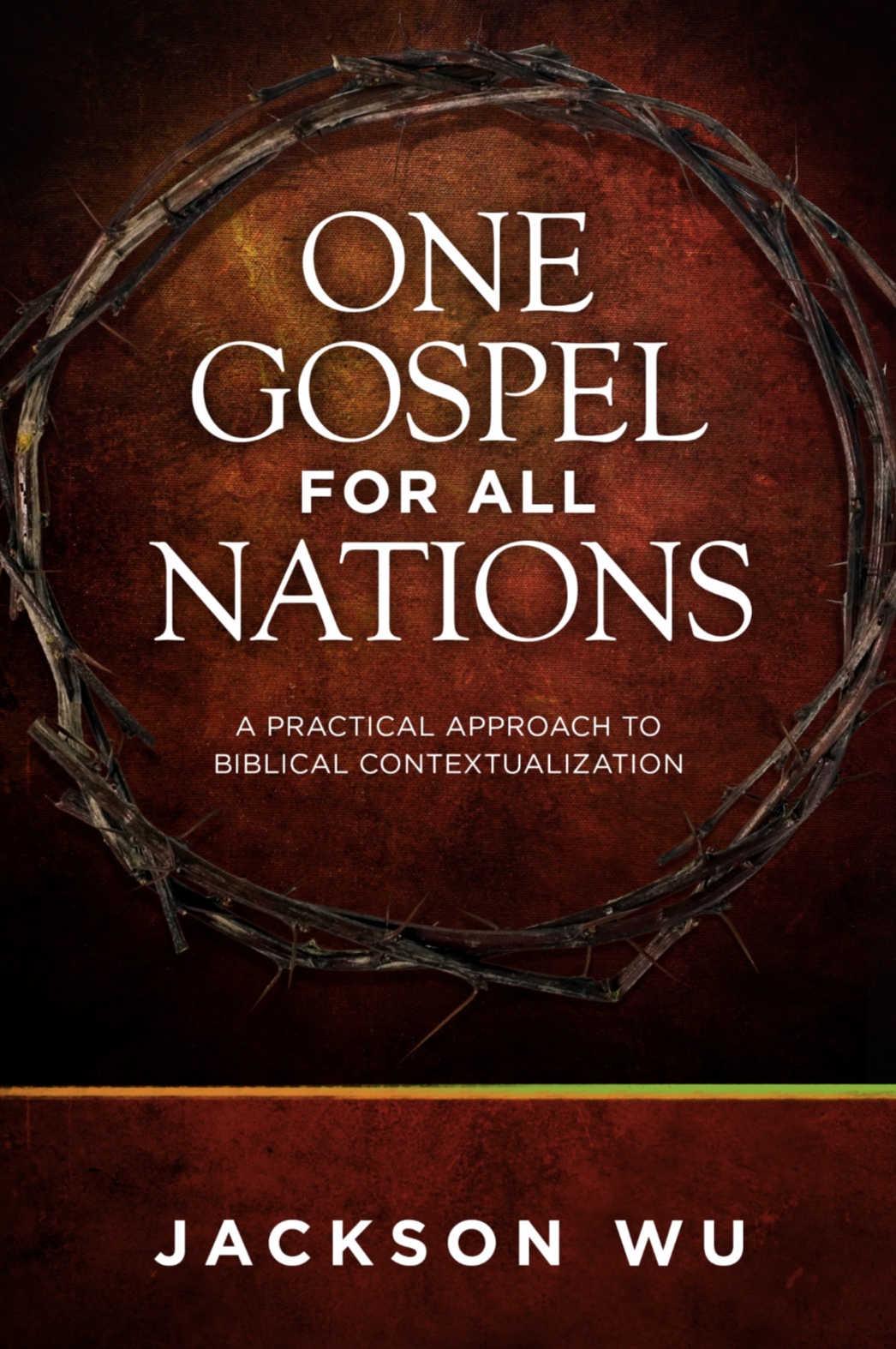 Contextualization fundamentally begins with biblical interpretation. Only then does it concern application and communication. Culture always acts as a filter to what we read. This happens even when we read other ancient works in order to grasp the cultures that influenced the biblical writers.
Sound biblical exegesis is fundamental to the contextualization process.
We want to understand the Bible’s meaning in its historical and canonical context. We desperately need the humility to acknowledge that we all come to the Bible with a limited viewpoint. We use a cultural lens that invariably causes us to notice some things but overlooks other important ideas. Contextualization occurs whenever we interpret the text from within a cultural context, which is always.
Therefore, we need to ask the practical question, “How do we intentionally account for this dynamic when interpreting the Bible?” This is a key question for everyone, including so-called “professional” Christians like theologians, pastors, and missionaries.
We shouldn’t “throw away” our cultural lens. I don’t suggest replacing a “western” lens for an “eastern” lens. Instead, we need to enlarge our cultural lens so that we might bring a broader human perspective to Scripture. Although I have fundamental differences with many of K. K. Yeo’s conclusions, he is right when he says,
“[A] cross-cultural reading is more objective than a monocultural reading of the biblical text.”
How the Bible ALWAYS Frames the Gospel
We need a practical model for doing contextualization that is both biblically faithful and culturally meaningful. I make such a proposal in One Gospel for all Nations. I begin with an observation that is only seen when we root contextualization in biblical theology (not systematic theology).

credit: wikimedia
Biblical writers always use at least one of three interconnected themes when presenting the gospel. They are creation, covenant, and kingdom.
These themes derive from the grand narrative of Scripture. Without exception, these three themes decisively frame the biblical authors’ gospel presentation. (I demonstrate this key point more fully in One Gospel.) Within this firm framework, one has the flexibility to discuss various other important sub-themes.
A biblically sound model of contextualization is both firm and flexible.
The Bible provides a firm framework. If this framework does not shape our contemporary gospel presentations, we are not preaching the gospel as the biblical writers understood it, (even if we do teach many correct and important doctrinal truths). In addition, we have the flexibility to highlight other biblical themes in accordance with the needs of the surrounding cultural context.
I’d like to hear from you.
- How does your cultural and subcultural background shape the way you see and present the gospel?
- What doctrines and themes tend to get more attention than others?
Previous Post

August 18, 2016
The Latest Issue of Themelios (August 2016)
Next Post
August 25, 2016 It's okay to cry. You're a Christian.
Browse Our Archives
Select a Category Atonement Biblical Theology Book Reviews China Chinese Church Chinese Culture Chinese Language Collectivism Contextualization Culture (General) Ecclesiology Evangelism Gospel Honor & Shame (Face) Interpretation/Exegesis Justification/Righteousness Missiology Mission Methods One Gospel for All Nations Other Practical Contextualization Reading Romans with Eastern Eyes Resources Romans Salvation (General) Saving God's Face Seeking God's Face The Cross in Context Theological Contextualization Theological Education Theology Uncategorized
Select a Month October 2026 September 2026 August 2026 July 2026 June 2026 May 2026 April 2026 March 2026 February 2026 January 2026 December 2025 November 2025 October 2025 September 2025 August 2025 July 2025 June 2025 May 2025 April 2025 March 2025 February 2025 January 2025 December 2024 November 2024 October 2024 September 2024 August 2024 July 2024 June 2024 May 2024 April 2024 March 2024 February 2024 January 2024 December 2023 November 2023 October 2023 September 2023 August 2023 July 2023 June 2023 May 2023 April 2023 March 2023 February 2023 January 2023 December 2022 November 2022 October 2022 September 2022 August 2022 July 2022 June 2022 May 2022 April 2022 March 2022 February 2022 January 2022 December 2021 November 2021 October 2021 September 2021 August 2021 July 2021 June 2021 May 2021 April 2021 March 2021 February 2021 January 2021 December 2020 November 2020 October 2020 September 2020 August 2020 July 2020 June 2020 May 2020 April 2020 March 2020 February 2020 January 2020 December 2019 November 2019 October 2019 September 2019 August 2019 July 2019 June 2019 May 2019 April 2019 March 2019 February 2019 January 2019 December 2018 November 2018 October 2018 September 2018 August 2018 July 2018 June 2018 May 2018 April 2018 March 2018 February 2018 January 2018 December 2017 November 2017 October 2017 September 2017 August 2017 July 2017 June 2017 May 2017 April 2017 March 2017 February 2017 January 2017 December 2016 November 2016 October 2016 September 2016 August 2016 July 2016 June 2016 May 2016 April 2016 March 2016 February 2016 January 2016 December 2015 November 2015 October 2015 September 2015 August 2015 July 2015 June 2015 May 2015 April 2015 March 2015 February 2015 January 2015 December 2014 November 2014 October 2014 September 2014 August 2014 July 2014 June 2014 May 2014 April 2014 March 2014 February 2014 January 2014 December 2013 November 2013 October 2013 September 2013 August 2013 July 2013 June 2013 May 2013 April 2013 March 2013 February 2013 January 2013 December 2012 November 2012
Follow Us!
TAKE THE
Religious Wisdom Quiz
True or False: The book of Psalms contains exactly 100 psalms.
Select your answer to see how you score.
FALSE TRUE
Books by This Author Books by Brad Vaughn
Related posts from Saving God's Face
Paul’s Contextualization of Artemis for the Ephesians

Bathsheba, #MeToo, and Eisegesis

I'm launching 3 online courses!
What's your political denomination?
TRENDING AT PATHEOS Evangelical

Methodist Central Hall and Westminster Abbey
Situated on the same square is Methodist Central Hall and Westminster Abbey. ...

57th Dove Awards Honor Dolly Parton, Crown New...
On gospel music’s biggest night, the 57th annual GMA Dove Awards honored...

The First Eucharistic Controversy: Christ’s Real Presence
For Catholics, the Eucharist is the source and summit of the Christian...

What a Stop Sign Can Teach Us About...
How to Make a Decision When You Can't Hear God Main point:...

Archdiocese Hosts Military Marriage Retreat in Germany
RASTATT, Germany — The transient military lifestyle, with its frequent deployments and...

Nearly every morning, I make the drive to Detroit with my high-school-age...
view all Evangelical blogs
Ad-Free & Subscriber Log-In Subscription Support
- About Us
- 2026 Calendar
- Videos
- Podcasts
- Library of World Religions
- Faith In Media Tracker
- Advertise With Us
- Write for Us
- Privacy Policy
- Terms of Service
- Do Not Sell My Data
- Contact Us
- Radiant Digital
- Manage Newsletter Subscriptions
- Unsubscribe From Notifications
- Sitemap
Copyright 2008-2026, Patheos. All rights reserved.
Subscription Support Ad-Free & Subscriber Log-In
Follow Patheos