
BuddhistCatholicContemplativeEvangelicalGeneral ChristianHinduJewishLatter-day SaintMuslimNew VisionsProgressive Christian
Beliefs
- Buddhist
- Catholic
- Contemplative
- Evangelical
- General Christian
- Hindu
- Jewish
- Latter-day Saint
- More Voices
- Muslim
- New Visions
- Pagan
- Progressive Christian
Topics
- Religion News
- Food and Religion
- Sports and Religion
- Religious Art
- Religious Music and Entertainment
- Religious Events
- History and Religion
- Style and Religion
- Politics and Religion
- Women in Religion
- Recreation Outdoors and Religion
- Business Finance and Religion
- Careers Workplace and Religion
- Education and Religion
- Family Parenting and Religion
- Health Fitness and Religion
- Home and Religion
- Relationships and Religion
- Technology and Religion
- Travel and Religion
Columnists
- Buddhist Columnists
- Business Finance and Religion Columnists
- Careers Workplace and Religion Columnists
- Catholic Columnists
- Contemplative Columnists
- Education and Religion Columnists
- Evangelists Columnists
- Family Parenting and Religion Columnists
- General Christian Columnists
- Health Fitness and Religion Columnists
- Hindu Columnists
- History and Religion Columnists
- Home and Religion Columnists
- Jewish Columnists
- More Voices Columnists
- Latter Day Columnists
- Muslim Columnists
- New Visions Columnists
- Nonreligious Columnists
- Pagan Columnists
- Politics and Religion Columnists
- Progressive Columnists
- Recreation Outdoors and Religion Columnists
- Relationships and Religion Columnists
- Religion News Columnists
- Religious Art Columnists
- Religious Events Columnists
- Religious Music and Entertainment Columnists
- Sports and Religion Columnists
- Style and Religion Columnists
- Technology and Religion Columnists
- Travel and Religion Columnists
- Women in Religion Columnists
Resource Library
- 2026 Calendar
- Library of World Religions
- The 100 Most Holy Places on Earth
- Patheos Answers
- Podcasts
- Videos
- Faith Leaders Database
- Anglican Episcopalian
- Bahai
- Baptist
- Buddhism
- Christianity
- Confucianism
- Eastern Orthodoxy
- Hinduism
- Holiness and Pentecostal
- ISKCON
- Islam
- Judaism
- Lutheran
- Methodist
- The Church of Jesus Christ of Latter-day Saints
- New Age
- Paganism
- Presbytarian and Reformed
- Protestantism
- Religion Behind the Scenes
- Roman Catholic
- Scientology
- Shia Islam
- Sikhism
- Sufism
- Sunni Islam
- Taoism
- Zen
- See all religions
Research Tools
 Ad-Free & Subscriber Log-In Subscription Support
Ad-Free & Subscriber Log-In Subscription Support
Follow Patheos 

- Trending:
- Forgiveness
- |
- Marriage
- |
- Consciousness
- |
- Death Penalty
- |
- Election
- |
- Halloween

-
Tools
-
Support the Work
- Home
- Evangelical
- “There is no God without me.” I’m disappointed.
“There is no God without me.” I’m disappointed.
Last updated on: July 7, 2016 at 8:55 am by Brad Vaughn
“There is no God without me.” I’m disappointed. 2016-07-07T08:55:12-07:00 Brad Vaughn
Patheos Explore the world's faith through different perspectives on religion and spirituality! Patheos has the views of the prevalent religions and spiritualities of the world.
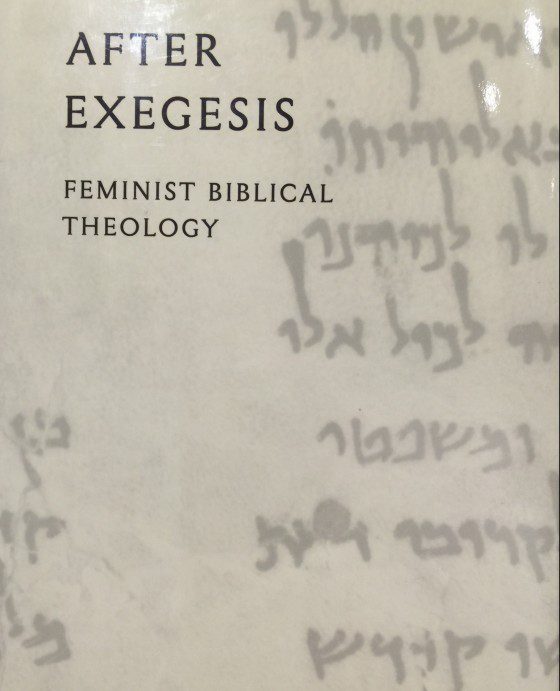
(This book title says it all)
Disappointed.
That’s how I felt recently after attending a meeting for the Society of Asian Biblical Studies (SABS). Sadly, I’m reminded that much of what passes for scholarship is sheer speculation (if not pleas for attention).
The presentations came from people who actually lead seminaries, universities and churches! As I listened horrified by these presentations, I was struck by these two thoughts:
If we don’t do theological education, this is what we’ll get.
If we don’t learn biblical contextualization, this is what we’ll get.
What We’ll Get
I’ll give an example of what I mean by quoting a paper from an emeritus professor who teaches Old Testament at an Asian school. She takes a feminist perspective and advocates for “contextual interpretation” (as understood by many non-evangelical scholars). I’ll interject my 2-cents as we go.
Throughout her comments, she affirms a “reader-oriented” approach to interpreting the Bible. Thus, “we must choose the appropriate methodologies and strategies which will advance the cause of [those on] the margins.” After all, she adds, “there is no ‘absolute truth’ established by any theory or methodology.”
JW: I’m sorry but we don’t choose interpretive methodologies simply to suit our social-political agenda. The cultural and canonical context of the Bible must drive interpretation method. The imperfection of interpreters and their methods doesn’t undermine the ability to access what is genuinely true (even if our perspective has limits).
She claims, “Advocating the rights of victims and the margins is the central message of the Bible, on which we should build our Biblical Studies.” [emphasis added]
JW: Really? The central message? What about the gospel? Jesus? God’s glory? ….
This professor then appeals to Buddhism, Shamanism and Confucianism to interpret Isaiah 53, claiming our interconnectedness as human beings enables mutual suffering with others. She suggests “that Asian Biblical Studies could interpret human beings and nature and understand God in the frame of one universe, if we are in cooperation with thoughts of Buddhism and Confucianism.”
JW: Huh? I don’t think we in fact are in the same biblical universe.
And Here I Wanted to Rage
The climax of her talk recalled how certain Japanese groups extended love to Korean “comfort women” (who were treated as slaves by Japanese soldiers during WWII). She states,
God is no longer to be understood as a transcendental being, but rather as being bound up in the web of life. It is impossible for God to be no less dependent than all of us, if not His love. Thus, in our interpretation of God’s image through the idea of vicarious suffering, the God-above-us has come down to become the God-within-us by overcoming the hierarchical concept of his transcendence. [emphasis added]
JW: Wisdom tells me to shut my mouth on this one. Feel free to add your commentary in the comment sections below. Before you do….
In the conclusion, this professor gives this:
The second aim is to be [sic] move towards interrelatedness and interdependence between God, us and the world, which is consistent with traditional Asian views of gods. As much as we need God, God needs us. It is not helpful any more to emphasize God the Almighty who patronize [sic] people with His omnipotent force.…There is no God without me. Now, we Asian theologians should enter the world God created and is continuing to create, and as His hands and feet, do what He wishes to do. [emphasis added]
“Moving Margins”?
The theme of the SABS meeting was “Moving Margins.” After this woman’s presentation, numerous people lauded her with gratitude. Repeatedly, scholars lamented the influence of “colonialism”, patriarchy and other “systematic modes of domination.”

credit: commons.wikimedia
The room was full of majority world scholars who actually teach students all across the world and especially Asia (including India, China, Myanmar, Korea, Australia among others). Their expressed ambition is in fact to move evangelical, historically rooted, grammatical based interpretations to the margins!
In view of this reality, I shake my head with grief that so many evangelical missionaries think that theological education is a secondary concern.
I’m perplexed that so many missionaries are practically apathetic when it comes to contextualization. I know this because I interact with them on a regular basis.
With the above comments in mind, let me repeat myself once more:
If we don’t do theological education, this is what we get.
If we don’t learn biblical contextualization, this is what we get.
Save
Save
Save
Save
Save
Save
Save
Save
Previous Post

June 29, 2016
Contextualizing without Compromising like Aaron (Part 2)
Next Post

July 13, 2016 How the West shames the rest
Browse Our Archives
Select a Category Atonement Biblical Theology Book Reviews China Chinese Church Chinese Culture Chinese Language Collectivism Contextualization Culture (General) Ecclesiology Evangelism Gospel Honor & Shame (Face) Interpretation/Exegesis Justification/Righteousness Missiology Mission Methods One Gospel for All Nations Other Practical Contextualization Reading Romans with Eastern Eyes Resources Romans Salvation (General) Saving God's Face Seeking God's Face The Cross in Context Theological Contextualization Theological Education Theology Uncategorized
Select a Month October 2026 September 2026 August 2026 July 2026 June 2026 May 2026 April 2026 March 2026 February 2026 January 2026 December 2025 November 2025 October 2025 September 2025 August 2025 July 2025 June 2025 May 2025 April 2025 March 2025 February 2025 January 2025 December 2024 November 2024 October 2024 September 2024 August 2024 July 2024 June 2024 May 2024 April 2024 March 2024 February 2024 January 2024 December 2023 November 2023 October 2023 September 2023 August 2023 July 2023 June 2023 May 2023 April 2023 March 2023 February 2023 January 2023 December 2022 November 2022 October 2022 September 2022 August 2022 July 2022 June 2022 May 2022 April 2022 March 2022 February 2022 January 2022 December 2021 November 2021 October 2021 September 2021 August 2021 July 2021 June 2021 May 2021 April 2021 March 2021 February 2021 January 2021 December 2020 November 2020 October 2020 September 2020 August 2020 July 2020 June 2020 May 2020 April 2020 March 2020 February 2020 January 2020 December 2019 November 2019 October 2019 September 2019 August 2019 July 2019 June 2019 May 2019 April 2019 March 2019 February 2019 January 2019 December 2018 November 2018 October 2018 September 2018 August 2018 July 2018 June 2018 May 2018 April 2018 March 2018 February 2018 January 2018 December 2017 November 2017 October 2017 September 2017 August 2017 July 2017 June 2017 May 2017 April 2017 March 2017 February 2017 January 2017 December 2016 November 2016 October 2016 September 2016 August 2016 July 2016 June 2016 May 2016 April 2016 March 2016 February 2016 January 2016 December 2015 November 2015 October 2015 September 2015 August 2015 July 2015 June 2015 May 2015 April 2015 March 2015 February 2015 January 2015 December 2014 November 2014 October 2014 September 2014 August 2014 July 2014 June 2014 May 2014 April 2014 March 2014 February 2014 January 2014 December 2013 November 2013 October 2013 September 2013 August 2013 July 2013 June 2013 May 2013 April 2013 March 2013 February 2013 January 2013 December 2012 November 2012
Follow Us!
TAKE THE
Religious Wisdom Quiz
No one can serve two masters. Either he will hate the one and love the other, or he will be devoted to the one and despise the other. You cannot serve both ___________.
Select your answer to see how you score.
Yourself and God God and Anyone Else God and Money Masters
Books by This Author Books by Brad Vaughn
Related posts from Saving God's Face

Applying the Trivium to Theological Training

Paul’s Contextualization of Artemis for the Ephesians

Bathsheba, #MeToo, and Eisegesis

I'm launching 3 online courses!
TRENDING AT PATHEOS Evangelical

The Iron Gates and the Lion of the...
Yesterday, I didn't finish my report about, well, yesterday. So I'll...

Dolly Parton’s Last Song Wins Dove Award with...
Bluegrass band The Grascals, speaking on the red carpet at the 57th...

The Image: On the Horror of Capitalism and...
The Image Then went the Pharisees, and took counsel how they might...

We are approaching the date of our new American national holiday: October...

Letters on Living the Faith by C.S. Lewis
Most of us met C.S. Lewis as a public intellectual. Mere Christianity....

When Halloween Unmasks Married Hearts
Written by Dr. David K. Ewen from Eternal Truth Bible College Behind...
view all Evangelical blogs
Ad-Free & Subscriber Log-In Subscription Support
- About Us
- 2026 Calendar
- Videos
- Podcasts
- Library of World Religions
- Faith In Media Tracker
- Advertise With Us
- Write for Us
- Privacy Policy
- Terms of Service
- Do Not Sell My Data
- Contact Us
- Radiant Digital
- Manage Newsletter Subscriptions
- Unsubscribe From Notifications
- Sitemap
Copyright 2008-2026, Patheos. All rights reserved.
Subscription Support Ad-Free & Subscriber Log-In
Follow Patheos