
BuddhistCatholicContemplativeEvangelicalGeneral ChristianHinduJewishLatter-day SaintMuslimNew VisionsProgressive Christian
Beliefs
- Buddhist
- Catholic
- Contemplative
- Evangelical
- General Christian
- Hindu
- Jewish
- Latter-day Saint
- More Voices
- Muslim
- New Visions
- Pagan
- Progressive Christian
Topics
- Religion News
- Food and Religion
- Sports and Religion
- Religious Art
- Religious Music and Entertainment
- Religious Events
- History and Religion
- Style and Religion
- Politics and Religion
- Women in Religion
- Recreation Outdoors and Religion
- Business Finance and Religion
- Careers Workplace and Religion
- Education and Religion
- Family Parenting and Religion
- Health Fitness and Religion
- Home and Religion
- Relationships and Religion
- Technology and Religion
- Travel and Religion
Columnists
- Buddhist Columnists
- Business Finance and Religion Columnists
- Careers Workplace and Religion Columnists
- Catholic Columnists
- Contemplative Columnists
- Education and Religion Columnists
- Evangelists Columnists
- Family Parenting and Religion Columnists
- General Christian Columnists
- Health Fitness and Religion Columnists
- Hindu Columnists
- History and Religion Columnists
- Home and Religion Columnists
- Jewish Columnists
- More Voices Columnists
- Latter Day Columnists
- Muslim Columnists
- New Visions Columnists
- Nonreligious Columnists
- Pagan Columnists
- Politics and Religion Columnists
- Progressive Columnists
- Recreation Outdoors and Religion Columnists
- Relationships and Religion Columnists
- Religion News Columnists
- Religious Art Columnists
- Religious Events Columnists
- Religious Music and Entertainment Columnists
- Sports and Religion Columnists
- Style and Religion Columnists
- Technology and Religion Columnists
- Travel and Religion Columnists
- Women in Religion Columnists
Resource Library
- 2026 Calendar
- Library of World Religions
- The 100 Most Holy Places on Earth
- Patheos Answers
- Podcasts
- Videos
- Faith Leaders Database
- Anglican Episcopalian
- Bahai
- Baptist
- Buddhism
- Christianity
- Confucianism
- Eastern Orthodoxy
- Hinduism
- Holiness and Pentecostal
- ISKCON
- Islam
- Judaism
- Lutheran
- Methodist
- The Church of Jesus Christ of Latter-day Saints
- New Age
- Paganism
- Presbytarian and Reformed
- Protestantism
- Religion Behind the Scenes
- Roman Catholic
- Scientology
- Shia Islam
- Sikhism
- Sufism
- Sunni Islam
- Taoism
- Zen
- See all religions
Research Tools
 Ad-Free & Subscriber Log-In Subscription Support
Ad-Free & Subscriber Log-In Subscription Support
Follow Patheos 

- Trending:
- Forgiveness
- |
- Marriage
- |
- Consciousness
- |
- Death Penalty
- |
- Election
- |
- Halloween

-
Tools
-
Support the Work
- Home
- Evangelical
- Israel’s Honor and Shame (Part 2)
Israel’s Honor and Shame (Part 2)
Last updated on: November 18, 2015 at 8:40 am by Brad Vaughn
Israel’s Honor and Shame (Part 2) 2015-10-20T16:52:27-07:00 Brad Vaughn
Patheos Explore the world's faith through different perspectives on religion and spirituality! Patheos has the views of the prevalent religions and spiritualities of the world.
In the last post, I began retelling Israel’s story from the perspective of honor and shame. (Click here: Part 1). The emphasis falls more on how God honored Israel. Today, we see the shift to shame.
 From Grace to Disgrace
Even from their time in the wilderness, the people of Israel brought disgrace upon themselves.
Psalm 106:19–21 is especially vivid,
They made a calf in Horeb and worshiped a metal image. They exchanged the glory of God for the image of an ox that eats grass. They forgot God, their Savior, who had done great things in Egypt,… (cf. Rom 1:23; Jer 2:11).
Their rebellion was a rejection of the Lord, whom they despised (cf. Numb 11:20; 14:23). The leaders did not glorify him before all the people (Lev 10:1–3).
They used social and political convention to mask their shame. For example, they dishonored the Lord when they sought to have a human king, like the other nations (1 Sam 8:7; 10:19). They refused to honor the Lord as the one true God and only King over them.
Not surprisingly, when people behave shamefully and pursue the praise of others (rather than the Lord), they will not find what they seek. Such a people turn against themselves. After Solomon’s reign, the nation was divided and suffered under civil war.
In the process, they squander their hope of glory by turning to idols. Israel did not heed Jeremiah’s warning,
Every man is stupid and without knowledge; every goldsmith is put to shame by his idols, for his images are false, and there is no breath in them. They are worthless, a work of delusion; at the time of their punishment they shall perish (Jer 10:14–15).
The Shame of Exile
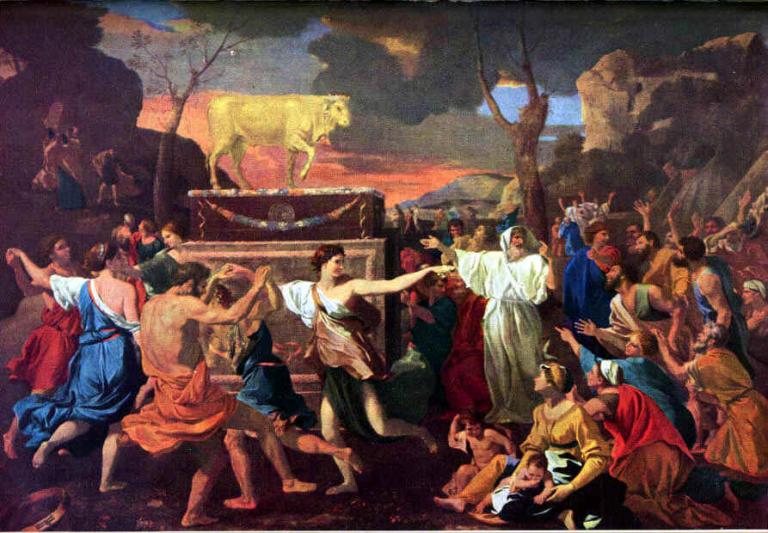 At this point in the story, most people focus on the plight of Israel. Deuteronomy 28–30 anticipates the consequences of Israel’s shameless behavior. She would now find herself languishing under God’s curse.
What few people pay attention to is the predicament in which God seems now to find Himself. God’s own honor is called into question by the unfaithfulness of his people. This is true from two perspectives.
(1) Although Israel had known the Lord is the one true Creator God, they nevertheless turned away from Him. What does it say to a watching world when this people––who had experienced the radical power and grace of God in the exodus––now preferred to worship the gods of the nations?
(2) God had promised to use Abraham’s family to bless the entire world. Yet, here they are––spurning God. How could they be a blessing to the world when they now were under the curse of the Law? How can God maintain his righteousness by keeping His promises?
We see a far more serious problem in the exile. It marks an egregious affront to God’s honor. Not doubt this is why Paul (in Rom 2:24) quotes Isa 52:5, where God days,
“Their rulers wail,” declares the LORD, “and continually all the day my name is despised.”
It is for this reason that Israel suffers the shame of alienation, which manifested in their exile. In Isaiah 42:17, the prophet writes,
They are turned back and utterly put to shame, who trust in carved idols, who say to metal images, “You are our gods.”
Notice how Jeremiah describes the events surrounding the exile,
We are put to shame, for we have heard reproach; dishonor has covered our face, for foreigners have come into the holy places of the LORD’s house. (Jer 51:51)
Sadly, not all the exiles had repented of their most fundamental sin. Therefore, in Mal 1:6–7 God rebukes his people:
A son honors his father, and a servant his master. If then I am a father, where is my honor? And if I am a master, where is my fear? says the LORD of hosts to you, O priests, who despise my name. But you say, “How have we despised your name?” By offering polluted food upon my altar. But you say, “How have we polluted you?” By saying that the LORD’s table may be despised.
According to Ezra, the mere returning to their homeland did not remove Israel’s shame:
And for our iniquities we, our kings, and our priests have been given into the hand of the kings of the lands, to the sword, to captivity, to plundering, and to utter shame, as it is today. But now for a brief moment favor has been shown by the Lord our God, to leave us a remnant and to give us a secure hold within his holy place, that our God may brighten our eyes and grant us a little reviving in our slavery. (Ezra 9:7b–8)
This readies us for the next part in the series, when we shall see the hope of restored honor, which was proclaimed by Israel’s prophets.
Photo credit: Creative Commons 2.0/en.wikipedia.org
Previous Post
November 11, 2015
Israel’s Honor and Shame (Part 1)
Next Post

November 24, 2015 Great Commission Quotes
Browse Our Archives
Select a Category Atonement Biblical Theology Book Reviews China Chinese Church Chinese Culture Chinese Language Collectivism Contextualization Culture (General) Ecclesiology Evangelism Gospel Honor & Shame (Face) Interpretation/Exegesis Justification/Righteousness Missiology Mission Methods One Gospel for All Nations Other Practical Contextualization Reading Romans with Eastern Eyes Resources Romans Salvation (General) Saving God's Face Seeking God's Face The Cross in Context Theological Contextualization Theological Education Theology Uncategorized
Select a Month October 2026 September 2026 August 2026 July 2026 June 2026 May 2026 April 2026 March 2026 February 2026 January 2026 December 2025 November 2025 October 2025 September 2025 August 2025 July 2025 June 2025 May 2025 April 2025 March 2025 February 2025 January 2025 December 2024 November 2024 October 2024 September 2024 August 2024 July 2024 June 2024 May 2024 April 2024 March 2024 February 2024 January 2024 December 2023 November 2023 October 2023 September 2023 August 2023 July 2023 June 2023 May 2023 April 2023 March 2023 February 2023 January 2023 December 2022 November 2022 October 2022 September 2022 August 2022 July 2022 June 2022 May 2022 April 2022 March 2022 February 2022 January 2022 December 2021 November 2021 October 2021 September 2021 August 2021 July 2021 June 2021 May 2021 April 2021 March 2021 February 2021 January 2021 December 2020 November 2020 October 2020 September 2020 August 2020 July 2020 June 2020 May 2020 April 2020 March 2020 February 2020 January 2020 December 2019 November 2019 October 2019 September 2019 August 2019 July 2019 June 2019 May 2019 April 2019 March 2019 February 2019 January 2019 December 2018 November 2018 October 2018 September 2018 August 2018 July 2018 June 2018 May 2018 April 2018 March 2018 February 2018 January 2018 December 2017 November 2017 October 2017 September 2017 August 2017 July 2017 June 2017 May 2017 April 2017 March 2017 February 2017 January 2017 December 2016 November 2016 October 2016 September 2016 August 2016 July 2016 June 2016 May 2016 April 2016 March 2016 February 2016 January 2016 December 2015 November 2015 October 2015 September 2015 August 2015 July 2015 June 2015 May 2015 April 2015 March 2015 February 2015 January 2015 December 2014 November 2014 October 2014 September 2014 August 2014 July 2014 June 2014 May 2014 April 2014 March 2014 February 2014 January 2014 December 2013 November 2013 October 2013 September 2013 August 2013 July 2013 June 2013 May 2013 April 2013 March 2013 February 2013 January 2013 December 2012 November 2012
Follow Us!
TAKE THE
Religious Wisdom Quiz
I was summoned from Lo Debar and ate at the king's table despite my disability. Who am I?
Select your answer to see how you score.
Mephibosheth Absalom Amnon Jonathan
Books by This Author Books by Brad Vaughn
Related posts from Saving God's Face

No King forgets his crown. Why do we?

Recovering Moral Vision Between Shame and Shamelessness

Refuge, Confession, and the End of Shame

Psalm 25 and the Fear of Being Put...
TRENDING AT PATHEOS Evangelical

Methodist Central Hall and Westminster Abbey
Situated on the same square is Methodist Central Hall and Westminster Abbey. ...

57th Dove Awards Honor Dolly Parton, Crown New...
On gospel music’s biggest night, the 57th annual GMA Dove Awards honored...

The First Eucharistic Controversy: Christ’s Real Presence
For Catholics, the Eucharist is the source and summit of the Christian...

What a Stop Sign Can Teach Us About...
How to Make a Decision When You Can't Hear God Main point:...

Archdiocese Hosts Military Marriage Retreat in Germany
RASTATT, Germany — The transient military lifestyle, with its frequent deployments and...

Nearly every morning, I make the drive to Detroit with my high-school-age...
view all Evangelical blogs
Ad-Free & Subscriber Log-In Subscription Support
- About Us
- 2026 Calendar
- Videos
- Podcasts
- Library of World Religions
- Faith In Media Tracker
- Advertise With Us
- Write for Us
- Privacy Policy
- Terms of Service
- Do Not Sell My Data
- Contact Us
- Radiant Digital
- Manage Newsletter Subscriptions
- Unsubscribe From Notifications
- Sitemap
Copyright 2008-2026, Patheos. All rights reserved.
Subscription Support Ad-Free & Subscriber Log-In
Follow Patheos