
BuddhistCatholicContemplativeEvangelicalGeneral ChristianHinduJewishLatter-day SaintMuslimNew VisionsProgressive Christian
Beliefs
- Buddhist
- Catholic
- Contemplative
- Evangelical
- General Christian
- Hindu
- Jewish
- Latter-day Saint
- More Voices
- Muslim
- New Visions
- Pagan
- Progressive Christian
Topics
- Religion News
- Food and Religion
- Sports and Religion
- Religious Art
- Religious Music and Entertainment
- Religious Events
- History and Religion
- Style and Religion
- Politics and Religion
- Women in Religion
- Recreation Outdoors and Religion
- Business Finance and Religion
- Careers Workplace and Religion
- Education and Religion
- Family Parenting and Religion
- Health Fitness and Religion
- Home and Religion
- Relationships and Religion
- Technology and Religion
- Travel and Religion
Columnists
- Buddhist Columnists
- Business Finance and Religion Columnists
- Careers Workplace and Religion Columnists
- Catholic Columnists
- Contemplative Columnists
- Education and Religion Columnists
- Evangelists Columnists
- Family Parenting and Religion Columnists
- General Christian Columnists
- Health Fitness and Religion Columnists
- Hindu Columnists
- History and Religion Columnists
- Home and Religion Columnists
- Jewish Columnists
- More Voices Columnists
- Latter Day Columnists
- Muslim Columnists
- New Visions Columnists
- Nonreligious Columnists
- Pagan Columnists
- Politics and Religion Columnists
- Progressive Columnists
- Recreation Outdoors and Religion Columnists
- Relationships and Religion Columnists
- Religion News Columnists
- Religious Art Columnists
- Religious Events Columnists
- Religious Music and Entertainment Columnists
- Sports and Religion Columnists
- Style and Religion Columnists
- Technology and Religion Columnists
- Travel and Religion Columnists
- Women in Religion Columnists
Resource Library
- 2026 Calendar
- Library of World Religions
- The 100 Most Holy Places on Earth
- Patheos Answers
- Podcasts
- Videos
- Faith Leaders Database
- Anglican Episcopalian
- Bahai
- Baptist
- Buddhism
- Christianity
- Confucianism
- Eastern Orthodoxy
- Hinduism
- Holiness and Pentecostal
- ISKCON
- Islam
- Judaism
- Lutheran
- Methodist
- The Church of Jesus Christ of Latter-day Saints
- New Age
- Paganism
- Presbytarian and Reformed
- Protestantism
- Religion Behind the Scenes
- Roman Catholic
- Scientology
- Shia Islam
- Sikhism
- Sufism
- Sunni Islam
- Taoism
- Zen
- See all religions
Research Tools
 Ad-Free & Subscriber Log-In Subscription Support
Ad-Free & Subscriber Log-In Subscription Support
Follow Patheos 

- Trending:
- Forgiveness
- |
- Marriage
- |
- Consciousness
- |
- Death Penalty
- |
- Election
- |
- Halloween

-
Tools
-
Support the Work
- Home
- Evangelical
- Challies’ View of Guilt & Shame is Half Right
Challies’ View of Guilt & Shame is Half Right
Last updated on: April 20, 2021 at 1:45 am by Brad Vaughn
Challies’ View of Guilt & Shame is Half Right 2021-04-20T01:45:06-07:00 Brad Vaughn
Patheos Explore the world's faith through different perspectives on religion and spirituality! Patheos has the views of the prevalent religions and spiritualities of the world.
 This past week Tim Challies posted his thoughts about guilt and shame. His view is representative of most people evangelicals I meet. Because his comments are so conventional, they unfortunately are very incomplete and need clarification.
I appreciate our brother’s blog. His suggested resources and commentary is often helpful. However, in this instance, his perspective is only correct in part. In this post, I would like to clarify the significance of guilt and shame within the Christian life.
Although my comments don’t directly contradict Challies’, they complement his ideas such that readers should see a distinct contrast between us concerning how we should understand these two concepts.
For a fuller discussion, see chapter 4 of my Saving God’s Face: A Chinese Contextualization of Salvation through Honor and Shame.
Guilts and Shames
Challies begins by defining his terms:
Here is how I differentiate between them: Guilt is the objective reality that I have committed an offense or a crime; shame is the subjective experience of feeling humiliation or distress because of what I have done. God has made us in such a way that sin incurs guilt and guilt generates shame.
The major problem here is that he only defines guilt as objective and shame merely as subjective. Both definitions are half-truths.
Challies’ view is mistaken in what it omits, not what it affirms. Although he doesn’t state it very clearly, he seems to acknowledge that guilt does a subjective element. He writes,
When I sin against God I may find that my conscience accuses me, that it convicts me that I have done wrong. My guilt, the realization that I have sinned, brings a feeling of shame.
He alternates between two senses of “guilt”, first speaking of an “objective reality” and then referring to it as “the realization that I have sinned.” In discussions about guilt and shame, we desperately need to be careful and consistent in the way we use our terms.
On the other hand, shame also has an objective aspect.
 Because of sin, we become shameful and worthy of dishonor. In other words, in the eyes of God and His people, we have shame. As in The Scarlet Letter, the main character feels shame (subjectively) in part because she bears her shame in the letter “A”, which is patched to her clothing (signifying her objective status within the community).
As I write in Saving God’s Face,
“‘Shame’ is the ill repute brought upon a person for some perceived deficiency or failure to meet the standards issued by his or her community” (p. 6).
Likewise, shame is objective in this sense: our sin is our shame. That is, when we sin, we dishonor God (Rom 1:21–23; Rom 2:23–24). We disregard and belittle His worth.
To put is bluntly, sin is bringing shame or dishonor upon God’s name.
Challies says that guilt refers to an “offense or a crime”; however, this is only true from the perspective of one single metaphor –– the law metaphor. This is true as far as it goes. However, what if we were to switch the metaphor? For example, when using familial language, one would not typically say (s)he commits a crime against my father.
That confuses the way language works in different contexts. Perhaps, a child disrespects or even disobeys the parent, yet that is still not considered a “crime” (which is language befitting a legal setting).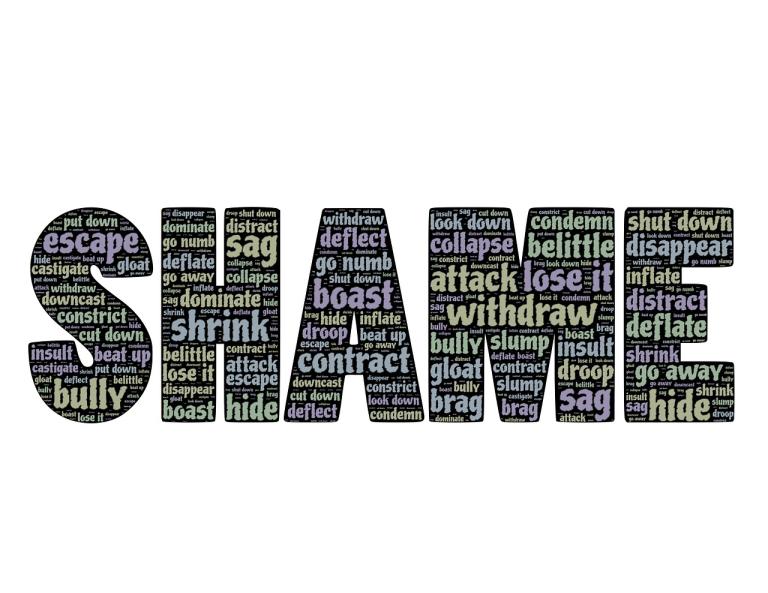 Even though Challies’ post is called “The Guilt and the Shame”, there are in fact multiple guilts and shames. If we miss this point, we will under-estimate and overlook the role of shame within the Christian life.
Shame Does Not Work Like Guilt
Finally, Challies misunderstands how shame and guilt work. When we are unclear about a problem, the solution is muddled in our minds.
Here is how he conceives the solution to shame.
Because the guilt of the offense is gone, the shame is gone as well. Because that sin is no longer my own, the shame is no longer my own.
Think about this. The sin is no longer my own, which means the guilt is no longer my own, which means the shame is no longer my own. The guilt and the shame of that sin now belong to Christ. If anyone ought to be feeling shame for that sin, it is not me but Christ! Do you think Christ is at the Father’s side today racked with shame because of the adultery and murder and envy that he took upon himself? Of course not! Christ knows that those sins have been dealt with, that they have been forgiven, that they have been removed as far as east is from west. There is no shame left for him to feel.
What’s the fundamental problem here?
He treats shame as though it were a legal problem that could be taken care of with a mere transaction or legal exchange. This is not helpful because it can only possibly be “true” (in some sense) if one offers a lot of qualifiers and explanation.
The basic difference between guilt and shame is not that one is “objective” and the other “subjective.” Rather, guilt is about what someone does (or doesn’t do). Shame is about who a person is.
Also, if we only use Challies’ subjective definition of shame, it does not make sense to say that Christ should feel humiliation for sin he didn’t commit. Shame is not transferred like numbers on a ledger. This is a category mistake.
Shame is dealt with in a different way. It is more relational than legal (though legal problems can certainly impinge one’s social standing). Shame is taken away when one is accepted and included, valued and treasured. To be reckoned an “insider” brings honor where there was shame. Likewise, the sinner’s heart, which dishonors God, must be changed so that it glorifies or delights in Christ above all.
I pray that this post helps my brother and other readers to give further thought to the subjects of guilt and shame. As people reexamine their assumptions, many will see that shame and honor have far more significance in the Bible and our lives than is commonly thought.
FYI –– Andy Crouch has written an excellent article in Christianity Today called The Return of Shame. He helpfully addresses both the theological and psychological aspects of shame.
Photo Credit (top black): CC 2.0 Search via pixabay
Photo Credit: (hands over face): commons.wikipedia
Photo Credit: CC 2.0 Search (shame): CC 2.0 search via pixabay
Related articles


Previous Post
September 11, 2015
Week 2 Winner is.... Are you the next one?
Next Post

September 16, 2015 Why the Abrahamic Covenant IS the gospel
Browse Our Archives
Select a Category Atonement Biblical Theology Book Reviews China Chinese Church Chinese Culture Chinese Language Collectivism Contextualization Culture (General) Ecclesiology Evangelism Gospel Honor & Shame (Face) Interpretation/Exegesis Justification/Righteousness Missiology Mission Methods One Gospel for All Nations Other Practical Contextualization Reading Romans with Eastern Eyes Resources Romans Salvation (General) Saving God's Face Seeking God's Face The Cross in Context Theological Contextualization Theological Education Theology Uncategorized
Select a Month October 2026 September 2026 August 2026 July 2026 June 2026 May 2026 April 2026 March 2026 February 2026 January 2026 December 2025 November 2025 October 2025 September 2025 August 2025 July 2025 June 2025 May 2025 April 2025 March 2025 February 2025 January 2025 December 2024 November 2024 October 2024 September 2024 August 2024 July 2024 June 2024 May 2024 April 2024 March 2024 February 2024 January 2024 December 2023 November 2023 October 2023 September 2023 August 2023 July 2023 June 2023 May 2023 April 2023 March 2023 February 2023 January 2023 December 2022 November 2022 October 2022 September 2022 August 2022 July 2022 June 2022 May 2022 April 2022 March 2022 February 2022 January 2022 December 2021 November 2021 October 2021 September 2021 August 2021 July 2021 June 2021 May 2021 April 2021 March 2021 February 2021 January 2021 December 2020 November 2020 October 2020 September 2020 August 2020 July 2020 June 2020 May 2020 April 2020 March 2020 February 2020 January 2020 December 2019 November 2019 October 2019 September 2019 August 2019 July 2019 June 2019 May 2019 April 2019 March 2019 February 2019 January 2019 December 2018 November 2018 October 2018 September 2018 August 2018 July 2018 June 2018 May 2018 April 2018 March 2018 February 2018 January 2018 December 2017 November 2017 October 2017 September 2017 August 2017 July 2017 June 2017 May 2017 April 2017 March 2017 February 2017 January 2017 December 2016 November 2016 October 2016 September 2016 August 2016 July 2016 June 2016 May 2016 April 2016 March 2016 February 2016 January 2016 December 2015 November 2015 October 2015 September 2015 August 2015 July 2015 June 2015 May 2015 April 2015 March 2015 February 2015 January 2015 December 2014 November 2014 October 2014 September 2014 August 2014 July 2014 June 2014 May 2014 April 2014 March 2014 February 2014 January 2014 December 2013 November 2013 October 2013 September 2013 August 2013 July 2013 June 2013 May 2013 April 2013 March 2013 February 2013 January 2013 December 2012 November 2012
Follow Us!
TAKE THE
Religious Wisdom Quiz
Who said, 'My kingdom is not of this world'?
Select your answer to see how you score.
Jesus Peter John Paul
Books by This Author Books by Brad Vaughn
Related posts from Saving God's Face

No King forgets his crown. Why do we?

Recovering Moral Vision Between Shame and Shamelessness

Refuge, Confession, and the End of Shame

Psalm 25 and the Fear of Being Put...
TRENDING AT PATHEOS Evangelical

16 Spiritual Touchstones for a More Grounded Life
After decades of spiritual study, here are 16 principles I try...

Catholic Evangelization: Sharing Your Faith Every Day
Welcome back to the Graceful Awakening mini-series called, “From Faith to Mission.” ...

The Pillar of the Boatmen: the Ancient Monument...
The Pillar of the Boatmen is a Romano-Gaulish sculpture that dates from...

In one sense walking into Westminster Abbey is like walking down the...

'Super Scam Me' Exposes AI Jon Bon Jovi...
Leslie Pickett believed she was in a relationship with Jon Bon Jovi....

The Brazilian Remake of Kendricks' 'Flywheel' Opens in...
“Flywheel,” the story that launched the Kendrick Brothers’ filmmaking career is getting...
view all Evangelical blogs
Ad-Free & Subscriber Log-In Subscription Support
- About Us
- 2026 Calendar
- Videos
- Podcasts
- Library of World Religions
- Faith In Media Tracker
- Advertise With Us
- Write for Us
- Privacy Policy
- Terms of Service
- Do Not Sell My Data
- Contact Us
- Radiant Digital
- Manage Newsletter Subscriptions
- Unsubscribe From Notifications
- Sitemap
Copyright 2008-2026, Patheos. All rights reserved.
Subscription Support Ad-Free & Subscriber Log-In
Follow Patheos