
BuddhistCatholicContemplativeEvangelicalGeneral ChristianHinduJewishLatter-day SaintMuslimNew VisionsProgressive Christian
Beliefs
- Buddhist
- Catholic
- Contemplative
- Evangelical
- General Christian
- Hindu
- Jewish
- Latter-day Saint
- More Voices
- Muslim
- New Visions
- Pagan
- Progressive Christian
Topics
- Religion News
- Food and Religion
- Sports and Religion
- Religious Art
- Religious Music and Entertainment
- Religious Events
- History and Religion
- Style and Religion
- Politics and Religion
- Women in Religion
- Recreation Outdoors and Religion
- Business Finance and Religion
- Careers Workplace and Religion
- Education and Religion
- Family Parenting and Religion
- Health Fitness and Religion
- Home and Religion
- Relationships and Religion
- Technology and Religion
- Travel and Religion
Columnists
- Buddhist Columnists
- Business Finance and Religion Columnists
- Careers Workplace and Religion Columnists
- Catholic Columnists
- Contemplative Columnists
- Education and Religion Columnists
- Evangelists Columnists
- Family Parenting and Religion Columnists
- General Christian Columnists
- Health Fitness and Religion Columnists
- Hindu Columnists
- History and Religion Columnists
- Home and Religion Columnists
- Jewish Columnists
- More Voices Columnists
- Latter Day Columnists
- Muslim Columnists
- New Visions Columnists
- Nonreligious Columnists
- Pagan Columnists
- Politics and Religion Columnists
- Progressive Columnists
- Recreation Outdoors and Religion Columnists
- Relationships and Religion Columnists
- Religion News Columnists
- Religious Art Columnists
- Religious Events Columnists
- Religious Music and Entertainment Columnists
- Sports and Religion Columnists
- Style and Religion Columnists
- Technology and Religion Columnists
- Travel and Religion Columnists
- Women in Religion Columnists
Resource Library
- 2026 Calendar
- Library of World Religions
- The 100 Most Holy Places on Earth
- Patheos Answers
- Podcasts
- Videos
- Faith Leaders Database
- Anglican Episcopalian
- Bahai
- Baptist
- Buddhism
- Christianity
- Confucianism
- Eastern Orthodoxy
- Hinduism
- Holiness and Pentecostal
- ISKCON
- Islam
- Judaism
- Lutheran
- Methodist
- The Church of Jesus Christ of Latter-day Saints
- New Age
- Paganism
- Presbytarian and Reformed
- Protestantism
- Religion Behind the Scenes
- Roman Catholic
- Scientology
- Shia Islam
- Sikhism
- Sufism
- Sunni Islam
- Taoism
- Zen
- See all religions
Research Tools
 Ad-Free & Subscriber Log-In Subscription Support
Ad-Free & Subscriber Log-In Subscription Support
Follow Patheos 

- Trending:
- Forgiveness
- |
- Marriage
- |
- Consciousness
- |
- Death Penalty
- |
- Election
- |
- Halloween

-
Tools
-
Support the Work
- Home
- Evangelical
- Why “One Gospel”?
Why “One Gospel”?
Last updated on: August 13, 2015 at 7:59 am by Brad Vaughn
Why “One Gospel”? 2015-08-13T07:59:49-07:00 Brad Vaughn
Patheos Explore the world's faith through different perspectives on religion and spirituality! Patheos has the views of the prevalent religions and spiritualities of the world.
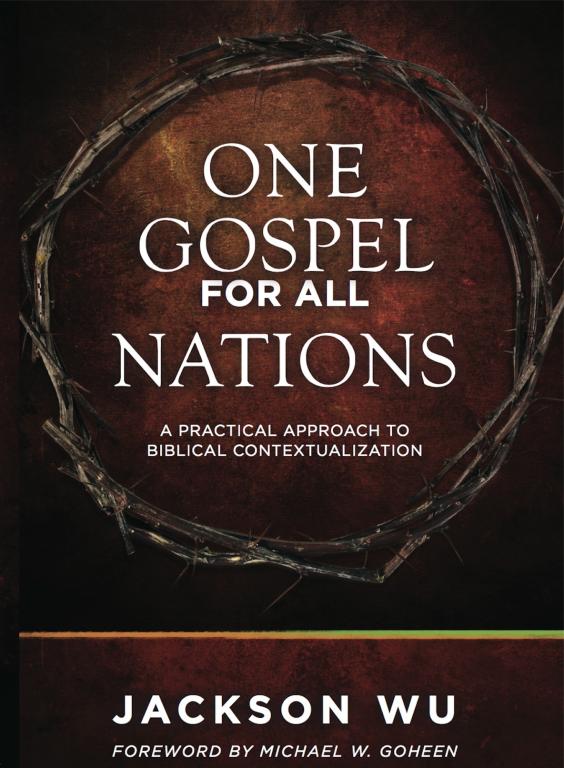
Over the coming weeks, I will introduce a number of thoughts and concerns that go into my recent book One Gospel for All Nations: A Practical Approach to Biblical Contextualization. [TWEET THIS]
This post will give a sweeping overview of the book’s main objectives.
Evangelical discussions about contextualization have largely focused on general principles concerning the relationship between the Bible and culture. While this has been important, we need more.
Getting Practical
After a lot of reading, I grew frustrated for two reasons.
First, people repeatedly reduce contextualization to a mere act of communication or application. Interpretation is rarely factored into the contextualization process. As I show in my first book, Saving God’s Face, if we “assume the gospel,” genuine contextualization becomes nearly impossible. In fact, the entire book attempted to demonstrate what happens when we have a more robust view of contextualization.
Second, there is very little in print that helps people know precisely the practical steps to take in order to do contextualization. Ok, even if we could agree on broad principles, what do we do in practice?? I wrote One Gospel for All Nations in order to address this second problem.
In this book, I propose a practical model of doing contextualization that can be applied in any context. Yes, I know. That’s a big claim. Let me be clear. What am I not saying?
I’m not saying . . .
Contextualization can be reduced a quick and easy formula.
There is a one size-fits-all method to preaching the gospel
Contextualization is a one-person task.
One Gospel for All Nations certainly doesn’t answer every question about contextualization methodology; however, I hope it will move the conversation to a far more practical level.
Bible and Culture
In addition, I pray One Gospel will spur greater interaction between the fields of missiology and theology. It was written for two communities that don’t always read the same books –– missionaries and theologians.
Missionaries need to reflect on ways that Scripture shapes the message and methods. Theologians need to consider how a person’s cultural lens subtly shapes one’s exegesis and theology. It is impossible for our cultural lens not to affect our reading of Scripture.
The title captures the tension felt by many evangelicals. We can agree there is only one gospel. Yet, we see the biblical writers communicate the gospel in manifold ways. Not surprisingly, this has spurred much debate in recent years about what exactly counts as the “gospel.”
If we can’t agree on the gospel, then how can we contextualize it?
Presenting the gospel requires we use words. This means using verbiage and metaphors that reflect a particular worldview. If so, it would seem nearly impossible to present ONE gospel for ALL nations. After all, it would seem to some changing our language and emphasis could invariably create a different “gospel.”
How do we deal with these tensions?
Beyond Principles
In order to contextualize the gospel, we need a model that is both firm and flexible amid fluctuating cultures*.*
 I had a significant breakthrough a few years back when studying the ways that Scripture explicitly talks about the gospel. I observed that biblical writers, when describing the gospel, use two types of themes–– those that frame and those that explain the gospel.
My book identifies three “framework” themes. Without exception, one finds at least one of those three themes wherever explicit reference is made to the gospel and evangelizing.
They include creation, covenant, and kingdom.
For those who have read a lot of biblical theology, it’s not surprising to find that these themes consistently frame the gospel. I urge people reading this blog not to assume you know I mean by those three terms. Each term conveys a set of ideas.
What are “explanation themes”? These include those motifs, images, and metaphors that explain the significance of the gospel. One could mention justification, redemption, adoption, Temple-language, sacrifice, exodus-imagery, among many others.
We can understand their meaning and inter-relationships by interpreting theme in light of the framework themes. We cannot simply appeal to our denominational or cultural assumptions when discerning the importance of one biblical idea compared to another.
To give an analogy, framework themes like the hardware to a computer. Explanatory themes are like the software. They need each other but serve different functions.
Firm AND Flexible
It is critical to distinguish these two kinds of themes. They account for both the firmness and flexibility of the gospel. They enable us to sufficiently address cultures, which are in constant flux.
What happens when we don’t identify and understand these “framework themes” and “explanation themes”?
Inevitably, we will tend to arbitrarily choose our favorite biblical ideas and stress those above all others. We will appeal to tradition or a narrow set of texts to support our point. Likewise, we will develop a systemized theology centering on our select doctrines.
In the process, however, we will slowly lose the biblical story as a whole. In addition, we will hinder church unity and cross cultural missions. This is because people will start to confuse what is true/false with what is primary/secondary. In addition, people will preach the gospel in a way that is easily understood in their home culture yet make little sense in other cultures.
Photo Credit: Nate Bolt via CC 2.0/Flickr
Previous Post

July 15, 2015
Measuring the “Success” of Contextualization
Next Post

July 23, 2015 Contextualization is about empathy
Browse Our Archives
Select a Category Atonement Biblical Theology Book Reviews China Chinese Church Chinese Culture Chinese Language Collectivism Contextualization Culture (General) Ecclesiology Evangelism Gospel Honor & Shame (Face) Interpretation/Exegesis Justification/Righteousness Missiology Mission Methods One Gospel for All Nations Other Practical Contextualization Reading Romans with Eastern Eyes Resources Romans Salvation (General) Saving God's Face Seeking God's Face The Cross in Context Theological Contextualization Theological Education Theology Uncategorized
Select a Month October 2026 September 2026 August 2026 July 2026 June 2026 May 2026 April 2026 March 2026 February 2026 January 2026 December 2025 November 2025 October 2025 September 2025 August 2025 July 2025 June 2025 May 2025 April 2025 March 2025 February 2025 January 2025 December 2024 November 2024 October 2024 September 2024 August 2024 July 2024 June 2024 May 2024 April 2024 March 2024 February 2024 January 2024 December 2023 November 2023 October 2023 September 2023 August 2023 July 2023 June 2023 May 2023 April 2023 March 2023 February 2023 January 2023 December 2022 November 2022 October 2022 September 2022 August 2022 July 2022 June 2022 May 2022 April 2022 March 2022 February 2022 January 2022 December 2021 November 2021 October 2021 September 2021 August 2021 July 2021 June 2021 May 2021 April 2021 March 2021 February 2021 January 2021 December 2020 November 2020 October 2020 September 2020 August 2020 July 2020 June 2020 May 2020 April 2020 March 2020 February 2020 January 2020 December 2019 November 2019 October 2019 September 2019 August 2019 July 2019 June 2019 May 2019 April 2019 March 2019 February 2019 January 2019 December 2018 November 2018 October 2018 September 2018 August 2018 July 2018 June 2018 May 2018 April 2018 March 2018 February 2018 January 2018 December 2017 November 2017 October 2017 September 2017 August 2017 July 2017 June 2017 May 2017 April 2017 March 2017 February 2017 January 2017 December 2016 November 2016 October 2016 September 2016 August 2016 July 2016 June 2016 May 2016 April 2016 March 2016 February 2016 January 2016 December 2015 November 2015 October 2015 September 2015 August 2015 July 2015 June 2015 May 2015 April 2015 March 2015 February 2015 January 2015 December 2014 November 2014 October 2014 September 2014 August 2014 July 2014 June 2014 May 2014 April 2014 March 2014 February 2014 January 2014 December 2013 November 2013 October 2013 September 2013 August 2013 July 2013 June 2013 May 2013 April 2013 March 2013 February 2013 January 2013 December 2012 November 2012
Follow Us!
TAKE THE
Religious Wisdom Quiz
What false teaching did Paul correct in 1 Corinthians 15?
Select your answer to see how you score.
Circumcision Denial of resurrection Animal sacrifice Pagan temple worship
Books by This Author Books by Brad Vaughn
Related posts from Saving God's Face

Bathsheba, #MeToo, and Eisegesis

I'm launching 3 online courses!
What's your political denomination?

Think Broadly on Contextualization and Biblical Theology
TRENDING AT PATHEOS Evangelical

A new article, written by Jeff Lindsay and Gale L. Pooley,...

Swimfan: Forgotten Aughts Pleasures
This is a recovery effort. In 2002, My Big Fat Greek Wedding...

Top Three Anti-Catholic Lies About Catholicism
This is my initial transcript for the video, "THE 3 WORST...

Pope Leo Celebrates Mass for Nurses & Docs...
I don't have any idea how he did it, but Pope Leo...

The Sermon on the Mount, Part I: Matthew...
The Sermon on the Mount, Part I (Matthew 4:12-5:12) St. Matthew moves...

What's up from Crossway: Reviewing some of their latest A few weeks...
view all Evangelical blogs
Ad-Free & Subscriber Log-In Subscription Support
- About Us
- 2026 Calendar
- Videos
- Podcasts
- Library of World Religions
- Faith In Media Tracker
- Advertise With Us
- Write for Us
- Privacy Policy
- Terms of Service
- Do Not Sell My Data
- Contact Us
- Radiant Digital
- Manage Newsletter Subscriptions
- Unsubscribe From Notifications
- Sitemap
Copyright 2008-2026, Patheos. All rights reserved.
Subscription Support Ad-Free & Subscriber Log-In
Follow Patheos