
BuddhistCatholicContemplativeEvangelicalGeneral ChristianHinduJewishLatter-day SaintMuslimNew VisionsProgressive Christian
Beliefs
- Buddhist
- Catholic
- Contemplative
- Evangelical
- General Christian
- Hindu
- Jewish
- Latter-day Saint
- More Voices
- Muslim
- New Visions
- Pagan
- Progressive Christian
Topics
- Religion News
- Food and Religion
- Sports and Religion
- Religious Art
- Religious Music and Entertainment
- Religious Events
- History and Religion
- Style and Religion
- Politics and Religion
- Women in Religion
- Recreation Outdoors and Religion
- Business Finance and Religion
- Careers Workplace and Religion
- Education and Religion
- Family Parenting and Religion
- Health Fitness and Religion
- Home and Religion
- Relationships and Religion
- Technology and Religion
- Travel and Religion
Columnists
- Buddhist Columnists
- Business Finance and Religion Columnists
- Careers Workplace and Religion Columnists
- Catholic Columnists
- Contemplative Columnists
- Education and Religion Columnists
- Evangelists Columnists
- Family Parenting and Religion Columnists
- General Christian Columnists
- Health Fitness and Religion Columnists
- Hindu Columnists
- History and Religion Columnists
- Home and Religion Columnists
- Jewish Columnists
- More Voices Columnists
- Latter Day Columnists
- Muslim Columnists
- New Visions Columnists
- Nonreligious Columnists
- Pagan Columnists
- Politics and Religion Columnists
- Progressive Columnists
- Recreation Outdoors and Religion Columnists
- Relationships and Religion Columnists
- Religion News Columnists
- Religious Art Columnists
- Religious Events Columnists
- Religious Music and Entertainment Columnists
- Sports and Religion Columnists
- Style and Religion Columnists
- Technology and Religion Columnists
- Travel and Religion Columnists
- Women in Religion Columnists
Resource Library
- 2026 Calendar
- Library of World Religions
- The 100 Most Holy Places on Earth
- Patheos Answers
- Podcasts
- Videos
- Faith Leaders Database
- Anglican Episcopalian
- Bahai
- Baptist
- Buddhism
- Christianity
- Confucianism
- Eastern Orthodoxy
- Hinduism
- Holiness and Pentecostal
- ISKCON
- Islam
- Judaism
- Lutheran
- Methodist
- The Church of Jesus Christ of Latter-day Saints
- New Age
- Paganism
- Presbytarian and Reformed
- Protestantism
- Religion Behind the Scenes
- Roman Catholic
- Scientology
- Shia Islam
- Sikhism
- Sufism
- Sunni Islam
- Taoism
- Zen
- See all religions
Research Tools
 Ad-Free & Subscriber Log-In Subscription Support
Ad-Free & Subscriber Log-In Subscription Support
Follow Patheos 

- Trending:
- Forgiveness
- |
- Marriage
- |
- Consciousness
- |
- Death Penalty
- |
- Election
- |
- Halloween

-
Tools
-
Support the Work
- Home
- Evangelical
- Reply to Doug Coleman (Part 3) — Defining "Law"
Reply to Doug Coleman (Part 3) — Defining "Law"
Last updated on: August 14, 2015 at 3:26 am by Brad Vaughn
Reply to Doug Coleman (Part 3) — Defining "Law" 2015-08-14T03:26:46-07:00 Brad Vaughn
Patheos Explore the world's faith through different perspectives on religion and spirituality! Patheos has the views of the prevalent religions and spiritualities of the world.
This post is the third in a series replying to Doug Coleman’s thoughtful questions about the meaning of sin in view of honor and shame.
Here is Doug’s first post. Then, click here for his follow-up response.
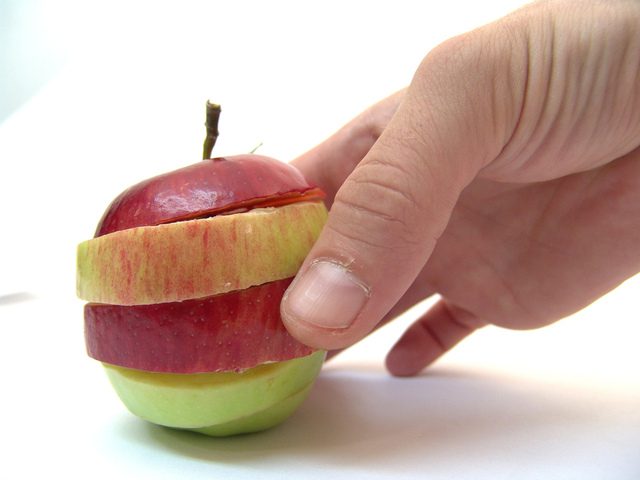
Credit: freeimages.com
For my first reply, click here. For my second post, click here.
Doug is correct when he says, “If we are to honor God, we must know what that means.” Therefore, in this post, I address this question: “How do we help people understand how sin expresses itself in concrete ways?”
God’s Revelation Makes Sin Concrete
Simply put, we do this by teaching the entire Bible. Because the essence of sin is the contrast of God’s character, people need to see what the Lord is like as he has revealed Himself in concrete ways in history.
The relationship between God and Israel becomes a microcosm for understanding both who God is and how people relate to Him, whether in a right or wrong way. By analogy, we may think that we can sing pretty well when taking a shower, . . . and then we listen to people like a Whitney Houston and Celine Dion only to realize we fall far short of excellence.
I think we may in fact make it more difficult for some people to grasp what sin is when we simply say that it is “breaking God’s law” or something similar.
On the one hand, people don’t know who this God is. They don’t understand his character. What kind of God are we talking about? What sort of actions and attitudes do not reflect his worth? Many Westerners assume the Christian God whenever they talk about “God.” We can’t make that other people share this view.

Credit: Jason Morrison via FreeImages.com
On the other hand, people have different assumptions about the meaning of “law.” They may think laws are too abstract and mere tools that powerful people use to oppress the common people. Also, in a culture that emphasizes relationship, they may not see the significance of keeping a “law” when in fact laws are supposed to help people. In other words, talking about “breaking God’s law” may come off irrelevant because they don’t see how this affects relationship.
Once again, we need to establish a better biblical context if people are to understand the character of God and the significance of the Law.
The Law is Specific
This brings me to my final point in response to Doug’s comments.
Paul speaks of sin’s existence before the Law was given. He rightly notes that Rom 5:13–14 refers to the Mosaic Law, not just any law. (I wish more people realized this as well because it would change the way people read the Law throughout Romans).
However, he adds, “In a non-technical sense, God’s command to Adam and Eve surely could be described as a law.”
Doug suggestion directly hits on a tendency that I want to resist––treating every command as though it were using a law-metaphor. We know this from everyday experience. A mother and father can give a command, but we don’t call it a “law.” This is a mixing of metaphors. When doing theology, we need to be slow to claim a law framework when it’s not actually there.
Disobedience to an authority is disrespectful, dishonoring, and a disruption to the relationship.
Do we overthrow the law? By no means!
So, to paraphrase Paul, “Do we then overthrow the law by honor and shame? By no means! On the contrary, we uphold the law!”
Why? Like any metaphor, even legal language is context specific. The significance of a term depends on a broader context. Accordingly, I can’t be accused of opposing or trivializing the law-metaphor. In fact, I want to redeem the law-metaphor, as it is understood within a biblical context.
When reading the Bible from an honor-shame perspective, we are freshly reminded that the Mosaic Law is an ancient covenant. Therefore, it describes who God is, establishes the collective identity of Israel as God’s people, and expresses what constitutes honorable (or shameful) behavior.
God is a king, not merely a judge. A king is a judge, but a judge is not necessarily a king. I too often see people reduce the “law” to a general set of rules, according to which God judges people “guilty” or “innocent.” God is reduced from a king to a mere administrator of juridical law.
In other words, God’s law becomes merely legal, not regal.
When we actually teach the Law as a covenant, we will be overwhelmed with issues of honor and shame. We see the relational significance of breaking covenant by the way that writers describe it. For example, in Ezekiel and Hosea, Israel’s unfaithfulness is compared to an adulteress and is even called a “whore.”
Breaking covenant is breaking a relationship. People in honor-shame cultures get that idea. This is why biblical theology is so important.
When we understand the law from this perspective, we are reminded that the law is made for people, not people for the law.
Honoring God in relationship––that’s the goal. Everything less is sin.
Previous Post
March 17, 2015
Reply to Doug Coleman (Part 2) -- Defining "Dishonor"
Next Post

March 26, 2015 Why is Sin Considered a "Debt"?
Browse Our Archives
Select a Category Atonement Biblical Theology Book Reviews China Chinese Church Chinese Culture Chinese Language Collectivism Contextualization Culture (General) Ecclesiology Evangelism Gospel Honor & Shame (Face) Interpretation/Exegesis Justification/Righteousness Missiology Mission Methods One Gospel for All Nations Other Practical Contextualization Reading Romans with Eastern Eyes Resources Romans Salvation (General) Saving God's Face Seeking God's Face The Cross in Context Theological Contextualization Theological Education Theology Uncategorized
Select a Month October 2026 September 2026 August 2026 July 2026 June 2026 May 2026 April 2026 March 2026 February 2026 January 2026 December 2025 November 2025 October 2025 September 2025 August 2025 July 2025 June 2025 May 2025 April 2025 March 2025 February 2025 January 2025 December 2024 November 2024 October 2024 September 2024 August 2024 July 2024 June 2024 May 2024 April 2024 March 2024 February 2024 January 2024 December 2023 November 2023 October 2023 September 2023 August 2023 July 2023 June 2023 May 2023 April 2023 March 2023 February 2023 January 2023 December 2022 November 2022 October 2022 September 2022 August 2022 July 2022 June 2022 May 2022 April 2022 March 2022 February 2022 January 2022 December 2021 November 2021 October 2021 September 2021 August 2021 July 2021 June 2021 May 2021 April 2021 March 2021 February 2021 January 2021 December 2020 November 2020 October 2020 September 2020 August 2020 July 2020 June 2020 May 2020 April 2020 March 2020 February 2020 January 2020 December 2019 November 2019 October 2019 September 2019 August 2019 July 2019 June 2019 May 2019 April 2019 March 2019 February 2019 January 2019 December 2018 November 2018 October 2018 September 2018 August 2018 July 2018 June 2018 May 2018 April 2018 March 2018 February 2018 January 2018 December 2017 November 2017 October 2017 September 2017 August 2017 July 2017 June 2017 May 2017 April 2017 March 2017 February 2017 January 2017 December 2016 November 2016 October 2016 September 2016 August 2016 July 2016 June 2016 May 2016 April 2016 March 2016 February 2016 January 2016 December 2015 November 2015 October 2015 September 2015 August 2015 July 2015 June 2015 May 2015 April 2015 March 2015 February 2015 January 2015 December 2014 November 2014 October 2014 September 2014 August 2014 July 2014 June 2014 May 2014 April 2014 March 2014 February 2014 January 2014 December 2013 November 2013 October 2013 September 2013 August 2013 July 2013 June 2013 May 2013 April 2013 March 2013 February 2013 January 2013 December 2012 November 2012
Follow Us!
TAKE THE
Religious Wisdom Quiz
Which Psalm contains "Create in me a clean heart, O God"?
Select your answer to see how you score.
Psalm 110 Psalm 33 Psalm 51 Psalm 70
Books by This Author Books by Brad Vaughn
Related posts from Saving God's Face

No King forgets his crown. Why do we?

Recovering Moral Vision Between Shame and Shamelessness

Refuge, Confession, and the End of Shame

Psalm 25 and the Fear of Being Put...
TRENDING AT PATHEOS Evangelical

Emotion in Early Christianity by Andrew Crislip
Andrew Crislip’s Emotion in Early Christianity examines an often overlooked dimension of...

16 Spiritual Touchstones for a More Grounded Life
After decades of spiritual study, here are 16 principles I try...

Catholic Evangelization: Sharing Your Faith Every Day
Welcome back to the Graceful Awakening mini-series called, “From Faith to Mission.” ...

The Pillar of the Boatmen: the Ancient Monument...
The Pillar of the Boatmen is a Romano-Gaulish sculpture that dates from...

In one sense walking into Westminster Abbey is like walking down the...

'Super Scam Me' Exposes AI Jon Bon Jovi...
Leslie Pickett believed she was in a relationship with Jon Bon Jovi....
view all Evangelical blogs
Ad-Free & Subscriber Log-In Subscription Support
- About Us
- 2026 Calendar
- Videos
- Podcasts
- Library of World Religions
- Faith In Media Tracker
- Advertise With Us
- Write for Us
- Privacy Policy
- Terms of Service
- Do Not Sell My Data
- Contact Us
- Radiant Digital
- Manage Newsletter Subscriptions
- Unsubscribe From Notifications
- Sitemap
Copyright 2008-2026, Patheos. All rights reserved.
Subscription Support Ad-Free & Subscriber Log-In
Follow Patheos