
BuddhistCatholicContemplativeEvangelicalGeneral ChristianHinduJewishLatter-day SaintMuslimNew VisionsProgressive Christian
Beliefs
- Buddhist
- Catholic
- Contemplative
- Evangelical
- General Christian
- Hindu
- Jewish
- Latter-day Saint
- More Voices
- Muslim
- New Visions
- Pagan
- Progressive Christian
Topics
- Religion News
- Food and Religion
- Sports and Religion
- Religious Art
- Religious Music and Entertainment
- Religious Events
- History and Religion
- Style and Religion
- Politics and Religion
- Women in Religion
- Recreation Outdoors and Religion
- Business Finance and Religion
- Careers Workplace and Religion
- Education and Religion
- Family Parenting and Religion
- Health Fitness and Religion
- Home and Religion
- Relationships and Religion
- Technology and Religion
- Travel and Religion
Columnists
- Buddhist Columnists
- Business Finance and Religion Columnists
- Careers Workplace and Religion Columnists
- Catholic Columnists
- Contemplative Columnists
- Education and Religion Columnists
- Evangelists Columnists
- Family Parenting and Religion Columnists
- General Christian Columnists
- Health Fitness and Religion Columnists
- Hindu Columnists
- History and Religion Columnists
- Home and Religion Columnists
- Jewish Columnists
- More Voices Columnists
- Latter Day Columnists
- Muslim Columnists
- New Visions Columnists
- Nonreligious Columnists
- Pagan Columnists
- Politics and Religion Columnists
- Progressive Columnists
- Recreation Outdoors and Religion Columnists
- Relationships and Religion Columnists
- Religion News Columnists
- Religious Art Columnists
- Religious Events Columnists
- Religious Music and Entertainment Columnists
- Sports and Religion Columnists
- Style and Religion Columnists
- Technology and Religion Columnists
- Travel and Religion Columnists
- Women in Religion Columnists
Resource Library
- 2026 Calendar
- Library of World Religions
- The 100 Most Holy Places on Earth
- Patheos Answers
- Podcasts
- Videos
- Faith Leaders Database
- Anglican Episcopalian
- Bahai
- Baptist
- Buddhism
- Christianity
- Confucianism
- Eastern Orthodoxy
- Hinduism
- Holiness and Pentecostal
- ISKCON
- Islam
- Judaism
- Lutheran
- Methodist
- The Church of Jesus Christ of Latter-day Saints
- New Age
- Paganism
- Presbytarian and Reformed
- Protestantism
- Religion Behind the Scenes
- Roman Catholic
- Scientology
- Shia Islam
- Sikhism
- Sufism
- Sunni Islam
- Taoism
- Zen
- See all religions
Research Tools
 Ad-Free & Subscriber Log-In Subscription Support
Ad-Free & Subscriber Log-In Subscription Support
Follow Patheos 

- Trending:
- Forgiveness
- |
- Marriage
- |
- Consciousness
- |
- Death Penalty
- |
- Election
- |
- Halloween

-
Tools
-
Support the Work
- Home
- Evangelical
- Reading the Bible “Literally” or Contextually?
Reading the Bible “Literally” or Contextually?
Last updated on: August 14, 2015 at 3:32 am by Brad Vaughn
Reading the Bible “Literally” or Contextually? 2015-08-14T03:32:50-07:00 Brad Vaughn
Patheos Explore the world's faith through different perspectives on religion and spirituality! Patheos has the views of the prevalent religions and spiritualities of the world.

Credit: flickr/26869693@N00
When reading John Walton’s The Lost World of Adam and Eve, a number of questions are sure to arise. Throughout this review series, we have seen Walton challenge many of the conventional assumptions people have about the Bible and how to interpret God’s word.
How should culture influence our interpretation of the Bible? Well, which culture do you mean? Ancient culture? Our church culture? The culture we presently live in?
One can feel tension emerge whenever these questions come up.
Do we interpret everything “literally”?
The word “literal” is problematic because it connotes different things to different people. For the sake of space, I’ll explore what it might mean to interpret Gen 1–3 “literally” according to the many people understand “literal.”
For many readers, we absolutely must interpret the Bible “literally,” which means the world was created in 144 hours (6 24-hour days), God used dust to create the first man “Adam,” and He cut into that man’s side in order to make Eve from a rib.
Before people get defensive, I would urge them to ask how one would interpret literally the following sentence:
“Whenever I think of 911, I get sad and angry.”
Literally speaking, “911” is a number that sits between 910 and 912. Interpreted in this way, we would naturally ask, “Why are you afraid of 911 but not 912, 632, 53 or other numbers?”
 Of course, we all know that “911” signifies far more than the sum of 900 and 11. Most people immediately recall the events on September 11, 2001, the day when terrorists used planes to attach the United States. This is why “911” is able to stir a variety of feelings, including anger and sadness.
It is worth mentioning that “911” can also refer to the phone number that Americans use whenever they face an emergency. Therefore, “911” could remind people of the day their father died of a heart attack. Perhaps, a son or daughter had to call “911” when they saw their parent lying on the floor.
In these examples, what does it really mean to interpret “911” literally?
Reading Genesis in Cultural Context
The meaning of words and images depend on context. How someone in one culture uses a phrase or metaphor may not correspond to the way people in another time and place use that same language.
When we overlook this seeming obvious point, we will inevitably misinterpret the Bible. This is beautifully illustrated in Misreading Scripture with Western Eyes. You can read my review of it by clicking here.
Walton urges readers to read Genesis from the perspective of its original ancient context. He puts it well when he says,
We therefore recognize that although the Bible is written for us (indeed, for everyone), it is not written to us. (19)
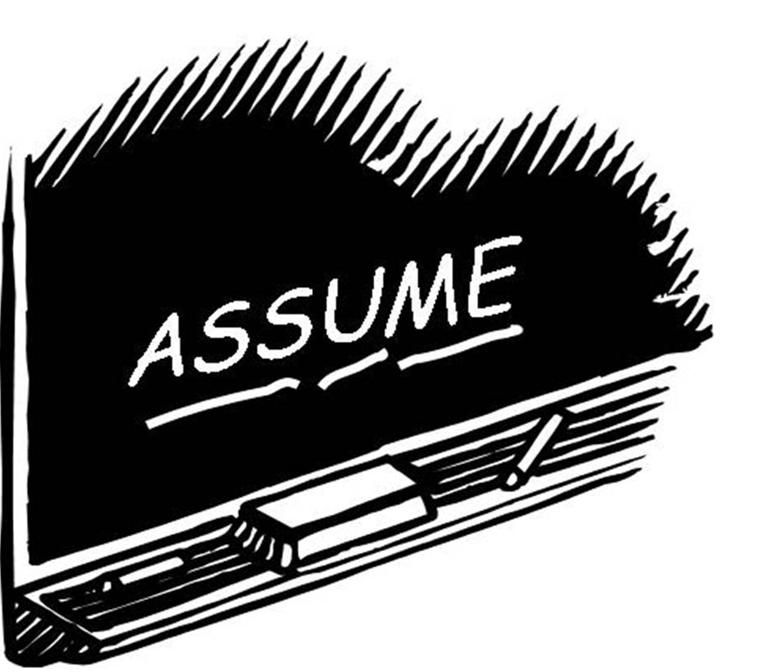
As some have put it, when we read the Bible, we are reading other people’s mail. Biblical scholars remind us of a principle that is easily forgotten: we assume our worldview is equivalent to that of the biblical writers. If we do, we will inevitably misinterpret Scripture.
Can’t it be both?
One might ask, “Can’t Genesis have functional or symbolic value while still being literally true?”
Yes. But it can’t simply be assumed.
Just as Walton makes effort to prove that Genesis gives a functional account of origins, so also interpreters must prove that Genesis gives a material creation. ( I talked about these options in a prior blog post).
In dialogue, we should be respectful and take care not to “demonize” others. There is no reason to question a person’s character or concern for the Bible simply because they hold a “functional” view of origins or does not interpret Gen 1 in terms of literal 7 24-hour days.
Walton’s book shows that exegesis can drive those conclusions, not the desire to appease non-believers or evolutionary scientists.
In the next post, I will consider Walton’s suggestion about how to read Genesis in a way that honors biblical authority. Then, I’ll explore some implications for contextualization.
Photo Credit (Assume): John Armato/flickr
Previous Post

March 3, 2015
Christianity Today Features Honor-Shame
Next Post
March 9, 2015 Reply to Doug Coleman (Part 1)
Browse Our Archives
Select a Category Atonement Biblical Theology Book Reviews China Chinese Church Chinese Culture Chinese Language Collectivism Contextualization Culture (General) Ecclesiology Evangelism Gospel Honor & Shame (Face) Interpretation/Exegesis Justification/Righteousness Missiology Mission Methods One Gospel for All Nations Other Practical Contextualization Reading Romans with Eastern Eyes Resources Romans Salvation (General) Saving God's Face Seeking God's Face The Cross in Context Theological Contextualization Theological Education Theology Uncategorized
Select a Month October 2026 September 2026 August 2026 July 2026 June 2026 May 2026 April 2026 March 2026 February 2026 January 2026 December 2025 November 2025 October 2025 September 2025 August 2025 July 2025 June 2025 May 2025 April 2025 March 2025 February 2025 January 2025 December 2024 November 2024 October 2024 September 2024 August 2024 July 2024 June 2024 May 2024 April 2024 March 2024 February 2024 January 2024 December 2023 November 2023 October 2023 September 2023 August 2023 July 2023 June 2023 May 2023 April 2023 March 2023 February 2023 January 2023 December 2022 November 2022 October 2022 September 2022 August 2022 July 2022 June 2022 May 2022 April 2022 March 2022 February 2022 January 2022 December 2021 November 2021 October 2021 September 2021 August 2021 July 2021 June 2021 May 2021 April 2021 March 2021 February 2021 January 2021 December 2020 November 2020 October 2020 September 2020 August 2020 July 2020 June 2020 May 2020 April 2020 March 2020 February 2020 January 2020 December 2019 November 2019 October 2019 September 2019 August 2019 July 2019 June 2019 May 2019 April 2019 March 2019 February 2019 January 2019 December 2018 November 2018 October 2018 September 2018 August 2018 July 2018 June 2018 May 2018 April 2018 March 2018 February 2018 January 2018 December 2017 November 2017 October 2017 September 2017 August 2017 July 2017 June 2017 May 2017 April 2017 March 2017 February 2017 January 2017 December 2016 November 2016 October 2016 September 2016 August 2016 July 2016 June 2016 May 2016 April 2016 March 2016 February 2016 January 2016 December 2015 November 2015 October 2015 September 2015 August 2015 July 2015 June 2015 May 2015 April 2015 March 2015 February 2015 January 2015 December 2014 November 2014 October 2014 September 2014 August 2014 July 2014 June 2014 May 2014 April 2014 March 2014 February 2014 January 2014 December 2013 November 2013 October 2013 September 2013 August 2013 July 2013 June 2013 May 2013 April 2013 March 2013 February 2013 January 2013 December 2012 November 2012
Follow Us!
TAKE THE
Religious Wisdom Quiz
Who was David’s best friend?
Select your answer to see how you score.
Joseph Samuel Saul Jonathan
Books by This Author Books by Brad Vaughn
Related posts from Saving God's Face

Why Christianity Needs Individuals but Rejects Individualism

Glory, Violence, and the Gospel of Peace

Should We Emphasize Jesus as King to People...

Why Egalitarians Can Stay in a Complementarian Church
TRENDING AT PATHEOS Evangelical

The First Eucharistic Controversy: Christ’s Real Presence
For Catholics, the Eucharist is the source and summit of the Christian...

What a Stop Sign Can Teach Us About...
How to Make a Decision When You Can't Hear God Main point:...

Archdiocese Hosts Military Marriage Retreat in Germany
RASTATT, Germany — The transient military lifestyle, with its frequent deployments and...

Nearly every morning, I make the drive to Detroit with my high-school-age...

The Real AI Story Is Adoption Without Trust
Artificial intelligence has crossed a political threshold. It is no longer a...

A new article, written by Jeff Lindsay and Gale L. Pooley,...
view all Evangelical blogs
Ad-Free & Subscriber Log-In Subscription Support
- About Us
- 2026 Calendar
- Videos
- Podcasts
- Library of World Religions
- Faith In Media Tracker
- Advertise With Us
- Write for Us
- Privacy Policy
- Terms of Service
- Do Not Sell My Data
- Contact Us
- Radiant Digital
- Manage Newsletter Subscriptions
- Unsubscribe From Notifications
- Sitemap
Copyright 2008-2026, Patheos. All rights reserved.
Subscription Support Ad-Free & Subscriber Log-In
Follow Patheos