
BuddhistCatholicContemplativeEvangelicalGeneral ChristianHinduJewishLatter-day SaintMuslimNew VisionsProgressive Christian
Beliefs
- Buddhist
- Catholic
- Contemplative
- Evangelical
- General Christian
- Hindu
- Jewish
- Latter-day Saint
- More Voices
- Muslim
- New Visions
- Pagan
- Progressive Christian
Topics
- Religion News
- Food and Religion
- Sports and Religion
- Religious Art
- Religious Music and Entertainment
- Religious Events
- History and Religion
- Style and Religion
- Politics and Religion
- Women in Religion
- Recreation Outdoors and Religion
- Business Finance and Religion
- Careers Workplace and Religion
- Education and Religion
- Family Parenting and Religion
- Health Fitness and Religion
- Home and Religion
- Relationships and Religion
- Technology and Religion
- Travel and Religion
Columnists
- Buddhist Columnists
- Business Finance and Religion Columnists
- Careers Workplace and Religion Columnists
- Catholic Columnists
- Contemplative Columnists
- Education and Religion Columnists
- Evangelists Columnists
- Family Parenting and Religion Columnists
- General Christian Columnists
- Health Fitness and Religion Columnists
- Hindu Columnists
- History and Religion Columnists
- Home and Religion Columnists
- Jewish Columnists
- More Voices Columnists
- Latter Day Columnists
- Muslim Columnists
- New Visions Columnists
- Nonreligious Columnists
- Pagan Columnists
- Politics and Religion Columnists
- Progressive Columnists
- Recreation Outdoors and Religion Columnists
- Relationships and Religion Columnists
- Religion News Columnists
- Religious Art Columnists
- Religious Events Columnists
- Religious Music and Entertainment Columnists
- Sports and Religion Columnists
- Style and Religion Columnists
- Technology and Religion Columnists
- Travel and Religion Columnists
- Women in Religion Columnists
Resource Library
- 2026 Calendar
- Library of World Religions
- The 100 Most Holy Places on Earth
- Patheos Answers
- Podcasts
- Videos
- Faith Leaders Database
- Anglican Episcopalian
- Bahai
- Baptist
- Buddhism
- Christianity
- Confucianism
- Eastern Orthodoxy
- Hinduism
- Holiness and Pentecostal
- ISKCON
- Islam
- Judaism
- Lutheran
- Methodist
- The Church of Jesus Christ of Latter-day Saints
- New Age
- Paganism
- Presbytarian and Reformed
- Protestantism
- Religion Behind the Scenes
- Roman Catholic
- Scientology
- Shia Islam
- Sikhism
- Sufism
- Sunni Islam
- Taoism
- Zen
- See all religions
Research Tools
 Ad-Free & Subscriber Log-In Subscription Support
Ad-Free & Subscriber Log-In Subscription Support
Follow Patheos 

- Trending:
- Forgiveness
- |
- Marriage
- |
- Consciousness
- |
- Death Penalty
- |
- Election
- |
- Halloween

-
Tools
-
Support the Work
- Home
- Evangelical
- The Lost World of Adam and Eve
The Lost World of Adam and Eve
Last updated on: February 11, 2015 at 8:50 am by Brad Vaughn
The Lost World of Adam and Eve 2015-02-11T08:50:26-07:00 Brad Vaughn
Patheos Explore the world's faith through different perspectives on religion and spirituality! Patheos has the views of the prevalent religions and spiritualities of the world.
Previously, I introduced my series reviewing John Walton’s new book The Lost World of Adam and Eve: Genesis 2–3 and the Human Origins Debate. I set the context by explaining what Walton calls a “functional account” of creation (in contrast to a material account).
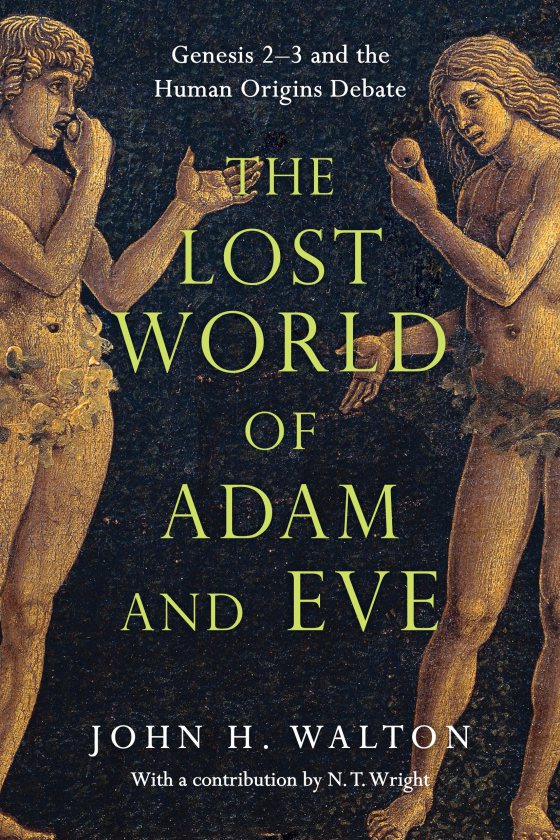 Why tackle this Genesis/creation debate?
I’ve been warned by a few people to stay away from this topic on the blog. It’s too much of a lightening rod issue, they say. Certainly so.
The truth, however, is that there are more important things involved here than the age of the earth and the merit of some scientific theory. (Personally, I myself am a bit agnostic about the precise, scientific details that fuel the entire debate.)
As much as I have tired of the discussion over the years, that doesn’t mean it becomes less relevant. Those who work in a place like China, for example, know the frequency with which people want to rehearse the details of the debate. How one responds to the Genesis/creation debate could either be destructive or constructive.
Why Missionaries Should Read This Book
In many contexts, particularly China, the creation-evolution discussion is sure to come up eventually. What’s at stake in these conversations? I’ll list five things.
1. Biblical Authority
For a long time, non-believers have tried to use the theory of evolution to usurp biblical authority. They attempt to show how science contradicts a literal reading of Genesis 1.
2. Biblical Interpretation
Whether we speak with Christians or non-Christians, our discussion will train people how to interpret the Bible. In other words, we will implicitly teach people what are the boundaries for faithful biblical exegesis.
3. Biblical Meaning
If we misread Genesis 1–3, we will miss out on what the text actually intends to say. Perhaps our view is not entirely wrong; yet, it leads us to overlook the passage’s main ideas.
4. Biblical Faith
The creation vs. evolution question is a major stumbling block for many people. By misinterpreting Gen 1–3, we potentially create obstacles that hinder them from believing the gospel or from maturing in their faith.
5. Biblical Unity
Churches, teams, and mission organizations split over topics like these. The conversation is embedded within various Christian subcultures. Emotions run high. I imagine many people assume they have heard all the arguments and so don’t need to listen to what others have to say.
These are not small issues.
A New Starting Line
I think The Lost World of Adam and Eve offers far more than do most other theology and apologetics books that address the subject.
Let me mention of few of the book’s key ideas. In coming posts, I’ll offer more specific thoughts on some of these ideas.
**** Adam and Eve were a real couple in history.***
**** They may not be the first two humans.***
**** Adam and Eve are archetypes for the humanity.***
**** We can’t assume that Genesis answers modern questions.***
**** Genesis 1–3 provides a “functional” (not “material”) account of origins.***
**** The world was created “good,” but that doesn’t negate the possibility of death prior to the “Fall.” It simply means there was not “disorder.”***
**** The Bible is more concerned with the theological implications of sin and death, not “original sin” as a theory about genetics***
**** Gen 1–3 provides a theological message about God and the humanity’s calling; it is not meant to be a scientific text*.**
This is just a sample of noteworthy ideas you’ll find inside the book. I particularly think we can learn from the way he allows culture and Scripture to interact with one another.
 An Overview
There is a natural flow to the different propositions (which represent different chapters). Each chapter is concise and easy to read. The first few chapters summarize ideas found in Walton’s The Lost World of Genesis One: Ancient Cosmology and the Origins Debate and The Lost World of Scripture: Ancient Literary Culture and Biblical Authority (both of which are helpful and interesting reads).
Here is the outline for The Lost World of Adam and Eve.
Introduction
Proposition 1: Genesis Is an Ancient Document
Proposition 2: In the Ancient World and the Old Testament, Creating Focuses on Establishing Order by Assigning Roles and Functions
Proposition 3: Genesis 1 Is an Account of Functional Origins, Not Material Origins
Proposition 4: In Genesis 1 God Orders the Cosmos as Sacred Space
Proposition 5: When God Establishes Functional Order, It Is “Good”
Proposition 6: ’adam Is Used in Genesis 1-5 in a Variety of Ways
Proposition 7: The Second Creation Account (Gen 2:4–24) Can Be Viewed as a Sequel Rather Than as a Recapitulation of Day Six in the First Account (Gen 1:1–2:3)
Proposition 8: “Forming from Dust” and “Building from Rib” Are Archetypal Claims and Not Claims of Material Origins
Proposition 9: Forming of Humans in Ancient Near Eastern Accounts Is Archetypal, So It Would Not Be Unusual for Israelites to Think in Those Terms
Proposition 10: The New Testament Is More Interested in Adam and Eve as Archetypes Than as Biological Progenitors
Proposition 11: Though Some of the Biblical Interest in Adam and Eve Is Archetypal, Yet They Are Real People Who Existed in a Real Past
Proposition 12: Adam Is Assigned as Priest in Sacred Space, with Eve to Help
Proposition 13: The Garden Is an Ancient Near Eastern Motif for Sacred Space, and the Trees Indicate God as the Source of Life and Wisdom
Proposition 14: The Serpent Would Have Been Viewed as a Chaos Creature from the Non-ordered Realm, Promoting Disorder
Proposition 15: Adam and Eve Chose to Make Themselves the Center of Order and Source of Wisdom, Therefore Admitting Disorder into the Cosmos
Proposition 16: We Currently Live in a World with Non-order, Order and Disorder
Proposition 17: All People Are Subject to Sin and Death Because of the Disorder in the World, Not Because of Genetics
Proposition 18: Jesus Is the Keystone of God’s Plan to Resolve Disorder and Perfect Order
Proposition 19: Paul’s Use of Adam Is More Interested in the Effect of Sin on the Cosmos Than in the Effect of Sin on Humanity and Has Nothing to Say About Human Origins (Excursus on Paul’s Use of Adam, by N. T. Wright)
Proposition 20: It Is Not Essential That All People Descended from Adam and Eve
Proposition 21: Humans Could Be Viewed as Distinct Creatures and a Special Creation of God Even If There Was Material Continuity
Conclusion and Summary
Previous Post
February 4, 2015
When Did God Make China?
Next Post

February 12, 2015 Who's to blame?
Browse Our Archives
Select a Category Atonement Biblical Theology Book Reviews China Chinese Church Chinese Culture Chinese Language Collectivism Contextualization Culture (General) Ecclesiology Evangelism Gospel Honor & Shame (Face) Interpretation/Exegesis Justification/Righteousness Missiology Mission Methods One Gospel for All Nations Other Practical Contextualization Reading Romans with Eastern Eyes Resources Romans Salvation (General) Saving God's Face Seeking God's Face The Cross in Context Theological Contextualization Theological Education Theology Uncategorized
Select a Month October 2026 September 2026 August 2026 July 2026 June 2026 May 2026 April 2026 March 2026 February 2026 January 2026 December 2025 November 2025 October 2025 September 2025 August 2025 July 2025 June 2025 May 2025 April 2025 March 2025 February 2025 January 2025 December 2024 November 2024 October 2024 September 2024 August 2024 July 2024 June 2024 May 2024 April 2024 March 2024 February 2024 January 2024 December 2023 November 2023 October 2023 September 2023 August 2023 July 2023 June 2023 May 2023 April 2023 March 2023 February 2023 January 2023 December 2022 November 2022 October 2022 September 2022 August 2022 July 2022 June 2022 May 2022 April 2022 March 2022 February 2022 January 2022 December 2021 November 2021 October 2021 September 2021 August 2021 July 2021 June 2021 May 2021 April 2021 March 2021 February 2021 January 2021 December 2020 November 2020 October 2020 September 2020 August 2020 July 2020 June 2020 May 2020 April 2020 March 2020 February 2020 January 2020 December 2019 November 2019 October 2019 September 2019 August 2019 July 2019 June 2019 May 2019 April 2019 March 2019 February 2019 January 2019 December 2018 November 2018 October 2018 September 2018 August 2018 July 2018 June 2018 May 2018 April 2018 March 2018 February 2018 January 2018 December 2017 November 2017 October 2017 September 2017 August 2017 July 2017 June 2017 May 2017 April 2017 March 2017 February 2017 January 2017 December 2016 November 2016 October 2016 September 2016 August 2016 July 2016 June 2016 May 2016 April 2016 March 2016 February 2016 January 2016 December 2015 November 2015 October 2015 September 2015 August 2015 July 2015 June 2015 May 2015 April 2015 March 2015 February 2015 January 2015 December 2014 November 2014 October 2014 September 2014 August 2014 July 2014 June 2014 May 2014 April 2014 March 2014 February 2014 January 2014 December 2013 November 2013 October 2013 September 2013 August 2013 July 2013 June 2013 May 2013 April 2013 March 2013 February 2013 January 2013 December 2012 November 2012
Follow Us!
TAKE THE
Religious Wisdom Quiz
Who said, "For where two or three gather in my name, there am I with them"?
Select your answer to see how you score.
Peter John Paul Jesus
Books by This Author Books by Brad Vaughn
Related posts from Saving God's Face

Why Christianity Needs Individuals but Rejects Individualism

Glory, Violence, and the Gospel of Peace

Should We Emphasize Jesus as King to People...

Why Egalitarians Can Stay in a Complementarian Church
TRENDING AT PATHEOS Evangelical

Looking at the Largest Orthodox Cathedral on Earth
There is often a considerable amount of anger and, shall we...

The Problem with False Prophets
Miller’s Station UMC| 10/18/26| Anchor Verse: Jeremiah 23: 1, 9-23 I...

Emotion in Early Christianity by Andrew Crislip
Andrew Crislip’s Emotion in Early Christianity examines an often overlooked dimension of...

16 Spiritual Touchstones for a More Grounded Life
After decades of spiritual study, here are 16 principles I try...

Catholic Evangelization: Sharing Your Faith Every Day
Welcome back to the Graceful Awakening mini-series called, “From Faith to Mission.” ...

The Pillar of the Boatmen: the Ancient Monument...
The Pillar of the Boatmen is a Romano-Gaulish sculpture that dates from...
view all Evangelical blogs
Ad-Free & Subscriber Log-In Subscription Support
- About Us
- 2026 Calendar
- Videos
- Podcasts
- Library of World Religions
- Faith In Media Tracker
- Advertise With Us
- Write for Us
- Privacy Policy
- Terms of Service
- Do Not Sell My Data
- Contact Us
- Radiant Digital
- Manage Newsletter Subscriptions
- Unsubscribe From Notifications
- Sitemap
Copyright 2008-2026, Patheos. All rights reserved.
Subscription Support Ad-Free & Subscriber Log-In
Follow Patheos