
BuddhistCatholicContemplativeEvangelicalGeneral ChristianHinduJewishLatter-day SaintMuslimNew VisionsProgressive Christian
Beliefs
- Buddhist
- Catholic
- Contemplative
- Evangelical
- General Christian
- Hindu
- Jewish
- Latter-day Saint
- More Voices
- Muslim
- New Visions
- Pagan
- Progressive Christian
Topics
- Religion News
- Food and Religion
- Sports and Religion
- Religious Art
- Religious Music and Entertainment
- Religious Events
- History and Religion
- Style and Religion
- Politics and Religion
- Women in Religion
- Recreation Outdoors and Religion
- Business Finance and Religion
- Careers Workplace and Religion
- Education and Religion
- Family Parenting and Religion
- Health Fitness and Religion
- Home and Religion
- Relationships and Religion
- Technology and Religion
- Travel and Religion
Columnists
- Buddhist Columnists
- Business Finance and Religion Columnists
- Careers Workplace and Religion Columnists
- Catholic Columnists
- Contemplative Columnists
- Education and Religion Columnists
- Evangelists Columnists
- Family Parenting and Religion Columnists
- General Christian Columnists
- Health Fitness and Religion Columnists
- Hindu Columnists
- History and Religion Columnists
- Home and Religion Columnists
- Jewish Columnists
- More Voices Columnists
- Latter Day Columnists
- Muslim Columnists
- New Visions Columnists
- Nonreligious Columnists
- Pagan Columnists
- Politics and Religion Columnists
- Progressive Columnists
- Recreation Outdoors and Religion Columnists
- Relationships and Religion Columnists
- Religion News Columnists
- Religious Art Columnists
- Religious Events Columnists
- Religious Music and Entertainment Columnists
- Sports and Religion Columnists
- Style and Religion Columnists
- Technology and Religion Columnists
- Travel and Religion Columnists
- Women in Religion Columnists
Resource Library
- 2026 Calendar
- Library of World Religions
- The 100 Most Holy Places on Earth
- Patheos Answers
- Podcasts
- Videos
- Faith Leaders Database
- Anglican Episcopalian
- Bahai
- Baptist
- Buddhism
- Christianity
- Confucianism
- Eastern Orthodoxy
- Hinduism
- Holiness and Pentecostal
- ISKCON
- Islam
- Judaism
- Lutheran
- Methodist
- The Church of Jesus Christ of Latter-day Saints
- New Age
- Paganism
- Presbytarian and Reformed
- Protestantism
- Religion Behind the Scenes
- Roman Catholic
- Scientology
- Shia Islam
- Sikhism
- Sufism
- Sunni Islam
- Taoism
- Zen
- See all religions
Research Tools
 Ad-Free & Subscriber Log-In Subscription Support
Ad-Free & Subscriber Log-In Subscription Support
Follow Patheos 

- Trending:
- Forgiveness
- |
- Marriage
- |
- Consciousness
- |
- Death Penalty
- |
- Election
- |
- Halloween

-
Tools
-
Support the Work
- Home
- Evangelical
- Why Chinese don’t contextualize theology
Why Chinese don’t contextualize theology
Last updated on: August 14, 2015 at 3:40 am by Brad Vaughn
Why Chinese don’t contextualize theology 2015-08-14T03:40:42-07:00 Brad Vaughn
Patheos Explore the world's faith through different perspectives on religion and spirituality! Patheos has the views of the prevalent religions and spiritualities of the world.
I often hear people say that missionaries are not the people who should be doing the contextualization for the Chinese church. Instead, they should let nationals do the contextualization. They are the ones who can contextualize best.
That sounds right. Unfortunately, however, it’s merely an ideal and a half-truth at best.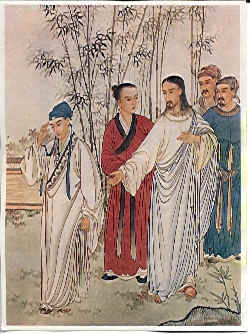
The truth is this––Chinese do not naturally contextualize theology for a Chinese context.
This observation is evident to anyone who has spent significant time among Chinese Christians across the country and has visited their training centers. At least among evangelical churches, one will not find a distinctly Chinese pattern of thinking about the Bible and theology. Rather, the typical theology found among Chinese Christians varies little, if any, from conservative, Western churches. In particular, I refer to emphases and expressions.
I’m not suggesting that a genuinely contextualize theology would contradict traditional, Western theology. Nor am I saying there isn’t a diversity of theological perspectives. That’s obviously false.
What would we expect….?
What would we expect from a distinctly Chinese theology? A genuinely contextualized theology would at least supplement (if not correct) Western theology. We would expect that non-Western theologies would expose blind spots and bring balance to traditionally neglected themes.
For example, we would expect a Chinese theology to address a number of critical ideas, which are concerns shared by both Chinese people as well as the Bible. Most obvious among these themes are honor-shame and collective identity.
Instead, other than the language, it is difficult to identify any meaningful differences between theology in the Western church and that found in the vast number of Chinese fellowships.
Why do Chinese not contextualize?
Here are a few factors that stifle contextualization within the Chinese church.
1. Chinese Union Version (CUV, 和合本)
The Chinese Bible hinders Chinese self-theologizing. One of the most well known problems in the CUV is its translation of sin as “crime” (罪). First of all, the word does not inherently mean “crime.” If we restrict ourselves to a sheerly legal metaphor, then of course “crime” expresses the idea of sin.
However, the Bible is far more diverse in its way of expressing the problem that we call sin. For example, Rom 1:18–23 describes unrighteousness as the dishonoring of God. The Old Testament routinely depicts Israel’s sin as that of adultery.
Unfortunately, the CUV’s narrow translation automatically forces the Chinese Christian to assume a legal framework when talking about sin and thus salvation. Consequently, other metaphors and themes will be marginalized and regarded as analogies at best.
2. Chinese respect authority and tradition
Chinese people respect authority and honor tradition. Therefore, when Western missionaries uncritically present theological ideas in a very traditionally Western way, then the Chinese believer will naturally accept this framework as “gospel”. Accordingly, they will emphasize doctrines and texts that speak most clearly to a Western context. All the while, these basic doctrinal categories and questions do not cohere easily with normal Chinese patterns of thinking.
Missionaries can confuse the theology commonly found in churches with a genuinely contextualized Chinese theology. The believers’ acceptance of Western theology however does not confirm that Western theology is essentially the same as Eastern theology. The Chinese people’s humility to honor tradition and authority becomes a pathway whereby they are subtly “judiazed” by Western teaching.
3. Lack of theological training
There is very little standardized theological training being done in the Chinese house church. I specifically refer to accredited theological education. The point of highlighting “accreditation” is not to say that higher level degrees are important to spiritual maturity. Instead, accredited theological training provides some measure of quality control.
There is a far amount of training that comes from “theology from a box” type programs. These 3–4 day sessions have value but they have definite limitations. For instance, they are not normally contextualized for a Chinese context in particular. Also, those course are often taught through translators.
Furthermore, those programs offer a pretty restricted scope of classes. This is because they are often pre-written to cover 8–10 basic and broad subjects. Then they are translated into Chinese and perhaps 10 other languages.
As a result of these things, those course teach doctrine but not necessarily the additional critical thinking skills that Chinese Christians need to address the problems they face in China.
4. Lack of exegetical skill
Those who have been heavily influenced by the Western church tend to emphasize systematic theology. Most missionaries are more conversant in theological doctrines than they are in how to do exegesis. (As illustration, let’s not forget how few missionaries received rigorous training in the original languages, not to mention the application of that knowledge in the task of exegesis).
Not surprisingly, a lot of training stresses the doctrines of systematic theology. These can be learned, memorized, and dogmatically defended. However, that does not guarantee that people will know to interpret the original meaning of a text within its own context. More typical is the instance where a pastor presupposes an answer and then goes to the Bible to confirm what they already heard from a prior teacher.
Contextualization however requires both exegetical skills as well as a grasp for the grand biblical narrative. These are two spheres of training that are not usually emphasized by missionaries and thus the Chinese believers whom they taught.
The above factors are just a few of the major reasons Chinese do not naturally do contextualization. Until these problems are addressed, it will be difficult for Chinese Christians to develop Chinese theologies.
Photo Credit: CC 2.0/commons.wikimedia
Previous Post

January 6, 2015
Honor-Shame in Mission Frontiers
Next Post
January 9, 2015 Thoughts on the Paris Attack (Guest Post by Roland Muller)
Browse Our Archives
Select a Category Atonement Biblical Theology Book Reviews China Chinese Church Chinese Culture Chinese Language Collectivism Contextualization Culture (General) Ecclesiology Evangelism Gospel Honor & Shame (Face) Interpretation/Exegesis Justification/Righteousness Missiology Mission Methods One Gospel for All Nations Other Practical Contextualization Reading Romans with Eastern Eyes Resources Romans Salvation (General) Saving God's Face Seeking God's Face The Cross in Context Theological Contextualization Theological Education Theology Uncategorized
Select a Month October 2026 September 2026 August 2026 July 2026 June 2026 May 2026 April 2026 March 2026 February 2026 January 2026 December 2025 November 2025 October 2025 September 2025 August 2025 July 2025 June 2025 May 2025 April 2025 March 2025 February 2025 January 2025 December 2024 November 2024 October 2024 September 2024 August 2024 July 2024 June 2024 May 2024 April 2024 March 2024 February 2024 January 2024 December 2023 November 2023 October 2023 September 2023 August 2023 July 2023 June 2023 May 2023 April 2023 March 2023 February 2023 January 2023 December 2022 November 2022 October 2022 September 2022 August 2022 July 2022 June 2022 May 2022 April 2022 March 2022 February 2022 January 2022 December 2021 November 2021 October 2021 September 2021 August 2021 July 2021 June 2021 May 2021 April 2021 March 2021 February 2021 January 2021 December 2020 November 2020 October 2020 September 2020 August 2020 July 2020 June 2020 May 2020 April 2020 March 2020 February 2020 January 2020 December 2019 November 2019 October 2019 September 2019 August 2019 July 2019 June 2019 May 2019 April 2019 March 2019 February 2019 January 2019 December 2018 November 2018 October 2018 September 2018 August 2018 July 2018 June 2018 May 2018 April 2018 March 2018 February 2018 January 2018 December 2017 November 2017 October 2017 September 2017 August 2017 July 2017 June 2017 May 2017 April 2017 March 2017 February 2017 January 2017 December 2016 November 2016 October 2016 September 2016 August 2016 July 2016 June 2016 May 2016 April 2016 March 2016 February 2016 January 2016 December 2015 November 2015 October 2015 September 2015 August 2015 July 2015 June 2015 May 2015 April 2015 March 2015 February 2015 January 2015 December 2014 November 2014 October 2014 September 2014 August 2014 July 2014 June 2014 May 2014 April 2014 March 2014 February 2014 January 2014 December 2013 November 2013 October 2013 September 2013 August 2013 July 2013 June 2013 May 2013 April 2013 March 2013 February 2013 January 2013 December 2012 November 2012
Follow Us!
TAKE THE
Religious Wisdom Quiz
What does "Sheol," often found in Psalms, mean?
Select your answer to see how you score.
Blessing The grave or abode of the dead Eternal light Above the mountain
Books by This Author Books by Brad Vaughn
Related posts from Saving God's Face

Bathsheba, #MeToo, and Eisegesis

I'm launching 3 online courses!
What's your political denomination?

Think Broadly on Contextualization and Biblical Theology
TRENDING AT PATHEOS Evangelical

When Halloween Unmasks Married Hearts
Written by Dr. David K. Ewen from Eternal Truth Bible College Behind...

Aristotle. He’s been called the father of logic, the father of the...

Methodist Central Hall and Westminster Abbey
Situated on the same square is Methodist Central Hall and Westminster Abbey. ...

57th Dove Awards Honor Dolly Parton, Crown New...
On gospel music’s biggest night, the 57th annual GMA Dove Awards honored...

The First Eucharistic Controversy: Christ’s Real Presence
For Catholics, the Eucharist is the source and summit of the Christian...

What a Stop Sign Can Teach Us About...
How to Make a Decision When You Can't Hear God Main point:...
view all Evangelical blogs
Ad-Free & Subscriber Log-In Subscription Support
- About Us
- 2026 Calendar
- Videos
- Podcasts
- Library of World Religions
- Faith In Media Tracker
- Advertise With Us
- Write for Us
- Privacy Policy
- Terms of Service
- Do Not Sell My Data
- Contact Us
- Radiant Digital
- Manage Newsletter Subscriptions
- Unsubscribe From Notifications
- Sitemap
Copyright 2008-2026, Patheos. All rights reserved.
Subscription Support Ad-Free & Subscriber Log-In
Follow Patheos