
BuddhistCatholicContemplativeEvangelicalGeneral ChristianHinduJewishLatter-day SaintMuslimNew VisionsProgressive Christian
Beliefs
- Buddhist
- Catholic
- Contemplative
- Evangelical
- General Christian
- Hindu
- Jewish
- Latter-day Saint
- More Voices
- Muslim
- New Visions
- Pagan
- Progressive Christian
Topics
- Religion News
- Food and Religion
- Sports and Religion
- Religious Art
- Religious Music and Entertainment
- Religious Events
- History and Religion
- Style and Religion
- Politics and Religion
- Women in Religion
- Recreation Outdoors and Religion
- Business Finance and Religion
- Careers Workplace and Religion
- Education and Religion
- Family Parenting and Religion
- Health Fitness and Religion
- Home and Religion
- Relationships and Religion
- Technology and Religion
- Travel and Religion
Columnists
- Buddhist Columnists
- Business Finance and Religion Columnists
- Careers Workplace and Religion Columnists
- Catholic Columnists
- Contemplative Columnists
- Education and Religion Columnists
- Evangelists Columnists
- Family Parenting and Religion Columnists
- General Christian Columnists
- Health Fitness and Religion Columnists
- Hindu Columnists
- History and Religion Columnists
- Home and Religion Columnists
- Jewish Columnists
- More Voices Columnists
- Latter Day Columnists
- Muslim Columnists
- New Visions Columnists
- Nonreligious Columnists
- Pagan Columnists
- Politics and Religion Columnists
- Progressive Columnists
- Recreation Outdoors and Religion Columnists
- Relationships and Religion Columnists
- Religion News Columnists
- Religious Art Columnists
- Religious Events Columnists
- Religious Music and Entertainment Columnists
- Sports and Religion Columnists
- Style and Religion Columnists
- Technology and Religion Columnists
- Travel and Religion Columnists
- Women in Religion Columnists
Resource Library
- 2026 Calendar
- Library of World Religions
- The 100 Most Holy Places on Earth
- Patheos Answers
- Podcasts
- Videos
- Faith Leaders Database
- Anglican Episcopalian
- Bahai
- Baptist
- Buddhism
- Christianity
- Confucianism
- Eastern Orthodoxy
- Hinduism
- Holiness and Pentecostal
- ISKCON
- Islam
- Judaism
- Lutheran
- Methodist
- The Church of Jesus Christ of Latter-day Saints
- New Age
- Paganism
- Presbytarian and Reformed
- Protestantism
- Religion Behind the Scenes
- Roman Catholic
- Scientology
- Shia Islam
- Sikhism
- Sufism
- Sunni Islam
- Taoism
- Zen
- See all religions
Research Tools
 Ad-Free & Subscriber Log-In Subscription Support
Ad-Free & Subscriber Log-In Subscription Support
Follow Patheos 

- Trending:
- Forgiveness
- |
- Marriage
- |
- Consciousness
- |
- Death Penalty
- |
- Election
- |
- Halloween

-
Tools
-
Support the Work
- Home
- Evangelical
- How to Contextualize the Gospel for Animists
How to Contextualize the Gospel for Animists
Last updated on: August 14, 2015 at 3:55 am by Brad Vaughn
How to Contextualize the Gospel for Animists 2015-08-14T03:55:11-07:00 Brad Vaughn
Patheos Explore the world's faith through different perspectives on religion and spirituality! Patheos has the views of the prevalent religions and spiritualities of the world.
How do we contextualize the gospel among animists?
In the last post, I highlighted a possible danger to be aware of when presenting the gospel among many unreached people groups. In this post, I will suggest a more constructive approach.
Credit: CC 2.0/wikipedia
How does the Bible confront other “gods”?
How did people like the OT prophets contend with polytheistic beliefs in their own contexts? I think we see a pattern in their approach.
I offer the following suggestion when confronting the false “gods” of animistic peoples.
Challenge their authority and not simply their existence.
The main thing to contend for is the sovereignty (i.e. supreme authority) of God.
I should add a brief background note. In the ancient near eastern world, kingship was linked with the worship of particular gods. After all, kings claimed divine mandate and were often reckoned sons of their people’s god. Accordingly, idolatry was linked to what we might call “politics.” Remember Daniel and his buddies? Worshipping an idol expressed political allegiance.
Idols claim power over people and places. Thus, they divide Gods kingdom. We should therefore make the following points clear.
1. The Creator God has sovereign power and authority.
- He not only gives people life; he also has power over death (cf. Acts 17:31).
- All other authorities are subordinate to the one true God.
Observe the stream of thought that extends throughout Isa 40–55. The prophet does not get into philosophical speculative debate about the meaning of deity. Rather, he proclaims that other so-called gods lack power and thus are not the Creator-king over the entire world. The Lord defeats the kings of the earth (and thus their idols).
Like the prophet Isaiah, our primary goal is to: challenge false gods’ authority, not simply their existence. We need o transfer our focal point.
This means we should identify people’s false gods.
 Credit: CC 2.0/wikipedia
We want to focus on who people honor as authority. If we find the authorities that people respect, we will also find their false gods. Even today, authority and idol worship are bound together.
Practically speaking, we affirm biblical monotheism by exposing those whom people most regard as authoritative. Monotheism concerns our sense of identification, . . . our allegiance. For example, to be a Jew in the ancient world meant allegiance to the one true God, the Lord, and his king (e.g. David).
Who does our life revolve around?
Idols come in many forms: statutes, money, children, homes, etc. Whose authority do they follow in order to secure benefit?
Perhaps, in one persons’ life, his mom has sovereignty. His mother, in reality, becomes his false god, his idol. By giving ultimate allegiance to his mom, the man practically reality denies monotheism as it functions in the Bible.
- The Creator King’s sphere or territory is the entire world.
Idols fragment the world, i.e. God’s kingdom. In essence, this is what human have done from the beginning: We have colonized world. We are usurpers.
This treason manifests itself in multiple ways. For example, people tend to boast in their nation, education, ethnicity, tradition, language, gender, etc.
2. Only God is worthy of worship.
What are some implications? God alone is worthy of honor and praise.
Therefore, we should not fight for face. Loving face too much inevitably leads us to wanting people to worship us! Why?
If we don’t think God alone deserves worship, then we will worship some other created thing. Yet, we should be aware that what we worship and our view of ourself are always intertwined. What we worship reflects our value system and worldview.

We become what we worship.
As result, our “face” and our worship are tied together. Eventually, our worship and our seeking of face are indistinguishable. Our “face” belongs to what we worship. We pursue our face more and more. Before long, we start worshipping ourselves.
Our mirror becomes our altar.
When we all pursue “face” (mianzi) in this way, human relationships disintegrate.
Though contrary to popular belief, we can see why biblical monotheism is the only hope we have for harmony in the world.

Concluding Thoughts
Instead of trying to prove God’s existence, we ought to challenge and question the authority of false gods. This seems to be the approach most used in Scripture.
If we look closely, we find that preaching biblical monotheism is to proclaim the gospel. Why? The gospel, like biblical monotheism, proclaims that the Creator-God is the supreme king over all nations.
Once again, we see the critical importance of getting the gospel right.
People can easily separate monotheism and evangelism. What I mean is this. People think monotheism simply prepares people to hear the gospel. Yet, truly grasping biblical monotheism through the lens of Christ will mean people will grasp the gospel.
Yes, individuals can be justified by faith, not by works. However, this does not capture the whole of the gospel. If we settle for what is gloriously yet merely true, we may compromise the gospel by missing that which binds it all together.
The gospel, like the doctrine of God, is far more robust than many of us have previously thought.
Previous Post

November 17, 2014
Why Chelsea Clinton was named "Mother of the Year"
Next Post
November 20, 2014 Doing Twitter Theology
Browse Our Archives
Select a Category Atonement Biblical Theology Book Reviews China Chinese Church Chinese Culture Chinese Language Collectivism Contextualization Culture (General) Ecclesiology Evangelism Gospel Honor & Shame (Face) Interpretation/Exegesis Justification/Righteousness Missiology Mission Methods One Gospel for All Nations Other Practical Contextualization Reading Romans with Eastern Eyes Resources Romans Salvation (General) Saving God's Face Seeking God's Face The Cross in Context Theological Contextualization Theological Education Theology Uncategorized
Select a Month October 2026 September 2026 August 2026 July 2026 June 2026 May 2026 April 2026 March 2026 February 2026 January 2026 December 2025 November 2025 October 2025 September 2025 August 2025 July 2025 June 2025 May 2025 April 2025 March 2025 February 2025 January 2025 December 2024 November 2024 October 2024 September 2024 August 2024 July 2024 June 2024 May 2024 April 2024 March 2024 February 2024 January 2024 December 2023 November 2023 October 2023 September 2023 August 2023 July 2023 June 2023 May 2023 April 2023 March 2023 February 2023 January 2023 December 2022 November 2022 October 2022 September 2022 August 2022 July 2022 June 2022 May 2022 April 2022 March 2022 February 2022 January 2022 December 2021 November 2021 October 2021 September 2021 August 2021 July 2021 June 2021 May 2021 April 2021 March 2021 February 2021 January 2021 December 2020 November 2020 October 2020 September 2020 August 2020 July 2020 June 2020 May 2020 April 2020 March 2020 February 2020 January 2020 December 2019 November 2019 October 2019 September 2019 August 2019 July 2019 June 2019 May 2019 April 2019 March 2019 February 2019 January 2019 December 2018 November 2018 October 2018 September 2018 August 2018 July 2018 June 2018 May 2018 April 2018 March 2018 February 2018 January 2018 December 2017 November 2017 October 2017 September 2017 August 2017 July 2017 June 2017 May 2017 April 2017 March 2017 February 2017 January 2017 December 2016 November 2016 October 2016 September 2016 August 2016 July 2016 June 2016 May 2016 April 2016 March 2016 February 2016 January 2016 December 2015 November 2015 October 2015 September 2015 August 2015 July 2015 June 2015 May 2015 April 2015 March 2015 February 2015 January 2015 December 2014 November 2014 October 2014 September 2014 August 2014 July 2014 June 2014 May 2014 April 2014 March 2014 February 2014 January 2014 December 2013 November 2013 October 2013 September 2013 August 2013 July 2013 June 2013 May 2013 April 2013 March 2013 February 2013 January 2013 December 2012 November 2012
Follow Us!
TAKE THE
Religious Wisdom Quiz
In Revelation, how many lampstands does John see?
Select your answer to see how you score.
Ten lampstands Seven golden lampstands Four lampstands Twelve lampstands
Books by This Author Books by Brad Vaughn
Related posts from Saving God's Face

Should We Emphasize Jesus as King to People...

Why Egalitarians Can Stay in a Complementarian Church
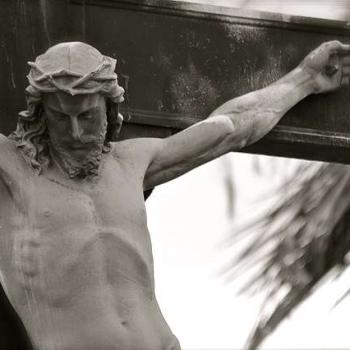
"Why Have You Forsaken Me?” and the Problem...

What motivates obedience when I don’t want to...
TRENDING AT PATHEOS Evangelical

Letters on Living the Faith by C.S. Lewis
Most of us met C.S. Lewis as a public intellectual. Mere Christianity....

When Halloween Unmasks Married Hearts
Written by Dr. David K. Ewen from Eternal Truth Bible College Behind...

Aristotle. He’s been called the father of logic, the father of the...

Methodist Central Hall and Westminster Abbey
Situated on the same square is Methodist Central Hall and Westminster Abbey. ...

57th Dove Awards Honor Dolly Parton, Crown New...
On gospel music’s biggest night, the 57th annual GMA Dove Awards honored...

The First Eucharistic Controversy: Christ’s Real Presence
For Catholics, the Eucharist is the source and summit of the Christian...
view all Evangelical blogs
Ad-Free & Subscriber Log-In Subscription Support
- About Us
- 2026 Calendar
- Videos
- Podcasts
- Library of World Religions
- Faith In Media Tracker
- Advertise With Us
- Write for Us
- Privacy Policy
- Terms of Service
- Do Not Sell My Data
- Contact Us
- Radiant Digital
- Manage Newsletter Subscriptions
- Unsubscribe From Notifications
- Sitemap
Copyright 2008-2026, Patheos. All rights reserved.
Subscription Support Ad-Free & Subscriber Log-In
Follow Patheos