
BuddhistCatholicContemplativeEvangelicalGeneral ChristianHinduJewishLatter-day SaintMuslimNew VisionsProgressive Christian
Beliefs
- Buddhist
- Catholic
- Contemplative
- Evangelical
- General Christian
- Hindu
- Jewish
- Latter-day Saint
- More Voices
- Muslim
- New Visions
- Pagan
- Progressive Christian
Topics
- Religion News
- Food and Religion
- Sports and Religion
- Religious Art
- Religious Music and Entertainment
- Religious Events
- History and Religion
- Style and Religion
- Politics and Religion
- Women in Religion
- Recreation Outdoors and Religion
- Business Finance and Religion
- Careers Workplace and Religion
- Education and Religion
- Family Parenting and Religion
- Health Fitness and Religion
- Home and Religion
- Relationships and Religion
- Technology and Religion
- Travel and Religion
Columnists
- Buddhist Columnists
- Business Finance and Religion Columnists
- Careers Workplace and Religion Columnists
- Catholic Columnists
- Contemplative Columnists
- Education and Religion Columnists
- Evangelists Columnists
- Family Parenting and Religion Columnists
- General Christian Columnists
- Health Fitness and Religion Columnists
- Hindu Columnists
- History and Religion Columnists
- Home and Religion Columnists
- Jewish Columnists
- More Voices Columnists
- Latter Day Columnists
- Muslim Columnists
- New Visions Columnists
- Nonreligious Columnists
- Pagan Columnists
- Politics and Religion Columnists
- Progressive Columnists
- Recreation Outdoors and Religion Columnists
- Relationships and Religion Columnists
- Religion News Columnists
- Religious Art Columnists
- Religious Events Columnists
- Religious Music and Entertainment Columnists
- Sports and Religion Columnists
- Style and Religion Columnists
- Technology and Religion Columnists
- Travel and Religion Columnists
- Women in Religion Columnists
Resource Library
- 2026 Calendar
- Library of World Religions
- The 100 Most Holy Places on Earth
- Patheos Answers
- Podcasts
- Videos
- Faith Leaders Database
- Anglican Episcopalian
- Bahai
- Baptist
- Buddhism
- Christianity
- Confucianism
- Eastern Orthodoxy
- Hinduism
- Holiness and Pentecostal
- ISKCON
- Islam
- Judaism
- Lutheran
- Methodist
- The Church of Jesus Christ of Latter-day Saints
- New Age
- Paganism
- Presbytarian and Reformed
- Protestantism
- Religion Behind the Scenes
- Roman Catholic
- Scientology
- Shia Islam
- Sikhism
- Sufism
- Sunni Islam
- Taoism
- Zen
- See all religions
Research Tools
 Ad-Free & Subscriber Log-In Subscription Support
Ad-Free & Subscriber Log-In Subscription Support
Follow Patheos 

- Trending:
- Forgiveness
- |
- Marriage
- |
- Consciousness
- |
- Death Penalty
- |
- Election
- |
- Halloween

-
Tools
-
Support the Work
- Home
- Evangelical
- Explaining “Face” Using Lian and Mianzi
Explaining “Face” Using Lian and Mianzi
Last updated on: August 12, 2015 at 6:38 am by Brad Vaughn
Explaining “Face” Using Lian and Mianzi 2015-08-12T06:38:42-07:00 Brad Vaughn
Patheos Explore the world's faith through different perspectives on religion and spirituality! Patheos has the views of the prevalent religions and spiritualities of the world.
Both in Saving God’s Face and on this blog, I have highlighted a slight distinction between the two Chinese words for “face”–– lian (脸) and mianzi (面子). Do Chinese people understand this? Is this distinction important? Does is matter when it comes to evangelism and explaining theological ideas?
As soon as you distinguish lian and mianzi in conversation, you will often find that Chinese listeners don’t always understand or agree with this distinction. What are we to make of this?
(By the way, this post is also relevant for people who don’t speak Chinese. In other languages, one will inevitably find that key terms could have multiple translations yet each word carries its own subtle connotations.)
Mianzi versus Lian
First of all, I want to reiterate what is this difference between lian and mianzi. In Saving God’s Face, I document various Chinese writers (e.g. anthropologists, linguists, etc.) who have made this observation. The distinction is rooted in the Han language and thus is easier to explain in northern areas where Cantonese has had less of an influence on people’s daily use of language.
In short, mianzi is more superficial in nature, referring to one’s reputation in a broad sense. Movie stars and singers have mianzi. When a students scores well on a test or is publicly praised, he or she gets mianzi. By contrast, lian has the capacity to carry moral connotations, having reference to a person’s character. While not everyone has mianzi (as in fame), people are born with lian (in the sense of human worth).
Lian is a type of mianzi; yet, mianzi is not necessarily lian. So, one could use the terms interchangeably; however, if someone specifically wanted to talk about character (i.e. “moral” face), one would use lian rather than mianzi.
“Face” is a Moral Issue
In conversation, I will make this distinction (for purposes I’ll make clear in a second). I routinely hear one of two objections. First, someone might say, “Mianzi and lian mean the same thing.” Or, second, I’ll hear, “But mianzi has a negative connotation in China. So, why do you talk about God and Christians getting lian?” It usually takes a few minutes to answer these questions, but 9 times out of 10, the person I’m speaking with will get the point and set aside their objection.
How do we answer these questions?
(1) To begin, I simply try to be clear about what I’m actually claiming. So, I state my comments above about mianzi and lian having overlap yet lian having the ability to carry moral overtones.
(2) Then, I pose questions that give evidence of this claim.
For example, every Chinese person knows the answer to the question, “Do you want lian?” (你要脸吗?). The answer is simply “Yes. Of course.” If one person were to say about another person, “He does not want lian”, that would be an insult. The speaker effectively would be saying that this person does not care about being a good person, having good character.
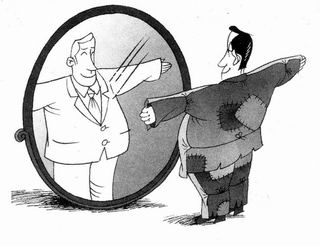 Therefore, if it were actually true that lian and mianzi were indistinguishable and that they had a negative meaning, then saying “He doesn’t want lian” wouldn’t be an insult. In fact, it would be very appropriate to say, “I don’t want lian.”
We could go about this from another direction. While mianzi quite often conveys a negative idea (e.g. being proud), everyone recognizes that giving mianzi is fundamentally a moral obligation within one’s relationships.
Thus, if a child were unwilling to give mianzi to his parents, then everyone would regard that child as disrespectful and unloving. In order to establish and maintain the most basic of social relationships, people must give mianzi (e.g. respect, praise, complements, etc.).
In addition, a number of idiom and set phrases use lian in a way that carries moral overtones. For instance, 撕破脸皮 (sī pò liǎn pí) means “to give no consideration for other people’s feelings.”
Conceptually, many other expressions demonstrate that Chinese clearly see things like face, shame, and honor in moral terms. Thus, if someone “does not have a sense of shame” (bu zhi lian chi, 不知廉耻), he or she is considered an immoral person or someone who lacks moral sensibilities. You can find many more expressions that are helpful in making the connection between honor/shame/face and morality or virtue.
After a little thought, Chinese grasp the point. Whether they are conscious of it or not, they intuitively distinguish mianzi and lian in one manner or another.
** In the next post, I’ll mention a few practical suggestions about how and why to use the mianzi/lian distinction in conversation.
Related articles
 Talking about “Face” in Chinese
 Do you want “face”?
 The Problem of “Ascribed Righteousness”
 Why Western Theology Neglects HonorShame
Previous Post

September 9, 2014
Honor and Shame across Generations in China
Next Post
September 17, 2014 Theological Education in Honor-Shame Cultures
Browse Our Archives
Select a Category Atonement Biblical Theology Book Reviews China Chinese Church Chinese Culture Chinese Language Collectivism Contextualization Culture (General) Ecclesiology Evangelism Gospel Honor & Shame (Face) Interpretation/Exegesis Justification/Righteousness Missiology Mission Methods One Gospel for All Nations Other Practical Contextualization Reading Romans with Eastern Eyes Resources Romans Salvation (General) Saving God's Face Seeking God's Face The Cross in Context Theological Contextualization Theological Education Theology Uncategorized
Select a Month October 2026 September 2026 August 2026 July 2026 June 2026 May 2026 April 2026 March 2026 February 2026 January 2026 December 2025 November 2025 October 2025 September 2025 August 2025 July 2025 June 2025 May 2025 April 2025 March 2025 February 2025 January 2025 December 2024 November 2024 October 2024 September 2024 August 2024 July 2024 June 2024 May 2024 April 2024 March 2024 February 2024 January 2024 December 2023 November 2023 October 2023 September 2023 August 2023 July 2023 June 2023 May 2023 April 2023 March 2023 February 2023 January 2023 December 2022 November 2022 October 2022 September 2022 August 2022 July 2022 June 2022 May 2022 April 2022 March 2022 February 2022 January 2022 December 2021 November 2021 October 2021 September 2021 August 2021 July 2021 June 2021 May 2021 April 2021 March 2021 February 2021 January 2021 December 2020 November 2020 October 2020 September 2020 August 2020 July 2020 June 2020 May 2020 April 2020 March 2020 February 2020 January 2020 December 2019 November 2019 October 2019 September 2019 August 2019 July 2019 June 2019 May 2019 April 2019 March 2019 February 2019 January 2019 December 2018 November 2018 October 2018 September 2018 August 2018 July 2018 June 2018 May 2018 April 2018 March 2018 February 2018 January 2018 December 2017 November 2017 October 2017 September 2017 August 2017 July 2017 June 2017 May 2017 April 2017 March 2017 February 2017 January 2017 December 2016 November 2016 October 2016 September 2016 August 2016 July 2016 June 2016 May 2016 April 2016 March 2016 February 2016 January 2016 December 2015 November 2015 October 2015 September 2015 August 2015 July 2015 June 2015 May 2015 April 2015 March 2015 February 2015 January 2015 December 2014 November 2014 October 2014 September 2014 August 2014 July 2014 June 2014 May 2014 April 2014 March 2014 February 2014 January 2014 December 2013 November 2013 October 2013 September 2013 August 2013 July 2013 June 2013 May 2013 April 2013 March 2013 February 2013 January 2013 December 2012 November 2012
Follow Us!
TAKE THE
Religious Wisdom Quiz
Who was Samson's mother?
Select your answer to see how you score.
Hannah Ruth Manoah's wife Delilah
Books by This Author Books by Brad Vaughn
Related posts from Saving God's Face

No King forgets his crown. Why do we?

Recovering Moral Vision Between Shame and Shamelessness

Refuge, Confession, and the End of Shame

Psalm 25 and the Fear of Being Put...
TRENDING AT PATHEOS Evangelical

When Halloween Unmasks Married Hearts
Written by Dr. David K. Ewen from Eternal Truth Bible College Behind...

Aristotle. He’s been called the father of logic, the father of the...

Methodist Central Hall and Westminster Abbey
Situated on the same square is Methodist Central Hall and Westminster Abbey. ...

57th Dove Awards Honor Dolly Parton, Crown New...
On gospel music’s biggest night, the 57th annual GMA Dove Awards honored...

The First Eucharistic Controversy: Christ’s Real Presence
For Catholics, the Eucharist is the source and summit of the Christian...

What a Stop Sign Can Teach Us About...
How to Make a Decision When You Can't Hear God Main point:...
view all Evangelical blogs
Ad-Free & Subscriber Log-In Subscription Support
- About Us
- 2026 Calendar
- Videos
- Podcasts
- Library of World Religions
- Faith In Media Tracker
- Advertise With Us
- Write for Us
- Privacy Policy
- Terms of Service
- Do Not Sell My Data
- Contact Us
- Radiant Digital
- Manage Newsletter Subscriptions
- Unsubscribe From Notifications
- Sitemap
Copyright 2008-2026, Patheos. All rights reserved.
Subscription Support Ad-Free & Subscriber Log-In
Follow Patheos