
BuddhistCatholicContemplativeEvangelicalGeneral ChristianHinduJewishLatter-day SaintMuslimNew VisionsProgressive Christian
Beliefs
- Buddhist
- Catholic
- Contemplative
- Evangelical
- General Christian
- Hindu
- Jewish
- Latter-day Saint
- More Voices
- Muslim
- New Visions
- Pagan
- Progressive Christian
Topics
- Religion News
- Food and Religion
- Sports and Religion
- Religious Art
- Religious Music and Entertainment
- Religious Events
- History and Religion
- Style and Religion
- Politics and Religion
- Women in Religion
- Recreation Outdoors and Religion
- Business Finance and Religion
- Careers Workplace and Religion
- Education and Religion
- Family Parenting and Religion
- Health Fitness and Religion
- Home and Religion
- Relationships and Religion
- Technology and Religion
- Travel and Religion
Columnists
- Buddhist Columnists
- Business Finance and Religion Columnists
- Careers Workplace and Religion Columnists
- Catholic Columnists
- Contemplative Columnists
- Education and Religion Columnists
- Evangelists Columnists
- Family Parenting and Religion Columnists
- General Christian Columnists
- Health Fitness and Religion Columnists
- Hindu Columnists
- History and Religion Columnists
- Home and Religion Columnists
- Jewish Columnists
- More Voices Columnists
- Latter Day Columnists
- Muslim Columnists
- New Visions Columnists
- Nonreligious Columnists
- Pagan Columnists
- Politics and Religion Columnists
- Progressive Columnists
- Recreation Outdoors and Religion Columnists
- Relationships and Religion Columnists
- Religion News Columnists
- Religious Art Columnists
- Religious Events Columnists
- Religious Music and Entertainment Columnists
- Sports and Religion Columnists
- Style and Religion Columnists
- Technology and Religion Columnists
- Travel and Religion Columnists
- Women in Religion Columnists
Resource Library
- 2026 Calendar
- Library of World Religions
- The 100 Most Holy Places on Earth
- Patheos Answers
- Podcasts
- Videos
- Faith Leaders Database
- Anglican Episcopalian
- Bahai
- Baptist
- Buddhism
- Christianity
- Confucianism
- Eastern Orthodoxy
- Hinduism
- Holiness and Pentecostal
- ISKCON
- Islam
- Judaism
- Lutheran
- Methodist
- The Church of Jesus Christ of Latter-day Saints
- New Age
- Paganism
- Presbytarian and Reformed
- Protestantism
- Religion Behind the Scenes
- Roman Catholic
- Scientology
- Shia Islam
- Sikhism
- Sufism
- Sunni Islam
- Taoism
- Zen
- See all religions
Research Tools
 Ad-Free & Subscriber Log-In Subscription Support
Ad-Free & Subscriber Log-In Subscription Support
Follow Patheos 

- Trending:
- Forgiveness
- |
- Marriage
- |
- Consciousness
- |
- Death Penalty
- |
- Election
- |
- Halloween

-
Tools
-
Support the Work
- Home
- Evangelical
- The Logic of Biblical Application (Part 3)
The Logic of Biblical Application (Part 3)
Last updated on: August 14, 2015 at 6:44 am by Brad Vaughn
The Logic of Biblical Application (Part 3) 2015-08-14T06:44:53-07:00 Brad Vaughn
Patheos Explore the world's faith through different perspectives on religion and spirituality! Patheos has the views of the prevalent religions and spiritualities of the world.
Does it matter what method we use when trying to find the application of a biblical text? Yes, it does….
In this post, I explain why we cannot be casual as to how to think about and look for application.
In Part One of the series, I suggested a more fully biblical meaning of “application” than one often hears. The application of a text concerns one’s total response––our head, heart, and hands–– not simply our actions. In Part Two, I offered a method by which one can discern the application of a Bible passage.
I began to explain why the sequence of the questions matters as well. The four questions (in order) included:
1. How do the passage HONOR God?
2. How does it affect our HEADS? (i.e. our thinking)
3. How does it affect our HEARTS? (i.e. emotions, desires)
4. How does it affect our HANDS? (i.e. hands)
Is this method really any better than other approaches? For example, a common tool that people use is called SPECKA.
S = Sin (Is there a sin to confess?)
P = Promise (Is there a promise from God?)
E = Example (Is there an example to follow?)
C = Commands (Are there commands to obey?)
K = Knowledge (What does this passage teach us about God? ourselves? others?)
A = Accountability (Where do we need accountability?)
I am not a fan of SPECKA nor many other similar sets of questions. I think the 4 H- questions above (honor, head, heart, hands) are better. I’ll explain.
The Biblical Logic of Application Questions
These four questions are not simply the product of my own random preference. I suggest three reasons for using these 4 questions rather than others.
1. Basic Logic of Life
As I mentioned in the last post, the four questions follow the natural and necessary order of all human actions. Every single things we do follows the same sequence––we first have a thought in the brain, which then spurs some sort of emotion or desire. Accordingly, we make the decision to take one course of action over others. Everything from going to the bathroom to getting married follows this order,…even if it’s quick and unconscious.
2. Biblical Commandments
Recall what Jesus said were the two greatest commandments. The greatest commandment is to love the Lord your God with all your heart, strength, and mind. The second one is to love your neighbor as yourself. Break down those two commands. Here are some observations.
- The primary command is LOVE THE LORD.
- The rest of the greatest commandment simply tells us how to love the Lord. In other words, it explains the various facets of life in which we are to love the Lord.
- The second command is…well, second. It follows from the first.
What does this imply for us when it comes to looking for the application of a text?
- Biblical application should be a response of love to God. Thus, our first question slow us down to contemplate why God should be honored. How does this passage reveal about God that glorifies or HONORS him? Of all the questions, this first one is the one I think people tend to skip the most. People don’t see this as an “application” question because they mistake the true nature of biblical obedience.
- The second, third, and fourth questions simply unpack the proper response to God’s glory. Essentially, Jesus tells us that the greatest commandment is to love the Lord with all of our head, heart, and hands.
- The final question should be the final question. Our actions of love toward others should flow from our loving God with our heads and hearts. When we love God, we will love people; yet, loving people does not necessarily imply we love God.
3. Balanced Application
We all have certain tendencies that favor one sort of application over another. Some people tend to be in the heads a lot. Consequently, they don’t often think through some of the practical points of action that they should take. Others are super pragmatic and concerned simply with the bottom line––”what am I actually supposed to do?” Unfortunately, they give little thought to the roots that produce godly actions.
Our personal preference for one type of application leads to an unbalanced Christian life.
By asking these four questions, we guard ourselves from such extremes hinder full growth. They guide us to find far more balance in our application. Someone inclined to thing long on theological implications will have to think through the behaviors that may need adjustment (or reinforcement). Others will be slowed down so that they gain wisdom and better motivation for their actions.
I urge you to try using these four applications in your our study and ministry. Try it consistently for a month or so. I suspect you will discover that many passages are far more relevant to your life than you might have expected. Additionally, we will learn to respond with more of our lives. I’d love to hear what you find.
Photo Credit: Creation Commons Search 2.0/pixabay
Related articles
 A Simple Approach to Applying Scripture (Part 2)
 “What does the text mean?” and other unhelpful questions
 Five Ways Not to Teach Biblical Interpretation
 When You Only Have a Bible: Context and Questions
Previous Post

June 18, 2014
A Simple Approach to Applying Scripture (Part 2)
Next Post

July 1, 2014 Must we have "a shot of heresy"?
Browse Our Archives
Select a Category Atonement Biblical Theology Book Reviews China Chinese Church Chinese Culture Chinese Language Collectivism Contextualization Culture (General) Ecclesiology Evangelism Gospel Honor & Shame (Face) Interpretation/Exegesis Justification/Righteousness Missiology Mission Methods One Gospel for All Nations Other Practical Contextualization Reading Romans with Eastern Eyes Resources Romans Salvation (General) Saving God's Face Seeking God's Face The Cross in Context Theological Contextualization Theological Education Theology Uncategorized
Select a Month October 2026 September 2026 August 2026 July 2026 June 2026 May 2026 April 2026 March 2026 February 2026 January 2026 December 2025 November 2025 October 2025 September 2025 August 2025 July 2025 June 2025 May 2025 April 2025 March 2025 February 2025 January 2025 December 2024 November 2024 October 2024 September 2024 August 2024 July 2024 June 2024 May 2024 April 2024 March 2024 February 2024 January 2024 December 2023 November 2023 October 2023 September 2023 August 2023 July 2023 June 2023 May 2023 April 2023 March 2023 February 2023 January 2023 December 2022 November 2022 October 2022 September 2022 August 2022 July 2022 June 2022 May 2022 April 2022 March 2022 February 2022 January 2022 December 2021 November 2021 October 2021 September 2021 August 2021 July 2021 June 2021 May 2021 April 2021 March 2021 February 2021 January 2021 December 2020 November 2020 October 2020 September 2020 August 2020 July 2020 June 2020 May 2020 April 2020 March 2020 February 2020 January 2020 December 2019 November 2019 October 2019 September 2019 August 2019 July 2019 June 2019 May 2019 April 2019 March 2019 February 2019 January 2019 December 2018 November 2018 October 2018 September 2018 August 2018 July 2018 June 2018 May 2018 April 2018 March 2018 February 2018 January 2018 December 2017 November 2017 October 2017 September 2017 August 2017 July 2017 June 2017 May 2017 April 2017 March 2017 February 2017 January 2017 December 2016 November 2016 October 2016 September 2016 August 2016 July 2016 June 2016 May 2016 April 2016 March 2016 February 2016 January 2016 December 2015 November 2015 October 2015 September 2015 August 2015 July 2015 June 2015 May 2015 April 2015 March 2015 February 2015 January 2015 December 2014 November 2014 October 2014 September 2014 August 2014 July 2014 June 2014 May 2014 April 2014 March 2014 February 2014 January 2014 December 2013 November 2013 October 2013 September 2013 August 2013 July 2013 June 2013 May 2013 April 2013 March 2013 February 2013 January 2013 December 2012 November 2012
Follow Us!
TAKE THE
Religious Wisdom Quiz
True or False: Paul wrote to the Philippians while he was imprisoned.
Select your answer to see how you score.
TRUE FALSE
Books by This Author Books by Brad Vaughn
Related posts from Saving God's Face

Why Christianity Needs Individuals but Rejects Individualism

Glory, Violence, and the Gospel of Peace

What motivates obedience when I don’t want to...
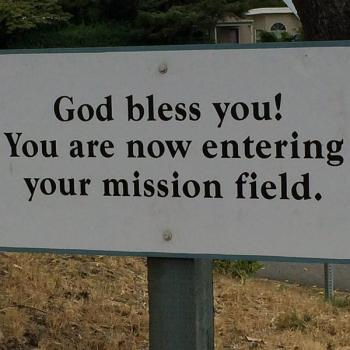
“I’ll be wherever you call me.”
TRENDING AT PATHEOS Evangelical

When Halloween Unmasks Married Hearts
Written by Dr. David K. Ewen from Eternal Truth Bible College Behind...

Aristotle. He’s been called the father of logic, the father of the...

Methodist Central Hall and Westminster Abbey
Situated on the same square is Methodist Central Hall and Westminster Abbey. ...

57th Dove Awards Honor Dolly Parton, Crown New...
On gospel music’s biggest night, the 57th annual GMA Dove Awards honored...

The First Eucharistic Controversy: Christ’s Real Presence
For Catholics, the Eucharist is the source and summit of the Christian...

What a Stop Sign Can Teach Us About...
How to Make a Decision When You Can't Hear God Main point:...
view all Evangelical blogs
Ad-Free & Subscriber Log-In Subscription Support
- About Us
- 2026 Calendar
- Videos
- Podcasts
- Library of World Religions
- Faith In Media Tracker
- Advertise With Us
- Write for Us
- Privacy Policy
- Terms of Service
- Do Not Sell My Data
- Contact Us
- Radiant Digital
- Manage Newsletter Subscriptions
- Unsubscribe From Notifications
- Sitemap
Copyright 2008-2026, Patheos. All rights reserved.
Subscription Support Ad-Free & Subscriber Log-In
Follow Patheos