
BuddhistCatholicContemplativeEvangelicalGeneral ChristianHinduJewishLatter-day SaintMuslimNew VisionsProgressive Christian
Beliefs
- Buddhist
- Catholic
- Contemplative
- Evangelical
- General Christian
- Hindu
- Jewish
- Latter-day Saint
- More Voices
- Muslim
- New Visions
- Pagan
- Progressive Christian
Topics
- Religion News
- Food and Religion
- Sports and Religion
- Religious Art
- Religious Music and Entertainment
- Religious Events
- History and Religion
- Style and Religion
- Politics and Religion
- Women in Religion
- Recreation Outdoors and Religion
- Business Finance and Religion
- Careers Workplace and Religion
- Education and Religion
- Family Parenting and Religion
- Health Fitness and Religion
- Home and Religion
- Relationships and Religion
- Technology and Religion
- Travel and Religion
Columnists
- Buddhist Columnists
- Business Finance and Religion Columnists
- Careers Workplace and Religion Columnists
- Catholic Columnists
- Contemplative Columnists
- Education and Religion Columnists
- Evangelists Columnists
- Family Parenting and Religion Columnists
- General Christian Columnists
- Health Fitness and Religion Columnists
- Hindu Columnists
- History and Religion Columnists
- Home and Religion Columnists
- Jewish Columnists
- More Voices Columnists
- Latter Day Columnists
- Muslim Columnists
- New Visions Columnists
- Nonreligious Columnists
- Pagan Columnists
- Politics and Religion Columnists
- Progressive Columnists
- Recreation Outdoors and Religion Columnists
- Relationships and Religion Columnists
- Religion News Columnists
- Religious Art Columnists
- Religious Events Columnists
- Religious Music and Entertainment Columnists
- Sports and Religion Columnists
- Style and Religion Columnists
- Technology and Religion Columnists
- Travel and Religion Columnists
- Women in Religion Columnists
Resource Library
- 2026 Calendar
- Library of World Religions
- The 100 Most Holy Places on Earth
- Patheos Answers
- Podcasts
- Videos
- Faith Leaders Database
- Anglican Episcopalian
- Bahai
- Baptist
- Buddhism
- Christianity
- Confucianism
- Eastern Orthodoxy
- Hinduism
- Holiness and Pentecostal
- ISKCON
- Islam
- Judaism
- Lutheran
- Methodist
- The Church of Jesus Christ of Latter-day Saints
- New Age
- Paganism
- Presbytarian and Reformed
- Protestantism
- Religion Behind the Scenes
- Roman Catholic
- Scientology
- Shia Islam
- Sikhism
- Sufism
- Sunni Islam
- Taoism
- Zen
- See all religions
Research Tools
 Ad-Free & Subscriber Log-In Subscription Support
Ad-Free & Subscriber Log-In Subscription Support
Follow Patheos 

- Trending:
- Forgiveness
- |
- Marriage
- |
- Consciousness
- |
- Death Penalty
- |
- Election
- |
- Halloween

-
Tools
-
Support the Work
- Home
- Evangelical
- Is the Gospel “Political”?
Is the Gospel “Political”?
Last updated on: August 14, 2015 at 7:14 am by Brad Vaughn
Is the Gospel “Political”? 2015-08-14T07:14:55-07:00 Brad Vaughn
Patheos Explore the world's faith through different perspectives on religion and spirituality! Patheos has the views of the prevalent religions and spiritualities of the world.
In Christian Political Witness, Scot McKnight and Tim Gombis unpack the theology/politics of Jesus and Paul. In this post, I’ll recap their train of thought in order to apply it in my next post.
I thoroughly enjoyed their chapters. This does not surprise me since McKnight’s book The King Jesus Gospel is one of the most important books I’ve read. It greatly influenced my book Saving God’s Face, for which Gombis served as my outside reader when it was in dissertation form. Both have blogs listed on my blogroll.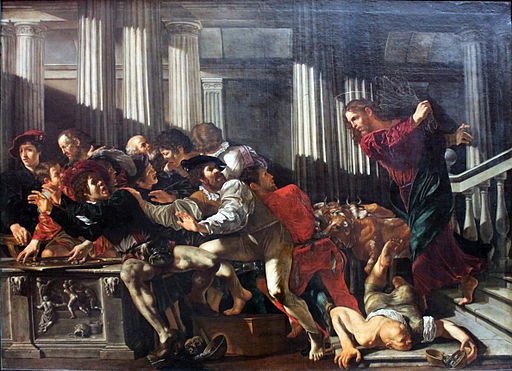
McKnight on the Politics of Jesus
McKnight’s main idea is simple: the Church is the politics of Jesus (p. 61).
In this age, God’s kingdom is manifest in the Church. Such an idea will certainly rankle some readers who are not careful to see how he qualifies that idea. The kingdom and Church are not equivalent. The Church includes the redeemed citizens of the kingdom. Thus, he is not denying the fact the God’s “kingdom” refers generally to his “reign” or domain (i.e. this world). After all, every kingdom has a person (king), people (citizens), and a place (territory).
Accordingly, if we do not talk about the Church, we are not talking about God’s kingdom.
He argues very clearly, using four categories to describe the “politic” of God, i.e. His Kingdom. It is eschatological, ecclesial, Christological, and ethical.
(1) It is eschatological in that God’s kingdom concerns the fulfillment of Israel’s story in which God achieves his creation purpose through David’s offspring.
(2) It is ecclesial because God’s kingdom only belongs to those who give their allegiance to (i.e. “believe in”) Jesus.
(3) The kingdom is Christological because it is created for and ruled by Jesus.
(4) It is ethical since Christ’s followers live according to the example and mission of Jesus.
Jesus’ politics cut across our modern-day political spectrum. He speaks of a coming theocracy unlike the sort espoused by contemporary religious extremists. It is contrary to the political vision of modern republicans, democrats, communists, and libertarians.
Christ’s biggest issue is not found on the platforms of modern political parties. Instead, Jesus calls the entire world to give allegiance to him above country, company, or any other community.
Political “power” is expressed in self-sacrificing love, not self-interested military dominance and diplomacy.
The Political Vision of the Apostle to the Nations
Timothy Gombis, in chapter 4, examines Paul’s political theology. Gombis defines “politics” as that which concerns rulership and the right rulers have to govern our lives (75). This includes the various spheres of the social order (e.g. economics, laws, etc.).
Gombis suggests the vocation of Israel shaped Paul’s political vision. Having endured exile and then occupation by the Romans, Israel looked at outsiders (Gentiles) with contempt. Yet, they were supposed to be God’s means of blessing the nations.
Accordingly, Paul confronts an “us-versus-them” mentality that held Israel captive and continues to do so today among many people. The Jews in Paul’s day were mistaken about exactly how they were supposed to be distinctive. Even in exile, they were to seek with humility the good of the places in which they lived.
By contrast, God’s politics start with the crucified Christ. In practice, this means that service and sacrifice are the normative means by which God brings restoration first to Israel and then the world. Naturally, God’s people must rethink their political categories and approach they take to bringing about change.
For the sake of brevity, I’ll wait to discuss the practical implications of these ideas in the next post. Until then, let me know what you think?
Here are a few questions to consider ––
-
- How should ecclesiology shape evangelism?
- What are implications for non-Western Christians (for example, those in China)?
- How might we rethink our church planting methodologies?
I am in the middle of a series that attempts to apply insights from the book Christian Political Witness (IVP, 2014). For previous posts, click on my review (Part 1), my review (Part 2) or click on the tag Christian Political Witness.
Photo Credit: CC 2.0/wikimedia
Related articles
 Jesus is both God and the “Son of God”
 Jesus Preached a Chinese Gospel
 Preaching the “Son of God” for Christ’s Sake
 The Biblical Story in the Context of Honor and Shame
 Explaining Different Gospel Presentations in the Bible (OT, Jesus, Paul)

Previous Post
May 15, 2014
Even Demons Believe the "Plan of Salvation" . . . and Shudder
Next Post

May 19, 2014 A “Social Gospel” Worth Preaching
Browse Our Archives
Select a Category Atonement Biblical Theology Book Reviews China Chinese Church Chinese Culture Chinese Language Collectivism Contextualization Culture (General) Ecclesiology Evangelism Gospel Honor & Shame (Face) Interpretation/Exegesis Justification/Righteousness Missiology Mission Methods One Gospel for All Nations Other Practical Contextualization Reading Romans with Eastern Eyes Resources Romans Salvation (General) Saving God's Face Seeking God's Face The Cross in Context Theological Contextualization Theological Education Theology Uncategorized
Select a Month October 2026 September 2026 August 2026 July 2026 June 2026 May 2026 April 2026 March 2026 February 2026 January 2026 December 2025 November 2025 October 2025 September 2025 August 2025 July 2025 June 2025 May 2025 April 2025 March 2025 February 2025 January 2025 December 2024 November 2024 October 2024 September 2024 August 2024 July 2024 June 2024 May 2024 April 2024 March 2024 February 2024 January 2024 December 2023 November 2023 October 2023 September 2023 August 2023 July 2023 June 2023 May 2023 April 2023 March 2023 February 2023 January 2023 December 2022 November 2022 October 2022 September 2022 August 2022 July 2022 June 2022 May 2022 April 2022 March 2022 February 2022 January 2022 December 2021 November 2021 October 2021 September 2021 August 2021 July 2021 June 2021 May 2021 April 2021 March 2021 February 2021 January 2021 December 2020 November 2020 October 2020 September 2020 August 2020 July 2020 June 2020 May 2020 April 2020 March 2020 February 2020 January 2020 December 2019 November 2019 October 2019 September 2019 August 2019 July 2019 June 2019 May 2019 April 2019 March 2019 February 2019 January 2019 December 2018 November 2018 October 2018 September 2018 August 2018 July 2018 June 2018 May 2018 April 2018 March 2018 February 2018 January 2018 December 2017 November 2017 October 2017 September 2017 August 2017 July 2017 June 2017 May 2017 April 2017 March 2017 February 2017 January 2017 December 2016 November 2016 October 2016 September 2016 August 2016 July 2016 June 2016 May 2016 April 2016 March 2016 February 2016 January 2016 December 2015 November 2015 October 2015 September 2015 August 2015 July 2015 June 2015 May 2015 April 2015 March 2015 February 2015 January 2015 December 2014 November 2014 October 2014 September 2014 August 2014 July 2014 June 2014 May 2014 April 2014 March 2014 February 2014 January 2014 December 2013 November 2013 October 2013 September 2013 August 2013 July 2013 June 2013 May 2013 April 2013 March 2013 February 2013 January 2013 December 2012 November 2012
Follow Us!
TAKE THE
Religious Wisdom Quiz
What was the name of the queen who visited Solomon?
Select your answer to see how you score.
Queen Vashti The Queen of Sheba Queen Esther Queen Jezebel
Books by This Author Books by Brad Vaughn
Related posts from Saving God's Face

Why Christianity Needs Individuals but Rejects Individualism

Glory, Violence, and the Gospel of Peace

Should We Emphasize Jesus as King to People...

Why Egalitarians Can Stay in a Complementarian Church
TRENDING AT PATHEOS Evangelical

Nearly every morning, I make the drive to Detroit with my high-school-age...

The Real AI Story Is Adoption Without Trust
Artificial intelligence has crossed a political threshold. It is no longer a...

A new article, written by Jeff Lindsay and Gale L. Pooley,...

Swimfan: Forgotten Aughts Pleasures
This is a recovery effort. In 2002, My Big Fat Greek Wedding...

Top Three Anti-Catholic Lies About Catholicism
This is my initial transcript for the video, "THE 3 WORST...

Pope Leo Celebrates Mass for Nurses & Docs...
I don't have any idea how he did it, but Pope Leo...
view all Evangelical blogs
Ad-Free & Subscriber Log-In Subscription Support
- About Us
- 2026 Calendar
- Videos
- Podcasts
- Library of World Religions
- Faith In Media Tracker
- Advertise With Us
- Write for Us
- Privacy Policy
- Terms of Service
- Do Not Sell My Data
- Contact Us
- Radiant Digital
- Manage Newsletter Subscriptions
- Unsubscribe From Notifications
- Sitemap
Copyright 2008-2026, Patheos. All rights reserved.
Subscription Support Ad-Free & Subscriber Log-In
Follow Patheos