
BuddhistCatholicContemplativeEvangelicalGeneral ChristianHinduJewishLatter-day SaintMuslimNew VisionsProgressive Christian
Beliefs
- Buddhist
- Catholic
- Contemplative
- Evangelical
- General Christian
- Hindu
- Jewish
- Latter-day Saint
- More Voices
- Muslim
- New Visions
- Pagan
- Progressive Christian
Topics
- Religion News
- Food and Religion
- Sports and Religion
- Religious Art
- Religious Music and Entertainment
- Religious Events
- History and Religion
- Style and Religion
- Politics and Religion
- Women in Religion
- Recreation Outdoors and Religion
- Business Finance and Religion
- Careers Workplace and Religion
- Education and Religion
- Family Parenting and Religion
- Health Fitness and Religion
- Home and Religion
- Relationships and Religion
- Technology and Religion
- Travel and Religion
Columnists
- Buddhist Columnists
- Business Finance and Religion Columnists
- Careers Workplace and Religion Columnists
- Catholic Columnists
- Contemplative Columnists
- Education and Religion Columnists
- Evangelists Columnists
- Family Parenting and Religion Columnists
- General Christian Columnists
- Health Fitness and Religion Columnists
- Hindu Columnists
- History and Religion Columnists
- Home and Religion Columnists
- Jewish Columnists
- More Voices Columnists
- Latter Day Columnists
- Muslim Columnists
- New Visions Columnists
- Nonreligious Columnists
- Pagan Columnists
- Politics and Religion Columnists
- Progressive Columnists
- Recreation Outdoors and Religion Columnists
- Relationships and Religion Columnists
- Religion News Columnists
- Religious Art Columnists
- Religious Events Columnists
- Religious Music and Entertainment Columnists
- Sports and Religion Columnists
- Style and Religion Columnists
- Technology and Religion Columnists
- Travel and Religion Columnists
- Women in Religion Columnists
Resource Library
- 2026 Calendar
- Library of World Religions
- The 100 Most Holy Places on Earth
- Patheos Answers
- Podcasts
- Videos
- Faith Leaders Database
- Anglican Episcopalian
- Bahai
- Baptist
- Buddhism
- Christianity
- Confucianism
- Eastern Orthodoxy
- Hinduism
- Holiness and Pentecostal
- ISKCON
- Islam
- Judaism
- Lutheran
- Methodist
- The Church of Jesus Christ of Latter-day Saints
- New Age
- Paganism
- Presbytarian and Reformed
- Protestantism
- Religion Behind the Scenes
- Roman Catholic
- Scientology
- Shia Islam
- Sikhism
- Sufism
- Sunni Islam
- Taoism
- Zen
- See all religions
Research Tools
 Ad-Free & Subscriber Log-In Subscription Support
Ad-Free & Subscriber Log-In Subscription Support
Follow Patheos 

- Trending:
- Forgiveness
- |
- Marriage
- |
- Consciousness
- |
- Death Penalty
- |
- Election
- |
- Halloween

-
Tools
-
Support the Work
- Home
- Evangelical
- Is the gospel a "how to" message?
Is the gospel a "how to" message?
Last updated on: August 14, 2015 at 7:05 am by Brad Vaughn
Is the gospel a "how to" message? 2015-08-14T07:05:19-07:00 Brad Vaughn
Patheos Explore the world's faith through different perspectives on religion and spirituality! Patheos has the views of the prevalent religions and spiritualities of the world.
The gospel is not so much the message how one gets saved; rather, it is the message one must believe in order to be saved.
If you understand the contrast I make in that last sentence, then you understand one way that we should differentiate the “plan of salvation” from the gospel itself. Most people do not separate the two; however, I suggest this is a major problem in the church today.
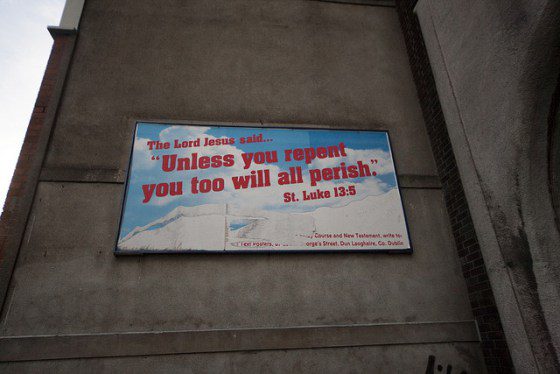 In this post, I’ll explain the distinction. Later, I’ll draw out some problematic consequences as I have seen them in practice.

Are We Preaching the Gospel or the Doctrine of Salvation?
One of the most important books I’ve read is Scot McKnight’s The King Jesus Gospel. In it, Scot helpfully reminds us not to confuse the gospel with the doctrine of salvation. Obviously, they cannot be separated, but they can be distinguished. By analogy, the words “wife” and “woman” cannot be separated too sharply. However, we can distinguish between them.

The gospel and the doctrine of salvation are overlapping categories but they are not equivalent. Therefore, it is our business to discern that difference and first preach the gospel.
Is the Plan of Salvation a Vicious Circle?
One should not confuse the gospel and the response. If we do, we run into a logical problem, which could either be called a “vicious circle” or an “infinite regression” (depending on how you frame the problem). Let me illustrate.
Greg Gilbert and Kevin DeYoung, in What is the Mission of the Church? make this critical mistake. When discussing Mark 1:15, they write,
“It is wrong to say that the gospel is the declaration that the kingdom of God has come. The gospel of the kingdom is the declaration of the kingdom of God together with the means of entering it. Remember, Jesus did not preach ‘the kingdom of God is at hand.’ He preached, ‘The kingdom of God is at hand; therefore repent and believe!’ ” (110–11).
They misquote the end of the verse. It should say, “. . . repent and believe the gospel.”
Why does their misquote matter?

In short, they would have disproven their own point if they had quoted the passage correctly. Observe how the grammar proves the distinction between the gospel and our response.
In other words, the content of the gospel and the response to the gospel are separate ideas and should not be collapsed into one.

Gilbert and DeYoung assert the gospel itself includes the way we are saved, i.e. if we respond with faith and repentance, we are saved. However, if this is Jesus’ meaning, what actually is Jesus saying? We can do some simple substitution of terms.
“believe the gospel = believe [that by repenting & believing the gospel, we are saved].“
But now we run into a problem. The thing we are supposed to believe (i.e. the gospel), includes the need to believe the gospel! Accordingly, if Gilbert and DeYoung are correct, then Jesus commands something like this:
“. . . repent and believe that you can repent and believe the truth that you can repent and believe . . . .” (and so the cycle goes on).
I know that last sentence makes little to no sense. That’s the point.
(I tried to make clear what I think their misquote makes unclear by italicizing the word “that” in the quotation. I do this to signify the content that one is supposed to believe. In Mark 1:15, Jesus inserts “the gospel.” However, if the gospel is a “how-to” message, then I could simply plug in a conditional if-then statement in its place.)
What results? If we must believe the gospel is a conditional statement wherein we are saved if we believe the gospel, then we end up with a vicious cycle. We wind up with an infinite loop.
The “gospel” (as the Bible uses the word) is not a “how-to” concept expressed in the form of a conditional sentence (i.e. “If . . . then . . .”).
Instead, it is a declaration that implies a command.
The gospel is a declaration of Jesus’ kingship, implying a summons to allegiance.
Consider an example from American history. Abraham’s Lincoln’s Emancipation Proclamation legally freed the slaves who lived in Confederate states. Lincoln, via executive order, commanded that there be a new reality. He was not merely giving information about how slaves could possibly be free.
Photo Credit: William Murphy/flickr
Related articles
 Jesus Preached a Chinese Gospel
 Explaining Different Gospel Presentations in the Bible (OT, Jesus, Paul)
 Chinese Evangelism: Telling Only Half the Story?
 What does the fox say…about the gospel?
 Changing the Gospel or Just Our Perspective?

Previous Post

May 6, 2014
A Review of Christian Political Witness (Part 2)
Next Post

May 8, 2014 The Political Witness of the Chinese Church
Browse Our Archives
Select a Category Atonement Biblical Theology Book Reviews China Chinese Church Chinese Culture Chinese Language Collectivism Contextualization Culture (General) Ecclesiology Evangelism Gospel Honor & Shame (Face) Interpretation/Exegesis Justification/Righteousness Missiology Mission Methods One Gospel for All Nations Other Practical Contextualization Reading Romans with Eastern Eyes Resources Romans Salvation (General) Saving God's Face Seeking God's Face The Cross in Context Theological Contextualization Theological Education Theology Uncategorized
Select a Month October 2026 September 2026 August 2026 July 2026 June 2026 May 2026 April 2026 March 2026 February 2026 January 2026 December 2025 November 2025 October 2025 September 2025 August 2025 July 2025 June 2025 May 2025 April 2025 March 2025 February 2025 January 2025 December 2024 November 2024 October 2024 September 2024 August 2024 July 2024 June 2024 May 2024 April 2024 March 2024 February 2024 January 2024 December 2023 November 2023 October 2023 September 2023 August 2023 July 2023 June 2023 May 2023 April 2023 March 2023 February 2023 January 2023 December 2022 November 2022 October 2022 September 2022 August 2022 July 2022 June 2022 May 2022 April 2022 March 2022 February 2022 January 2022 December 2021 November 2021 October 2021 September 2021 August 2021 July 2021 June 2021 May 2021 April 2021 March 2021 February 2021 January 2021 December 2020 November 2020 October 2020 September 2020 August 2020 July 2020 June 2020 May 2020 April 2020 March 2020 February 2020 January 2020 December 2019 November 2019 October 2019 September 2019 August 2019 July 2019 June 2019 May 2019 April 2019 March 2019 February 2019 January 2019 December 2018 November 2018 October 2018 September 2018 August 2018 July 2018 June 2018 May 2018 April 2018 March 2018 February 2018 January 2018 December 2017 November 2017 October 2017 September 2017 August 2017 July 2017 June 2017 May 2017 April 2017 March 2017 February 2017 January 2017 December 2016 November 2016 October 2016 September 2016 August 2016 July 2016 June 2016 May 2016 April 2016 March 2016 February 2016 January 2016 December 2015 November 2015 October 2015 September 2015 August 2015 July 2015 June 2015 May 2015 April 2015 March 2015 February 2015 January 2015 December 2014 November 2014 October 2014 September 2014 August 2014 July 2014 June 2014 May 2014 April 2014 March 2014 February 2014 January 2014 December 2013 November 2013 October 2013 September 2013 August 2013 July 2013 June 2013 May 2013 April 2013 March 2013 February 2013 January 2013 December 2012 November 2012
Follow Us!
TAKE THE
Religious Wisdom Quiz
Which disciple of Jesus was a former zealot?
Select your answer to see how you score.
Judas Iscariot Bartholomew Thaddeus Simon
Books by This Author Books by Brad Vaughn
Related posts from Saving God's Face

Glory, Violence, and the Gospel of Peace

Should We Emphasize Jesus as King to People...
Peter teaches that weakness and setbacks are not...

Should multiplication be the goal of missions?
TRENDING AT PATHEOS Evangelical

When Halloween Unmasks Married Hearts
Written by Dr. David K. Ewen from Eternal Truth Bible College Behind...

Aristotle. He’s been called the father of logic, the father of the...

Methodist Central Hall and Westminster Abbey
Situated on the same square is Methodist Central Hall and Westminster Abbey. ...

57th Dove Awards Honor Dolly Parton, Crown New...
On gospel music’s biggest night, the 57th annual GMA Dove Awards honored...

The First Eucharistic Controversy: Christ’s Real Presence
For Catholics, the Eucharist is the source and summit of the Christian...

What a Stop Sign Can Teach Us About...
How to Make a Decision When You Can't Hear God Main point:...
view all Evangelical blogs
Ad-Free & Subscriber Log-In Subscription Support
- About Us
- 2026 Calendar
- Videos
- Podcasts
- Library of World Religions
- Faith In Media Tracker
- Advertise With Us
- Write for Us
- Privacy Policy
- Terms of Service
- Do Not Sell My Data
- Contact Us
- Radiant Digital
- Manage Newsletter Subscriptions
- Unsubscribe From Notifications
- Sitemap
Copyright 2008-2026, Patheos. All rights reserved.
Subscription Support Ad-Free & Subscriber Log-In
Follow Patheos