
BuddhistCatholicContemplativeEvangelicalGeneral ChristianHinduJewishLatter-day SaintMuslimNew VisionsProgressive Christian
Beliefs
- Buddhist
- Catholic
- Contemplative
- Evangelical
- General Christian
- Hindu
- Jewish
- Latter-day Saint
- More Voices
- Muslim
- New Visions
- Pagan
- Progressive Christian
Topics
- Religion News
- Food and Religion
- Sports and Religion
- Religious Art
- Religious Music and Entertainment
- Religious Events
- History and Religion
- Style and Religion
- Politics and Religion
- Women in Religion
- Recreation Outdoors and Religion
- Business Finance and Religion
- Careers Workplace and Religion
- Education and Religion
- Family Parenting and Religion
- Health Fitness and Religion
- Home and Religion
- Relationships and Religion
- Technology and Religion
- Travel and Religion
Columnists
- Buddhist Columnists
- Business Finance and Religion Columnists
- Careers Workplace and Religion Columnists
- Catholic Columnists
- Contemplative Columnists
- Education and Religion Columnists
- Evangelists Columnists
- Family Parenting and Religion Columnists
- General Christian Columnists
- Health Fitness and Religion Columnists
- Hindu Columnists
- History and Religion Columnists
- Home and Religion Columnists
- Jewish Columnists
- More Voices Columnists
- Latter Day Columnists
- Muslim Columnists
- New Visions Columnists
- Nonreligious Columnists
- Pagan Columnists
- Politics and Religion Columnists
- Progressive Columnists
- Recreation Outdoors and Religion Columnists
- Relationships and Religion Columnists
- Religion News Columnists
- Religious Art Columnists
- Religious Events Columnists
- Religious Music and Entertainment Columnists
- Sports and Religion Columnists
- Style and Religion Columnists
- Technology and Religion Columnists
- Travel and Religion Columnists
- Women in Religion Columnists
Resource Library
- 2026 Calendar
- Library of World Religions
- The 100 Most Holy Places on Earth
- Patheos Answers
- Podcasts
- Videos
- Faith Leaders Database
- Anglican Episcopalian
- Bahai
- Baptist
- Buddhism
- Christianity
- Confucianism
- Eastern Orthodoxy
- Hinduism
- Holiness and Pentecostal
- ISKCON
- Islam
- Judaism
- Lutheran
- Methodist
- The Church of Jesus Christ of Latter-day Saints
- New Age
- Paganism
- Presbytarian and Reformed
- Protestantism
- Religion Behind the Scenes
- Roman Catholic
- Scientology
- Shia Islam
- Sikhism
- Sufism
- Sunni Islam
- Taoism
- Zen
- See all religions
Research Tools
 Ad-Free & Subscriber Log-In Subscription Support
Ad-Free & Subscriber Log-In Subscription Support
Follow Patheos 

- Trending:
- Forgiveness
- |
- Marriage
- |
- Consciousness
- |
- Death Penalty
- |
- Election
- |
- Halloween

-
Tools
-
Support the Work
- Home
- Evangelical
- Can we deny the truth when affirming Christ’s deity?
Can we deny the truth when affirming Christ’s deity?
Last updated on: August 12, 2015 at 7:23 am by Brad Vaughn
Can we deny the truth when affirming Christ’s deity? 2015-08-12T07:23:41-07:00 Brad Vaughn
Patheos Explore the world's faith through different perspectives on religion and spirituality! Patheos has the views of the prevalent religions and spiritualities of the world.
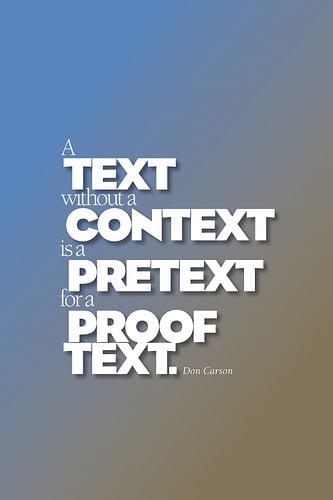
In a previous post, I argued that the phrase “son of God” itself does not imply deity. To be clear, I wholeheartedly affirm that Jesus is God incarnate. However, that does not excuse our misusing a key biblical phrase. In my last post, I explained some of the practical reasons why this discussion matters.
In this post, I want to emphasize another reason why this conversation matters. This misunderstanding as to the meaning of the phrase “son of God” highlights a fundamental flaw in the way we view Scripture and, specifically, our approach to interpreting the Bible.
Don’t Misuse Scripture to Prove the Truth
During this Easter season, a lot of people will probably emphasize the point that Jesus is the “son of God.” By that however, they mean that Jesus is divine. You might ask, “So what’s the problem?” The problem is simply this:
When we settle for what is merely true (Jesus has a divine nature), then we miss out on what the phrase actually means.
When the biblical writers use that title, “son of God”, they are not intending to primarily denote Jesus’ deity. The fact that Jesus is divine does not give us the right to force the phrase “son of God” to carry that meaning. To do so is to assume authority over the Bible itself.
I recently read a poignant line in N. T. Wright’s recent work Pauline Perspectives: Essays on Paul:
“By what right do we take scripture and find ways of making it talk about the things we want to talk about?” (377)
In other words, we have no right to misuse the Bible, even in order to prove something true.
One reason this conversation matters is that it signals a common tendency to read our systematic theology into places in the Bible that it doesn’t belong. If we do that with such a key phrase like “son of God,” where else might we confuse systematic theology and biblical theology?
Let me rephrase the question––
How often might we be applying a right doctrine to a wrong text?
Misapply a right truth to a wrong text fosters bad habits in both ourselves and in those whom we serve. When interpreting the Bible, we need to slow ourselves down and pay attention to the biblical context. Our tendency is to assume our definitions are the same as that of the biblical author’s. This is simply not the case.
I love a phrase John Walton often uses. He says the Bible “does communicate to us and it was written for us, and for all humankind. But it was not written to us.” This is such an important point. We cannot assume that we share the same worldview as the original authors. Thus, we cannot immediately that ancients used the phrase “son of God” in the same we would.
Theological Infallibility?
Many who read this may be quite content to use the phrase “son of God” to emphasize Jesus’ deity. They might strongly react against what I have written, even though I adamantly affirm Jesus’ deity. Why? They think that are protecting a fundamental doctrine of Scripture.
Sadly however, they do not realize the cost that must be paid. When we say that “son of God” inherently refers to Jesus’ deity, the first causality is the Bible itself.
Piece by piece, we change the author’s original intent.
We might subtly switch major and minor points of emphasis. In this way, our systematizing rearranges the biblical story. In the process, it becomes very easy to confuse our theology for the biblical message itself. We can have wonderful theology and teach completely true doctrine and yet still be wrong time and time again when it comes to particular passages.
What does this mean for our doctrine of Scripture? Potentially, one unwittingly confuses biblical infallibility with interpretive infallibility. By confusing the two, conservatives commit an error similar to that of liberals.
How so?
Do Conservatives Act Like Liberals?
The basic problem conservatives have with liberals is that liberals selectively pick and choose what they will accept as God’s word. Therefore, they like to stuff about loving each other but not the parts about miracles, resurrection, etc.
Conservatives can be guilty of an opposite albeit similar problem. Conservatives rightly want to protect certain truths, like Christ’s deity. However, if we make texts affirm Christ’s deity when that was never their intention, we functionally deny what they biblical text actually saying.
We may not overtly deny the truth; however, our silence on the main point still shows a certain selectivity that does not honor God’s revelation. When we don’t major on the major points of a given passage, those truths slowly disappear from our consciousness and thus our teaching.
I obviously think liberal denials are far worse that conservative silence. Nevertheless, neither respects the text the way we ought. We are messengers of the Son of God, the King of kings. We should seek to convey his message, not ours, not matter how true it is.
Photo Credit: Brett Jordon/Flickr
Related articles
 What Theologians Are Saying About the Glory of God
 “What does the text mean?” and other unhelpful questions
 My Latest Article on Romans Now Published in JETS

Previous Post
April 16, 2014
Don’t settle for a god when you can have a king
Next Post

April 24, 2014 Using Stories in Honor-Shame Cultures
Browse Our Archives
Select a Category Atonement Biblical Theology Book Reviews China Chinese Church Chinese Culture Chinese Language Collectivism Contextualization Culture (General) Ecclesiology Evangelism Gospel Honor & Shame (Face) Interpretation/Exegesis Justification/Righteousness Missiology Mission Methods One Gospel for All Nations Other Practical Contextualization Reading Romans with Eastern Eyes Resources Romans Salvation (General) Saving God's Face Seeking God's Face The Cross in Context Theological Contextualization Theological Education Theology Uncategorized
Select a Month October 2026 September 2026 August 2026 July 2026 June 2026 May 2026 April 2026 March 2026 February 2026 January 2026 December 2025 November 2025 October 2025 September 2025 August 2025 July 2025 June 2025 May 2025 April 2025 March 2025 February 2025 January 2025 December 2024 November 2024 October 2024 September 2024 August 2024 July 2024 June 2024 May 2024 April 2024 March 2024 February 2024 January 2024 December 2023 November 2023 October 2023 September 2023 August 2023 July 2023 June 2023 May 2023 April 2023 March 2023 February 2023 January 2023 December 2022 November 2022 October 2022 September 2022 August 2022 July 2022 June 2022 May 2022 April 2022 March 2022 February 2022 January 2022 December 2021 November 2021 October 2021 September 2021 August 2021 July 2021 June 2021 May 2021 April 2021 March 2021 February 2021 January 2021 December 2020 November 2020 October 2020 September 2020 August 2020 July 2020 June 2020 May 2020 April 2020 March 2020 February 2020 January 2020 December 2019 November 2019 October 2019 September 2019 August 2019 July 2019 June 2019 May 2019 April 2019 March 2019 February 2019 January 2019 December 2018 November 2018 October 2018 September 2018 August 2018 July 2018 June 2018 May 2018 April 2018 March 2018 February 2018 January 2018 December 2017 November 2017 October 2017 September 2017 August 2017 July 2017 June 2017 May 2017 April 2017 March 2017 February 2017 January 2017 December 2016 November 2016 October 2016 September 2016 August 2016 July 2016 June 2016 May 2016 April 2016 March 2016 February 2016 January 2016 December 2015 November 2015 October 2015 September 2015 August 2015 July 2015 June 2015 May 2015 April 2015 March 2015 February 2015 January 2015 December 2014 November 2014 October 2014 September 2014 August 2014 July 2014 June 2014 May 2014 April 2014 March 2014 February 2014 January 2014 December 2013 November 2013 October 2013 September 2013 August 2013 July 2013 June 2013 May 2013 April 2013 March 2013 February 2013 January 2013 December 2012 November 2012
Follow Us!
TAKE THE
Religious Wisdom Quiz
I am bread from heaven that appeared with the morning dew six days a week. What am I?
Select your answer to see how you score.
Bread of angels Manna God's provision Heavenly food
Books by This Author Books by Brad Vaughn
Related posts from Saving God's Face

Should We Emphasize Jesus as King to People...

Why Egalitarians Can Stay in a Complementarian Church

"Why Have You Forsaken Me?” and the Problem...

What motivates obedience when I don’t want to...
TRENDING AT PATHEOS Evangelical

When Halloween Unmasks Married Hearts
Written by Dr. David K. Ewen from Eternal Truth Bible College Behind...

Aristotle. He’s been called the father of logic, the father of the...

Methodist Central Hall and Westminster Abbey
Situated on the same square is Methodist Central Hall and Westminster Abbey. ...

57th Dove Awards Honor Dolly Parton, Crown New...
On gospel music’s biggest night, the 57th annual GMA Dove Awards honored...

The First Eucharistic Controversy: Christ’s Real Presence
For Catholics, the Eucharist is the source and summit of the Christian...

What a Stop Sign Can Teach Us About...
How to Make a Decision When You Can't Hear God Main point:...
view all Evangelical blogs
Ad-Free & Subscriber Log-In Subscription Support
- About Us
- 2026 Calendar
- Videos
- Podcasts
- Library of World Religions
- Faith In Media Tracker
- Advertise With Us
- Write for Us
- Privacy Policy
- Terms of Service
- Do Not Sell My Data
- Contact Us
- Radiant Digital
- Manage Newsletter Subscriptions
- Unsubscribe From Notifications
- Sitemap
Copyright 2008-2026, Patheos. All rights reserved.
Subscription Support Ad-Free & Subscriber Log-In
Follow Patheos