
BuddhistCatholicContemplativeEvangelicalGeneral ChristianHinduJewishLatter-day SaintMuslimNew VisionsProgressive Christian
Beliefs
- Buddhist
- Catholic
- Contemplative
- Evangelical
- General Christian
- Hindu
- Jewish
- Latter-day Saint
- More Voices
- Muslim
- New Visions
- Pagan
- Progressive Christian
Topics
- Religion News
- Food and Religion
- Sports and Religion
- Religious Art
- Religious Music and Entertainment
- Religious Events
- History and Religion
- Style and Religion
- Politics and Religion
- Women in Religion
- Recreation Outdoors and Religion
- Business Finance and Religion
- Careers Workplace and Religion
- Education and Religion
- Family Parenting and Religion
- Health Fitness and Religion
- Home and Religion
- Relationships and Religion
- Technology and Religion
- Travel and Religion
Columnists
- Buddhist Columnists
- Business Finance and Religion Columnists
- Careers Workplace and Religion Columnists
- Catholic Columnists
- Contemplative Columnists
- Education and Religion Columnists
- Evangelists Columnists
- Family Parenting and Religion Columnists
- General Christian Columnists
- Health Fitness and Religion Columnists
- Hindu Columnists
- History and Religion Columnists
- Home and Religion Columnists
- Jewish Columnists
- More Voices Columnists
- Latter Day Columnists
- Muslim Columnists
- New Visions Columnists
- Nonreligious Columnists
- Pagan Columnists
- Politics and Religion Columnists
- Progressive Columnists
- Recreation Outdoors and Religion Columnists
- Relationships and Religion Columnists
- Religion News Columnists
- Religious Art Columnists
- Religious Events Columnists
- Religious Music and Entertainment Columnists
- Sports and Religion Columnists
- Style and Religion Columnists
- Technology and Religion Columnists
- Travel and Religion Columnists
- Women in Religion Columnists
Resource Library
- 2026 Calendar
- Library of World Religions
- The 100 Most Holy Places on Earth
- Patheos Answers
- Podcasts
- Videos
- Faith Leaders Database
- Anglican Episcopalian
- Bahai
- Baptist
- Buddhism
- Christianity
- Confucianism
- Eastern Orthodoxy
- Hinduism
- Holiness and Pentecostal
- ISKCON
- Islam
- Judaism
- Lutheran
- Methodist
- The Church of Jesus Christ of Latter-day Saints
- New Age
- Paganism
- Presbytarian and Reformed
- Protestantism
- Religion Behind the Scenes
- Roman Catholic
- Scientology
- Shia Islam
- Sikhism
- Sufism
- Sunni Islam
- Taoism
- Zen
- See all religions
Research Tools
 Ad-Free & Subscriber Log-In Subscription Support
Ad-Free & Subscriber Log-In Subscription Support
Follow Patheos 

- Trending:
- Forgiveness
- |
- Marriage
- |
- Consciousness
- |
- Death Penalty
- |
- Election
- |
- Halloween

-
Tools
-
Support the Work
- Home
- Evangelical
- Interpreting Scripture When You Only Have a Bible (Steps 1 and 2)
Interpreting Scripture When You Only Have a Bible (Steps 1 and 2)
Last updated on: December 31, 2013 at 8:22 am by Brad Vaughn
Interpreting Scripture When You Only Have a Bible (Steps 1 and 2) 2013-12-31T08:22:56-07:00 Brad Vaughn
Patheos Explore the world's faith through different perspectives on religion and spirituality! Patheos has the views of the prevalent religions and spiritualities of the world.
Practically speaking, how do we interpret the Bible when we only have the Bible? This means no commentaries, no seminary education, no footnotes, etc.
 For Part 1 of the series “When You Only Have a Bible,” click here. Check out Part 2 talked about unhelpful but common approaches to interpretation.
I have created a bookmark (in color or black-white) that lays out a process whereby anyone can interpret the Bible in a way that corrects problems I mentioned in the last post (concerning other interpretation methods).
The following model was originally designed in Chinese. As a result, the verbiage was designed so that people could easily memorize the steps. I have yet to figure out what memory devices could be used in English to teach the same content. Still working on it . . . .
The process is designed to makes us slow down! It has five steps that could be summarized in this way:
述-印-境-提-释 (shù-yìn-jìng-tí-shì)
Today, I’ll list the first two steps.
1. Restate the passage (重述, chóngshù)
In other words, use your own words to repeat and retell what the author say; however, do not interject your own interpretation. As much as possible, don’t add your own understanding to the passage. If the meaning of a phrase or word is unclear, then simply restate the language it uses.
I find people initially really resist this step at first. Eventually, they come to appreciate it because the purpose is to slow us down so that we notice the subtle transitions, the author’s imagery and word choice, as well as any other details we missed in our initial casual read.
When you actually have to rephrase a text (being careful not to interpret it), you notice more things. Even small children can parrot what they don’t yet understand. In the same, way anyone can do this step.
It’s not complicated. It simply requires the humility to be patience and slow yourself down.
2. What are your impressions of the text? (印象, yìnxiàng)
Specifically, we want to discover our own assumptions that we bring to the text. Perhaps, we have read a book or heard a pastor teach on the subject. We’ve “heard” someone say something that seems like a reasonable interpretation. This type of question is ignored by typical interpretation methods
Why is this question utterly critical? Although the original meaning of the text doesn’t change, our interpretation of a passage certainly might shift depending on our assumption, background, and culture. We must be humble enough to distinguish what the Bible says and what we think it says (i.e. theology). Our knowledge is limited. Sin and misunderstanding can subtly distort our reading of the text.
In a Chinese context, this question especially has value in that there are no wrong answers! We are not asking what they text means. We are asking: On the surface, what does it appear to say? The only possible “wrong” answer is if someone lies and says something that is not their impression.
I’ve heard people dismiss this concern because they say that Holy Spirit guides us so as to reveal truth. Frankly, this objection is naïve in this respect: we obviously know that Christians disagree, get things wrong, and misinterpret verses. Having the Spirit does not ensure omniscience. We need to be careful not to use the “Holy Spirit” card as a subtle way of validating our own interpretation against someone else’s.
If this is so, then we should take the problem more seriously than I think we have in the past. We do so by adding a step at the front of our study in order to make our assumptions as clear as possible. Perhaps, our impressions are correct; however, we still need to test them. It may be the case that we have assumed something that is true but it may be the minor point of the passage and not the major idea. It is quite easy to confuse right/wrong and major/minor. We must guard against compromising the gospel by settling for truth.
Essentially, my book Saving God’s Face aims at dealing with this very question, i.e. the influence of the reader on his or her own theology.
Related articles
- Why China Matters for Doing Theology: Biblical Truth (www.patheos.com/blogs/jacksonwu)
- A Model to Explain the Entire Bible (a new series) (www.patheos.com/blogs/jacksonwu)
Previous Post

December 23, 2013
What Theologians Are Saying About the Glory of God
Next Post
January 7, 2014 When You Only Have a Bible: Context and Questions (Steps 3 and 4)
Browse Our Archives
Select a Category Atonement Biblical Theology Book Reviews China Chinese Church Chinese Culture Chinese Language Collectivism Contextualization Culture (General) Ecclesiology Evangelism Gospel Honor & Shame (Face) Interpretation/Exegesis Justification/Righteousness Missiology Mission Methods One Gospel for All Nations Other Practical Contextualization Reading Romans with Eastern Eyes Resources Romans Salvation (General) Saving God's Face Seeking God's Face The Cross in Context Theological Contextualization Theological Education Theology Uncategorized
Select a Month October 2026 September 2026 August 2026 July 2026 June 2026 May 2026 April 2026 March 2026 February 2026 January 2026 December 2025 November 2025 October 2025 September 2025 August 2025 July 2025 June 2025 May 2025 April 2025 March 2025 February 2025 January 2025 December 2024 November 2024 October 2024 September 2024 August 2024 July 2024 June 2024 May 2024 April 2024 March 2024 February 2024 January 2024 December 2023 November 2023 October 2023 September 2023 August 2023 July 2023 June 2023 May 2023 April 2023 March 2023 February 2023 January 2023 December 2022 November 2022 October 2022 September 2022 August 2022 July 2022 June 2022 May 2022 April 2022 March 2022 February 2022 January 2022 December 2021 November 2021 October 2021 September 2021 August 2021 July 2021 June 2021 May 2021 April 2021 March 2021 February 2021 January 2021 December 2020 November 2020 October 2020 September 2020 August 2020 July 2020 June 2020 May 2020 April 2020 March 2020 February 2020 January 2020 December 2019 November 2019 October 2019 September 2019 August 2019 July 2019 June 2019 May 2019 April 2019 March 2019 February 2019 January 2019 December 2018 November 2018 October 2018 September 2018 August 2018 July 2018 June 2018 May 2018 April 2018 March 2018 February 2018 January 2018 December 2017 November 2017 October 2017 September 2017 August 2017 July 2017 June 2017 May 2017 April 2017 March 2017 February 2017 January 2017 December 2016 November 2016 October 2016 September 2016 August 2016 July 2016 June 2016 May 2016 April 2016 March 2016 February 2016 January 2016 December 2015 November 2015 October 2015 September 2015 August 2015 July 2015 June 2015 May 2015 April 2015 March 2015 February 2015 January 2015 December 2014 November 2014 October 2014 September 2014 August 2014 July 2014 June 2014 May 2014 April 2014 March 2014 February 2014 January 2014 December 2013 November 2013 October 2013 September 2013 August 2013 July 2013 June 2013 May 2013 April 2013 March 2013 February 2013 January 2013 December 2012 November 2012
Follow Us!
TAKE THE
Religious Wisdom Quiz
In Jude, what did the Lord do to the people he saved from Egypt who did not believe?
Select your answer to see how you score.
Punished them Cast them into the wilderness Let them wander forty years Destroyed them
Books by This Author Books by Brad Vaughn
Related posts from Saving God's Face

Why Christianity Needs Individuals but Rejects Individualism

Glory, Violence, and the Gospel of Peace
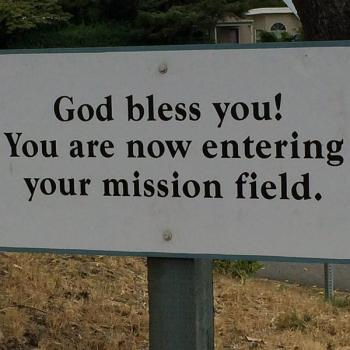
“I’ll be wherever you call me.”

Biblical Foundations for Local Embodiment
TRENDING AT PATHEOS Evangelical

'Super Scam Me' Exposes AI Jon Bon Jovi...
Leslie Pickett believed she was in a relationship with Jon Bon Jovi....

The Brazilian Remake of Kendricks' 'Flywheel' Opens in...
“Flywheel,” the story that launched the Kendrick Brothers’ filmmaking career is getting...

The Dangers of Gradual Accommodation (Winking at Sin)
Recently, the “law of gradualness” resurfaced during the opening of a weeklong,...

The Iron Gates and the Lion of the...
Yesterday, I didn't finish my report about, well, yesterday. So I'll...

The Image: On the Horror of Capitalism and...
The Image Then went the Pharisees, and took counsel how they might...

We are approaching the date of our new American national holiday: October...
view all Evangelical blogs
Ad-Free & Subscriber Log-In Subscription Support
- About Us
- 2026 Calendar
- Videos
- Podcasts
- Library of World Religions
- Faith In Media Tracker
- Advertise With Us
- Write for Us
- Privacy Policy
- Terms of Service
- Do Not Sell My Data
- Contact Us
- Radiant Digital
- Manage Newsletter Subscriptions
- Unsubscribe From Notifications
- Sitemap
Copyright 2008-2026, Patheos. All rights reserved.
Subscription Support Ad-Free & Subscriber Log-In
Follow Patheos