
BuddhistCatholicContemplativeEvangelicalGeneral ChristianHinduJewishLatter-day SaintMuslimNew VisionsProgressive Christian
Beliefs
- Buddhist
- Catholic
- Contemplative
- Evangelical
- General Christian
- Hindu
- Jewish
- Latter-day Saint
- More Voices
- Muslim
- New Visions
- Pagan
- Progressive Christian
Topics
- Religion News
- Food and Religion
- Sports and Religion
- Religious Art
- Religious Music and Entertainment
- Religious Events
- History and Religion
- Style and Religion
- Politics and Religion
- Women in Religion
- Recreation Outdoors and Religion
- Business Finance and Religion
- Careers Workplace and Religion
- Education and Religion
- Family Parenting and Religion
- Health Fitness and Religion
- Home and Religion
- Relationships and Religion
- Technology and Religion
- Travel and Religion
Columnists
- Buddhist Columnists
- Business Finance and Religion Columnists
- Careers Workplace and Religion Columnists
- Catholic Columnists
- Contemplative Columnists
- Education and Religion Columnists
- Evangelists Columnists
- Family Parenting and Religion Columnists
- General Christian Columnists
- Health Fitness and Religion Columnists
- Hindu Columnists
- History and Religion Columnists
- Home and Religion Columnists
- Jewish Columnists
- More Voices Columnists
- Latter Day Columnists
- Muslim Columnists
- New Visions Columnists
- Nonreligious Columnists
- Pagan Columnists
- Politics and Religion Columnists
- Progressive Columnists
- Recreation Outdoors and Religion Columnists
- Relationships and Religion Columnists
- Religion News Columnists
- Religious Art Columnists
- Religious Events Columnists
- Religious Music and Entertainment Columnists
- Sports and Religion Columnists
- Style and Religion Columnists
- Technology and Religion Columnists
- Travel and Religion Columnists
- Women in Religion Columnists
Resource Library
- 2026 Calendar
- Library of World Religions
- The 100 Most Holy Places on Earth
- Patheos Answers
- Podcasts
- Videos
- Faith Leaders Database
- Anglican Episcopalian
- Bahai
- Baptist
- Buddhism
- Christianity
- Confucianism
- Eastern Orthodoxy
- Hinduism
- Holiness and Pentecostal
- ISKCON
- Islam
- Judaism
- Lutheran
- Methodist
- The Church of Jesus Christ of Latter-day Saints
- New Age
- Paganism
- Presbytarian and Reformed
- Protestantism
- Religion Behind the Scenes
- Roman Catholic
- Scientology
- Shia Islam
- Sikhism
- Sufism
- Sunni Islam
- Taoism
- Zen
- See all religions
Research Tools
 Ad-Free & Subscriber Log-In Subscription Support
Ad-Free & Subscriber Log-In Subscription Support
Follow Patheos 

- Trending:
- Forgiveness
- |
- Marriage
- |
- Consciousness
- |
- Death Penalty
- |
- Election
- |
- Halloween

-
Tools
-
Support the Work
- Home
- Evangelical
- A Chinese Perspective on Justification
A Chinese Perspective on Justification
Last updated on: August 14, 2015 at 7:53 am by Brad Vaughn
A Chinese Perspective on Justification 2015-08-14T07:53:50-07:00 Brad Vaughn
Patheos Explore the world's faith through different perspectives on religion and spirituality! Patheos has the views of the prevalent religions and spiritualities of the world.
How would I outline a Chinese perspective of justification?

I could write a book on this, so I’ll have to limit this sketch to a few simple points. Some of these ideas or developed more in chapter 5 of *Saving God’s Face.*First, I need to make one clarification. I’m prescribing what should be the case. I’m not describing what Chinese pastors actually preach. This is because evangelical pastors in China have thoroughly western theologies.
Why is this? Let’s not forget. Chinese have great respect for tradition and value conformity. If missionaries don’t understand and do contextualization, then the average pastor will make sure to rigidly affirm tradition. It’s imbedded into the Chinese psyche.
Identity: Who are Insiders and Outsiders?
A Chinese perspective of justification would squarely answer questions about identity. For example, Who are insiders? Who are outsiders? Where do I belong?
Like the Jews, Chinese need to reckon with ethnocentrism and/or nationalism. I frequently ask my students whether they are Chinese Christians or Christian Chinese. The noun constitutes one’s identity; the adjective is simply one characteristic among others that could be stated. I ask them what would make them angrier more quickly: if someone said something bad about Christ or if people insulted China. You would be saddened to know the responses I get.
The identity question extends to various areas, like one’s hometown, family name, position in a company, school, rank in a class, etc. In short, we need to deal with all forms of ascribed honor that undermine one’s identification with Christ and his people.
Ultimately, we should point people to the human family, not allowing them to settle for some local, cultural, or national identity. After all, the one true God is the Father who promises to make for himself sons and daughters from among all nations.
Boasting: Who do I want to please?
In some form or another, Scripture often speaks of faith or the lack of faith in terms of boasting/rejoicing. In essence, what do we celebrate? Where do we find our own sense of worth?
Succinctly, justification raises the question, “Whom do you want to please?” There is a direct relationship between our identity and our standard of values. Both who we think we are and who we want to be determine what we regard as praiseworthy and shameful. In the West, people use the phrase “people pleasing” (typically in a negative sense). This is the constant problem we find with the Jewish leaders in the New Testament. They wanted to praise of man. Jesus said they could not have faith because they did not seek the praise of God (John 5:44).
At the level of the heart, this is the problem that Paul wants to solve when he talks about justification. A survey of Romans makes the point obvious beyond dispute. Notice for example, how Paul sets up the book in Rom 1:18-28; Rom 2:23-24, 28-29. The Jews boasted in their ethnic identity and law-keeping. Accordingly, they were unrighteous.
 Faith: Loyalty is More than Belief
The royal context of Romans is often under stressed. First of all, we need to keep in mind that the word “gospel” (in the ancient world) was a royal announcement, declaring the birth, ascension, or victory of a king. It wasn’t a “religious” term per say until Christianity adopted it. Second, the entire book opens with the proclamation that Jesus is king (Rom 1:1–4). Paul conveys this idea by using a few different expressions, such as “descended of David,” “Son of God,” “Christ,” and “Lord.”
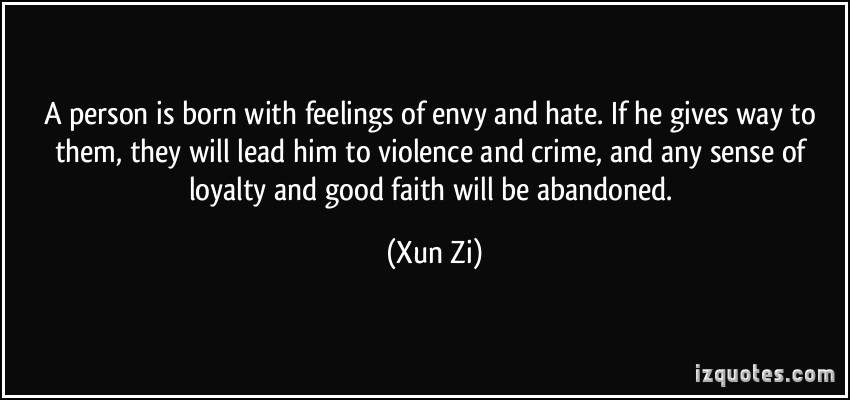
Naturally, we can understand why the Greek word for faith very often carries the idea of “loyalty.” However, around the world, people think of “faith” as mere “belief.” This simply feeds the notion that Christianity is a private affair. Chinese grasp the importance of authority. They know what it means to obey leaders and conform the a group. Who better is there to understand the biblical meaning of faith in King Jesus?
A Chinese perspective on justification will emphasize the point that Jesus saves those who give their allegiance to him. Such followers will seek to please him and will identify with God’s people, regardless of their national and cultural identity.
So much more to say on this topic. Perhaps in a book to come.
Photo Credit (Chinese character): CC 2.0/wikipedia
Related articles
- 10 Troubling Tendencies in Chinese Evangelism (www.patheos.com/blogs/jacksonwu)
- The Biblical Story in the Context of Honor and Shame (www.patheos.com/blogs/jacksonwu)
- We cheat students when we confuse grace and wrath (www.patheos.com/blogs/jacksonwu)
Previous Post

October 22, 2013
Theology is Like Making a Baby
Next Post
October 28, 2013 How many posts per week? (a poll)
Browse Our Archives
Select a Category Atonement Biblical Theology Book Reviews China Chinese Church Chinese Culture Chinese Language Collectivism Contextualization Culture (General) Ecclesiology Evangelism Gospel Honor & Shame (Face) Interpretation/Exegesis Justification/Righteousness Missiology Mission Methods One Gospel for All Nations Other Practical Contextualization Reading Romans with Eastern Eyes Resources Romans Salvation (General) Saving God's Face Seeking God's Face The Cross in Context Theological Contextualization Theological Education Theology Uncategorized
Select a Month October 2026 September 2026 August 2026 July 2026 June 2026 May 2026 April 2026 March 2026 February 2026 January 2026 December 2025 November 2025 October 2025 September 2025 August 2025 July 2025 June 2025 May 2025 April 2025 March 2025 February 2025 January 2025 December 2024 November 2024 October 2024 September 2024 August 2024 July 2024 June 2024 May 2024 April 2024 March 2024 February 2024 January 2024 December 2023 November 2023 October 2023 September 2023 August 2023 July 2023 June 2023 May 2023 April 2023 March 2023 February 2023 January 2023 December 2022 November 2022 October 2022 September 2022 August 2022 July 2022 June 2022 May 2022 April 2022 March 2022 February 2022 January 2022 December 2021 November 2021 October 2021 September 2021 August 2021 July 2021 June 2021 May 2021 April 2021 March 2021 February 2021 January 2021 December 2020 November 2020 October 2020 September 2020 August 2020 July 2020 June 2020 May 2020 April 2020 March 2020 February 2020 January 2020 December 2019 November 2019 October 2019 September 2019 August 2019 July 2019 June 2019 May 2019 April 2019 March 2019 February 2019 January 2019 December 2018 November 2018 October 2018 September 2018 August 2018 July 2018 June 2018 May 2018 April 2018 March 2018 February 2018 January 2018 December 2017 November 2017 October 2017 September 2017 August 2017 July 2017 June 2017 May 2017 April 2017 March 2017 February 2017 January 2017 December 2016 November 2016 October 2016 September 2016 August 2016 July 2016 June 2016 May 2016 April 2016 March 2016 February 2016 January 2016 December 2015 November 2015 October 2015 September 2015 August 2015 July 2015 June 2015 May 2015 April 2015 March 2015 February 2015 January 2015 December 2014 November 2014 October 2014 September 2014 August 2014 July 2014 June 2014 May 2014 April 2014 March 2014 February 2014 January 2014 December 2013 November 2013 October 2013 September 2013 August 2013 July 2013 June 2013 May 2013 April 2013 March 2013 February 2013 January 2013 December 2012 November 2012
Follow Us!
TAKE THE
Religious Wisdom Quiz
I built a 75-foot gallows for my enemy, but I was hanged on it instead. Who am I?
Select your answer to see how you score.
Haman Ahasuerus Bigthana Mordecai
Books by This Author Books by Brad Vaughn
Related posts from Saving God's Face

Americans, not Asians, have Positive Illusions

The Psychology of Broad and Eastern Thinking
Is John’s Gospel a Defense of Jesus’ Honor?

Why punish parents for kids’ bad behavior?
TRENDING AT PATHEOS Evangelical

Nearly every morning, I make the drive to Detroit with my high-school-age...

The Real AI Story Is Adoption Without Trust
Artificial intelligence has crossed a political threshold. It is no longer a...

A new article, written by Jeff Lindsay and Gale L. Pooley,...

Swimfan: Forgotten Aughts Pleasures
This is a recovery effort. In 2002, My Big Fat Greek Wedding...

Top Three Anti-Catholic Lies About Catholicism
This is my initial transcript for the video, "THE 3 WORST...

Pope Leo Celebrates Mass for Nurses & Docs...
I don't have any idea how he did it, but Pope Leo...
view all Evangelical blogs
Ad-Free & Subscriber Log-In Subscription Support
- About Us
- 2026 Calendar
- Videos
- Podcasts
- Library of World Religions
- Faith In Media Tracker
- Advertise With Us
- Write for Us
- Privacy Policy
- Terms of Service
- Do Not Sell My Data
- Contact Us
- Radiant Digital
- Manage Newsletter Subscriptions
- Unsubscribe From Notifications
- Sitemap
Copyright 2008-2026, Patheos. All rights reserved.
Subscription Support Ad-Free & Subscriber Log-In
Follow Patheos