
BuddhistCatholicContemplativeEvangelicalGeneral ChristianHinduJewishLatter-day SaintMuslimNew VisionsProgressive Christian
Beliefs
- Buddhist
- Catholic
- Contemplative
- Evangelical
- General Christian
- Hindu
- Jewish
- Latter-day Saint
- More Voices
- Muslim
- New Visions
- Pagan
- Progressive Christian
Topics
- Religion News
- Food and Religion
- Sports and Religion
- Religious Art
- Religious Music and Entertainment
- Religious Events
- History and Religion
- Style and Religion
- Politics and Religion
- Women in Religion
- Recreation Outdoors and Religion
- Business Finance and Religion
- Careers Workplace and Religion
- Education and Religion
- Family Parenting and Religion
- Health Fitness and Religion
- Home and Religion
- Relationships and Religion
- Technology and Religion
- Travel and Religion
Columnists
- Buddhist Columnists
- Business Finance and Religion Columnists
- Careers Workplace and Religion Columnists
- Catholic Columnists
- Contemplative Columnists
- Education and Religion Columnists
- Evangelists Columnists
- Family Parenting and Religion Columnists
- General Christian Columnists
- Health Fitness and Religion Columnists
- Hindu Columnists
- History and Religion Columnists
- Home and Religion Columnists
- Jewish Columnists
- More Voices Columnists
- Latter Day Columnists
- Muslim Columnists
- New Visions Columnists
- Nonreligious Columnists
- Pagan Columnists
- Politics and Religion Columnists
- Progressive Columnists
- Recreation Outdoors and Religion Columnists
- Relationships and Religion Columnists
- Religion News Columnists
- Religious Art Columnists
- Religious Events Columnists
- Religious Music and Entertainment Columnists
- Sports and Religion Columnists
- Style and Religion Columnists
- Technology and Religion Columnists
- Travel and Religion Columnists
- Women in Religion Columnists
Resource Library
- 2026 Calendar
- Library of World Religions
- The 100 Most Holy Places on Earth
- Patheos Answers
- Podcasts
- Videos
- Faith Leaders Database
- Anglican Episcopalian
- Bahai
- Baptist
- Buddhism
- Christianity
- Confucianism
- Eastern Orthodoxy
- Hinduism
- Holiness and Pentecostal
- ISKCON
- Islam
- Judaism
- Lutheran
- Methodist
- The Church of Jesus Christ of Latter-day Saints
- New Age
- Paganism
- Presbytarian and Reformed
- Protestantism
- Religion Behind the Scenes
- Roman Catholic
- Scientology
- Shia Islam
- Sikhism
- Sufism
- Sunni Islam
- Taoism
- Zen
- See all religions
Research Tools
 Ad-Free & Subscriber Log-In Subscription Support
Ad-Free & Subscriber Log-In Subscription Support
Follow Patheos 

- Trending:
- Forgiveness
- |
- Marriage
- |
- Consciousness
- |
- Death Penalty
- |
- Election
- |
- Halloween

-
Tools
-
Support the Work
- Home
- Evangelical
- The Problem of "Ascribed Righteousness"
The Problem of "Ascribed Righteousness"
Last updated on: October 15, 2013 at 8:20 am by Brad Vaughn
The Problem of "Ascribed Righteousness" 2013-10-15T08:20:26-07:00 Brad Vaughn
Patheos Explore the world's faith through different perspectives on religion and spirituality! Patheos has the views of the prevalent religions and spiritualities of the world.
Chinese culture may help us reconcile the “New Perspective on Paul” (NPP) and the traditional view of justification.
Accordingly, we can also expect the NPP debate to have key implications for ministry in China and elsewhere. In a previous post, I offered two graphs that summarize the NPP and the traditional “Old Perspective on Paul (OPP). Now, I want to bring the two together in the graph below.
The left side represents the way the OPP understands the Jewish problem with justification as described in Romans and Galatians. Paul and his Jewish opponent divide the world into two types of people–righteous and unrighteous. One is justified through faith in Christ, not good works.
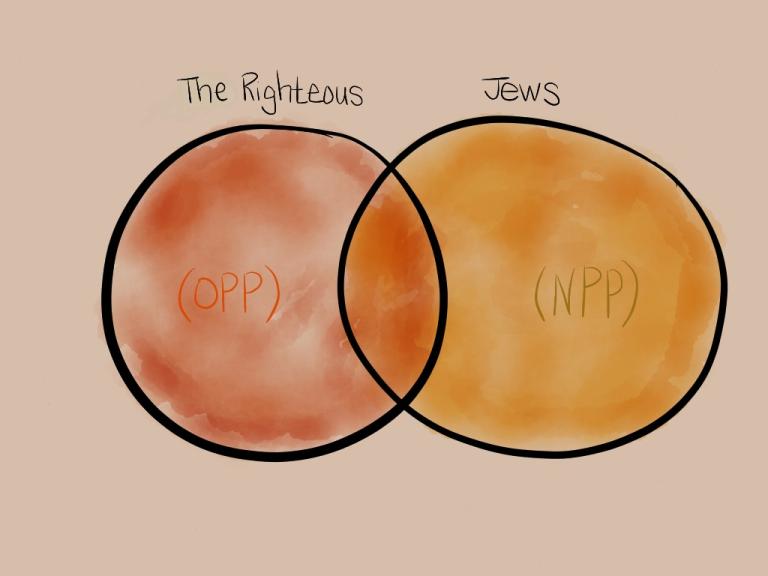
The right side reflects the thinking of the NPP. Humans are divided into two groups–the Jew and the Gentile. The NPP says that justification primarily solves a problem with ethnicity not ethics.
Is there any hope to reconcile these two views? It seems the two camps have fundamentally different starting points. However, I think that if we will first put on a Chinese cultural lens, we will see how the two perspectives come together nicely.
Putting on a Chinese Lens
It all starts with face. As I argued in Saving God’s Face and on the blog, there are two ways on gets face (honor and shame). One achieves face via accomplishments and good deeds. Western theology has long emphasized this aspect. In addition, people are “ascribed” face according to one’s position, relationships, gender, one’s hometown, etc.
Everyone wants face. It’s the way we were made. It’s not sin. This is because face is about our sense of value and our place of belonging. Christians before God don’t want to “lose face” but rather “have face.” We want to be reckoned as one of his people.
This same sort of dynamic is at play in Paul’s discussion on justification. Ancient Jews, like people of every time and place, wanted honor not shame. A Jew wanted to be regarded as a “righteous person.” This of course was a term of honor. At one level, to be righteous signified identity, that one belongs to God’s people. At another level, it could point to one’s actions.
In the eyes of the Paul’s Jewish contemporaries, the greatest honor consists in belonging to God’s people. Presumably, this implied being righteous. (“Righteous” is not synonymous with the word “perfect.”) Thus, within Israel, simply being a Jew would afford/ascribe a person more honor than the “unrighteous” Gentile. However, one’s piety could bring a person further honor. For example, a Pharisee would win greater social praise than a less disciplined person.
We can begin to see the problem Paul is facing. Achieved and ascribed honor correspond with the fact that, for the Jews, being “righteous” had moral and collective connotations.
What does it mean to be “righteous”?
Is “righteousness” a moral/ethnic or covenantal category? That is precisely the wrong question that shapes so much of NPP debate.
Keep in mind that God in history had chosen a particular nation, Israel, to represent him in the world. God would use Israel to bless the entire world. Yet, what happens when Jews began to misunderstand their election? By Paul’s day, many Jews saw themselves primarily as the primary recipients of God’s blessing, as opposed to being the channel through which the Gentiles would be blessed. This error radically distorts God’s covenant with Abraham and thus their Israel’s view of the Mosaic Law.
Consequently, the Jews mistakenly collapsed their categories of thinking. Having sharply separated Israel from Gentiles, they misunderstand justification. They presumed that if God declares someone “righteous”, that person would be a Jew, i.e. one who identifies with the one true God and his people Israel. (This is not the same thing as saying all Jews are righteous.)
According to this way of thinking, being justified presumed being Jewish and thus keeping the Law. By means of circumcision, etc., one signified himself as belonging to Israel.
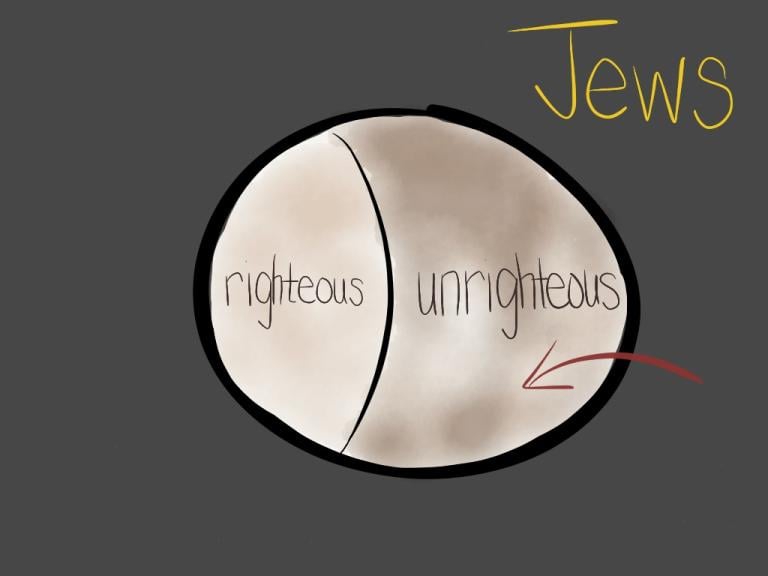
Therefore, the “ethnic badge” became an “ethical” distinction. Belonging to God’s covenant (whether Abraham or Moses) was restricted to Jews. In this respect, being justified/righteous (in their view) implied ethnic identity. We can see the distortion in their thinking more clearly.
Practically, Law-keeping had functioned as an ethnic boundary marker; yet, it also came to be seen as a condition (basis?) for ultimate justification (vindication) and salvation.
In short,
1. Being justified by God implies being Jewish.
2. Being Jewish implied one kept the Mosaic Law.
thus,
3. Keeping the Law both signified ethic identity and was a necessary condition for justification.
Ascribed and Achieved Righteousness
How do we put the discussion about honor and shame together with the debate concerning justification?
Paul’s opponents wanted the honor of being considered “righteous.” From different perspectives, this honor could be ascribed or achieved. While some Jews may have sought achieved honor/righteousness, others would be well content with the ascribed honor via group membership.
Previous Post

October 10, 2013
Can We Balance the Ying-Yang of Justification?
Next Post
October 17, 2013 The "Old Perspective": Right Answer, Wrong Problem?
Browse Our Archives
Select a Category Atonement Biblical Theology Book Reviews China Chinese Church Chinese Culture Chinese Language Collectivism Contextualization Culture (General) Ecclesiology Evangelism Gospel Honor & Shame (Face) Interpretation/Exegesis Justification/Righteousness Missiology Mission Methods One Gospel for All Nations Other Practical Contextualization Reading Romans with Eastern Eyes Resources Romans Salvation (General) Saving God's Face Seeking God's Face The Cross in Context Theological Contextualization Theological Education Theology Uncategorized
Select a Month October 2026 September 2026 August 2026 July 2026 June 2026 May 2026 April 2026 March 2026 February 2026 January 2026 December 2025 November 2025 October 2025 September 2025 August 2025 July 2025 June 2025 May 2025 April 2025 March 2025 February 2025 January 2025 December 2024 November 2024 October 2024 September 2024 August 2024 July 2024 June 2024 May 2024 April 2024 March 2024 February 2024 January 2024 December 2023 November 2023 October 2023 September 2023 August 2023 July 2023 June 2023 May 2023 April 2023 March 2023 February 2023 January 2023 December 2022 November 2022 October 2022 September 2022 August 2022 July 2022 June 2022 May 2022 April 2022 March 2022 February 2022 January 2022 December 2021 November 2021 October 2021 September 2021 August 2021 July 2021 June 2021 May 2021 April 2021 March 2021 February 2021 January 2021 December 2020 November 2020 October 2020 September 2020 August 2020 July 2020 June 2020 May 2020 April 2020 March 2020 February 2020 January 2020 December 2019 November 2019 October 2019 September 2019 August 2019 July 2019 June 2019 May 2019 April 2019 March 2019 February 2019 January 2019 December 2018 November 2018 October 2018 September 2018 August 2018 July 2018 June 2018 May 2018 April 2018 March 2018 February 2018 January 2018 December 2017 November 2017 October 2017 September 2017 August 2017 July 2017 June 2017 May 2017 April 2017 March 2017 February 2017 January 2017 December 2016 November 2016 October 2016 September 2016 August 2016 July 2016 June 2016 May 2016 April 2016 March 2016 February 2016 January 2016 December 2015 November 2015 October 2015 September 2015 August 2015 July 2015 June 2015 May 2015 April 2015 March 2015 February 2015 January 2015 December 2014 November 2014 October 2014 September 2014 August 2014 July 2014 June 2014 May 2014 April 2014 March 2014 February 2014 January 2014 December 2013 November 2013 October 2013 September 2013 August 2013 July 2013 June 2013 May 2013 April 2013 March 2013 February 2013 January 2013 December 2012 November 2012
Follow Us!
TAKE THE
Religious Wisdom Quiz
"Train up a child in the way he should go" is found in which book?
Select your answer to see how you score.
Matthew Job Jonah Proverbs
Books by This Author Books by Brad Vaughn
Related posts from Saving God's Face

Romans 2 is Not about General Human Conscience

Americans, not Asians, have Positive Illusions

Romans 7 Does Not Say People Have a...

Why Common Readings of Romans 7 Produce Shame
TRENDING AT PATHEOS Evangelical

How to Make a Decision When You Can't...
Main point: It’s much more valuable to stay close to God so...

Archdiocese Hosts Military Marriage Retreat in Germany
RASTATT, Germany — The transient military lifestyle, with its frequent deployments and...

Nearly every morning, I make the drive to Detroit with my high-school-age...

The Real AI Story Is Adoption Without Trust
Artificial intelligence has crossed a political threshold. It is no longer a...

A new article, written by Jeff Lindsay and Gale L. Pooley,...

Swimfan: Forgotten Aughts Pleasures
This is a recovery effort. In 2002, My Big Fat Greek Wedding...
view all Evangelical blogs
Ad-Free & Subscriber Log-In Subscription Support
- About Us
- 2026 Calendar
- Videos
- Podcasts
- Library of World Religions
- Faith In Media Tracker
- Advertise With Us
- Write for Us
- Privacy Policy
- Terms of Service
- Do Not Sell My Data
- Contact Us
- Radiant Digital
- Manage Newsletter Subscriptions
- Unsubscribe From Notifications
- Sitemap
Copyright 2008-2026, Patheos. All rights reserved.
Subscription Support Ad-Free & Subscriber Log-In
Follow Patheos