
BuddhistCatholicContemplativeEvangelicalGeneral ChristianHinduJewishLatter-day SaintMuslimNew VisionsProgressive Christian
Beliefs
- Buddhist
- Catholic
- Contemplative
- Evangelical
- General Christian
- Hindu
- Jewish
- Latter-day Saint
- More Voices
- Muslim
- New Visions
- Pagan
- Progressive Christian
Topics
- Religion News
- Food and Religion
- Sports and Religion
- Religious Art
- Religious Music and Entertainment
- Religious Events
- History and Religion
- Style and Religion
- Politics and Religion
- Women in Religion
- Recreation Outdoors and Religion
- Business Finance and Religion
- Careers Workplace and Religion
- Education and Religion
- Family Parenting and Religion
- Health Fitness and Religion
- Home and Religion
- Relationships and Religion
- Technology and Religion
- Travel and Religion
Columnists
- Buddhist Columnists
- Business Finance and Religion Columnists
- Careers Workplace and Religion Columnists
- Catholic Columnists
- Contemplative Columnists
- Education and Religion Columnists
- Evangelists Columnists
- Family Parenting and Religion Columnists
- General Christian Columnists
- Health Fitness and Religion Columnists
- Hindu Columnists
- History and Religion Columnists
- Home and Religion Columnists
- Jewish Columnists
- More Voices Columnists
- Latter Day Columnists
- Muslim Columnists
- New Visions Columnists
- Nonreligious Columnists
- Pagan Columnists
- Politics and Religion Columnists
- Progressive Columnists
- Recreation Outdoors and Religion Columnists
- Relationships and Religion Columnists
- Religion News Columnists
- Religious Art Columnists
- Religious Events Columnists
- Religious Music and Entertainment Columnists
- Sports and Religion Columnists
- Style and Religion Columnists
- Technology and Religion Columnists
- Travel and Religion Columnists
- Women in Religion Columnists
Resource Library
- 2026 Calendar
- Library of World Religions
- The 100 Most Holy Places on Earth
- Patheos Answers
- Podcasts
- Videos
- Faith Leaders Database
- Anglican Episcopalian
- Bahai
- Baptist
- Buddhism
- Christianity
- Confucianism
- Eastern Orthodoxy
- Hinduism
- Holiness and Pentecostal
- ISKCON
- Islam
- Judaism
- Lutheran
- Methodist
- The Church of Jesus Christ of Latter-day Saints
- New Age
- Paganism
- Presbytarian and Reformed
- Protestantism
- Religion Behind the Scenes
- Roman Catholic
- Scientology
- Shia Islam
- Sikhism
- Sufism
- Sunni Islam
- Taoism
- Zen
- See all religions
Research Tools
 Ad-Free & Subscriber Log-In Subscription Support
Ad-Free & Subscriber Log-In Subscription Support
Follow Patheos 

- Trending:
- Forgiveness
- |
- Marriage
- |
- Consciousness
- |
- Death Penalty
- |
- Election
- |
- Halloween

-
Tools
-
Support the Work
- Home
- Evangelical
- Preaching the Gospel to the Tiger Mom (Part 2)
Preaching the Gospel to the Tiger Mom (Part 2)
Last updated on: August 13, 2015 at 2:51 am by Brad Vaughn
Preaching the Gospel to the Tiger Mom (Part 2) 2015-08-13T02:51:15-07:00 Brad Vaughn
Patheos Explore the world's faith through different perspectives on religion and spirituality! Patheos has the views of the prevalent religions and spiritualities of the world.
Would you use a tradition presentation to preach the gospel to a “Tiger Mom“?
 In the last point, I suggested that traditional formulations and methods may not address Eastern questions and problems.
For example, in my first point, I noted that the Tiger mom’s rigorous and self disciplined zeal for perfection is not like that of Luther, who worried how God would accept him as an imperfect sinner. As with other Chinese people, Chua is not thinking about God at all. This leads us to my second point.
(2) We want to ask, “What are the possible motives behind this sort of thinking?”
As I’ve pointed out in previous posts, the quest for perfection may not be a “legalist” problem at all. Rather, it may express a person’s desire for “face,” wanting to be accepted by a group and so avoid the shame and insecurity of isolation.
From a parent’s perspective, people don’t want to see their kids fail, be excluded, and feel ashamed. Not only that, no parent wants to look bad themselves due to the problems stemming from their kid’s lack of discipline. Before being quick to criticize the selfishness of a “tiger mom,” what parent has not worked out of this same sort of thinking? For example, parents compromise and don’t do what is right simply because their kids embarrass them in public. Also, many families even in the West appeal to “family pride” and uphold the family name.
Even Westerners understand this very basic law of human community: we share the honor and shame of those with whom we identify. This fact has untold implications for theology and ministry.
(3) “Easterners” and “Westerners” typically have different assumptions about human nature.
Chua explains her rationale:
Chinese parents demand perfect grades because they believe that their child can get them. If their child doesn’t get them, the Chinese parent assumes it’s because the child didn’t work hard enough. That’s why the solution to substandard performance is always to excoriate, punish, and shame the child. The Chinese parent believes that their child will be strong enough to take the shaming and to improve from it.” (p. 52-53).
Chinese thinking sees human nature as fundamentally good. Western culture, because of the Church’s emphasis on sin nature, has emphasized human depravity. Theologically interpreted, one might say that Chinese intuit the fact that humans were originally created good, made in the image of God. Thus, one could perhaps say that Chinese focus more on what is inherently human nature.
 The West, on the other hand, focuses on the our sin nature, which is not an essential feature of having a human nature, since (a) Jesus was fully human but had no sin nature, (b) Adam had no sin prior to the Fall, and (c) we will not be less human in the new heaven and new earth, yet we will not have sin.
Sorting out the detailed thinking and the implications of these two views would take too much time. For now, I want to emphasize a couple of important and related points.
A Chinese Perspective on Parenting
First, Chinese see the potential in people for improvement. Therefore, Chinese emphasize hard work and self-discipline. (In truth, many Americans are no different in practice. The “American Dream” presumes the great potential of the rugged individual who can be anything he wants to be when he grows up.)


It’s not uncommon for an American parent to say, “Well, she just wasn’t born with that ability.” As a result, a girls parents may not push their daughter through those tough times required of any student trying to master a new skill, like playing piano or dance. It could of course work the other way. One could not work hard to develop a “natural” gifting precisely because a person takes that talent for granted.
The Chinese on the other hand see the interconnectedness of people and events. For some, it can lead to a sort of fatalism, so that one doesn’t even want to try a new challenge. However, for others, they know they must work incredibly hard to overcome the various factors that stand in the way to their success.
One’s view of human nature and community is a fundamentally theological and missiological issue. It is not simply “Are we born good or bad?” It’s a bit more nuanced, which the second point above about context illustrates.
Our Response
Christian pastors, missionaries, and theologians have to take these questions seriously. In the zeal to makes things simple, we may cover over a number of problems. We can’t treat Chinese like Americans, just as one could not treat a New Yorker like a Cajun from New Orleans.
For all the talk about contextualization and global theology, I wonder how serious we actually are. Mission and evangelism books offer simple methods to start church planting movements with little consideration for how their formula may or may not work in another context. “Contextualization” (so called) in the States can often amount to nothing more than an alteration in music or esthetics.
Consider our task––we serve the one true Creator God in the midst of all the nations of the world. Do we really think this work should be simple?
I wonder if it might help the church if we would just be willing to complicate the whole process just a little bit.
Photo Credit: CC 2.0/wikipedia
Related articles
- Introducing My New Book, Saving God’s Face (www.patheos.com/blogs/jacksonwu)
- Tiger moms turning kids into robots (cnn.com)
Battle Hymn of the Tiger Mother
Previous Post

May 27, 2013
Preaching the Gospel to the Tiger Mom
Next Post
May 30, 2013 "Theology" versus "Chinese Theology"?
Browse Our Archives
Select a Category Atonement Biblical Theology Book Reviews China Chinese Church Chinese Culture Chinese Language Collectivism Contextualization Culture (General) Ecclesiology Evangelism Gospel Honor & Shame (Face) Interpretation/Exegesis Justification/Righteousness Missiology Mission Methods One Gospel for All Nations Other Practical Contextualization Reading Romans with Eastern Eyes Resources Romans Salvation (General) Saving God's Face Seeking God's Face The Cross in Context Theological Contextualization Theological Education Theology Uncategorized
Select a Month October 2026 September 2026 August 2026 July 2026 June 2026 May 2026 April 2026 March 2026 February 2026 January 2026 December 2025 November 2025 October 2025 September 2025 August 2025 July 2025 June 2025 May 2025 April 2025 March 2025 February 2025 January 2025 December 2024 November 2024 October 2024 September 2024 August 2024 July 2024 June 2024 May 2024 April 2024 March 2024 February 2024 January 2024 December 2023 November 2023 October 2023 September 2023 August 2023 July 2023 June 2023 May 2023 April 2023 March 2023 February 2023 January 2023 December 2022 November 2022 October 2022 September 2022 August 2022 July 2022 June 2022 May 2022 April 2022 March 2022 February 2022 January 2022 December 2021 November 2021 October 2021 September 2021 August 2021 July 2021 June 2021 May 2021 April 2021 March 2021 February 2021 January 2021 December 2020 November 2020 October 2020 September 2020 August 2020 July 2020 June 2020 May 2020 April 2020 March 2020 February 2020 January 2020 December 2019 November 2019 October 2019 September 2019 August 2019 July 2019 June 2019 May 2019 April 2019 March 2019 February 2019 January 2019 December 2018 November 2018 October 2018 September 2018 August 2018 July 2018 June 2018 May 2018 April 2018 March 2018 February 2018 January 2018 December 2017 November 2017 October 2017 September 2017 August 2017 July 2017 June 2017 May 2017 April 2017 March 2017 February 2017 January 2017 December 2016 November 2016 October 2016 September 2016 August 2016 July 2016 June 2016 May 2016 April 2016 March 2016 February 2016 January 2016 December 2015 November 2015 October 2015 September 2015 August 2015 July 2015 June 2015 May 2015 April 2015 March 2015 February 2015 January 2015 December 2014 November 2014 October 2014 September 2014 August 2014 July 2014 June 2014 May 2014 April 2014 March 2014 February 2014 January 2014 December 2013 November 2013 October 2013 September 2013 August 2013 July 2013 June 2013 May 2013 April 2013 March 2013 February 2013 January 2013 December 2012 November 2012
Follow Us!
TAKE THE
Religious Wisdom Quiz
What small part of the body does James say is a restless evil, full of deadly poison?
Select your answer to see how you score.
The heart The eye The tongue The hand
Books by This Author Books by Brad Vaughn
Related posts from Saving God's Face

Americans, not Asians, have Positive Illusions

The Psychology of Broad and Eastern Thinking

Why punish parents for kids’ bad behavior?
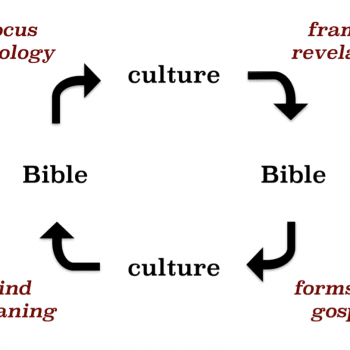
The Circular Relationship Between Culture and the Bible
TRENDING AT PATHEOS Evangelical

In one sense walking into Westminster Abbey is like walking down the...

'Super Scam Me' Exposes AI Jon Bon Jovi...
Leslie Pickett believed she was in a relationship with Jon Bon Jovi....

The Brazilian Remake of Kendricks' 'Flywheel' Opens in...
“Flywheel,” the story that launched the Kendrick Brothers’ filmmaking career is getting...

The Dangers of Gradual Accommodation (Winking at Sin)
Recently, the “law of gradualness” resurfaced during the opening of a weeklong,...

The Iron Gates and the Lion of the...
Yesterday, I didn't finish my report about, well, yesterday. So I'll...

The Image: On the Horror of Capitalism and...
The Image Then went the Pharisees, and took counsel how they might...
view all Evangelical blogs
Ad-Free & Subscriber Log-In Subscription Support
- About Us
- 2026 Calendar
- Videos
- Podcasts
- Library of World Religions
- Faith In Media Tracker
- Advertise With Us
- Write for Us
- Privacy Policy
- Terms of Service
- Do Not Sell My Data
- Contact Us
- Radiant Digital
- Manage Newsletter Subscriptions
- Unsubscribe From Notifications
- Sitemap
Copyright 2008-2026, Patheos. All rights reserved.
Subscription Support Ad-Free & Subscriber Log-In
Follow Patheos