
BuddhistCatholicContemplativeEvangelicalGeneral ChristianHinduJewishLatter-day SaintMuslimNew VisionsProgressive Christian
Beliefs
- Buddhist
- Catholic
- Contemplative
- Evangelical
- General Christian
- Hindu
- Jewish
- Latter-day Saint
- More Voices
- Muslim
- New Visions
- Pagan
- Progressive Christian
Topics
- Religion News
- Food and Religion
- Sports and Religion
- Religious Art
- Religious Music and Entertainment
- Religious Events
- History and Religion
- Style and Religion
- Politics and Religion
- Women in Religion
- Recreation Outdoors and Religion
- Business Finance and Religion
- Careers Workplace and Religion
- Education and Religion
- Family Parenting and Religion
- Health Fitness and Religion
- Home and Religion
- Relationships and Religion
- Technology and Religion
- Travel and Religion
Columnists
- Buddhist Columnists
- Business Finance and Religion Columnists
- Careers Workplace and Religion Columnists
- Catholic Columnists
- Contemplative Columnists
- Education and Religion Columnists
- Evangelists Columnists
- Family Parenting and Religion Columnists
- General Christian Columnists
- Health Fitness and Religion Columnists
- Hindu Columnists
- History and Religion Columnists
- Home and Religion Columnists
- Jewish Columnists
- More Voices Columnists
- Latter Day Columnists
- Muslim Columnists
- New Visions Columnists
- Nonreligious Columnists
- Pagan Columnists
- Politics and Religion Columnists
- Progressive Columnists
- Recreation Outdoors and Religion Columnists
- Relationships and Religion Columnists
- Religion News Columnists
- Religious Art Columnists
- Religious Events Columnists
- Religious Music and Entertainment Columnists
- Sports and Religion Columnists
- Style and Religion Columnists
- Technology and Religion Columnists
- Travel and Religion Columnists
- Women in Religion Columnists
Resource Library
- 2026 Calendar
- Library of World Religions
- The 100 Most Holy Places on Earth
- Patheos Answers
- Podcasts
- Videos
- Faith Leaders Database
- Anglican Episcopalian
- Bahai
- Baptist
- Buddhism
- Christianity
- Confucianism
- Eastern Orthodoxy
- Hinduism
- Holiness and Pentecostal
- ISKCON
- Islam
- Judaism
- Lutheran
- Methodist
- The Church of Jesus Christ of Latter-day Saints
- New Age
- Paganism
- Presbytarian and Reformed
- Protestantism
- Religion Behind the Scenes
- Roman Catholic
- Scientology
- Shia Islam
- Sikhism
- Sufism
- Sunni Islam
- Taoism
- Zen
- See all religions
Research Tools
 Ad-Free & Subscriber Log-In Subscription Support
Ad-Free & Subscriber Log-In Subscription Support
Follow Patheos 

- Trending:
- Forgiveness
- |
- Marriage
- |
- Consciousness
- |
- Death Penalty
- |
- Election
- |
- Halloween

-
Tools
-
Support the Work
- Home
- Evangelical
- Contextualization Among Oral Peoples — Part 1 of a New Series
Contextualization Among Oral Peoples — Part 1 of a New Series
Last updated on: April 4, 2013 at 8:30 am by Brad Vaughn
Contextualization Among Oral Peoples — Part 1 of a New Series 2013-04-04T08:30:00-07:00 Brad Vaughn
Patheos Explore the world's faith through different perspectives on religion and spirituality! Patheos has the views of the prevalent religions and spiritualities of the world.
In this series, I will explore the topic of contextualization among unreached people groups with orality based cultures. To state it negatively, they have high levels of illiteracy.
This is a complex topic, which requires a few posts to unpack the diverse factors related to contextualization among oral peoples.
THEOLOGY FOR THE SAKE OF UPGs
One of the main reasons I do theological education among Chinese church leaders is to equip a massive missionary force to reach the various unreached people groups (UPGs) in China and throughout the world.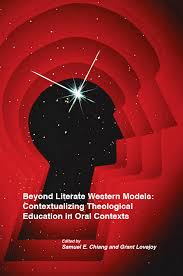
The challenges of cross cultural work are difficult enough. When other factors are added to the equation––like illiteracy, poverty, ethnic division, and geographic isolation––one understands the importance of intentional planning and strategic training when it comes to UPG work. Missionaries in UPG contexts really need to be strong an array of diverse skill sets. They need to be tough and flexible to endure the hardships of the life.
Furthermore, creativity and patience will cover a lifetime of mistakes. I would also add one more need sometimes overlooked: They should be more versed in theological topics than the average pastor in the West.
Not only are they supposed to teach the same truths a pastor could teach, they also aim to train future pastors in a foreign culture that intermingles a number of religions and ideologies. This is not a simply job. However, they like us all are merely human and can’t do it all.
Why do I say all this?
Theological training is an essential component of UPG work.
It is not merely icing on the cake, the advanced content to be added to the basics. All methodology implies or is grounded in some sort of theology. Workers cannot teach a method of church planting or give a gospel presentation and not convey a load of theological content. That implicit theology may or may not be biblical; it may contradict broader cultural assumptions.
Problems arise when strategists and local peoples are not clear on such details. Confusion, even false teaching, can quickly result. Theological training instills DNA to sustain churches and movements for generations. It helps people realize the gospel entails a radical worldview change. Christian faith is more than private spirituality.
To put is another way, practice grows from perspective. A healthy and holistic theology should shape that perspective. If we default to ministry pragmatism, some other less-than-biblical perspective will motivate practice–like the desire for approval, money, security, etc.
Orality and UPGs
So many UPGs have very low literacy rates. Many UPGs don’t even have written languages. Naturally, strategists have to think about how to share the gospel and teach the Bible to people who can’t read.
Debates about orality can divide into two extremes. On one side, someone will say, “Teach them to read, or just focus on those who can read.” Others may go to the other extreme, “We can’t be using methods designed for literates when so many can’t read.”
Thus, it would seem they will only consider oral approaches to the exclusion of literate methods. Not surprisingly, this latter group could err towards being contra-theological training. After all, theological training traditional requires higher levels of education and literacy.
In reality, neither extreme is helpful.
Strategies for reaching “oral” peoples should include components that utilize those who are literate among that particular UPG; in addition, other methods that don’t depend on reading should be utilized.
In recent years, missionaries have especially stressed the importance of STORY and thus have focused on developing the most effective methods of COMMUNICATION possible. These are good focal points; however, we need to give more careful attention to each theme. It is not enough to say that “storying” is key to reaching illiterate people groups.
It matters which stories are told, the order of those stories, the way the individual stories are tied together, etc. Is there an essential theological connection between those stories? Is that connection evident? Why are these stories selected? Are certain themes emphasized more than others? Non-western cultures that don’t emphasize literacy tend to be very good at memorization. They use song, ritual, dance, among other things to reinforce the lessons to be learned.
In the coming posts, I’ll expand on the discussion, proposing ideas that may help answer a few important questions.
For example, how should we communicate Scripture, i.e. convey the information within the Bible? Do we teach about Israel to illiterate peoples in the mountains of southern China or northern India? How might oral peoples do exegesis, i.e. interpret the Bible?
Related articles
 Contextualizing Shakespeare and the 3 Little Pigs
 My Latest Article on Romans Now Published in JETS
 What is the “Context” of Scripture?

Contextualization Among Oral Peoples
Next Post

April 9, 2013 Taking the Context out of the Bible?
Browse Our Archives
Select a Category Atonement Biblical Theology Book Reviews China Chinese Church Chinese Culture Chinese Language Collectivism Contextualization Culture (General) Ecclesiology Evangelism Gospel Honor & Shame (Face) Interpretation/Exegesis Justification/Righteousness Missiology Mission Methods One Gospel for All Nations Other Practical Contextualization Reading Romans with Eastern Eyes Resources Romans Salvation (General) Saving God's Face Seeking God's Face The Cross in Context Theological Contextualization Theological Education Theology Uncategorized
Select a Month October 2026 September 2026 August 2026 July 2026 June 2026 May 2026 April 2026 March 2026 February 2026 January 2026 December 2025 November 2025 October 2025 September 2025 August 2025 July 2025 June 2025 May 2025 April 2025 March 2025 February 2025 January 2025 December 2024 November 2024 October 2024 September 2024 August 2024 July 2024 June 2024 May 2024 April 2024 March 2024 February 2024 January 2024 December 2023 November 2023 October 2023 September 2023 August 2023 July 2023 June 2023 May 2023 April 2023 March 2023 February 2023 January 2023 December 2022 November 2022 October 2022 September 2022 August 2022 July 2022 June 2022 May 2022 April 2022 March 2022 February 2022 January 2022 December 2021 November 2021 October 2021 September 2021 August 2021 July 2021 June 2021 May 2021 April 2021 March 2021 February 2021 January 2021 December 2020 November 2020 October 2020 September 2020 August 2020 July 2020 June 2020 May 2020 April 2020 March 2020 February 2020 January 2020 December 2019 November 2019 October 2019 September 2019 August 2019 July 2019 June 2019 May 2019 April 2019 March 2019 February 2019 January 2019 December 2018 November 2018 October 2018 September 2018 August 2018 July 2018 June 2018 May 2018 April 2018 March 2018 February 2018 January 2018 December 2017 November 2017 October 2017 September 2017 August 2017 July 2017 June 2017 May 2017 April 2017 March 2017 February 2017 January 2017 December 2016 November 2016 October 2016 September 2016 August 2016 July 2016 June 2016 May 2016 April 2016 March 2016 February 2016 January 2016 December 2015 November 2015 October 2015 September 2015 August 2015 July 2015 June 2015 May 2015 April 2015 March 2015 February 2015 January 2015 December 2014 November 2014 October 2014 September 2014 August 2014 July 2014 June 2014 May 2014 April 2014 March 2014 February 2014 January 2014 December 2013 November 2013 October 2013 September 2013 August 2013 July 2013 June 2013 May 2013 April 2013 March 2013 February 2013 January 2013 December 2012 November 2012
Follow Us!
TAKE THE
Religious Wisdom Quiz
What tax collector wrote a Gospel and was called by Jesus?
Select your answer to see how you score.
Luke Matthew Mark Barnabas
Books by This Author Books by Brad Vaughn
Related posts from Saving God's Face

Why Christianity Needs Individuals but Rejects Individualism

Glory, Violence, and the Gospel of Peace

Should We Emphasize Jesus as King to People...

Why Egalitarians Can Stay in a Complementarian Church
TRENDING AT PATHEOS Evangelical

The Problem with False Prophets
Miller’s Station UMC| 10/18/26| Anchor Verse: Jeremiah 23: 1, 9-23 I...

Emotion in Early Christianity by Andrew Crislip
Andrew Crislip’s Emotion in Early Christianity examines an often overlooked dimension of...

16 Spiritual Touchstones for a More Grounded Life
After decades of spiritual study, here are 16 principles I try...

Catholic Evangelization: Sharing Your Faith Every Day
Welcome back to the Graceful Awakening mini-series called, “From Faith to Mission.” ...

The Pillar of the Boatmen: the Ancient Monument...
The Pillar of the Boatmen is a Romano-Gaulish sculpture that dates from...

In one sense walking into Westminster Abbey is like walking down the...
view all Evangelical blogs
Ad-Free & Subscriber Log-In Subscription Support
- About Us
- 2026 Calendar
- Videos
- Podcasts
- Library of World Religions
- Faith In Media Tracker
- Advertise With Us
- Write for Us
- Privacy Policy
- Terms of Service
- Do Not Sell My Data
- Contact Us
- Radiant Digital
- Manage Newsletter Subscriptions
- Unsubscribe From Notifications
- Sitemap
Copyright 2008-2026, Patheos. All rights reserved.
Subscription Support Ad-Free & Subscriber Log-In
Follow Patheos