
BuddhistCatholicContemplativeEvangelicalGeneral ChristianHinduJewishLatter-day SaintMuslimNew VisionsProgressive Christian
Beliefs
- Buddhist
- Catholic
- Contemplative
- Evangelical
- General Christian
- Hindu
- Jewish
- Latter-day Saint
- More Voices
- Muslim
- New Visions
- Pagan
- Progressive Christian
Topics
- Religion News
- Food and Religion
- Sports and Religion
- Religious Art
- Religious Music and Entertainment
- Religious Events
- History and Religion
- Style and Religion
- Politics and Religion
- Women in Religion
- Recreation Outdoors and Religion
- Business Finance and Religion
- Careers Workplace and Religion
- Education and Religion
- Family Parenting and Religion
- Health Fitness and Religion
- Home and Religion
- Relationships and Religion
- Technology and Religion
- Travel and Religion
Columnists
- Buddhist Columnists
- Business Finance and Religion Columnists
- Careers Workplace and Religion Columnists
- Catholic Columnists
- Contemplative Columnists
- Education and Religion Columnists
- Evangelists Columnists
- Family Parenting and Religion Columnists
- General Christian Columnists
- Health Fitness and Religion Columnists
- Hindu Columnists
- History and Religion Columnists
- Home and Religion Columnists
- Jewish Columnists
- More Voices Columnists
- Latter Day Columnists
- Muslim Columnists
- New Visions Columnists
- Nonreligious Columnists
- Pagan Columnists
- Politics and Religion Columnists
- Progressive Columnists
- Recreation Outdoors and Religion Columnists
- Relationships and Religion Columnists
- Religion News Columnists
- Religious Art Columnists
- Religious Events Columnists
- Religious Music and Entertainment Columnists
- Sports and Religion Columnists
- Style and Religion Columnists
- Technology and Religion Columnists
- Travel and Religion Columnists
- Women in Religion Columnists
Resource Library
- 2026 Calendar
- Library of World Religions
- The 100 Most Holy Places on Earth
- Patheos Answers
- Podcasts
- Videos
- Faith Leaders Database
- Anglican Episcopalian
- Bahai
- Baptist
- Buddhism
- Christianity
- Confucianism
- Eastern Orthodoxy
- Hinduism
- Holiness and Pentecostal
- ISKCON
- Islam
- Judaism
- Lutheran
- Methodist
- The Church of Jesus Christ of Latter-day Saints
- New Age
- Paganism
- Presbytarian and Reformed
- Protestantism
- Religion Behind the Scenes
- Roman Catholic
- Scientology
- Shia Islam
- Sikhism
- Sufism
- Sunni Islam
- Taoism
- Zen
- See all religions
Research Tools
 Ad-Free & Subscriber Log-In Subscription Support
Ad-Free & Subscriber Log-In Subscription Support
Follow Patheos 

- Trending:
- Forgiveness
- |
- Marriage
- |
- Consciousness
- |
- Death Penalty
- |
- Election
- |
- Halloween

-
Tools
-
Support the Work
- Home
- Evangelical
- The New Covenant in a Chinese Context (Part 1): A Collectivistic Understanding of Identity
The New Covenant in a Chinese Context (Part 1): A Collectivistic Understanding of Identity
Last updated on: February 7, 2013 at 8:50 am by Brad Vaughn
The New Covenant in a Chinese Context (Part 1): A Collectivistic Understanding of Identity 2013-02-07T08:50:05-07:00 Brad Vaughn
Patheos Explore the world's faith through different perspectives on religion and spirituality! Patheos has the views of the prevalent religions and spiritualities of the world.
One thing that gets me excited is thinking about the way that an eastern (e.g. Chinese) worldview can contribute to the task of theology. Stephen Bevans speaks for many when he writes, “There is no such thing a ‘theology’; there is only contextual theology” (Models of Contextual Theology, 2008; p. 3). The Bible is a book for all of humanity. Therefore, we should expect the Bible to speak in ways and about topics that typically resonate more with Easterners than Westerners. That being the case, I urge that we do what I call exegetical contextualization, intentionally interpreting Scripture through the lens of a particular culture. (More on this in upcoming blogs).
In that spirit, I begin a series of reflections on the new covenant from a Chinese context. Don’t expect a rehashing of the countless books and articles on the subject. I simply want to highlight both the significance and a few implications of the new covenant as seen from a Chinese perspective. These are just suggestive, so please feel free to dialogue in the comments. Much of what is called “theology” is in fact “western theology.” That is not a criticism; the statement simply highlights the critical role western culture has served in helping us all interpret Scripture. I hope non-western cultures, like those of East Asia, will increasing contribute to a broader understanding of the Bible.
The new covenant is one way the Old Testament foretells the gospel. Sadly, many people are unfamiliar with it. The central passage on the new covenant is Jer 31:31–34.
“Behold, the days are coming, declares the LORD, when I will make a new covenant with the house of Israel and the house of Judah, 32 not like the covenant that I made with their fathers on the day when I took them by the hand to bring them out of the land of Egypt, my covenant that they broke, though I was their husband, declares the LORD. 33 But this is the covenant that I will make with the house of Israel after those days, declares the LORD: I will put my law within them, and I will write it on their hearts. And I will be their God, and they shall be my people. 34 And no longer shall each one teach his neighbor and each his brother, saying, ‘Know the LORD,’ for they shall all know me, from the least of them to the greatest, declares the LORD. For I will forgive their iniquity, and I will remember their sin no more.’” (ESV)
31 耶和华说,日子将到,我要与以色列家和犹大家另立 新约, 32 不像我拉着他们祖宗的手,领他们出埃及地的时候, 与他们所立的约。我虽作他们的丈夫,他们却背了我的约. 这是耶和华说的. 33 耶和华说,那些日子以后,我与以色列家所立的约乃是这样,我要将我的律法放在他们里面,写在他们心上. 我要作他们的神,他们要作我的子民. 34 他们各人不再教导自己的邻舍和自己的弟兄说, 你该认识耶和华, 因为他们从最小的到至大的都必认识我。我要赦免他们的罪孽, 不再记念他们的罪恶. 这是耶和华说的.” [和合本]
Other relevant passages that may interest you include Ezek 36:26–27; Luke 22:20; Hebrews 8, 10; 2 Cor 3. In each post, I’ll list one or two of its key statements and then discuss.
[Verse 31] “I will make a new covenant with the house of Israel and the house of Judah.” [我要与以色列家和犹大家另立新约]
Interestingly, even though Jeremiah says “Israel” and “Judah,” the NT authors still apply this covenant to Gentiles. That is to say, the new covenant is for the entire church (cf. 2 Cor 3; Rom 2; Luke 22, etc.). This observation is important for learning principles for biblical interpretation. We don’t want to over literalize the text, restricting the Bible’s every word and sentence such that the authors are bound by our own modern expectations of what and how they should speak. In a sense, over literalized interpretations are the opposite error of liberalism. Both overly restrict the text’s meaning so as to deny from the start that the author could have been speaking either figuratively or historically. We must interpret Scripture with Scripture. The author’s language depends on context. Context is king.
In the OT, the nomenclature, “Israel,” refers to God’s people. In fact, in the NT, we find out that Gentiles also belong to God’s people, reckoned as Abraham’s offspring (Rom 4; Gal 3).
Notice verse 33, “And I will be their God, and they shall be my people.” [我要作他们的神, 他们要作我的子民]
The new covenant is inherently collectivistic in nature. Salvation is not merely an individual concept. People being saved means they gain a new identity. They belong to a new group, a new family, a new kingdom. Real faith means loyalty to God. God, through the new covenant, promises to identify with us. Because he changes our hearts, we also identify with him. God and we share in the same honor and shame. We come under God’s name.
People may get nervous about mixing collectivism and soteriology, but this is unfounded. Collectivistic readings need not imply salvation comes simply by ethnic identity, etc. Instead, a collectivistic perspective highlights a few key aspects: first, we are saved into a community; second, this will mean rejection and leaving from some prior community. One of the church fathers said there was no salvation outside the church––this statement has been (mis)taken a number of ways. At its best, the idea is right. Why? Loyalty to God is inseparable from loyalty to his people. He is not merely my God but our God. To forsake his people is to forsake God*.* Protestants, evangelical, and missionaries are prone to separate soteriology (salvation) from ecclesiology (the church). This is problematic on various levels. Conversion is an exchange of social identities.
We therefore do all we do knowing that the reputation of the Church and ultimately its head, Christ, is at stake as we make moral and strategical decisions. There is no “Jesus and me.” There is Jesus and us.
How does this affect our life and those with whom we share the gospel? Here are a few questions to ask for reflection:
1. With whom do you/we identify? (Who do you admire? want approval from? seek to please?)
2. To whom are you loyal?
3. Is your group head faithful?
These are fundamental gospel questions. Particularly in a Chinese setting, the biggest stumbling block is one’s own community (whether family, ethnic group, etc.). One’s relationships determine everything. The problems people must confront more concern loyalty, not legalism. Ultimately, we must think about and have others also consider the faithfulness and ability of the group head with whom they identify. Is is a boss, a president, a parent,…who? Among whom do you belong and how is that expressed in various ways within one’s social network?
Previous Post

February 5, 2013
A legal solution won't solve a shame problem. Agree or Disagree?
Next Post
February 12, 2013 The New Covenant in a Chinese Context (Part 2): New Hearts and No Sin
Browse Our Archives
Select a Category Atonement Biblical Theology Book Reviews China Chinese Church Chinese Culture Chinese Language Collectivism Contextualization Culture (General) Ecclesiology Evangelism Gospel Honor & Shame (Face) Interpretation/Exegesis Justification/Righteousness Missiology Mission Methods One Gospel for All Nations Other Practical Contextualization Reading Romans with Eastern Eyes Resources Romans Salvation (General) Saving God's Face Seeking God's Face The Cross in Context Theological Contextualization Theological Education Theology Uncategorized
Select a Month October 2026 September 2026 August 2026 July 2026 June 2026 May 2026 April 2026 March 2026 February 2026 January 2026 December 2025 November 2025 October 2025 September 2025 August 2025 July 2025 June 2025 May 2025 April 2025 March 2025 February 2025 January 2025 December 2024 November 2024 October 2024 September 2024 August 2024 July 2024 June 2024 May 2024 April 2024 March 2024 February 2024 January 2024 December 2023 November 2023 October 2023 September 2023 August 2023 July 2023 June 2023 May 2023 April 2023 March 2023 February 2023 January 2023 December 2022 November 2022 October 2022 September 2022 August 2022 July 2022 June 2022 May 2022 April 2022 March 2022 February 2022 January 2022 December 2021 November 2021 October 2021 September 2021 August 2021 July 2021 June 2021 May 2021 April 2021 March 2021 February 2021 January 2021 December 2020 November 2020 October 2020 September 2020 August 2020 July 2020 June 2020 May 2020 April 2020 March 2020 February 2020 January 2020 December 2019 November 2019 October 2019 September 2019 August 2019 July 2019 June 2019 May 2019 April 2019 March 2019 February 2019 January 2019 December 2018 November 2018 October 2018 September 2018 August 2018 July 2018 June 2018 May 2018 April 2018 March 2018 February 2018 January 2018 December 2017 November 2017 October 2017 September 2017 August 2017 July 2017 June 2017 May 2017 April 2017 March 2017 February 2017 January 2017 December 2016 November 2016 October 2016 September 2016 August 2016 July 2016 June 2016 May 2016 April 2016 March 2016 February 2016 January 2016 December 2015 November 2015 October 2015 September 2015 August 2015 July 2015 June 2015 May 2015 April 2015 March 2015 February 2015 January 2015 December 2014 November 2014 October 2014 September 2014 August 2014 July 2014 June 2014 May 2014 April 2014 March 2014 February 2014 January 2014 December 2013 November 2013 October 2013 September 2013 August 2013 July 2013 June 2013 May 2013 April 2013 March 2013 February 2013 January 2013 December 2012 November 2012
Follow Us!
TAKE THE
Religious Wisdom Quiz
What does Proverbs say about "a soft answer"?
Select your answer to see how you score.
It makes a fool wise It turns away wrath It brings riches It brings rain
Books by This Author Books by Brad Vaughn
Related posts from Saving God's Face

How Western Individualism Quietly Undermines the Solas

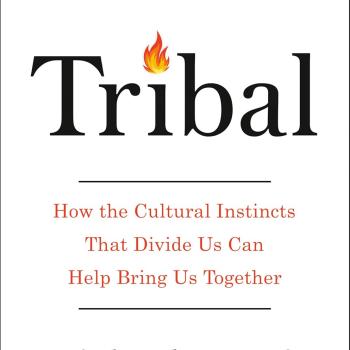
Tribal is a book worth reading!

How Rousseau Steers the West Wrongly to Individualism
TRENDING AT PATHEOS Evangelical

In "Irreplaceable," our book on vocation and technology, Trevor Sutton and I...

I was strolling through the top floor of the brand new Parthenon...

What Does Gêvâh Mean For Kimberley Guifoyle &...
This week, a lot of the news is focused on Kimberly Guilfoyle....

INNER CIRCLE: Profound Mystery (Of Christ In All...
Ephesians 5:31-32 “For this reason, a man will leave his father and...

Do Not Rejoice When Your Enemy Falls: The...
Turning an execution into a public spectacle is a disturbing expression of...

'The Chosen' S6 Trailer: The Passion Gets Very...
Not many watching 'The Chosen' worry about spoilers, but just because they...
view all Evangelical blogs
Ad-Free & Subscriber Log-In Subscription Support
- About Us
- 2026 Calendar
- Videos
- Podcasts
- Library of World Religions
- Faith In Media Tracker
- Advertise With Us
- Write for Us
- Privacy Policy
- Terms of Service
- Do Not Sell My Data
- Contact Us
- Radiant Digital
- Manage Newsletter Subscriptions
- Unsubscribe From Notifications
- Sitemap
Copyright 2008-2026, Patheos. All rights reserved.
Subscription Support Ad-Free & Subscriber Log-In
Follow Patheos