
BuddhistCatholicContemplativeEvangelicalGeneral ChristianHinduJewishLatter-day SaintMuslimNew VisionsProgressive Christian
Beliefs
- Buddhist
- Catholic
- Contemplative
- Evangelical
- General Christian
- Hindu
- Jewish
- Latter-day Saint
- More Voices
- Muslim
- New Visions
- Pagan
- Progressive Christian
Topics
- Religion News
- Food and Religion
- Sports and Religion
- Religious Art
- Religious Music and Entertainment
- Religious Events
- History and Religion
- Style and Religion
- Politics and Religion
- Women in Religion
- Recreation Outdoors and Religion
- Business Finance and Religion
- Careers Workplace and Religion
- Education and Religion
- Family Parenting and Religion
- Health Fitness and Religion
- Home and Religion
- Relationships and Religion
- Technology and Religion
- Travel and Religion
Columnists
- Buddhist Columnists
- Business Finance and Religion Columnists
- Careers Workplace and Religion Columnists
- Catholic Columnists
- Contemplative Columnists
- Education and Religion Columnists
- Evangelists Columnists
- Family Parenting and Religion Columnists
- General Christian Columnists
- Health Fitness and Religion Columnists
- Hindu Columnists
- History and Religion Columnists
- Home and Religion Columnists
- Jewish Columnists
- More Voices Columnists
- Latter Day Columnists
- Muslim Columnists
- New Visions Columnists
- Nonreligious Columnists
- Pagan Columnists
- Politics and Religion Columnists
- Progressive Columnists
- Recreation Outdoors and Religion Columnists
- Relationships and Religion Columnists
- Religion News Columnists
- Religious Art Columnists
- Religious Events Columnists
- Religious Music and Entertainment Columnists
- Sports and Religion Columnists
- Style and Religion Columnists
- Technology and Religion Columnists
- Travel and Religion Columnists
- Women in Religion Columnists
Resource Library
- 2026 Calendar
- Library of World Religions
- The 100 Most Holy Places on Earth
- Patheos Answers
- Podcasts
- Videos
- Faith Leaders Database
- Anglican Episcopalian
- Bahai
- Baptist
- Buddhism
- Christianity
- Confucianism
- Eastern Orthodoxy
- Hinduism
- Holiness and Pentecostal
- ISKCON
- Islam
- Judaism
- Lutheran
- Methodist
- The Church of Jesus Christ of Latter-day Saints
- New Age
- Paganism
- Presbytarian and Reformed
- Protestantism
- Religion Behind the Scenes
- Roman Catholic
- Scientology
- Shia Islam
- Sikhism
- Sufism
- Sunni Islam
- Taoism
- Zen
- See all religions
Research Tools
 Ad-Free & Subscriber Log-In Subscription Support
Ad-Free & Subscriber Log-In Subscription Support
Follow Patheos 

- Trending:
- Forgiveness
- |
- Marriage
- |
- Consciousness
- |
- Death Penalty
- |
- Election
- |
- Halloween

-
Tools
-
Support the Work
- Home
- Evangelical
- Two Kinds of Contextualization and Why They Matter (Part 3––A Matrix for Seeing the World)
Two Kinds of Contextualization and Why They Matter (Part 3––A Matrix for Seeing the World)
Last updated on: January 21, 2013 at 8:15 am by Brad Vaughn
Two Kinds of Contextualization and Why They Matter (Part 3––A Matrix for Seeing the World) 2013-01-21T08:15:26-07:00 Brad Vaughn
Patheos Explore the world's faith through different perspectives on religion and spirituality! Patheos has the views of the prevalent religions and spiritualities of the world.
This is Part 3 in a series that aims to help people understand contextualization. Contextualization comes from our having a certain perspective on the biblical text and the cultural context. In Part 1, I surveyed a number of standard evangelical views of contextualization (in which contextualization is essentially a kind of communication). In Part 2, I suggested an alternative view in which I distinguish two kinds of contextualization. This post illustrates different ways of seeing the world, connecting them with the idea of contextualization.
Four Ways of Seeing the World
Contextualization is a matter of perspective. How one interprets Scripture and culture will depend upon the contextual lens through which one sees the world. Therefore, I suggest four ways in which people perceive the world. To illustrate these four kinds of sight, I’ll draw from the movie series The Matrix, released in 1999 starring Keanu Reeves.
If you are not familiar with the premise of The Matrix movies, the idea is that computers and humans, at some point in the future, have a conflict and the computers will. The main supercomputer, called the Matrix, has enslaved humans by connecting their minds to computers that simulate the real world. Meanwhile, the Matrix essentially harvests people to serve its own purposes. Those inside the computer-generated world are unaware that they are “in” the Matrix. A group of rebels, who are not hooked up to machines, resists the Matrix. They can go in and out of the Matrix to do reconnaissance. These rebels recruit the main character, Neo, who has had suspicions that something is not right about the world. After taking a pill, he is freed from slavery to the Matrix and joins the cause against the Matrix. The increased awareness and movement in and out of the Matrix creates an assortment of perspectives from which to see the world.
The first way people see the world is through their natural eyes. We are all born “in the Matrix” (see picture below). We live in a fallen world and are slaves to sin (cf. Rom 6). Before Christ opens our eyes, we are blinded to his glory and to our shame (2 Cor 4:3–6). This is just “normal” life.

Second, upon believing the truth, we are set free from our ignorance (Eph 4:18). We see the world as somewhat foreign now, even if it is familiar. Basically, we gain entirely new categories for processing our experience. Quite often, these categories are abstract. The language of the Bible and of the church is unique and unnatural to the world we just came from. Essentially, from this perspective, we are decoding or interpreting truth about the world from the perspective of the Bible. This new lens produces things like “theology.” This view serves an equipping function. Seeing the world through systematic theology is not “natural,” but it is necessary in that it provides the language to speak about the world in which we live.

Third, as we serve Christ in the world, we feel like foreigners and exiles (Eph 2:12, 19; 1 Pet 1:17). The fallen world that we grew up in (i.e., the “Matrix”) now regards us as enemies (cf. Matt 10:36). We can see the world, at a superficial level, in the same way everyone else can. However, we know the truth behind what we are seeing. We know we are not safe. We also know the world is enslaved. The missionary is prototypical in this sense. No one knows himself to be a foreigner more than he who crosses a culture in order to share the gospel.
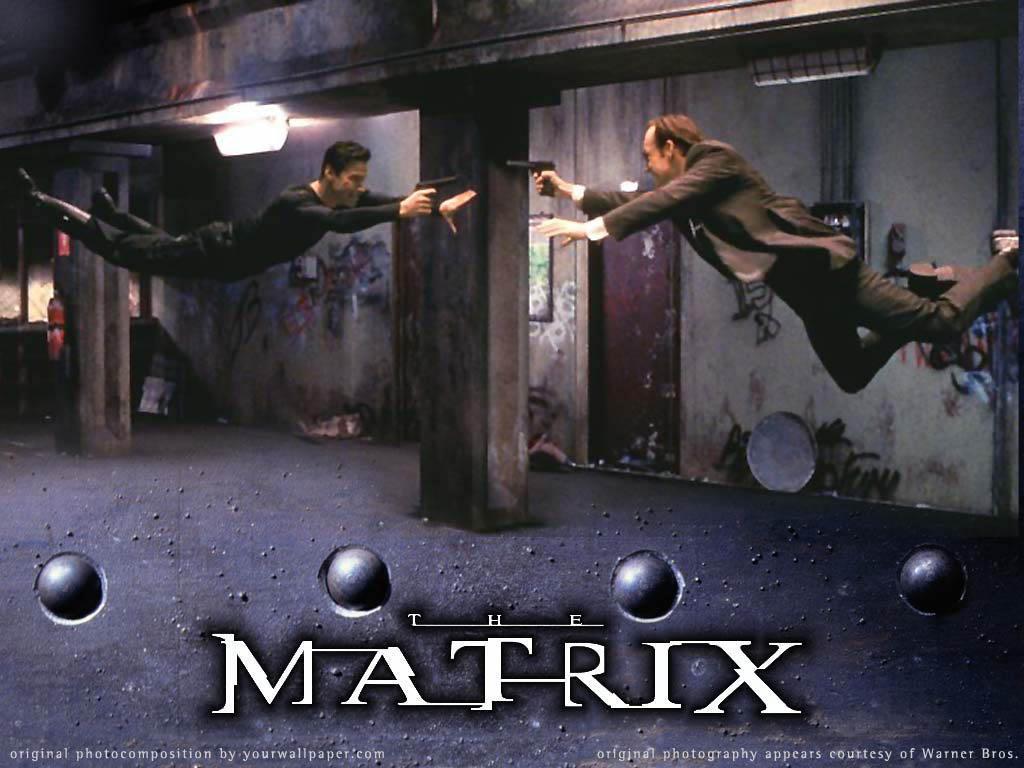
Finally, there is the view from completely outside the Matrix. This is not the perspective the world wants you to see. All pretenses of order, harmony, and beauty are gone. The world is dark and dangerous. The world is at war with itself. There are rebels around the world who work in coordination to resist their common enemy and free people from their blindness. We see the world as it really is. Likewise, the church functions as a band of rebels who resists every power and perspective that brings bondage and death. Local churches are little outposts of hope. From the small communities, Christians go out into the world. For now, they are a glimpse of what the world could be.
The two kinds of contextualization discussed can be likened to the second and third ways of seeing. In our Matrix analogy, exegetical contextualization is comparable to seeing truth in digital. One sees the truth.. When we read the Bible, we take a peek at history from God’s perspective. Even so, what we see is still determined by one’s vantage point.
Cultural contextualization can be compared to the third view, wherein we cognitively perceive the world as it presents itself. However, our affections are changed. Our hearts are not enslaved by the allurement of the world. We work among those who are blind to the truth, hoping to help others find freedom. We present ourselves in terms that can be understood to these people; yet, we are not bound to interpret what they see in the same way. We are aware of the battle around us. The whole world system will turn against us if it detects our agenda–––to announce the reign of Christ and the demise of the “matrix” of lies that result in sin and death.
Conclusions
The central aim of these reflections has been to define and distinguish two kinds of contextualization. In order to do so, I suggested that contextualization first be understood in terms of interpretation. In contrast, evangelicals have typically regarded contextualization as a method of communication or application. Interpretation is never done in a vacuum. It requires a context. Contextualization happens where the biblical and cultural contexts overlap. These two contexts create the possibility for two kinds of approaches––exegetical contextualization and cultural contextualization. These two methods are complementary. In fact, I suggest the latter is built upon the former. Exegetical contextualization interprets Scripture from a cultural perspective. Cultural interpretation interprets culture through the lens of Scripture. One always interprets either a biblical text or a “cultural text.”[1] Evangelicals need a more nuanced perspective when it comes to relating the Bible and culture. If we do not grasp these differences, it will be difficult for evangelicals to make further progress in the work of contextualization.
[1] For a helpful discussion on and resource for interpreting “cultural texts,” see Kevin Vanhoozer, ed., Everyday Theology: How to Read Cultural Texts and Interpret Trends (Grand Rapids, Mich.: Baker Academic, 2007).
Related articles
Two Kinds of Contextualization
Previous Post

January 16, 2013
Two Kinds of Contextualization and Why They Matter (Part 2)
Next Post

January 23, 2013 The Relationship between Good Works and Honor
Browse Our Archives
Select a Category Atonement Biblical Theology Book Reviews China Chinese Church Chinese Culture Chinese Language Collectivism Contextualization Culture (General) Ecclesiology Evangelism Gospel Honor & Shame (Face) Interpretation/Exegesis Justification/Righteousness Missiology Mission Methods One Gospel for All Nations Other Practical Contextualization Reading Romans with Eastern Eyes Resources Romans Salvation (General) Saving God's Face Seeking God's Face The Cross in Context Theological Contextualization Theological Education Theology Uncategorized
Select a Month October 2026 September 2026 August 2026 July 2026 June 2026 May 2026 April 2026 March 2026 February 2026 January 2026 December 2025 November 2025 October 2025 September 2025 August 2025 July 2025 June 2025 May 2025 April 2025 March 2025 February 2025 January 2025 December 2024 November 2024 October 2024 September 2024 August 2024 July 2024 June 2024 May 2024 April 2024 March 2024 February 2024 January 2024 December 2023 November 2023 October 2023 September 2023 August 2023 July 2023 June 2023 May 2023 April 2023 March 2023 February 2023 January 2023 December 2022 November 2022 October 2022 September 2022 August 2022 July 2022 June 2022 May 2022 April 2022 March 2022 February 2022 January 2022 December 2021 November 2021 October 2021 September 2021 August 2021 July 2021 June 2021 May 2021 April 2021 March 2021 February 2021 January 2021 December 2020 November 2020 October 2020 September 2020 August 2020 July 2020 June 2020 May 2020 April 2020 March 2020 February 2020 January 2020 December 2019 November 2019 October 2019 September 2019 August 2019 July 2019 June 2019 May 2019 April 2019 March 2019 February 2019 January 2019 December 2018 November 2018 October 2018 September 2018 August 2018 July 2018 June 2018 May 2018 April 2018 March 2018 February 2018 January 2018 December 2017 November 2017 October 2017 September 2017 August 2017 July 2017 June 2017 May 2017 April 2017 March 2017 February 2017 January 2017 December 2016 November 2016 October 2016 September 2016 August 2016 July 2016 June 2016 May 2016 April 2016 March 2016 February 2016 January 2016 December 2015 November 2015 October 2015 September 2015 August 2015 July 2015 June 2015 May 2015 April 2015 March 2015 February 2015 January 2015 December 2014 November 2014 October 2014 September 2014 August 2014 July 2014 June 2014 May 2014 April 2014 March 2014 February 2014 January 2014 December 2013 November 2013 October 2013 September 2013 August 2013 July 2013 June 2013 May 2013 April 2013 March 2013 February 2013 January 2013 December 2012 November 2012
Follow Us!
TAKE THE
Religious Wisdom Quiz
What small part of the body does James say is a restless evil, full of deadly poison?
Select your answer to see how you score.
The heart The eye The tongue The hand
Books by This Author Books by Brad Vaughn
Related posts from Saving God's Face

Paul’s Contextualization of Artemis for the Ephesians

Bathsheba, #MeToo, and Eisegesis

I'm launching 3 online courses!
What's your political denomination?
TRENDING AT PATHEOS Evangelical

In one sense walking into Westminster Abbey is like walking down the...

'Super Scam Me' Exposes AI Jon Bon Jovi...
Leslie Pickett believed she was in a relationship with Jon Bon Jovi....

The Brazilian Remake of Kendricks' 'Flywheel' Opens in...
“Flywheel,” the story that launched the Kendrick Brothers’ filmmaking career is getting...

The Dangers of Gradual Accommodation (Winking at Sin)
Recently, the “law of gradualness” resurfaced during the opening of a weeklong,...

The Iron Gates and the Lion of the...
Yesterday, I didn't finish my report about, well, yesterday. So I'll...

The Image: On the Horror of Capitalism and...
The Image Then went the Pharisees, and took counsel how they might...
view all Evangelical blogs
Ad-Free & Subscriber Log-In Subscription Support
- About Us
- 2026 Calendar
- Videos
- Podcasts
- Library of World Religions
- Faith In Media Tracker
- Advertise With Us
- Write for Us
- Privacy Policy
- Terms of Service
- Do Not Sell My Data
- Contact Us
- Radiant Digital
- Manage Newsletter Subscriptions
- Unsubscribe From Notifications
- Sitemap
Copyright 2008-2026, Patheos. All rights reserved.
Subscription Support Ad-Free & Subscriber Log-In
Follow Patheos