
BuddhistCatholicContemplativeEvangelicalGeneral ChristianHinduJewishLatter-day SaintMuslimNew VisionsProgressive Christian
Beliefs
- Buddhist
- Catholic
- Contemplative
- Evangelical
- General Christian
- Hindu
- Jewish
- Latter-day Saint
- More Voices
- Muslim
- New Visions
- Pagan
- Progressive Christian
Topics
- Religion News
- Food and Religion
- Sports and Religion
- Religious Art
- Religious Music and Entertainment
- Religious Events
- History and Religion
- Style and Religion
- Politics and Religion
- Women in Religion
- Recreation Outdoors and Religion
- Business Finance and Religion
- Careers Workplace and Religion
- Education and Religion
- Family Parenting and Religion
- Health Fitness and Religion
- Home and Religion
- Relationships and Religion
- Technology and Religion
- Travel and Religion
Columnists
- Buddhist Columnists
- Business Finance and Religion Columnists
- Careers Workplace and Religion Columnists
- Catholic Columnists
- Contemplative Columnists
- Education and Religion Columnists
- Evangelists Columnists
- Family Parenting and Religion Columnists
- General Christian Columnists
- Health Fitness and Religion Columnists
- Hindu Columnists
- History and Religion Columnists
- Home and Religion Columnists
- Jewish Columnists
- More Voices Columnists
- Latter Day Columnists
- Muslim Columnists
- New Visions Columnists
- Nonreligious Columnists
- Pagan Columnists
- Politics and Religion Columnists
- Progressive Columnists
- Recreation Outdoors and Religion Columnists
- Relationships and Religion Columnists
- Religion News Columnists
- Religious Art Columnists
- Religious Events Columnists
- Religious Music and Entertainment Columnists
- Sports and Religion Columnists
- Style and Religion Columnists
- Technology and Religion Columnists
- Travel and Religion Columnists
- Women in Religion Columnists
Resource Library
- 2026 Calendar
- Library of World Religions
- The 100 Most Holy Places on Earth
- Patheos Answers
- Podcasts
- Videos
- Faith Leaders Database
- Anglican Episcopalian
- Bahai
- Baptist
- Buddhism
- Christianity
- Confucianism
- Eastern Orthodoxy
- Hinduism
- Holiness and Pentecostal
- ISKCON
- Islam
- Judaism
- Lutheran
- Methodist
- The Church of Jesus Christ of Latter-day Saints
- New Age
- Paganism
- Presbytarian and Reformed
- Protestantism
- Religion Behind the Scenes
- Roman Catholic
- Scientology
- Shia Islam
- Sikhism
- Sufism
- Sunni Islam
- Taoism
- Zen
- See all religions
Research Tools
 Ad-Free & Subscriber Log-In Subscription Support
Ad-Free & Subscriber Log-In Subscription Support
Follow Patheos 

- Trending:
- Forgiveness
- |
- Marriage
- |
- Consciousness
- |
- Death Penalty
- |
- Election
- |
- Halloween

-
Tools
-
Support the Work
- Home
- Evangelical
- Two Kinds of Contextualization and Why It Matters: Defining the Relationship Between the Biblical Text and Cultural Context (Part 1)
Two Kinds of Contextualization and Why It Matters: Defining the Relationship Between the Biblical Text and Cultural Context (Part 1)
Last updated on: August 15, 2015 at 3:38 am by Brad Vaughn
Two Kinds of Contextualization and Why It Matters: Defining the Relationship Between the Biblical Text and Cultural Context (Part 1) 2015-08-15T03:38:58-07:00 Brad Vaughn
Patheos Explore the world's faith through different perspectives on religion and spirituality! Patheos has the views of the prevalent religions and spiritualities of the world.
This is part 1 in a series on contextualization. It first considers conventional evangelical views on contextualization and the need for a new perspective.
Part 2 will introduce a distinction between two kinds of contextualization. It concludes by explaining why it matters that we differentiate the two.
Finally, part 3 will illustrate four ways in which people “see” the world. Taken together, they reinforce the importance of perspective and worldview in doing contextualization. Just for fun, we’ll draw from the movie, The Matrix, to make the point.
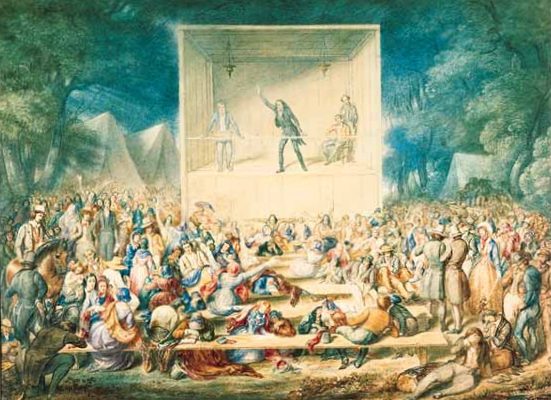
Evangelical Views on “Contextualization” and the Need for a New Perspective
Context is king. This principle holds true in missions as much as it does for biblical interpretation. Whether we recognize it or not, we are creatures of context. In Rom 6, Paul says we all are either slaves to sin or slaves to righteousness. In the same way, we can acknowledge that we are slaves to our context(s).
Our context determines the language we use, our experiences, and our worldview, which includes our ways of thinking and judging the world. Within any context, actions have meaning to be understood according to the various implicit or explicit rules. Context governs interpretation; yet, humans either submit to or reject this king.
Paradoxically, Paul defines slavery to righteousness in terms of “freedom” (Rom 6:17–18). From one perspective, Paul says Christians are free; from another, he claims we are still slaves. In particular, those who are in Christ are reckoned “slaves of God” (Rom 6:20).
What does all this mean for contextualization?
For many years, evangelicals have debated the meaning and significance of this concept. There is consensus when it comes to principles. All agree that the biblical context reigns as the authority over any cultural context. The Bible judges culture, not vice versa.
Evangelicals close ranks against what they perceive to be threats against Scripture. For example, liberation theology has often been opposed precisely because many evangelicals judge it to contradict biblical authority. However, it is possible that a right desire to resist false doctrine can also conjure an unhealthy fear that limits the ability to contextualize the gospel.
Alert to human sin and the noetic effects of the Fall, one could become suspicious of theologies that emphasize cultural themes seemingly omitted or minimized in Scripture (at least according to traditional theologies). Evangelicals are keen to reiterate that there is one unchanging gospel, which is not bound by culture but rather transcends culture. Not surprisingly, it is easy to become overly conservative in the way one relates the Bible and culture. Many conservative Christians tend to see an inherent conflict between these two contexts.
In the attempt to shield interpretation from corrupting influence of culture, evangelicals try to be “objective,” separating the biblical text from the reader, and as a result neglect giving “attention to the cultural context of the contemporary reader.”[1] What results? Fear can quickly enslave those who seek to contextualize biblical truth.
How? One unwittingly becomes a slave to his or her own cultural context or theological tradition. This happens when a reader of the Bible does not realize how culture influences his or her interpretations. A mono-contextual perspective may subtly usurp the authority of the text. The individual’s cultural context reigns in the guise of orthodoxy. In the end, there is a danger that the very text that offers freedom becomes a tool that enslaves one to traditionalism and denominationalism.
Common Evangelical Perspectives
To order to avoid compromising Scripture, evangelicals tend to treat contextualization as a way of communication or application. After all, if there is only one gospel and the Bible is authoritative over human cultures, then, it is reasoned, contextualization does not change the meaning of Scripture. Certainly some people have paid attention to the relationship between contextualization and hermeneutics.[2] However, these few are not representative of typical evangelical thinking, which reduces contextualization to communication. Consequently, a foreign cultural context (relative to the missionary) plays little role in determining how one interprets the biblical text.
In what follows, I offer a sample of suggestions made by evangelicals who try to define contextualization. Countless articles and essays have been written on the subject. My immediate purpose is not to deny the truth in what they affirm. Instead, one should notice their agreement. Contextualization is defined in terms of communication not interpretation. David Hesselgrave and Edward Rommen offer a representative summary:
Christian contextualization can be thought of as the attempt to communicate the message of the person, works, Word, and will of God in a way that is faithful to God’s revelation, especially as it is put forth in the teachings of Holy Scripture, and that is meaningful to respondents in their respective cultural and existential contexts.[3]

Scott Moreau claims that evangelicals most commonly hold to a “translation” model of contextualization where “there is a core message of universal truth which must be translated into each 
Roy Musasiwa adds, “A conservative evangelical view of contextualization limits it to communicate the gospel message in a way that is both faithful to the Bible and meaningful to respondents in their respective cultural and existential contexts”[5] As another writer puts it, “Local theology, or contextualization, means articulating biblical faith using vernacular terms and engaging local issues.”[6]
Other evangelical scholars echo this view. Contextualization means “making concepts of ideals relevant in a given situation” (Byang H. Kato),[7] “the translation of the unchanging content of the Gospel of the kingdom into verbal form meaningful to the peoples in their separate culture” (Bruce J. Nicholls)[8] and “to discover the legitimate implications of the gospel in a given situation” (George W. Peters).[9]
Paul Hiebert regards contextualization foremost as communication not interpretation.[10] David Sills agrees by saying, “[C]ontextualization is simply the process of making the gospel understood.”[11] Kevin Greeson says contextualization tries “to adapt the style, form and language of the Christian faith and message to the culture of the people one is seeking to reach.”[12]
Fortunately, 


David Clarke correctly highlights a few problems with reducing contextualization to communication.[16] He describes the conventional evangelical perspective as that of 
Clarke says, “First, this model assumes that human expressions of transcultural principles can remain constant even as they change their attire in the cultural dressing rooms of different eras. . . . But principlizing obscures the facts that any articulation of the allegedly transcultural principles still reflects the culture of the translator.”
Second, the evangelical view “does not make clear that responsibility for contextualization lies with the peoples of the church in every culture, not primarily with cross-cultural missionaries.” In short, even though the traditional model highlights communication, it affords little opportunity for “dialogue.”[17]
(In Part 2, I’ll suggest an alternative perspective and distinguish two kinds of contextualization.)
Photo Credit: CC 2.0/Wikipedia
[1] David K. Clark, To Know and Love God: Method for Theology (Wheaton, Ill.: Crossway, 2003), 104.
[2] Among the best of these examples, see Chapter 3 of Clark, To Know and Love God.
[3] David J. Hesselgrave and Edward Rommen, Contextualization: Meanings, Methods, and Models (Grand Rapids, Mich.: Baker, 1989), 200.
[4] Scott Moreau, “Evangelical Models of Contextualization,” in Local Theology for the Global Church: Principles for an Evangelical Approach to Contextualization (ed by. Matthew Cook et al.; Pasadena, Calif.: William Carey Library, 2010), 169. He cites Stephen Bevans, Models of Contextual Theology (Rev. and expanded ed.; Maryknoll, N.Y.: Orbis Books, 2002), 37.
[5] Roy Musasiwa, “Contextualization,” in Dictionary of Mission Theology: Evangelical Foundations (ed. John Corrie, Juan F. Martinez, and Simon Chan; Downers Grove, Ill.: IVP Academic, 2007), 66.
[6] T. D. Gener, “Contextualization,” ed by. William A. Dyrness and Veli-Matti Kärkkäinen, Global Dictionary of Theology (Downers Grove, Ill.: IVP), 192.
[7] Byang H. Kato, “The Gospel, Cultural Context, and Religious Syncretism,” in Let the Earth Hear His Voice (ed by. J. D. Douglas; Minneapolis, Minn.: World Wide, 1975), 1217. Cited in Hesselgrave and Rommen, Contextualization, 33.
[8] Bruce J. Nicholls, “Theological Education and Evangelization,” in Let the Earth Hear His Voice (ed by. J. D. Douglas; Minneapolis, Minn.: World Wide, 1975), 647. Cited in Hesselgrave and Rommen, Contextualization, 33.
[9] George W. Peters, “Issues Confronting Evangelical Missions,” in Evangelical Missions Tomorrow (ed by. E. L. Frizen and Wade Coggins; Pasadena, Calif.: William Carey Library, 1977), 169. Cited in Hesselgrave and Rommen, Contextualization, 34.
[10] Paul Hiebert, “Cultural Difference and the Communication of the Gospel,” in Perspectives on the World Christian Movement: A Reader (ed by. Ralph Winter et al.; 3rd ed.; Pasadena, Calif.: William Carey Library, 1999), 373–83. Paul Hiebert, Anthropological Insights for Missionaries (Grand Rapids, Mich.: Baker, 1985), 186–90. Also, see Moreau, “Evangelical Models,” 174. Sills agrees that Heibert’s proposal mainly concerns appropriate applications of Scripture. See M. David Sills, Reaching and Teaching: A Call to Great Commission Obedience (Chicago, Ill.: Moody Publishers, 2010), 205–7.
[11] Sills, Reaching and Teaching, 195.
[12] Kevin Greeson, The Camel: How Muslims Are Coming to Faith in Christ! (Revised Edition.; Monument, CO: WIGTake Resources, 2010), 199–200.
[13] Dean Flemming, Contextualization in the New Testament: Patterns for Theology and Mission (Downers Grove, Ill.: IVP Academic, 2005), 19.
[14] Louis J. Luzbetak, The Church and Cultures: New Perspectives in Missiological Anthropology (Maryknoll, N.Y.: Orbis Books, 1988), 69. Cited in Susan S. Baker, “The Social Sciences for Urban Ministry,” in The Urban Face of Mission: Ministering the Gospel in a Diverse and Changing World (ed by. Manuel Ortiz and Susan S. Baker; Phillipsburg, N.J.: P & R Publishing, 2002), 75.
[15] Bruce Riley Ashford, “The Gospel and Culture,” in Theology and Practice of Mission: God, the Church, and the Nations (ed. Bruce Riley Ashford; Nashville, Tenn.: B & H Academic, 2011), Kindle Loc 3303–4. Emphasis original.
[16] Clark, To Know and Love God, 112–13. All citations in this paragraph come from these pages.
[17] For Clarke’s proposal for a “dialogical contextualization,” see Ibid., 113–22.
Related articles
Two Kinds of Contextualization
Previous Post

January 10, 2013
Interview with Karl Dahlfred, Theology Drives Methodology (Part 2)
Next Post

January 16, 2013 Two Kinds of Contextualization and Why They Matter (Part 2)
Browse Our Archives
Select a Category Atonement Biblical Theology Book Reviews China Chinese Church Chinese Culture Chinese Language Collectivism Contextualization Culture (General) Ecclesiology Evangelism Gospel Honor & Shame (Face) Interpretation/Exegesis Justification/Righteousness Missiology Mission Methods One Gospel for All Nations Other Practical Contextualization Reading Romans with Eastern Eyes Resources Romans Salvation (General) Saving God's Face Seeking God's Face The Cross in Context Theological Contextualization Theological Education Theology Uncategorized
Select a Month October 2026 September 2026 August 2026 July 2026 June 2026 May 2026 April 2026 March 2026 February 2026 January 2026 December 2025 November 2025 October 2025 September 2025 August 2025 July 2025 June 2025 May 2025 April 2025 March 2025 February 2025 January 2025 December 2024 November 2024 October 2024 September 2024 August 2024 July 2024 June 2024 May 2024 April 2024 March 2024 February 2024 January 2024 December 2023 November 2023 October 2023 September 2023 August 2023 July 2023 June 2023 May 2023 April 2023 March 2023 February 2023 January 2023 December 2022 November 2022 October 2022 September 2022 August 2022 July 2022 June 2022 May 2022 April 2022 March 2022 February 2022 January 2022 December 2021 November 2021 October 2021 September 2021 August 2021 July 2021 June 2021 May 2021 April 2021 March 2021 February 2021 January 2021 December 2020 November 2020 October 2020 September 2020 August 2020 July 2020 June 2020 May 2020 April 2020 March 2020 February 2020 January 2020 December 2019 November 2019 October 2019 September 2019 August 2019 July 2019 June 2019 May 2019 April 2019 March 2019 February 2019 January 2019 December 2018 November 2018 October 2018 September 2018 August 2018 July 2018 June 2018 May 2018 April 2018 March 2018 February 2018 January 2018 December 2017 November 2017 October 2017 September 2017 August 2017 July 2017 June 2017 May 2017 April 2017 March 2017 February 2017 January 2017 December 2016 November 2016 October 2016 September 2016 August 2016 July 2016 June 2016 May 2016 April 2016 March 2016 February 2016 January 2016 December 2015 November 2015 October 2015 September 2015 August 2015 July 2015 June 2015 May 2015 April 2015 March 2015 February 2015 January 2015 December 2014 November 2014 October 2014 September 2014 August 2014 July 2014 June 2014 May 2014 April 2014 March 2014 February 2014 January 2014 December 2013 November 2013 October 2013 September 2013 August 2013 July 2013 June 2013 May 2013 April 2013 March 2013 February 2013 January 2013 December 2012 November 2012
Follow Us!
TAKE THE
Religious Wisdom Quiz
I carried a letter from the king giving me authority and resources to rebuild Jerusalem. Who am I?
Select your answer to see how you score.
Nehemiah Ezra Zerubbabel Artaxerxes
Books by This Author Books by Brad Vaughn
Related posts from Saving God's Face

10 Principles for Reading the Bible Missionally

The Implicit Critique of Culture in Revelation 5:9

Paul’s Contextualization of Artemis for the Ephesians

Why Artemis is Nobody’s Mother (a book review)
TRENDING AT PATHEOS Evangelical

Emotion in Early Christianity by Andrew Crislip
Andrew Crislip’s Emotion in Early Christianity examines an often overlooked dimension of...

16 Spiritual Touchstones for a More Grounded Life
After decades of spiritual study, here are 16 principles I try...

Catholic Evangelization: Sharing Your Faith Every Day
Welcome back to the Graceful Awakening mini-series called, “From Faith to Mission.” ...

The Pillar of the Boatmen: the Ancient Monument...
The Pillar of the Boatmen is a Romano-Gaulish sculpture that dates from...

In one sense walking into Westminster Abbey is like walking down the...

'Super Scam Me' Exposes AI Jon Bon Jovi...
Leslie Pickett believed she was in a relationship with Jon Bon Jovi....
view all Evangelical blogs
Ad-Free & Subscriber Log-In Subscription Support
- About Us
- 2026 Calendar
- Videos
- Podcasts
- Library of World Religions
- Faith In Media Tracker
- Advertise With Us
- Write for Us
- Privacy Policy
- Terms of Service
- Do Not Sell My Data
- Contact Us
- Radiant Digital
- Manage Newsletter Subscriptions
- Unsubscribe From Notifications
- Sitemap
Copyright 2008-2026, Patheos. All rights reserved.
Subscription Support Ad-Free & Subscriber Log-In
Follow Patheos