
BuddhistCatholicContemplativeEvangelicalGeneral ChristianHinduJewishLatter-day SaintMuslimNew VisionsProgressive Christian
Beliefs
- Buddhist
- Catholic
- Contemplative
- Evangelical
- General Christian
- Hindu
- Jewish
- Latter-day Saint
- More Voices
- Muslim
- New Visions
- Pagan
- Progressive Christian
Topics
- Religion News
- Food and Religion
- Sports and Religion
- Religious Art
- Religious Music and Entertainment
- Religious Events
- History and Religion
- Style and Religion
- Politics and Religion
- Women in Religion
- Recreation Outdoors and Religion
- Business Finance and Religion
- Careers Workplace and Religion
- Education and Religion
- Family Parenting and Religion
- Health Fitness and Religion
- Home and Religion
- Relationships and Religion
- Technology and Religion
- Travel and Religion
Columnists
- Buddhist Columnists
- Business Finance and Religion Columnists
- Careers Workplace and Religion Columnists
- Catholic Columnists
- Contemplative Columnists
- Education and Religion Columnists
- Evangelists Columnists
- Family Parenting and Religion Columnists
- General Christian Columnists
- Health Fitness and Religion Columnists
- Hindu Columnists
- History and Religion Columnists
- Home and Religion Columnists
- Jewish Columnists
- More Voices Columnists
- Latter Day Columnists
- Muslim Columnists
- New Visions Columnists
- Nonreligious Columnists
- Pagan Columnists
- Politics and Religion Columnists
- Progressive Columnists
- Recreation Outdoors and Religion Columnists
- Relationships and Religion Columnists
- Religion News Columnists
- Religious Art Columnists
- Religious Events Columnists
- Religious Music and Entertainment Columnists
- Sports and Religion Columnists
- Style and Religion Columnists
- Technology and Religion Columnists
- Travel and Religion Columnists
- Women in Religion Columnists
Resource Library
- 2026 Calendar
- Library of World Religions
- The 100 Most Holy Places on Earth
- Patheos Answers
- Podcasts
- Videos
- Faith Leaders Database
- Anglican Episcopalian
- Bahai
- Baptist
- Buddhism
- Christianity
- Confucianism
- Eastern Orthodoxy
- Hinduism
- Holiness and Pentecostal
- ISKCON
- Islam
- Judaism
- Lutheran
- Methodist
- The Church of Jesus Christ of Latter-day Saints
- New Age
- Paganism
- Presbytarian and Reformed
- Protestantism
- Religion Behind the Scenes
- Roman Catholic
- Scientology
- Shia Islam
- Sikhism
- Sufism
- Sunni Islam
- Taoism
- Zen
- See all religions
Research Tools
 Ad-Free & Subscriber Log-In Subscription Support
Ad-Free & Subscriber Log-In Subscription Support
Follow Patheos 

- Trending:
- Forgiveness
- |
- Marriage
- |
- Consciousness
- |
- Death Penalty
- |
- Election
- |
- Halloween

- Home
- Muslim
- A Common Misconception Answered
A Common Misconception Answered
Last updated on: July 8, 2018 at 8:56 pm by Muslims Writers Guild of America
A Common Misconception Answered 2018-07-08T20:56:05-05:00 Muslims Writers Guild of America
Patheos Explore the world's faith through different perspectives on religion and spirituality! Patheos has the views of the prevalent religions and spiritualities of the world.
by Imam Rizwan Khan
The Ahmadiyya Muslim Community has a long history of tolerance and is recognized the world over for its efforts at promoting peace, justice and harmony in society. Its charitable efforts span the globe and provide innumerable services in poverty and disaster stricken areas. Despite these well known realities there are some who bring fine theological points to accuse the community of intolerance and hate. Although it is impossible to point to a single practical instance that bears out such and accusation, it is still worth clarifying anything that may be misconstrued. The most often used of these arguments is that there are instances where Ahmadi Muslim scholars have referred to non-Ahmadi Muslims as disbelievers and non-Muslims.
The first part of this objection is, why have some Muslims been called disbelievers by Ahmadi Muslims?
Allah Almighty Himself says that a person can be a Muslim while not being a believer.
“The Arabs of the desert say, ‘We believe.’ Say, “You have not believed yet; but rather say, ‘We have accepted Islam,’ for the true belief has not yet entered into your hearts.”” (49:15)
The following Hadith is also narrated in Nasai,
“The Messenger of Allah (sa) distributed (some spoils of war) and gave to some people but withheld from others. I said: “O Messenger of Allah, you gave to so-and-so and so-and-so, and you withheld from so-and-so, who is a believer.” He said: “Do not say ‘a believer,’ say ‘a Muslim.'” Ibn Shihab (one of the narrators) said: “The Arabs of the desert say: ‘We believe’”.” (Nasai)
This concept was also explained by the Holy Prophet Muhammad (sa) elsewhere,”The one who commits an adultery/fornication is not a believer at the time of committing adultery/fornication and a thief is not a believer at the time of committing theft and a drinker of alcoholic drink is not a believer at the time of drinking.” (Bukhari and Muslim)
The Fourth Caliph of the Ahmadiyya Muslim Community explained this further, “The opposite of a believer is a disbeliever, and the opposite of a Muslim is a non-Muslim and in these two things God has placed a difference—for God says [to the Holy Prophet(sa)]: Tell them that God, Who is the Knower of the Unseen, has given me the knowledge that belief has not yet entered in your hearts. Therefore, do not claim to be mo’min [believer], but we do not take away your right to call yourselves Muslims.” (pg 5 here)
From the very beginning, Muslims who were weak of faith were referred to as disbelievers, and this did not infringe in any way on their right to call themselves Muslims. In the same manner as the Holy Quran and the Holy Prophet (sa) Ahmadi Muslims refer to some Muslims as disbelievers. This is nothing innovative in Islamic terminology.
In contrast, the blanket approach of Takfeer (declaring someone a non-believer) in vogue now can be considered an innovation. The second Caliph of the Ahmadiyya Muslim Community said, “We believe that the term Kafir applies to a person after he has passed beyond a prescribed limit. When a person takes Islam as his religion and accepts the Qur’anic injunctions and teachings as his guide of action, he is entitled to be called a Muslim. But if he denies a basic principle of the faith of Islam then although he may be called a Muslim yet in reality he is not so. We do not therefore take Kafir to mean that such a person denies the Holy Prophet Muhammad (peace be upon him). Who can say to a person who says that he believes in the Holy Prophet, that in reality he has no such faith? Nor do we take this term to mean the denial of the existence of God. One who says that he has belief in God, who can dare say that he has none? According to our definition of Kufr the denial of a fundamental doctrine of Islam renders a person Kafir. On the other hand only belief in all the essentials of Islam can make a person a true Muslim in the real sense of the word.” (April 26, 1935, pg.14)
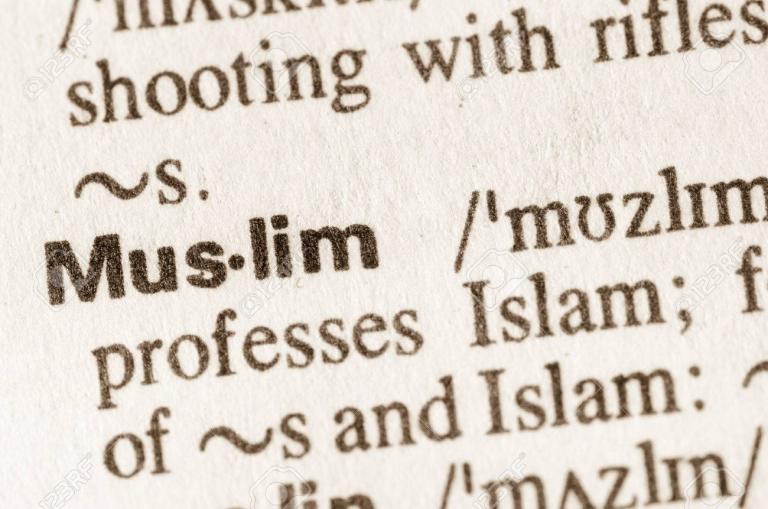 The second part of the question is, why have some Muslims been called non-Muslims by Ahmadi Muslims?
The answer is that there are two categories of non-Muslims.
First are those who outwardly are non-Muslims; this can even refer to innocent disbelievers. In this relation I again quote the second Caliph of the Ahmadiyya Muslim Community,
“Those who do not accept a prophet, even if it is only because they have never heard his name, they are referred to as disbelievers, although in the sight of God they are not deserving of punishment because their disbelief was not because of any fault of theirs.” (Ainae Sadaqat pg31)
Second are those who outwardly are Muslims but inwardly are not true Muslims.
The Second Caliph (ra) explained that there are different stages of the word Muslim, which has been explained in the renowned dictionary “Mufradat-i-Raghib on page 240, where Islam has been shown to be of two kinds: one lower than the stage of Iman; the other above the stage of Iman. In Dunal Iman, in the stage of lower than common Iman, are included people whose Islam remains at a level lower than a proper Iman, and in the stage of higher than the common Iman are Muslims who stand at a level of distinction in their faith, higher than the common level.”
By definition, there are two stages of Muslims, Dunal Iman (lower than common faith) and Fauqal Iman (higher than common faith). Those who are only Muslims in Dunal Iman are not Muslims in Fauqal Iman. These Muslims are referred to as non-Muslims in this context, but they are never deprived of their right to call themselves Muslims.
For example, the Holy Prophet (sa) said, “Where a man sallies forth to give support to an unjust person, knowing that he is unjust, the supporter thereby throws himself outside the bounds of Islam.” (Mishkat vol 2, Kitab-ul-Adab, Bab-u-Zulm, pg 555)
Also, the founder of the Ahmadiyya Muslim Community, the Promised Messiah (as) said, “Now let it be quite clear that these days the doctrine of some believers in the unity of God, that in species of birds, some are the creation of the Lord God, and some of Hadhrat Isa, is entirely misleading and idolatrous. The person who holds this view, without any doubt, is outside the pale of Islam.” (Ruhani Khazain vol 3 pg 252)
These stages of Islam become even more refined based on context. For example, one stage of submission, or Islam, is described as far above the category of faith by itself. The Holy Qur’an narrates about Hadhrat Ibrahim (as), “When his Lord said to him, ‘Submit,’ he said, ‘I have submitted to the Lord of the worlds.’” (2:132). Here, a great prophet of God, who is on the highest stages of faith, is commanded to attain the stage of Islam (or submission). However, in a different context, the Holy Qur’an uses this same word to refer to a stage that is far lower than faith when it says, “You have not believed yet; but rather say, ‘We have accepted Islam” (49:15). A person can be a non-Muslim in a certain context and a Muslim by another.
From the very beginning, the term Muslim has been used to refer at times to those who were the weakest of believers and at times those who were the strongest of believers. This never infringed in any way on their right to call themselves Muslims. The same way in which the Holy Qur’an and the Holy Prophet (sa) used the term Muslim, Ahmadi Muslims use the term Muslim. Having a nuanced approach to this term is nothing innovative in Islamic terminology. In fact, to insist on interpreting a use of the word Muslim in only a black and white way and without context goes against the established usage of this terminology throughout Islamic scripture.
When outward Muslims were referred to as disbelievers and non-Muslims by the Holy Prophet (sa) or the Promised Messiah (as) or Khulafa (ra), their right to be Muslims and call themselves Muslims was never encroached upon. The so-called Muslim scholars of today who try to deprive Ahmadi Muslims of their inalienable right to call themselves Muslims go against the teachings of Islam, and their declaring Ahmadi Muslims to be non-Muslims even in the Dunal Iman definition of the word has no precedence and is an innovation in Islam.
There is a telling difference between the position of non-Ahmadi Muslims and Ahmadi Muslims on Takfeer. When an Ahmadi Muslim is asked if non-Ahmadi Muslims should call themselves Muslims, we must say that not only do they have every right to call themselves Muslims, we insist that they do so. This is in perfect line with the precedent of the Holy Qur’an and Holy Prophet (sa) who gave the hypocrites and bedouins every right to identify as Muslims even though they were disbelievers and not true Muslims. However, when non-Ahmadi Muslims are asked if Ahmadi Muslims should call themselves Muslims, they say that we should not.
This is a position that has no precedence in Qur’an and Hadith, and this position is where they have deviated from the scriptures of Islam. Practically, this has resulted in the intolerant position of many Muslim clerics towards the Ahmadiyya Muslim Community. It is these same clerics who use these arguments to accuse this community of intolerance despite the evidence (see persecution of the Ahmadiyya Muslim Community in Pakistan and several other Muslim nations) pointing to the exact opposite. The Ahmadi-Muslim position on the other hand is perfectly in line with the peaceful and tolerant example of the Prophet Muhammad and is practically demonstrated in all of its actions.
Previous Post

May 17, 2018
Donald Trump, Jerusalem & The Islamic Messiah
Next Post
July 8, 2018 Does the Qur'an Contain Anti-Semitism?
Browse Our Archives
Select a Category American-Muslims Economic Justice Interfaith Jesus Palestine Ramadan Uncategorized World Peace
Select a Month September 2025 August 2025 July 2025 June 2025 May 2025 April 2025 March 2025 January 2025 December 2024 November 2024 October 2024 November 2019 October 2019 September 2019 August 2019 November 2018 September 2018 August 2018 July 2018 May 2018 April 2018 February 2018 December 2017 October 2017 September 2017 August 2017 July 2017 June 2017 May 2017 April 2017 March 2017 February 2017 January 2017 December 2016 November 2016 October 2016 September 2016 August 2016 July 2016 June 2016 May 2016 April 2016 March 2016 February 2016 January 2016 December 2015 November 2015 October 2015 September 2015 August 2015 July 2015 June 2015 May 2015 April 2015 March 2015 February 2015 January 2015 December 2014
Follow Us!
TAKE THE
Religious Wisdom Quiz
Which of Job’s friends said, "Consider now: Who, being innocent, has ever perished?"
Select your answer to see how you score.
Elihu Bildad Eliphaz Zophar
Related posts from Ahmadiyya Muslim Youth Angle
Unity Is America’s Strength — Division Is Its...
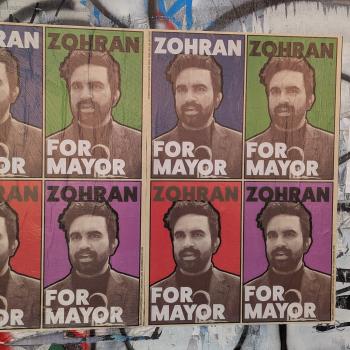
Zohran Mamdani and New York’s Fight Against Islamophobia

What the Fourth of July Means to a...

Faith and Flag: A Muslim's Love
TRENDING AT PATHEOS Muslim

25 Years Later: How Much Has Changed for...
As we approach the 25th anniversary of September 11th, I’ve found myself...

Podcast: Third Spaces & The Rise of Yemeni...
In the latest episode of The Artistic Foodies Podcast, hosts Abbas...

HalalFest Picks: Best 60 Halal Spots for Super...
Back in 2016, I came up with a list of 29...

Unity Is America’s Strength — Division Is Its...
by Hidayatullah Ahsan When Valentina Gomez, a Republican candidate for Congress in...

Zohran Mamdani and New York’s Fight Against Islamophobia
This past June, against all odds, Zohran Mamdani won the Democratic primary...

What the Fourth of July Means to a...
As we mark another Fourth of July, millions of Americans will celebrate...
view all Muslim blogs
Ad-Free & Subscriber Log-In Subscription Support
- About Us
- 2026 Calendar
- Videos
- Podcasts
- Library of World Religions
- Faith In Media Tracker
- Advertise With Us
- Write for Us
- Privacy Policy
- Terms of Service
- Do Not Sell My Data
- Contact Us
- Radiant Digital
- Manage Newsletter Subscriptions
- Unsubscribe From Notifications
- Sitemap
Copyright 2008-2026, Patheos. All rights reserved.
Subscription Support Ad-Free & Subscriber Log-In
Follow Patheos